
Before you pop a cork this weekend, take heed to the price
you’re paying because next month it may jump.
President Donald Trump has threatened a 200% tariff on European
Union wines, champagnes and spirits in response to tariffs implemented by the
EU on American steel and aluminum. Trump’s tariff is scheduled to go in place April 2.
“There is a lot of concern,” said Cam Davis, manager and owner of
LouElla in Durham. “It was an initial shock to the system. When the
pandemic happened, all of a sudden we had to learn how to pivot and do
something else. This seems to have more of a damaging effect to a six-year-old
business.”
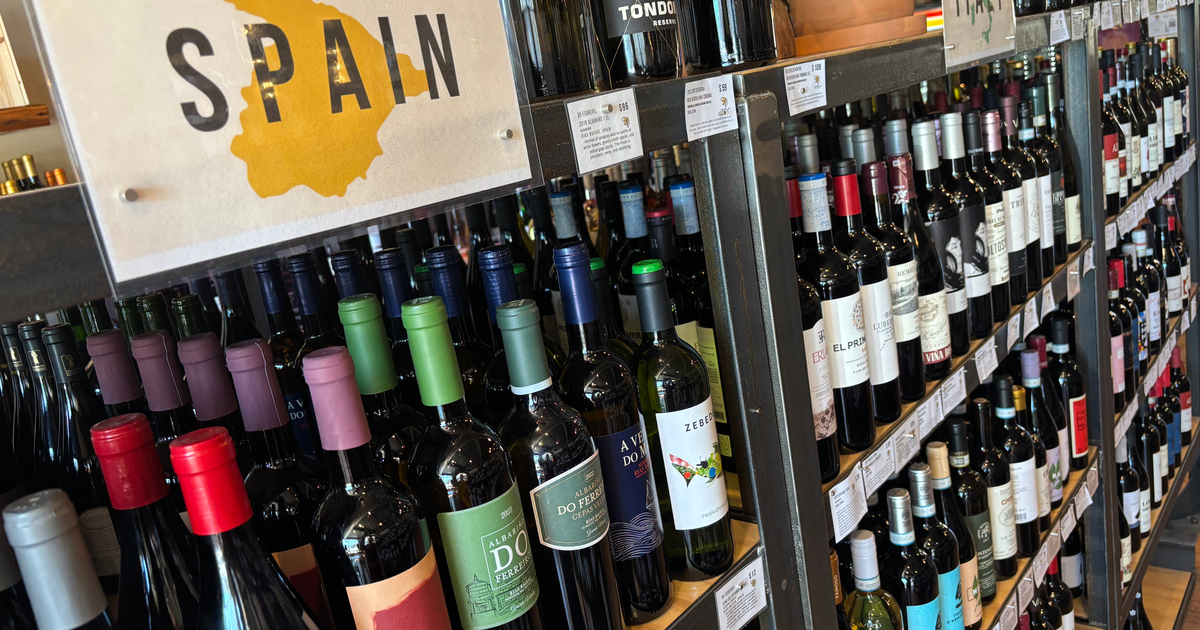
Davis shop sells predominantly EU wines, between 80% to 90%.
The shop is stocked with incredibly affordable wines.
“A majority of customers buy $15 to $20 bottles of wine,”
Davis said. “This gamay is $18 on the shelf and probably one of the most
drinkable little red wines we have, coming out of France.”
An $18 bottle that’s a couple of weeks away from jumping two
to three times the price.
“A normal $15 bottle will be double that price, which does not carry the value for the quality that you have,” Davis said.
Davis credits that quality to price ratio to the millennia of
production from Europe.
“We have 150 years or so of production whereas Europe has
thousands of years on production,” Davis said. “That’s where we get our great
values and quality of wines. Thousands of years of history.”
Davis expressed his concern if the 200% tariff goes
through.
“It’s actually a blockade,” Jay Murrie, owner of Piedmont
Wine Imports said. “Things will just stop moving. It’s not so much that they
will be paying three times as much for their Chianti Classico. It will just
disappear from the shelves.”
It will ripple through the grapevines from a worldwide level
to national, Murrie says.
“If you take half of the supply out of any market system,
what remains is going to spike in price precipitously,” Murrie said. “The idea
that suddenly we’re just going to replace that volume of wine with domestic
product or from Australia or somewhere is really misunderstanding scale.”
France, Italy and Spain are the top three wine producers in the
world. They turned out more than 12.5 million tons in 2021. That’s more than
the next 14 countries combined.
And the U.S. imports a lot of that wine. More than 70% of wine imported to the U.S. in 2021 came from those three countries.
So pivoting from Davis’ current model to one without EU
wines just isn’t feasible.
“Their production still doesn’t touch what we’re seeing come
out of Spain, Italy and France,” Davis said. “They’re the largest producers in
the world.”
The cabernet crackdown will ripple through more than just
wine bars and other drinking establishments. It will impact anyone who sells
wine, champagne or spirits, like restaurants.
An industry still recovering after being rocked by closures
during the pandemic.
“Restaurants maybe break even on their food or do OK overall but most of those businesses derive profitability from the sale of
glasses of wine,” Murrie said. “People just aren’t going to pay $35 for a glass
of red wine.”
“I don’t think it’s hyperbole,” said Greg Pfaender, a national sales manager for Durham-based Authentique Vin said. “European wine is so
intrinsically tied to food; the consumption of, the use of in restaurant
settings and things like that. This will have a market effect on that
hospitality sector. People will lose jobs over this.”
It’s why these three men say, it’s bigger than just wine.
It’s livelihoods. Yes, for the wine cellars, the wine
sellers and the wine swillers.
“You have traditions, legacy, heritage, all of which are
rolled up in European wine in a way,” Pfaender said. “This is coveralls and
work trucks, not Prada and Lamborghinis. It’s not big business for many of
these producers.”
“It is just wine,” Murrie said. “But I think it minimizes
its role in our local businesses and in the health and happiness of our fellow
citizens.
Related: May is North Carolina Wine Month: Explore NC’s award-winning wineries