
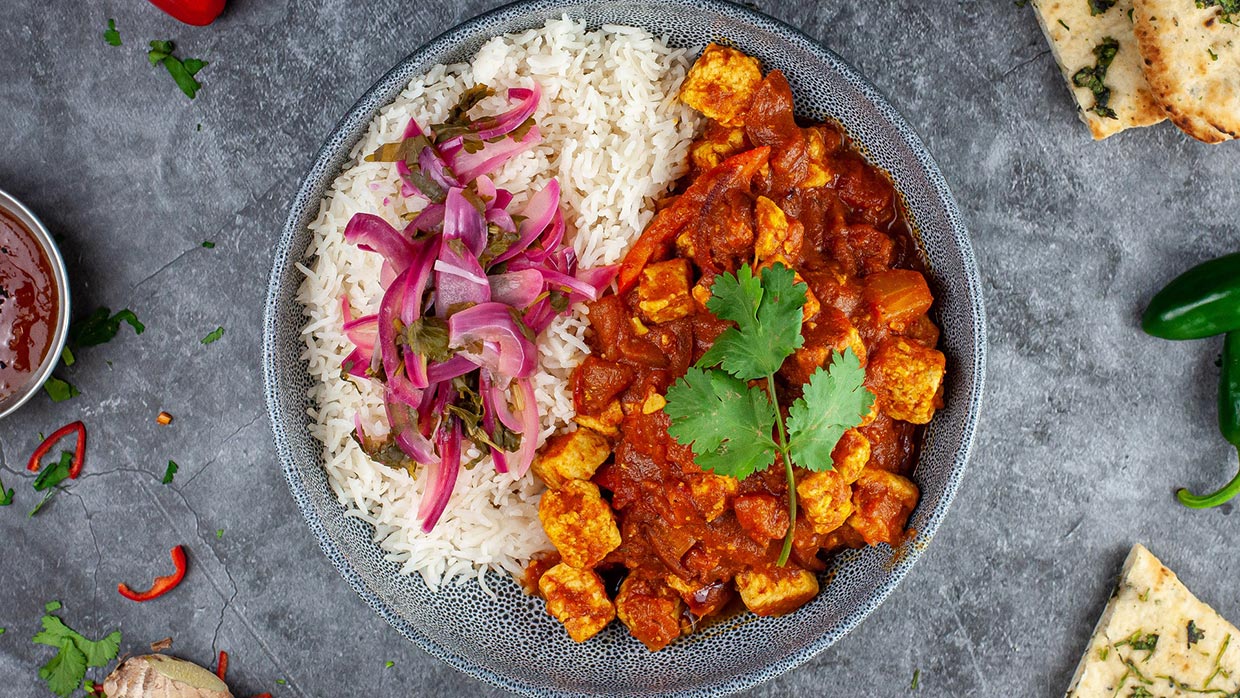
Opting for Quorn instead of meat could be comparable to consuming the Mediterranean diet when it comes to lowering bad cholesterol, says a new study.
The remotely-delivered study, by scientists at the University of Exeter and published in Clinical Nutrition, involved 72 overweight adults with high cholesterol levels.
Scientists found that those who ate 180g of Quorn products daily – equivalent to two servings of Quorn mince – experienced a 10 per cent reduction in ‘bad’ LDL cholesterol over the four-week study period.
To put this into context, the researchers noted that ‘typical doses of atorvastatin, the most popular statin prescribed by the NHS to treat high cholesterol, commonly yield a 0.3 – 1.3 mmol/l reduction after 12 months’.
Quorn instead of medicine?
A statement released about the study added: “According to medical research, a decrease of 0.39 mmol/l in bad cholesterol levels is associated with a 25 per cent lower lifetime risk of heart and circulatory disease.
“With pharmaceutical trials suggesting that reductions increase in a linear way over time, the researchers suggested further studies should be undertaken to see if the results improve even further when Quorn is eaten over a longer period.”
It continued that the findings are significant because while both Mediterranean and vegan diets are ‘proven to be effective in lowering cholesterol‘, making ‘such wholesale dietary changes can be difficult’.
The reasons it listed for this included ‘higher costs of ingredients, unfamiliarity of foods and the reduced availability of specialist products’.
By contrast, researchers noted, one dietary substitution is easier to implement and therefore more sustainable.
‘Really excited’
In a statement sent to Vegan Food and Living, study leader Dr George Pavis, of the University of Exeter, said: “We’re really excited about these results and what they mean for public health.
“Previous laboratory studies, where all food eaten is controlled and alcohol and caffeine consumption regulated, have clearly shown that daily consumption of mycoprotein reduces bad cholesterol.”
But, he noted, this is the first study of its kind to study this type of intervention in a ‘real-world, home-based setting’ where other activities or food consumptions were not limited.
He continued: “The findings demonstrate that introducing Quorn foods into a diet on a regular basis helps to significantly lower bad cholesterol, blood glucose and c-peptide concentrations, which is important for boosting heart health and reducing the risk of cardiovascular disease.”
Potential cholesterol-lowering effects of Quorn
Sam Blunt, Quorn’s director of sustainability and corporate affairs, also commented on the results of the study, noting the effects Quorn can have on cholesterol.
He said: “The potential cholesterol-lowering effects of Quorn’s mycoprotein were first identified nearly four decades ago and, since then, numerous studies have helped us to understand more about the extent of its cholesterol management capabilities, with its high-fibre content thought to play a key role in this.
“While the benefits of adopting a Mediterranean diet are clear, it’s not always easy to do and this study highlights how, by simply introducing Quorn products into their diet on a regular basis, people may be able to quickly reduce their cholesterol levels and improve their heart health with minimal effort.”
The study, entitled ‘A four-week dietary intervention with mycoprotein-containing food products reduces serum cholesterol concentrations in community-dwelling, overweight adults: a randomised controlled trial’ is published in Clinical Nutrition Journal.
It’s a healthy swap for meat, but is Quorn vegan?
Find out which products are fully plant-based, and which to avoid.
Featured photo © Quorn