
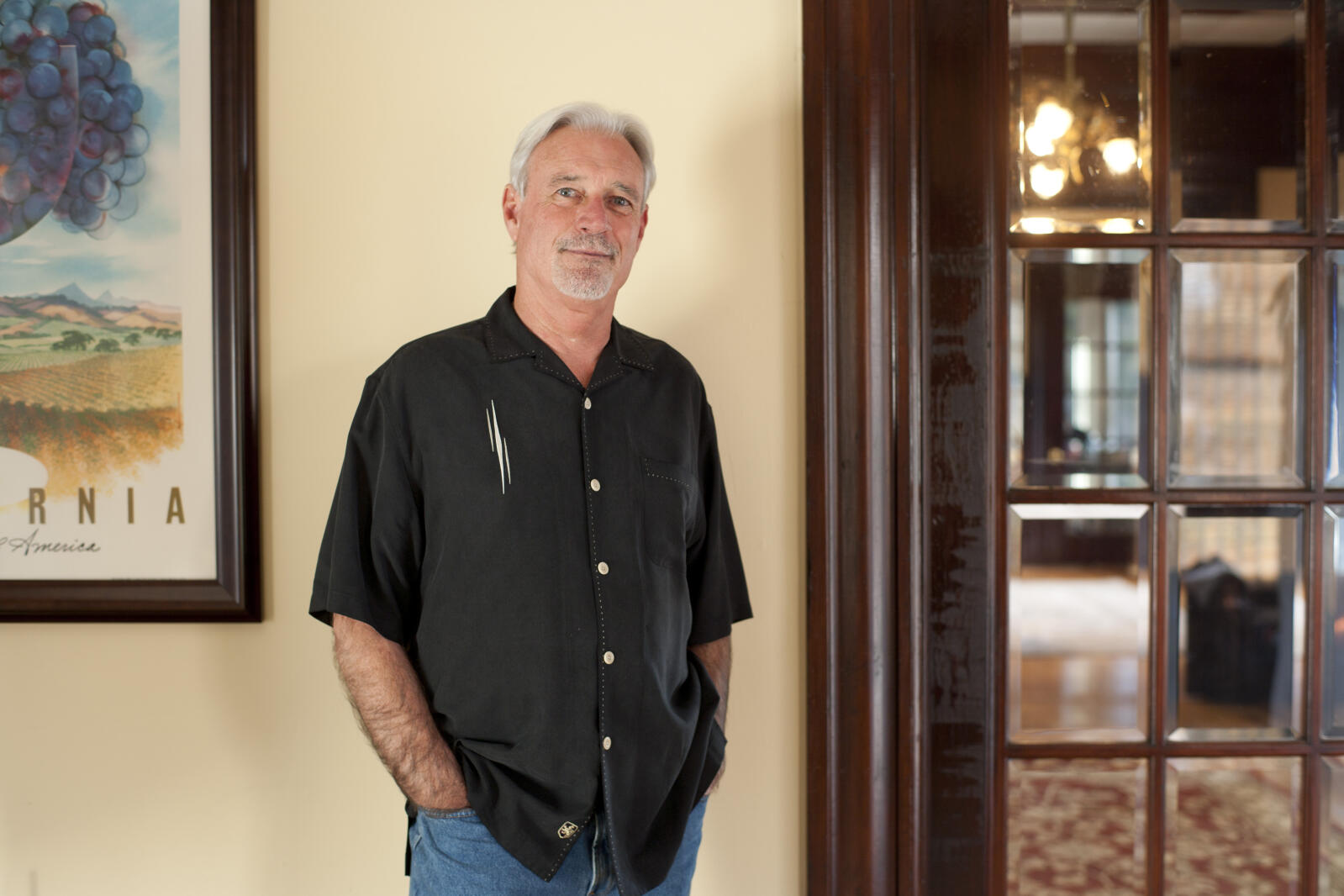
James Laube was known for his ‘unparalleled palate,’ exacting wine standards and frank honesty.
Not everyone agreed with James Laube’s oft polarizing opinions, but nearly all agree the longtime wine critic at Wine Spectator was a standup guy.
Laube, who dedicated 40 years to the wine magazine, including as its Napa bureau chief, died last week from a short illness, according to Wine Spectator. He was 73.
After joining Wine Spectator in 1983, Laube went on to become one of the most prominent wine critics of his time. He authored four books: “California’s Great Cabernets,” “California’s Great Chardonnays” and two editions of “Wine Spectator’s California Wine.”
Marvin R. Shanken, editor and publisher of Wine Spectator since 1979, hired Laube when the young reporter was just 29-years-old.
But even then, Laube was “years ahead of others” when it came to his understanding of California wine.
“California wine would not be what it is without James Laube,” said Shanken, who worked with the writer for more than 30 years. “His impact on Cabernet was particularly incredible.”
Tim McDonald, a wine PR and communications veteran, remembers Laube as “a true giant in wine writing.”
“No one writing about wines in the U.S. made a bigger impact on the popularity of California wine than James,” he said. “Through great storytelling, he forever changed the way Americans perceive wine. He was truly the original influencer.”
Pilgrimages to Sonoma County
Raised in Anaheim, Laube majored in history at San Diego State University, where he spent his free time surfing both the Pacific ― and the shelves of a small wine shop in Cardiff-by-the-Sea.
“I had no idea that I was sipping my way through the modern renaissance of California wine and laying the groundwork for a life of writing about and drinking California wine,” he wrote in Cigar Aficionado in 1993.
After a friend moved north to Sonoma County, Laube made numerous pilgrimages to the North Bay, where the pair “chugged around the narrow back roads of Sonoma and Napa in his (friend’s) weathered VW Bug.”
That’s when he began to gain a deeper appreciation of California Cabernet, with each taste “providing a footnote in (his) wine education.”
“Some of our favorites at the time were Louis M. Martini’s,” he wrote. “Always fairly priced … the wines were complex and easy to drink … Paying $5 for a 1968 Martini Cabernet was a drag on a student’s budget, but we realized this was a special wine.”
After moving to Napa Valley in 1978, Laube worked as the Napa County bureau chief for the Vallejo-Times Herald, where he first whet his palate for wine writing. Among his first big wine stories was coverage of the 1981 Napa Valley Wine Auction, where the first case of Opus One (then called Napamedoc) sold for $24,000.
An honest wine critic, consumer advocate
At Wine Spectator, Laube was tasked with critiquing California wines. Over the decades that followed, he earned a reputation for his “unparalleled palate,” exacting wine standards and frank honesty — which some found divisive.
But McDonald, who knew Laube for about 40 years, believes the wine writer’s candor was a sign of his “news reporter integrity.”
“Jim always defended his obligation to being an honest wine critic and consumer advocate,” he said.
In the early 2000s, Laube detected high levels of 2,4,6-trichloroanisole (TCA) among numerous local wines, including two Cabernet Sauvignons from Napa Valley’s prominent Château Montelena. A chemical compound that can cause musty, wet-cardboard aromas and flavors, it was a scarlet letter on the winery’s stellar reputation — one that caused great controversy.
In a 2004 letter to the San Francisco Chronicle, Wine Enthusiast editor Steve Heimoff charged Laube with being “a ‘super-super-taster;’ that one-in-a-million with taste buds exquisitely more powerful than any technology known.”
Heimoff argued that the levels of TCA were so low, they were undetectable to him and other professional wine tasters.
“If Laube is the only person who can taste, and be troubled by, TCA in such infinitesimal quantities, why should anyone care?” Heimoff wrote. “He … should be extra careful before going public with these sorts of charges.”
But Laube’s forthrightness and character is precisely why others respected him. While he retired from Wine Spectator in 2019, he’s remembered for his contributions to California’s wine industry.
“Jim’s honesty, integrity and unwavering mentorship shaped many of us, and his impact on the wine industry was immeasurable,” said Tony Lombardi, founder of Lombardi Wines, who knew Laube for 25 years. “He had a rare gift for inspiring wine lovers to embark on their own journeys of discovery. Another wine legend gone too soon.”
Jeff Gaffner, a longtime winemaker and owner of Saxon Brown Wines in Sonoma, was friends with Laube for nearly 20 years. While they met through the wine industry, they often avoided the subject of wine altogether.
“I was a winemaker and he was a wine critic, so I didn’t want to put him in an awkward position,” said Gaffner. “Instead, we’d go golfing, talk about life, grab a couple of beers — and argue whether Corona or Pacifica was the better beer.”
Gaffner believes Laube didn’t take himself nearly as seriously as others did and “often came across harder than he actually was.”
“Jim didn’t love the spotlight, so I think he was actually really shy,” said Gaffner. “He was such a sweet guy. I’ll really miss him.”
Laube is survived by his brothers, Tom and Bob; his former wife, Cheryl; his son, Dwight Laube; daughter, Margaux Revis; and two granddaughters.
A private memorial service is set for May.
You can reach Staff Writer Sarah Doyle at 707-521-5478 or sarah.doyle@pressdemocrat.com. Follow Sarah on Instagram at @whiskymuse.