
April 27, 2023
4 min read

Add topic to email alerts
Receive an email when new articles are posted on
Please provide your email address to receive an email when new articles are posted on .
“
data-action=”subscribe”>
Subscribe
We were unable to process your request. Please try again later. If you continue to have this issue please contact customerservice@slackinc.com.
Back to Healio
Key takeaways:
Ketogenic and paleo eating plans may not be best for heart health.
Clinicians should suggest that patients avoid added sugars and refined grains and increase intake of whole grains, fruits and vegetables.
The Dietary Approaches to Stop Hypertension eating plan, Mediterranean and vegetarian-based diets best meet 2021 American Heart Association dietary guidelines for CV health, whereas other popular plans fall short, researchers reported.
In a new AHA scientific statement, a committee reviewed the defining features of several dietary patterns across 10 categories that are intended to be followed long term, rating how well the plans improve cardiometabolic health. The Dietary Approaches to Stop Hypertension (DASH)-style eating pattern received a perfect score by meeting all AHA dietary guidance.
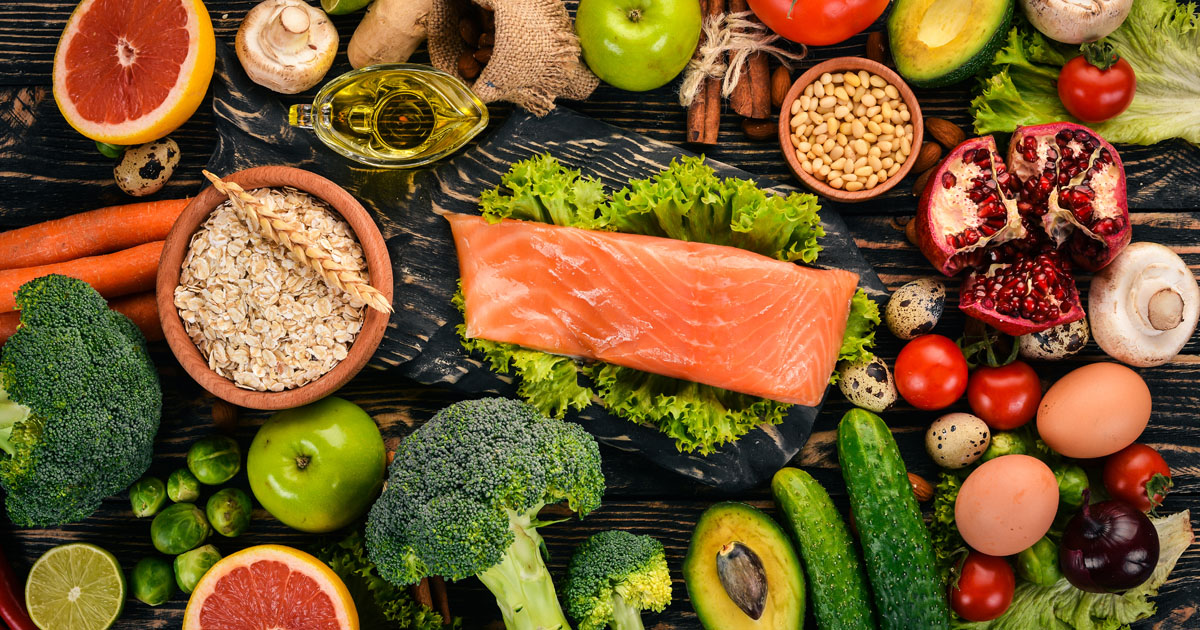
Ketogenic and paleo eating plans may not be best for heart health.
Image: Adobe Stock
“There has been a shift during the last 20 years from nutrients in foods to eating patterns,” Christopher D. Gardner, PhD, FAHA, the Rehnborg Farquhar Professor of Medicine at Stanford University and chair of the writing committee for the scientific statement, told Healio. “That is good, because nutrients were too isolated, with certain foods promoted as so-called ‘super’ foods. It is the overall pattern of what you are eating that matters. However, there are more than 40 diet patterns, and clinicians who do not receive adequate nutrition education may have a hard time differentiating the specifics of the patterns. What are the key differences? We wanted to match the patterns to the specific guidance domains of the AHA. We show which diets are or are not aligned with the 10 domains that the AHA has already demonstrated.”
Ranking popular eating plans
The statement provides analysis for 10 main categories of eating plans:
DASH-style diet, emphasizing vegetables, fruits, whole grains, legumes, nuts and seeds and low-fat dairy, and includes lean meats and poultry, fish and non-tropical oils;
Mediterranean-style, limiting dairy consumption and emphasizing fruits, vegetables, whole grains, legumes, nuts and seeds, plus fatty fish and extra-virgin olive oil;
vegetarian-style pescatarian, a plant-based eating plan that includes fish;
vegetarian-style ovo- or lacto-vegetarian, or plant-based plans that include eggs, dairy or both;
vegetarian-style vegan, a plant-based plan that includes no animal products;
low fat, limiting fat intake to less than 30% of total calories;
very low fat, limiting fat intake to less than 10% of total calories;
low carbohydrate, limiting carbohydrates to 30% or 40% of total calorie intake;
paleo, excluding whole and refined grains, legumes, oils and dairy; and
ketogenic, limiting carbohydrates to less than 10% of daily calories.
Researchers evaluated each eating plan against nine of the 10 features of the AHA guidance for a heart-healthy eating pattern, assigning points based on how well each feature aligned with the guidance: 1 point for fully meeting guidance, 0.75 points for mostly meeting guidance and 0.5 points for partially meeting guidance. Researchers totaled and adjusted scores to arrive at a rating between 0 and 100, with 100 indicating closest adherence to the dietary guidance.
The DASH plan had a score of 100, whereas the pescatarian, Mediterranean and ovo-lacto-pescatarian eating plans had scores of 92, 89 and 86, respectively. The two worst-scoring plans were the paleo and keto eating plans, with scores of 53 and 31, respectively.
The researchers noted that the two plans’ restrictions on whole fruit (ketogenic), legumes and whole grains and inclusion of more animal-sourced foods make it challenging for the two patterns to align with AHA guidance and may lead to nutritional deficiencies and loss of beneficial phytochemicals found in plant-based foods consistently associated with reduced morbidity and mortality.
“What was much more interesting was learning which eating plans were not in alignment, why, and how far out of alignment they were,” Gardner said.
Researchers developed the statement to serve as a guide for clinicians and consumers to evaluate whether popular dietary patterns promote cardiometabolic health. The statement also suggests factors to consider when adopting any eating pattern to improve alignment with the 2021 AHA dietary guidance, Gardner said.
The statement does not include plans that involve time-restricted eating or intermittent fasting, Gardner said, because such plans focus solely on timing around meals and not specific types of foods.
“There is not just one way to eat, which is reassuring,” Gardner said in an interview. “There is quite a bit of flexibility. If a person were to choose the DASH plan, or a Mediterranean eating plan, or pescatarian, all of those can be adjusted to be, for example, Mediterranean Latin American, or African, or Korean. You can add specific food groups from various cultures for flexibility and still have a heart-healthy diet. The challenge is how much specific guidance and how much flexibility someone wants. We hope that with these patterns and descriptions, the statement walks that tight line of highlighting which groups of foods are best but is flexible enough to allow people to enjoy their own culturally appropriate diet, while recognizing the health equity issues that are also at play.”
Important common patterns
Gardner said there are common takeaways for clinicians that are evident in all of the included eating plans that should be stressed to patients when discussing the benefits of a healthy diet and lifestyle.
“Even though we ranked the keto and paleo eating plans low, and Mediterranean and DASH eating plans high, all of the eating plans suggest people avoid added sugars and refined grains,” Gardner said. “All the eating plans suggest people eat more vegetables and whole foods. All four of those areas are challenges for the American public. Finding the thing that everyone agrees on but Americans are not doing is powerful. Let’s focus less on controversy and more on consensus.”
Gardner said clinicians should take time to ask patients about diet during a clinic visit, as well as assess a person’s access to healthy foods and their ability to prepare them.
“You can say, ‘I want you to go home and cook more vegetables,’ and then you find out that they don’t own a stove; they may only have a hot plate at home, work three jobs and worry they do not have time,” Gardner said. “Something like steel cut oats placed in boiling water overnight on a hot plate can provide a healthy breakfast for the morning. We hope we can make this simpler and shift from food security to nutrition security. We need to ask the right questions.”
For more information:
Christopher D. Gardner, PhD, FAHA, can be reached at cgardner@stanford.edu.
Perspective
Back to Top

My takeaway is that we need to have more nutritional support. The fact that there are so many diets just proves that people are confused about what to eat, they are searching for the right plan, which can often lead to overly restrictive eating habits. If we can instill better nutrition early on, even in schools and at pediatric visits, we would dispel so much confusion. The issue is confusion, lack of education and allowing food companies to take over our food supply.
I agree with some of the scientific statement’s conclusions. The authors assessed each diet to determine to what percentage it met heart-healthy criteria. You can’t disagree with the findings from a scientific standpoint. What I can disagree with from a patient care standpoint is that we need to provide education. If the ketogenic diet was rated poorly relative to meeting the dietary guidelines, we as nutrition professionals can still help someone create success out of that style of diet, and then educate them and transition them into a diet that better meets the criteria of the guidelines. It comes down to a patient being open-minded and having a professional help guide them on what plan is best for their specific body, health and weight.
I encourage more of a Mediterranean-style diet, because it is less restrictive. You can be vegetarian, be pescetarian, eat meat or abstain from dairy on it if you want to. I use that as a baseline in my counseling, and then omit things patients may not want to have or may not be good for their bodies. Then I help them to find ways to incorporate some of the healthy foods they are not eating a lot of, in whatever setting they feel is most appropriate for their lifestyle. Another advantage of a Mediterranean-style diet is that fat can be arranged to be anywhere from 25% to 35% of calories. I think the DASH diet is great, too. The issue with higher-carbohydrate diets is that the majority of American patients are inactive and do not need many carbohydrates.
However, I think we are missing the mark by looking for what is the best diet without understanding that the reason U.S. society is in such a bad health situation is that we depend on ultra-processed foods that are high in unhealthy fats, sodium, sugar and artificial ingredients. We are not addressing the main problem. We are encouraging good foundational guidelines, but we need more instruction, resources and support for all Americans regardless of their race, ethnicity or socioeconomic status. We need to provide better food that is affordable to them. We have a lot of junk foods that are affordable to those populations who are underserved when it comes to nutrition education. The main issue is that the foundation of the standard American diet is junk.
Cardiologists should be involved by referring every single patient they see to a nutritionist. Every single one. There is very rarely a patient that does not need a little bit of education or counseling. A nutrition professional, especially a cardiac-specific dietician, is very versed in all the data and all the diets. Cardiologists are outstanding at what they do, but they are busy and often do not have enough time to provide nutrition information. They also do not have extensive training that dieticians have. Dietitians are underutilized. Every single cardiac clinic should have a dietitian to provide group classes and individual consults to patients and education for the cardiologists to help patients whose insurance does not cover access to a nutritionist.
Julia Zumpano, RD, LD
Dietitian in Preventive Cardiology and Rehabilitation
Cleveland Clinic
Disclosures: Zumpano reports no relevant financial disclosures.
Published by:
Sources/Disclosures
Collapse
Disclosures:
Gardner reports no relevant financial disclosures. Please see the scientific statement for all other authors’ relevant financial disclosures.
Add topic to email alerts
Receive an email when new articles are posted on
Please provide your email address to receive an email when new articles are posted on .
“
data-action=”subscribe”>
Subscribe
We were unable to process your request. Please try again later. If you continue to have this issue please contact customerservice@slackinc.com.
Back to Healio