
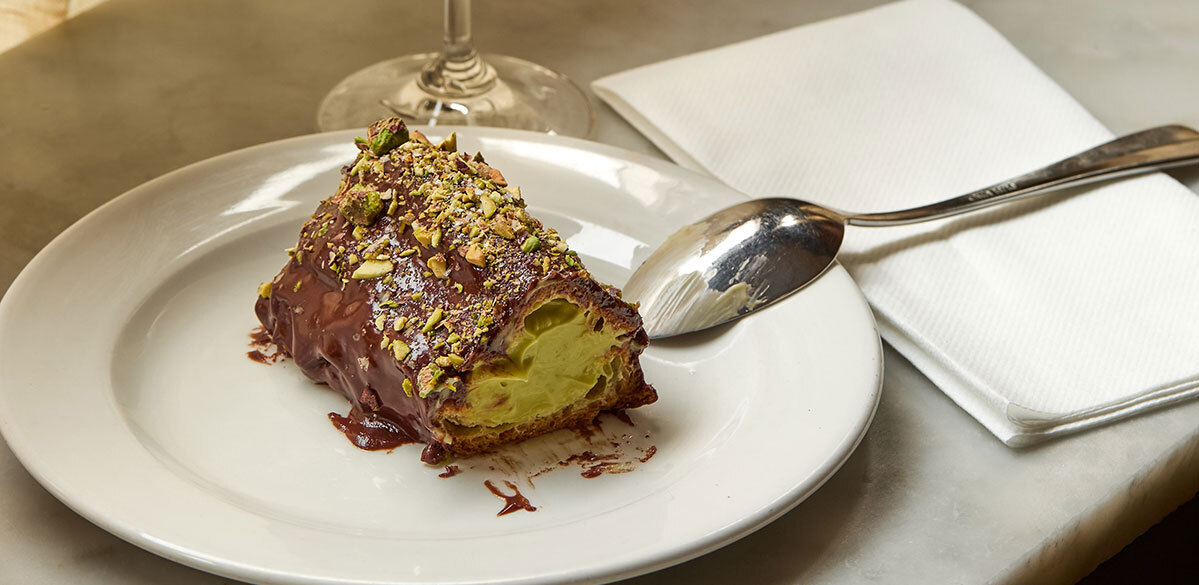
Elliot Hashtroudi’s French bistro offers up pâté en croûte, whole animal butchery and Pierre Koffmann’s favourite tripe dish in tribute to la cuisine française
bookmark_borderSave to Library
There’s no denying that the capital’s French bistros are having something of a moment, but in a market that includes restaurants by industry greats such as Henry Harris and Claude Bosi, Elliot Hashtroudi is creating menus that bring something different to the table at Camille in Borough Market.
He says: “So many great French restaurants in London are focusing on [the food of] Lyon and doing it amazingly. I don’t want to step on any toes and I’d rather focus on Normandy, Provence, Bordeaux or Marseille – those areas of France that are maybe less well-known. I think we forget how big France is and the diversity there is across the country.”
“The inspiration always starts there with the farmer”
Hashtroudi was invited to head the restaurant by owners Clare Lattin and Tom Hill, who were impressed by the St John alumni’s regional French cuisine as well as his insistence on using only whole carcasses and produce from regenerative British farms. He says: “We work so closely with our farmers and our growers. They tell us every day what they’re growing and harvesting and what’s starting to breed or going for slaughter, so that allows me to get excited about a product or a dish or a technique. The inspiration always starts there with the farmer. We then say to ourselves, how do we use every element, waste nothing and make a tasty dish that’s steeped in French history and draws on the regionality of French cookery?”
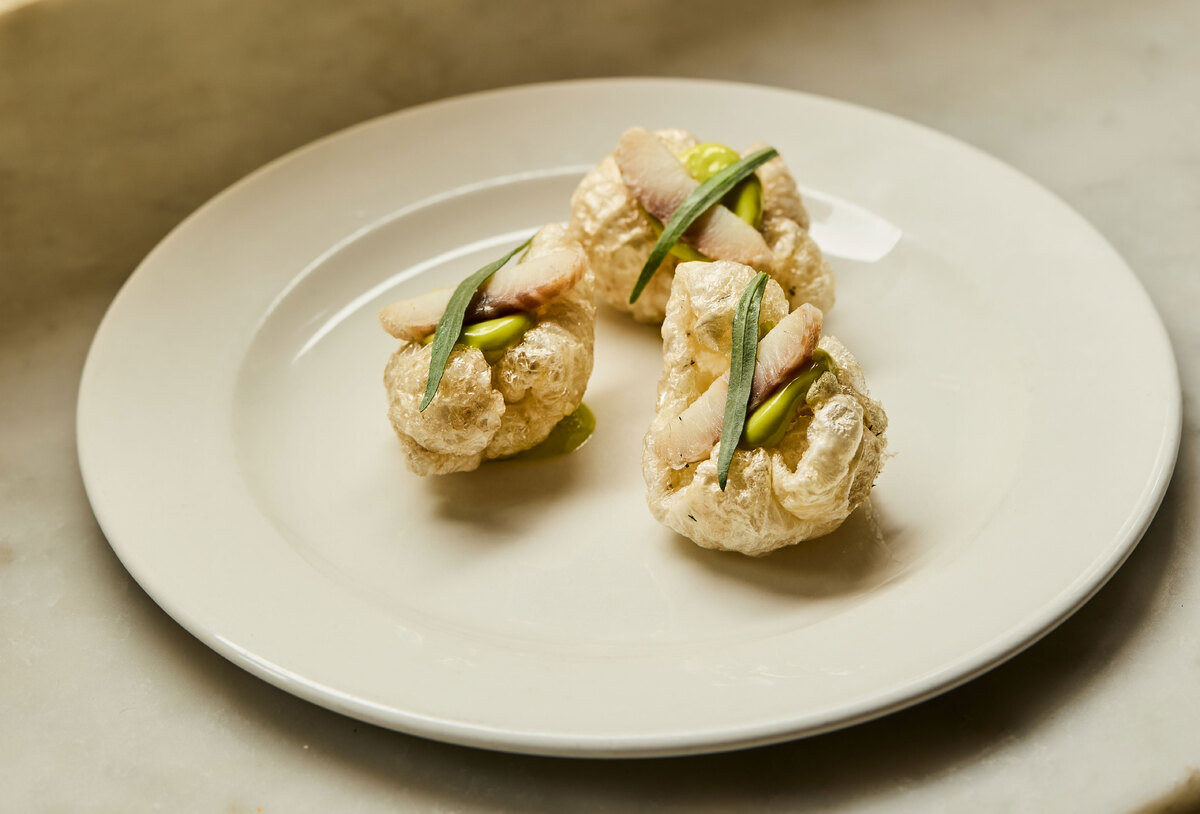
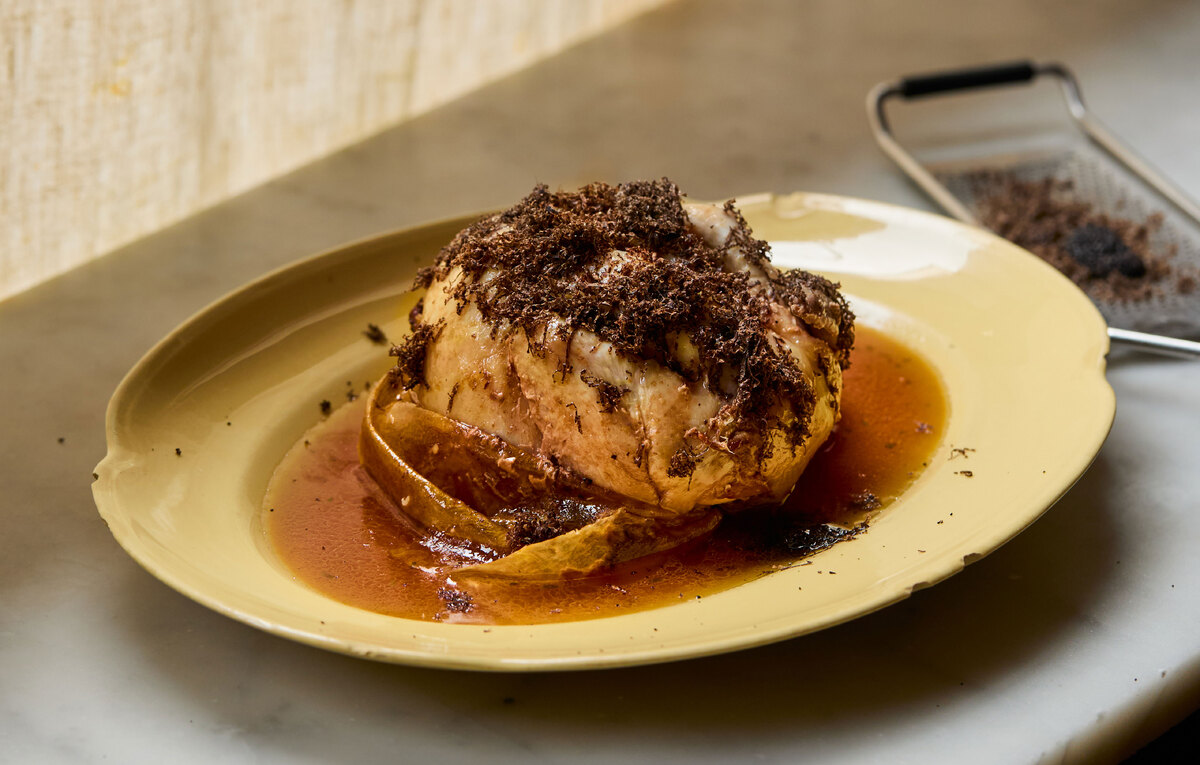
Hashtroudi’s own love of French cuisine was ignited during childhood holidays with family spent outside of Montpellier, and he recalls his wonder at the abundance and beauty of the local town’s marketplace. He has since travelled widely and been inspired by regional dishes such as the offal cookery of Normandy or the bouillabaisses of Marseille. The chef studies classic recipes before reinterpreting them with sustainable British produce and contemporary twists.
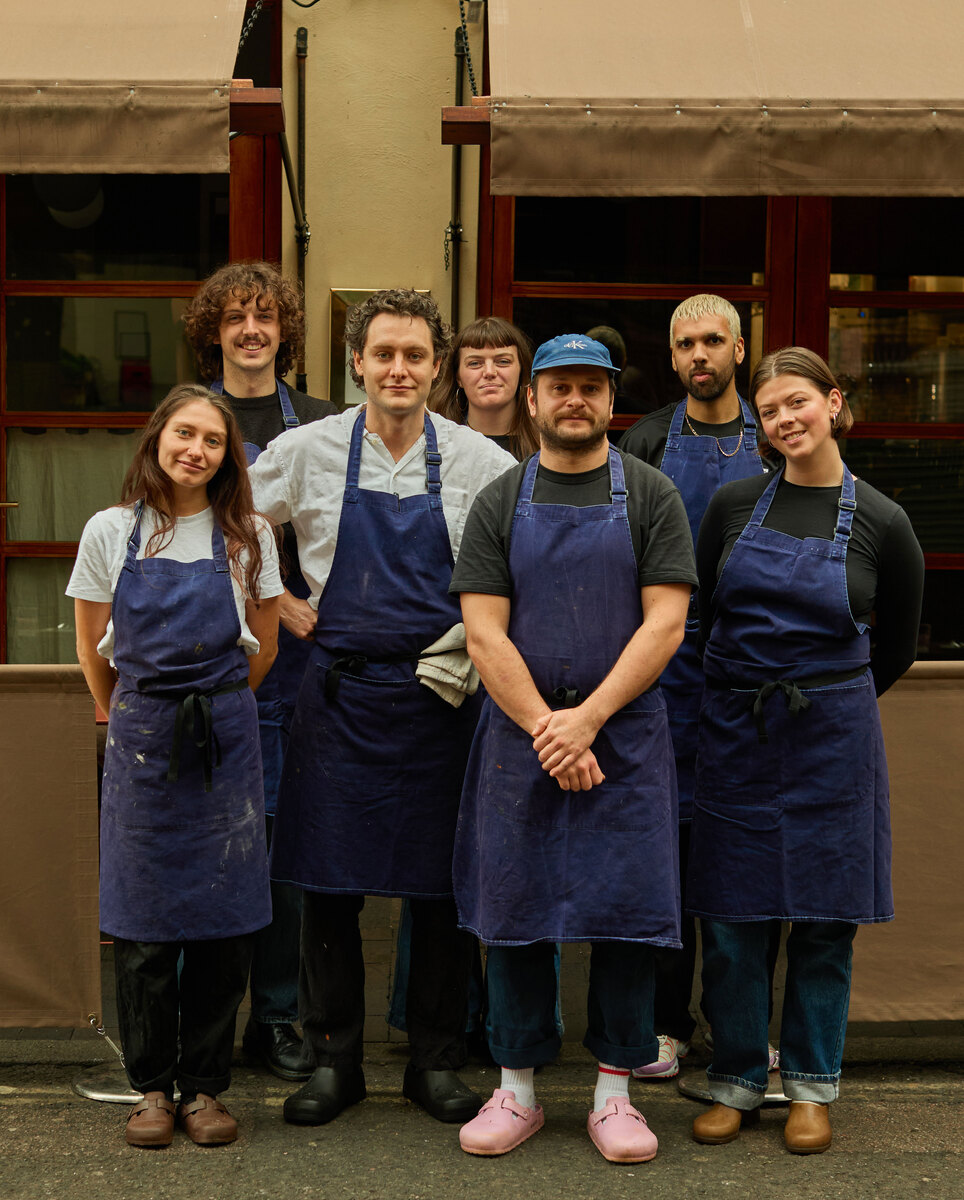
Elliot Hashtroudi (centre, front) and team>/small>
Hashtroudi is particularly proud of the restaurant’s pâté en croûte (£13), which currently incorporates smoked eel, in what the chef calls “a marriage of land and sea”. First, the team renders pig fat into lard and use it to make a hot water crust pastry. Pork belly and shoulder are then minced down and seasoned with herbs, aromats and spices. The mince is layered with smoked eel and studded with dried fruit. Then the team make a jelly from pig bones and fruit, before encasing the dish in the pastry and getting creative with decoration. The dish is served with a spent grain mustard.
Hashtroudi says: “A pâté en croûte is a good litmus test of a classic French restaurant – a good indicator that you’re in a proper bistro. It’s become a bit of a thing in the kitchen, where people like to be a bit competitive about how they’re building it, whether there’s a little floral element they’ve put in the dough or what their crimping style is. I love that.”
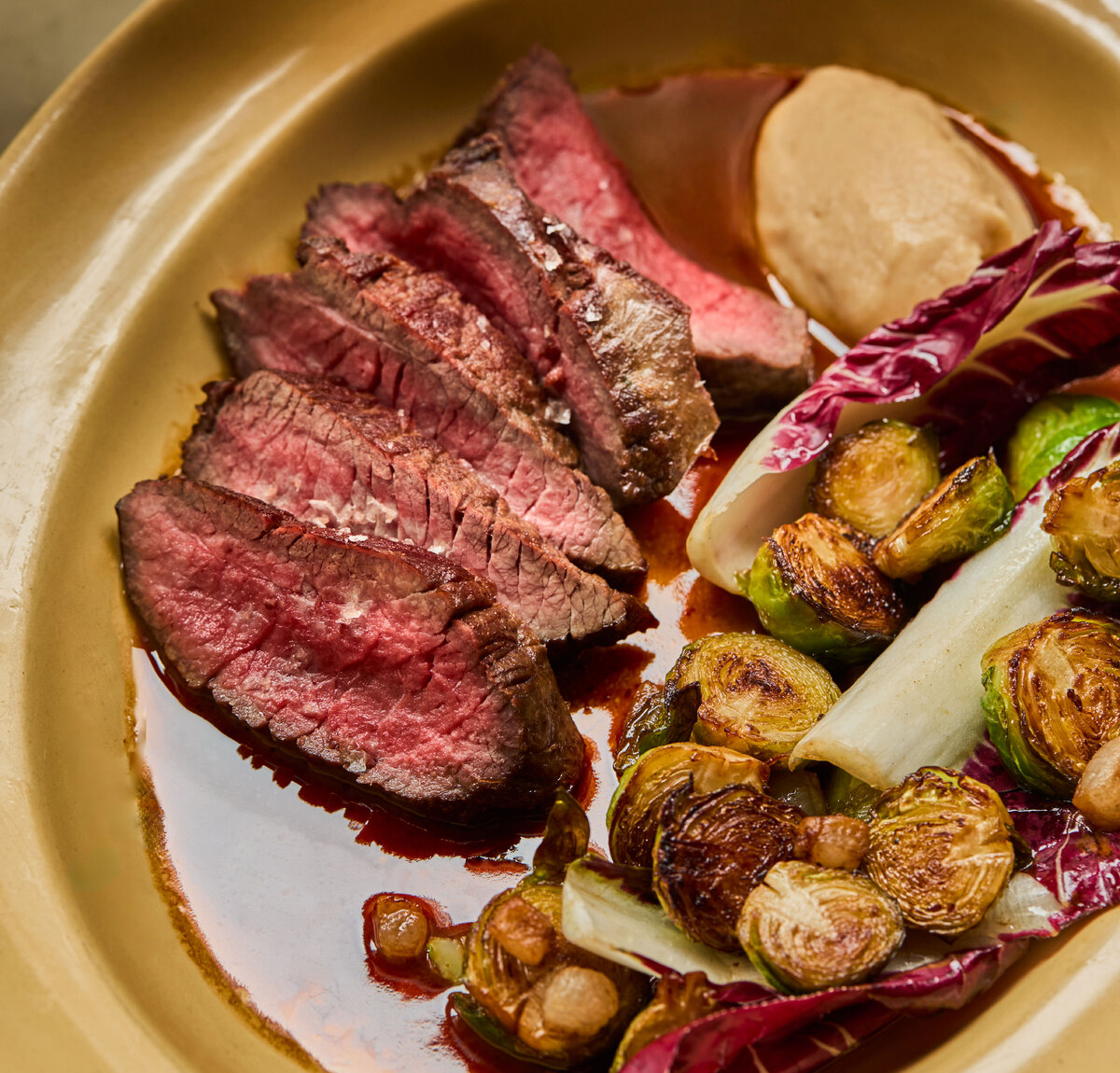
Another example of a classic dish adapted to British produce is monkfish grenobloise tournedos Rossini (£22). The dish takes inspiration from Paul Bocuse’s tournedos Rossini, where a beef fillet is topped with foie gras and served on a crouton. Hashtroudi has reimagined the dish to fit with his ethos and values, using seasonal Cornish monkfish topped with monkfish liver and served with a sauce of brown butter, capers and foraged purslane.
He says: “It’s a celebration of British fish. You forget how meaty monkfish is; it has that lobster-like texture. I just think why use fillet steak when we can get the whole fish in and really showcase British seafood.”
The chef’s use of offal earned him the ultimate praise when Pierre Koffmann rebooked a table after praising his tripe dish, Hashtroudi’s take on the Normandy dish of tripes à la mode de caen, saying he hadn’t had better since he was a child. Hashtroudi described the great chef’s words as “the nicest compliment you can receive”.
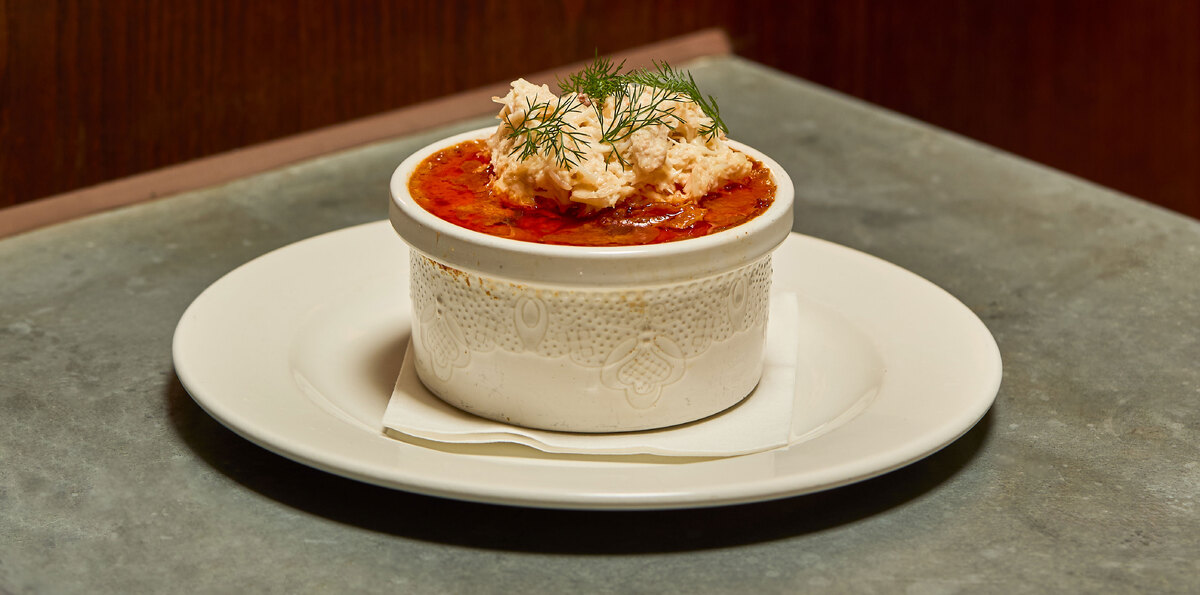
To make the dish, Hashtroudi says: “We take our piece of tripe, which has these wonderful honeycomb pockets to hold the sauce, and we braise that for hours, until it’s really soft. We then make a really rich trotter stock with smoked bacon, fennel, garlic and butter, and then reduce it with a lot of Port to make a rich, red braise that’s sticky and very unctuous. It really opens people’s eyes to tripe.”
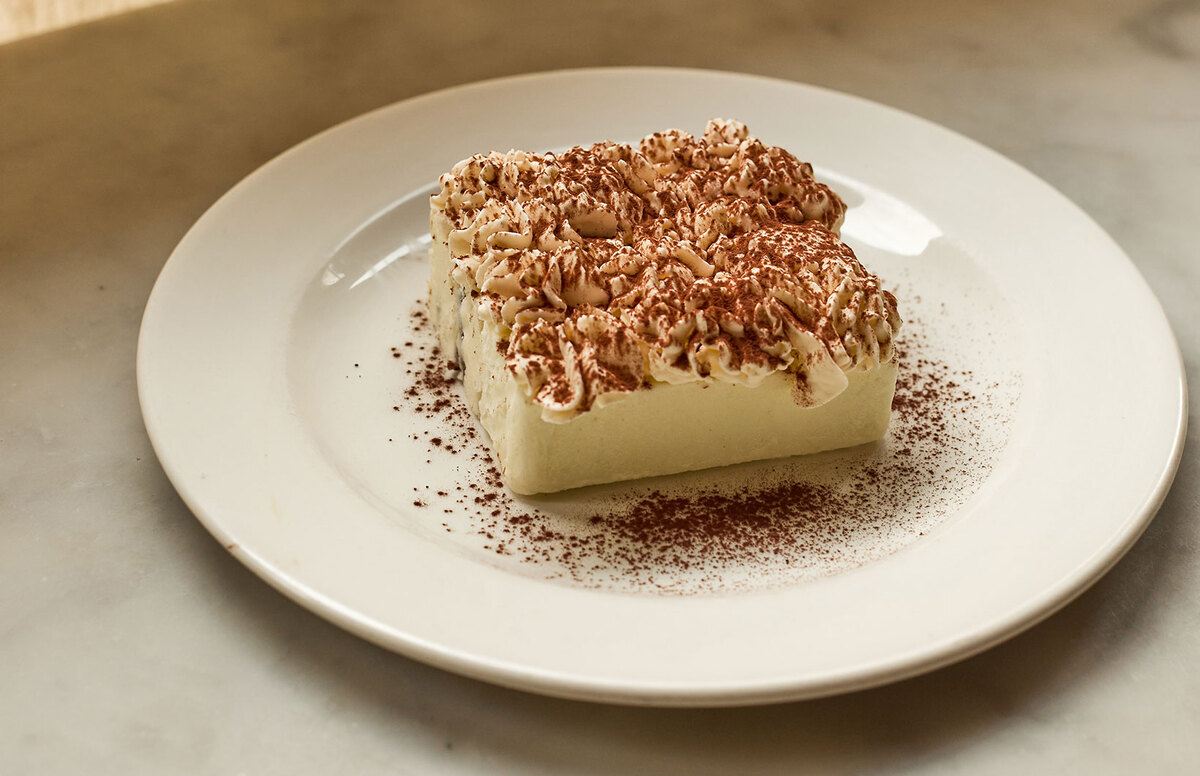
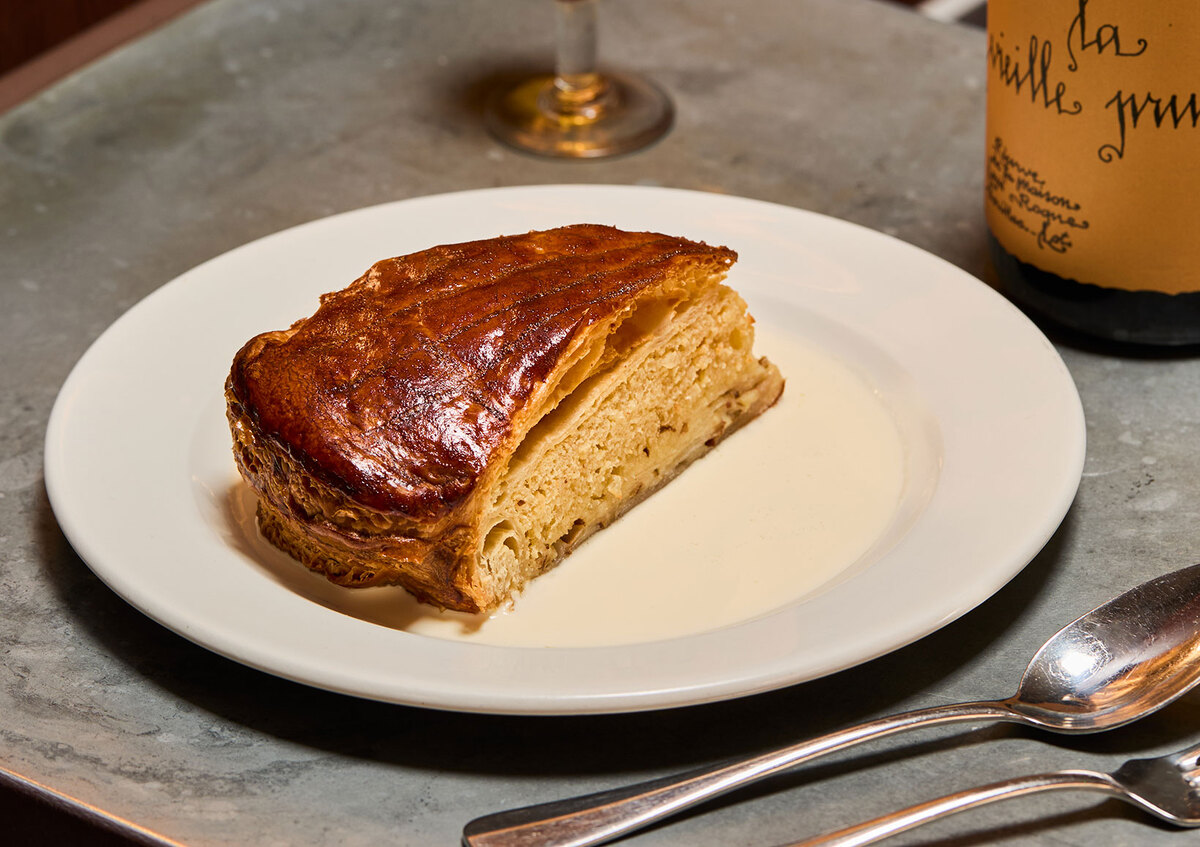
One of the restaurant’s signature desserts is the milk tart (£10), which was developed by the team as a take on a crème caramel and a crème brûlée. Milk and muscovado sugar are burned until they have a deep flavour and caramel colour before being set in a rye pastry case, which adds a biscuity flavour. The dish is brûléed before service. The tart was an immediate hit and appeared “on every ticket” for the first six months of the restaurant’s opening, and when Hashtroudi took it off the menus it was swiftly brought back as a special – a decision indicative of his desire to keep producing exciting menus that challenge both himself and the team.
He adds: “It’s nice to make a menu that people are talking about. There are so many menus in the UK and in London that are really similar and we wanted to do something that would set us apart. Fortunately, it’s been really celebrated.”
From the menu
Ox liver, bacon and nettles £13
White asparagus, beurre blanc and noir £17
Quail, buttermilk and celery leaf £18
Dorset crab choux bun £20
Whole gurnard and pig skin bouillabaisse £33
Confit duck leg and trotter cassoulette £36
Guinea fowl crown, crab bisque and preserved lemon £47
Canelé and beef fat caramel £5
Chocolate crèmeux and brandy apricots £11
Camille 2-3 Stoney Street, Borough Market, London SE1 9AA
www.camillerestaurant.co.uk
Photography: Harriet Langford