FINALLY success in making a single high hydration loaf in a stand mixer
FINALLY success in making a single high hydration loaf in a stand mixer
by kneechalice
9 Comments
kneechalice
Over the past few years I’ve made a few attempts at making my weekly recipe (a single, 75-80% hydration, 300-400g loaf) in a kitchenaid stand mixer (6qt) with _mixed_ success – I always struggled with building up the strength to actually make the dough ball up and spin around the hook like you’d expect a properly kneaded dough to do. I had tried so many different things – a long autolyse vs. no autolyse at all; adding all the water at the start vs. kneading at a lower % and adding water after a rest, etc.; all to no avail. All my loaves would either end up flatter than I’d like, or require a lot more hands-on after it was out of the mixer, which to me defeats the purpose of using one.
When making larger batches I didn’t have the same issues as I think the extra content in the bowl helps with the dough hook actually make contact with the dough in a way it doesn’t with a smaller batch. In a similar vein, making a lower hydration dough even at a small weight was also much easier, as the stiffness also helped the dough contact the hook.
After being fed up with sub-par loaves I decided to try something else a few weeks ago. Now, in the manual, kitchenaid says **DO NOT go faster than speed 2**. For most doughs, I heed this warning – for example, making bagels even at speed 2 can sometimes cause the mixer to get pretty close to overheating cause of the strong flour and low hydration. However, at such a low dough weight, really only the tip of the dough hook is doing any work. My thought process here was – if it’s barely even touching the dough, how much strain is actually put on the motor at this low speed??
So, _please don’t tell kitchenaid warranty support on me_, but all I did differently was crank up the speed. I let the thing rip at speed 4 for 5 minutes, touching the back of the machine periodically to make sure it wasn’t overheating, and it wasn’t. After about 5 minutes it was pretty good but not quite there, so I let it rip another 5, and at this point it was really balled up and moving around like a dough ball should. At this point I knocked it back down to speed 2 to see how it traveled at the normal speed, and it did start to revert a bit and stick to the sides. So I let it go another 5 minutes at this lower speed and by the end of it, it finally looked perfect – all balled up and moving around without any sticking!! After this, I turned it out on the counter, gave it one final stretch, and let it sit in its proofing container till it was ready (I did give it one coil fold 2 hours into bulk to see if it needed extra strength and it really didn’t but you could always do a few more if you feel it needs it).
While I’d say the method isn’t totally perfected yet, if any of you have had this issue and are looking for a solution, imo this is it. However, **obviously this is a do-it-at-your-own-risk thing**, and if you try it out and bust your machine, don’t say I didn’t warn you!! For those of you looking for a recipe, my modified weekly recipe I used for this loaf is below – check some of my other posts for my weekly hand-mixed loaf recipe!!
im_always
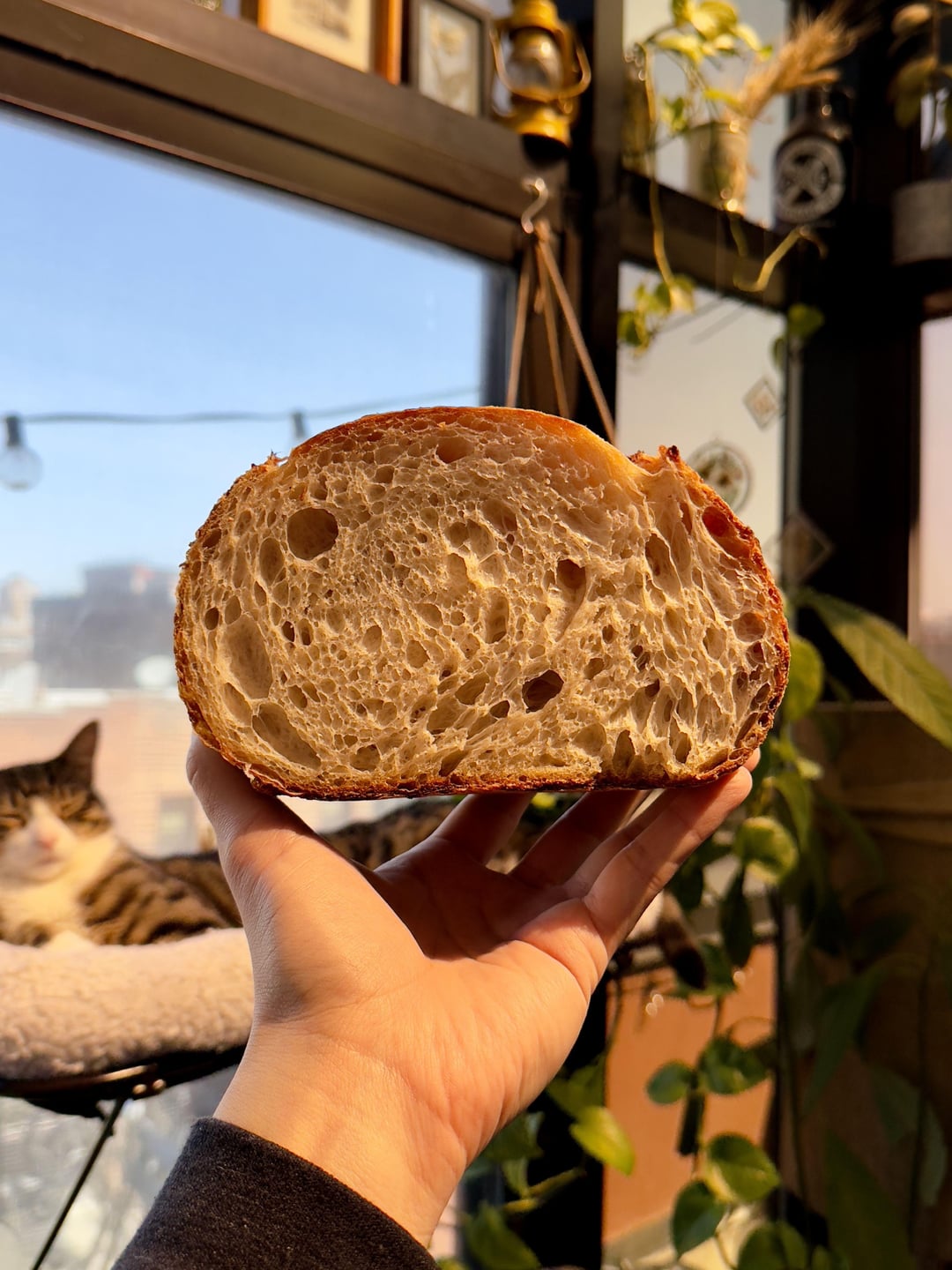
that crumb is beautiful. and the kitty too!
Diligent_Bass1910
Omg what a coincidence! I learned that YESTERDAY! When I was making brioche dough!!! I was using speed 2 and the dough was not coming together after more than 30 minutes. Cranked it up to speed 4 — boom!!!
valerieddr
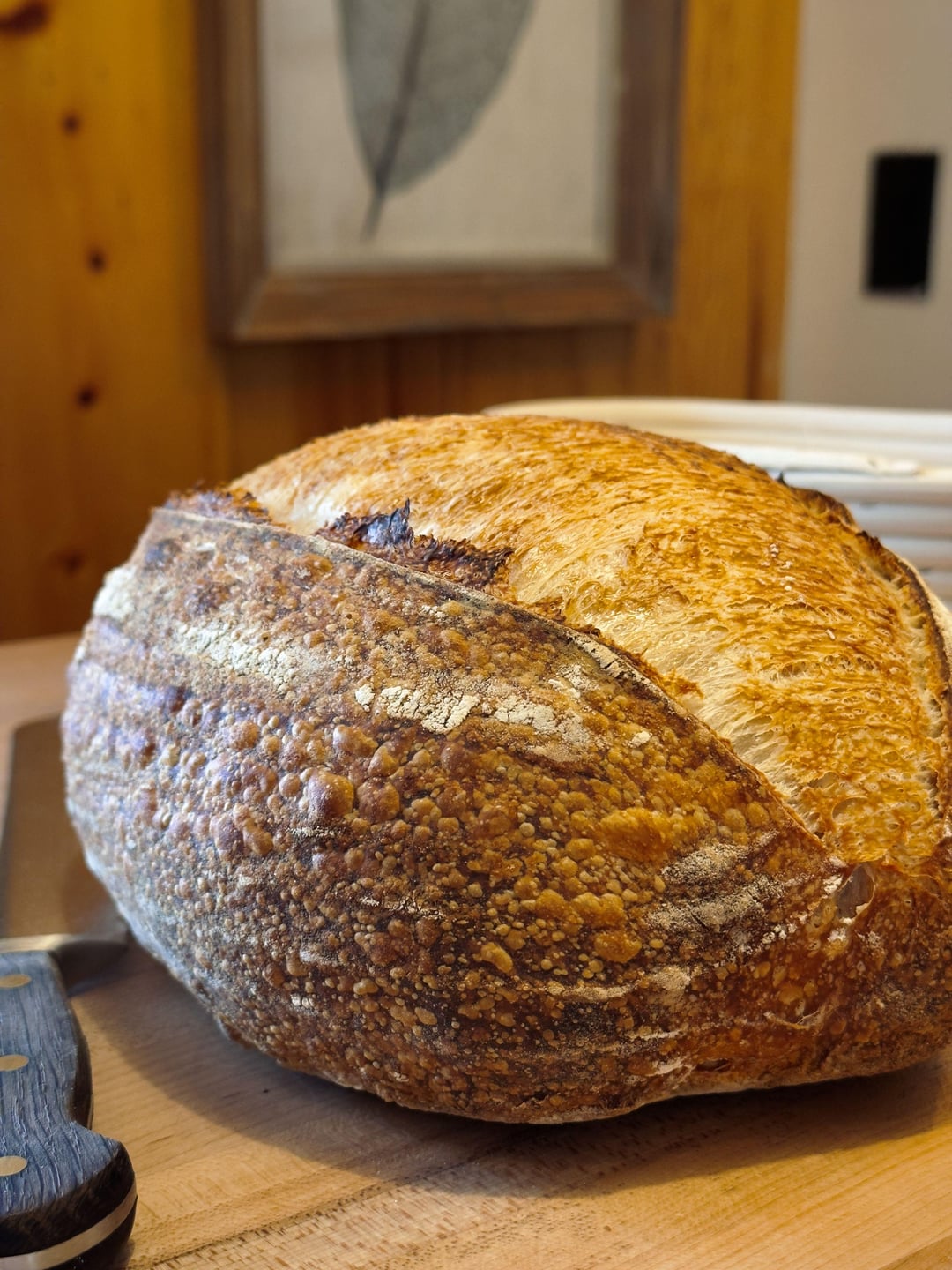
Beautiful loaf! Fully agree on the use of the KA . To be noted that if you have the same 6qt as I have . It has a bigger motor than most of KA mixer.
WhoSaidThat2Me
This post made me jump out of bed to shape my dough. Thanks for the reminder lol
edge61957
Oooooo, very sexy crumb shot :0
No-Pepper800
Cute loaf, and the bread looks good too 😼
SnoDragon
I have a 25+ year old kitchenaid that I always mix dough on 4. the old instructions said up to speed 4. I’ve only broken 1 dough hook over that time, and it was on a very dry dough. High hydration doughs, and these things can take up to 800g of flour and work just fine on speed 4.
I have very high protein bread flour sitting about 14.5% and let the mixer go for 15 to 20 minutes to get my high hydration doughs working well and holding strength now. No coils, no folds, great texture every time.
ALLCAPSAUNT
Was about to have a rage stroke from my current high hydration dough but I have hope now! Even if it doesn’t work as well as yours, thanks for giving me permission


9 Comments
Over the past few years I’ve made a few attempts at making my weekly recipe (a single, 75-80% hydration, 300-400g loaf) in a kitchenaid stand mixer (6qt) with _mixed_ success – I always struggled with building up the strength to actually make the dough ball up and spin around the hook like you’d expect a properly kneaded dough to do. I had tried so many different things – a long autolyse vs. no autolyse at all; adding all the water at the start vs. kneading at a lower % and adding water after a rest, etc.; all to no avail. All my loaves would either end up flatter than I’d like, or require a lot more hands-on after it was out of the mixer, which to me defeats the purpose of using one.
When making larger batches I didn’t have the same issues as I think the extra content in the bowl helps with the dough hook actually make contact with the dough in a way it doesn’t with a smaller batch. In a similar vein, making a lower hydration dough even at a small weight was also much easier, as the stiffness also helped the dough contact the hook.
After being fed up with sub-par loaves I decided to try something else a few weeks ago. Now, in the manual, kitchenaid says **DO NOT go faster than speed 2**. For most doughs, I heed this warning – for example, making bagels even at speed 2 can sometimes cause the mixer to get pretty close to overheating cause of the strong flour and low hydration. However, at such a low dough weight, really only the tip of the dough hook is doing any work. My thought process here was – if it’s barely even touching the dough, how much strain is actually put on the motor at this low speed??
So, _please don’t tell kitchenaid warranty support on me_, but all I did differently was crank up the speed. I let the thing rip at speed 4 for 5 minutes, touching the back of the machine periodically to make sure it wasn’t overheating, and it wasn’t. After about 5 minutes it was pretty good but not quite there, so I let it rip another 5, and at this point it was really balled up and moving around like a dough ball should. At this point I knocked it back down to speed 2 to see how it traveled at the normal speed, and it did start to revert a bit and stick to the sides. So I let it go another 5 minutes at this lower speed and by the end of it, it finally looked perfect – all balled up and moving around without any sticking!! After this, I turned it out on the counter, gave it one final stretch, and let it sit in its proofing container till it was ready (I did give it one coil fold 2 hours into bulk to see if it needed extra strength and it really didn’t but you could always do a few more if you feel it needs it).
While I’d say the method isn’t totally perfected yet, if any of you have had this issue and are looking for a solution, imo this is it. However, **obviously this is a do-it-at-your-own-risk thing**, and if you try it out and bust your machine, don’t say I didn’t warn you!! For those of you looking for a recipe, my modified weekly recipe I used for this loaf is below – check some of my other posts for my weekly hand-mixed loaf recipe!!
that crumb is beautiful. and the kitty too!
Omg what a coincidence! I learned that YESTERDAY! When I was making brioche dough!!! I was using speed 2 and the dough was not coming together after more than 30 minutes. Cranked it up to speed 4 — boom!!!
Beautiful loaf!
Fully agree on the use of the KA . To be noted that if you have the same 6qt as I have . It has a bigger motor than most of KA mixer.
This post made me jump out of bed to shape my dough. Thanks for the reminder lol
Oooooo, very sexy crumb shot :0
Cute loaf, and the bread looks good too 😼
I have a 25+ year old kitchenaid that I always mix dough on 4. the old instructions said up to speed 4. I’ve only broken 1 dough hook over that time, and it was on a very dry dough. High hydration doughs, and these things can take up to 800g of flour and work just fine on speed 4.
I have very high protein bread flour sitting about 14.5% and let the mixer go for 15 to 20 minutes to get my high hydration doughs working well and holding strength now. No coils, no folds, great texture every time.
Was about to have a rage stroke from my current high hydration dough but I have hope now! Even if it doesn’t work as well as yours, thanks for giving me permission