
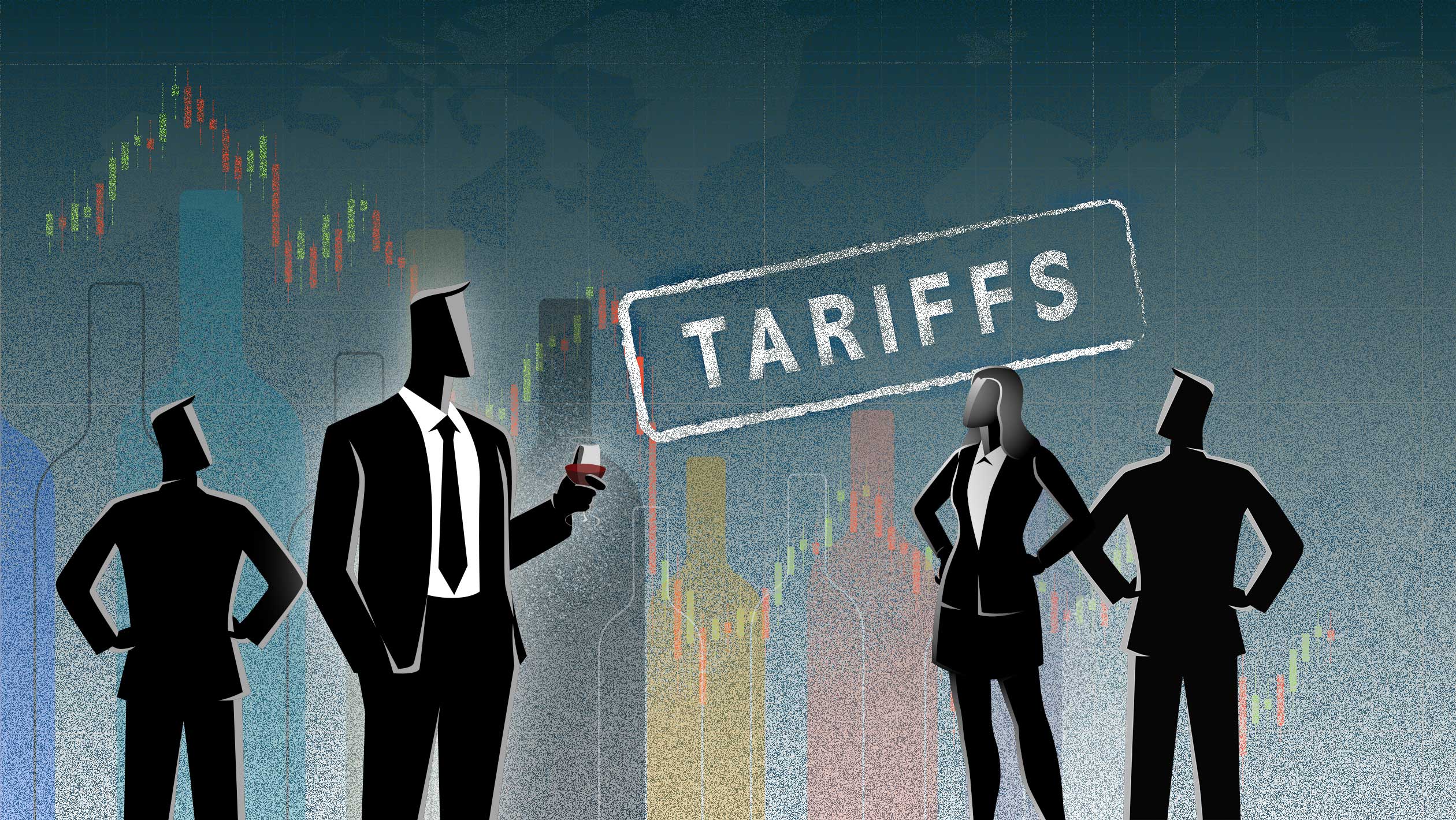
Sweeping tariffs on all imports. Threats of 200 percent tariffs on European wines and spirits. Sudden and unpredictable tariff enactment and postponement, often broadcast in social media posts. This is the reality of the trade war that is unfolding in the U.S., and no industry is immune—certainly not the beverage industry.
While President Donald Trump’s trade policy states that it will “protect American workers” and promises “better-paying American jobs,” U.S. businesses across all three tiers of the beverage industry are facing serious financial ramifications from these tariffs. Ultimately, importers are responsible for paying these fees as goods come into ports, putting them on the front line of these changing trade policies.
“The tariff landscape in 2025 has been a rollercoaster for importers,” says Michael Bilello, the executive vice president of strategic communications for the Wine and Spirits Wholesalers of America (WSWA). “There’s frustration over the stop-and-start nature of tariff announcements, which makes it nearly impossible to plan.” Data from WSWA’s SipSource, which is based on distributor depletion data, indicates that 2025 will be a down year, with wine and spirits stabilizing in negative territory.
Don’t miss the latest drinks industry news and insights. Sign up for our award-winning newsletters and get insider intel, resources, and trends delivered to your inbox every week.
Even though the heaviest tariffs on alcohol have been postponed—for now—all imported goods are currently subject to 10 percent levies. According to SipSource, imports comprise 38 percent of the U.S. wine market by volume, so American importers are now paying tariffs on nearly half of all wines sold. The moves they make to cope with these tariffs dictate whether costs are passed down the line to distributors, buyers, and consumers, and whether the wide pool of imported wines we currently have access to will shrink.
To find out how American importers are working to adapt their business strategies and cope with the uncertain climate they currently operate in, SevenFifty Daily spoke with five wine and spirits wholesalers about how they have been impacted thus far, and how they are planning to move forward.
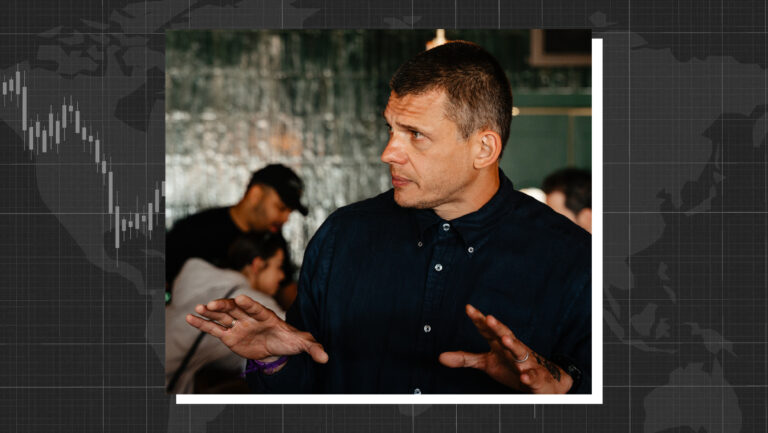 Nicolas Palazzi, the owner of PM Spirits. Photo by Doug Price.
Nicolas Palazzi, owner, PM Spirits
“This is a giant black box at this point, so we paused shipments and they’re still paused.”
What began as a purveyor of rare Cognac, grew into PM Spirits, a boutique importer known for its portfolio of small-batch, artisanal bottles. At the time of writing, owner Nicolas Palazzi had paused all shipments until there’s more clarity around tariffs. “One can’t risk shipping a bunch of stuff, not really knowing if it’s going to get taxed and how much,” he says. “So, we’re still waiting.”
The impact of this could be “tremendous,” he says. More broadly, his concern is that inflation combined with tariffs, and now the weakening dollar—which is “hurting prices as much as the tariffs,” he says—could cause cash-strapped consumers to spend less or trade down, which is particularly hurtful to a company that focuses on spirits that, by the nature of their production, are expensive.
With an emphasis on quality over quantity, these producers are often family run and small scale, without the means to absorb the extra costs brought on by a trade war. “They’re going to be hit harder than larger businesses and big brands,” he says. “When you don’t have extra budget—allocated for marketing or anything—you can’t take money from that pot to offset costs. That money just doesn’t exist.” Palazzi also called off a trip to Europe to meet with potential new suppliers, because “it doesn’t seem like the right timing to invest time and money traveling when so much is at stake,” he says.
Some worried producers in his portfolio were keen to rush product to the U.S., which Palazzi advised against. “We don’t want to be stuck with a bunch of products that we can’t sell,” he says. “If we speed things up now, we might not beat the tariffs, and shelling out that cash upfront would be a blow to the business.” Furthermore, purchase patterns might change based on rising prices. Palazzi saw a lot of importers make that mistake during Trump’s first trade war, and they “paid the price” for it. “Demand wasn’t really there and we carried the wheel of inventory for a long time.”
After the 2023 banking crisis, institutions were less likely to lend to small businesses and cash flow became a struggle, which plays into choices being made today. “In an economy where lending is expensive and difficult, it puts an extra strain, and an immediate one, on the ability of businesses to operate,” he says. “We’re going to see a lot of reorganization because some businesses are likely not going to make it. So, to me, it’s quite sad to see this.”
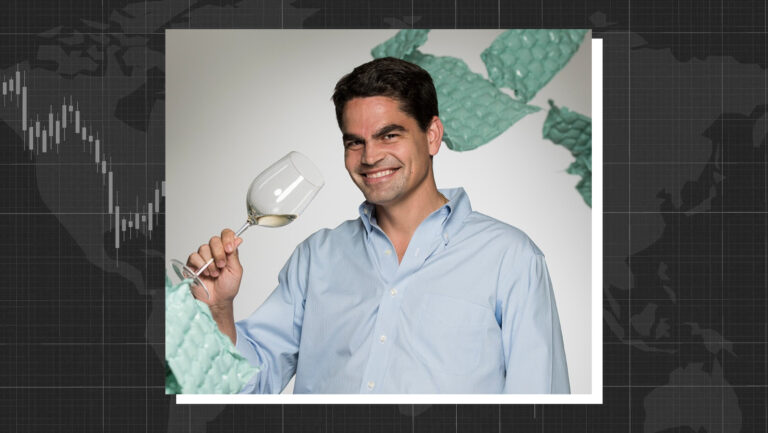 Patrick Mata, the cofounder of Olé & Obrigado. Photo courtesy of Olé & Obrigado.
Patrick Mata, cofounder, Olé & Obrigado
“Our hope is that by becoming more efficient in how we manage distribution logistics, we can keep the same wholesale prices.”
As a wholesaler of wines from Spain and Portugal, Olé & Obrigado solely relies on imports. “A hundred percent of the cases we import are affected by this,” says Patrick Mata, the company’s cofounder. “My wish was to entirely digest these tariffs, but that reality is not possible, so ultimately, we’re going to have to change many prices.” The impact has been swift; in early April, Olé & Obrigado had not received any new orders for overseas goods in nearly a month.
Mata’s primary adaptation tactic is to find ways to cut costs for distributors in order to mitigate the impact of tariffs. This, he hopes, will help to maintain the current price that distributors—and, subsequently, buyers and consumers—pay.
About half of Olé & Obrigado’s distributors currently purchase wines from the company’s New Jersey warehouse, which adds additional shipping costs to the wines. Instead, Mata is encouraging distributors to ship wines directly to their warehouses from Spain and Portugal. “That will, in essence, lower our cost by $8 to $12 per case, which, in most cases, is the full amount of the tariff,” he says.
The benefit of this strategy is that distributors have more price stability, allowing them to maintain their own pricing for buyers. The problem, however, is quantity; in order to ship directly, distributors need to purchase a full container at once. “We will work with our producers to extend terms and make [distributors] feel more comfortable making a bigger inventory commitment,” says Mata.
Distributors who ship directly from Spain would normally be taxed and tariffed on the amount they pay to Olé and Obrigado—which includes the importer’s markup—but Mata plans to mitigate some costs by clearing customs on their behalf. “We will pay the accurate tax and tariff on the wines, which will be lower than if [distributors] were to be clearing customs,” says Mata. Olé & Obrigado also plans to subsidize their pricing with the $2.38-per-case refund they receive through the Craft Beverage Modernization Act.
Mata’s fear is that wines under $25 will be most impacted by increased costs, and consumers will simply seek out an alternative choice if their $15 bottle goes up to $18. “Wines at sensitive price points, once you increase pricing, you lose those customers,” he says. “This will affect the livelihood of many of our producers.”
 Stephen (left) and Dale Ott, the founders of Nossa Imports. Photo courtesy of Nossa Imports.
Dale and Stephen Ott, founders, Nossa Imports
“We live six months to a year ahead—that’s our present. So the complete lack of ability to plan is crushing us.” – Dale Ott
While only five years old, Nossa Imports, the small, Tucson, Arizona-based wine importer founded by husband-and-wife team Stephen and Dale Ott, has seen its share of challenges. “We started our business in January of 2020, so we were built on a pivot,” says Dale Ott.
Nevertheless, the Otts have built a thoughtful portfolio of wines from two distinct countries, Mexico and Portugal, both of which are now squarely in the crosshairs of the Trump administration’s recent tariffs. Fortunately, they responded to the tariff threats preemptively. “Before the election when [Trump] made the announcement that this was going to be imminent, we had already started preparing,” says Dale Ott. “We started bringing in higher-volume shipments and stocking up. We also started slowing down our national activations and events so we could stockpile.”
The whiplash of the on-again-off-again tariffs has made it extremely difficult. “All of our business is future planning,” says Dale Ott. “We live six months to a year ahead—that’s our present. So the complete lack of ability to plan is crushing us, and I think it’s crushing all of our peers as well.” Indeed, the lead times required for producing and transporting wine mean that decisions made today won’t be felt until much further down the road.
News
Alcohol industry members are dealing with trade war whiplash from the Trump administration’s stop-and-start tariffs on Canada, Mexico, and the rest of the world. Here’s the latest on the new trade crisis
They have managed to find a glimmer of positivity as a small importer in a tough position. “We have actively reached out to a lot of our peers,” says Dale Ott. “We’re working together. We’re talking about sharing shipments … about cutting costs through partnerships in any way that we can. So the camaraderie has been a shining light in this for sure.”
Long term, however, the Otts see a dim outlook. “I don’t think importers of our size and intention are going to exist within five to 10 years,” says Dale Ott. “That’s what these tariffs are fast forwarding us towards.”
For now, the Otts are ready for anything. “We have a lot of options on deck should they be required, from least worst-case scenario to most worst-case scenario,” says Dale Ott. “It’s been a lot of work, and a lot of stepping back from our active roles, to potentially prepare for about 20 different scenarios and make sure that we’re ready to press the go button at any given moment.”
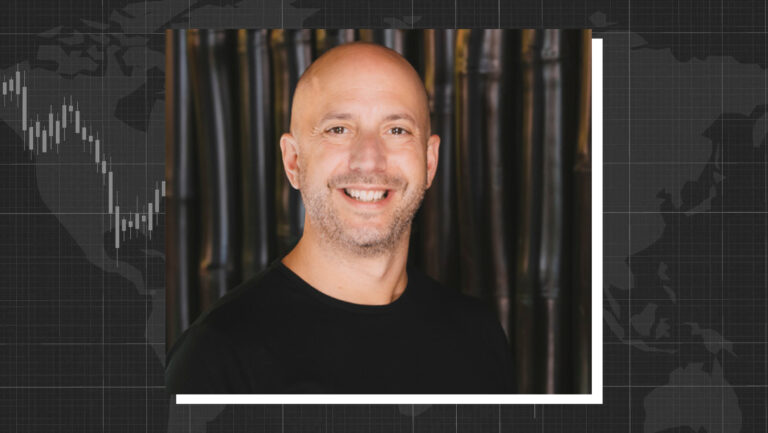 Matt Milner, the CEO and cofounder of Back Bar Project. Photo courtesy of Back Bar Project.
Matt Milner, CEO and cofounder, Back Bar Project
“We have about a 30-day period before a tough decision.”
Founded in 2012, the Back Bar Project focuses on premium spirit brands, often offering more specialized ingredients or flavors, such as Giffard Liqueurs, Cognac Park, Tepache Sazón, and Sotol Por Siempre. In this moment of uncertainty, CEO and cofounder Matt Milner takes solace that the company “got through COVID together,” he says. “When a lot of our partners in the industry furloughed, fired, shrunk their teams, we did not. We all stuck together.”
Back Bar operates on a monthly shipping cadence, and their last shipment just made it through prior to additional tariffs. So they have until the end of April, in consultation with their partners at Park Street Imports, to decide on their strategy going forward. “These opportunities—and I use that word generously—are going to allow us to really do a deep dive on the company and make some tough decisions that we all agree on are the best for the company,” Milner says. “There are ways that we can problem-solve for this if it’s only a 60-, 90-day issue; if it becomes a long-term strategy of the Trump administration, it will be completely different.”
Their “intentionally slow” decision-making process is in the hope of landing on a strategy that is sustainable, rather than reactive, and right for the business in the long term, accounting for the fact that Trump might “wake up in a bad mood and do it all over again.” For Milner, this isn’t just a challenge from a business perspective, but as a team. “It’s just really demotivating … How do you reframe financially what success looks like?” he says. “I really don’t feel like pivoting seven more times throughout the year. I don’t think even my optimistic self could sell that to our team. Like, ‘Hey guys, every month let’s have a new strategy and get excited about it!’”
Some of the options on the table as they revisit their budget include bringing over the next shipment and holding it in bond (at a bonded warehouse with tax paid upon its release); working with distributors to share the costs; or reducing their margins. “It feels like mental gymnastics,” Milner says. “Ideally it doesn’t affect anybody’s compensation. That’s always first, no one’s leaving the company; two, whatever bills you had to pay before, we don’t want to be the reason why you can’t; and then three, hypothetically … sales bonuses, you’re going to get them, but not because you hit a sales number, but because we came in under a budget number. Can we get excited about that? I sure hope so.”
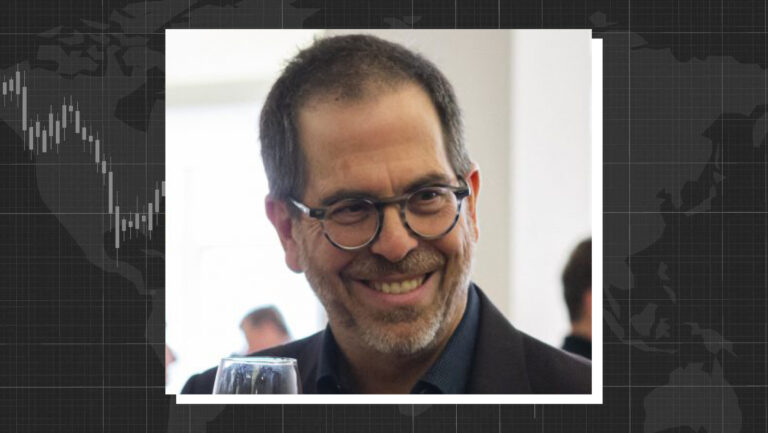 Harmon Skurnik, the president of Skurnik Wines & Spirits. Photo courtesy of Skurnik Wines & Spirits.
Harmon Skurnik, president, Skurnik Wines & Spirits
“The industry is fully aligned on this issue—even American wine producers are mostly anti-tariff and for free trade.”
Refusing to be caught off guard as beverage businesses were in 2018, Skurnik Wines & Spirits has been mobilizing the industry to prepare for tariffs since before the 2024 presidential election. Harmon Skurnik, the company’s president, is also the treasurer of the U.S. Wine Trade Alliance, which works on behalf of the American wine industry to fight tariffs.
“The uncertainty is paralyzing,” says Skurnik. “It’s hard to forecast demand, build inventory, or even set pricing when you don’t know if your core products will be hit with a 200 percent surcharge overnight.” He calls any amount of planning right now “fairly impossible.”
Part of that is the wide range of impacts that different levels of tariffs could have on businesses. “Internally, we’re reevaluating every part of the business—from portfolio planning to staffing—because these threats are real,” says Skurnik, who notes that more than 50 percent of the company’s revenue comes from imported wines and spirits. “A tariff like 200 percent might force us to lay off close to half of our 275 employees just to survive.”
But Skurnik is worried about more than just Skurnik Wines & Spirits; he’s worried about the industry at large. “Right now, we just want to make sure we still have an industry left to plan for,” he says, noting that previously threatened 200 percent tariffs would be a “death knell” for small- to mid-sized importers. That would, in turn, devastate restaurants and retailers across the U.S.
Businesses across the three-tier system are inherently connected, and the only silver lining to the trade war is how the beverage industry has come together. “We’ve seen incredible solidarity across the industry,” says Skurnik. “Once we make it through this storm, we want to come out stronger on the other side.”

Dispatch
Sign up for our award-winning newsletter
Don’t miss the latest drinks industry news and insights—delivered to your inbox every week.
Courtney Schiessl Magrini is the editor-in-chief for SevenFifty Daily and the Beverage Media Group publications. She has held sommelier positions at some of New York’s top restaurants, including Marta, Dirty French, and Terroir, and her work has appeared in Wine Enthusiast, GuildSomm, Forbes.com, VinePair, EatingWell Magazine, and more. She holds the WSET Diploma in Wines. Follow her on Instagram at @takeittocourt.