
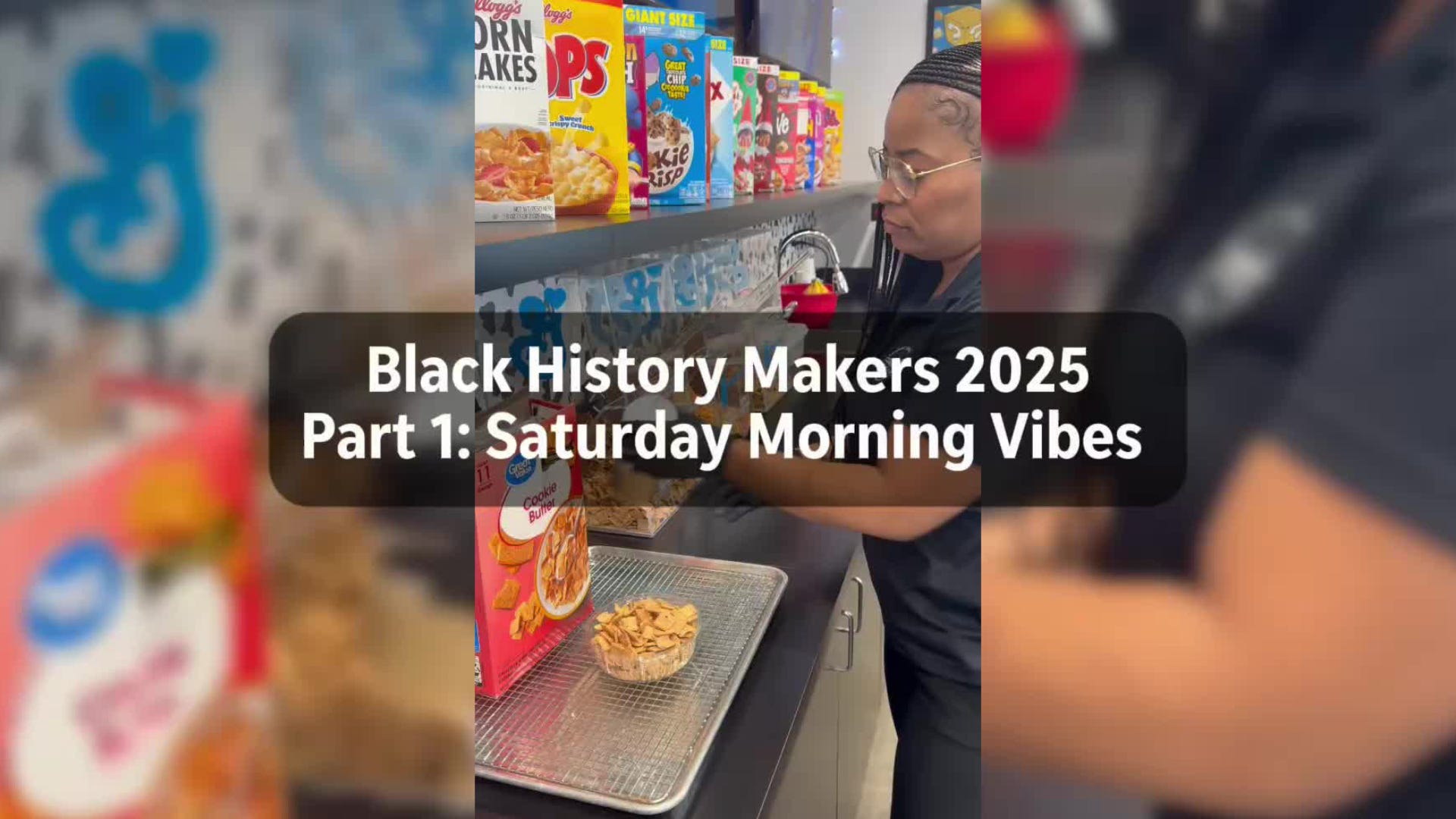

Video: Saturday Morning Vibes Cereal Bar serves more than cereal
A Cincinnati native is recapturing childhood nostalgia through Saturday Morning Vibes, a cereal bar in Avondale.
Edith Hern Fossett introduced French cuisine to Cincinnati.
Her culinary contribution is highlighted in a display as part of the “Julia Child: Recipe for Life” exhibit at the Cincinnati Museum Center.
The Fossetts were big names in the catering business in the city during the 1850s, when Edith Fossett’s sons, William and Peter Fossett, provided elegant fare for Cincinnati’s elite families.
They also secretly worked with the Underground Railroad to help others escape from slavery.
That’s also a part of the Fossetts’ story. The whole Fossett family had been enslaved by Thomas Jefferson, president of the United States and author of the Declaration of Independence, at his Virginia plantation, Monticello.
Edith Fossett was an enslaved chef at the White House and Monticello
Edith Fossett was 15 years old in 1802 when Jefferson chose her to join him at the White House – then known as the President’s House – to be trained as a cook under French chef Honoré Julien.
An avowed Francophile and foodie, Jefferson took a liking to French food while serving as Minster to France. He couldn’t afford a full-time chef, so he brought his own enslaved chef, James Hemings, with him to France.
Hemings trained there and developed a cuisine that was half Virginian, half French. He brought back many French dishes, including creme brulee, French fries, vanilla ice cream, and macaroni and cheese.
“This is something you see all throughout the South,” said Monticello guide Alice Wagner on the podcast “Mountaintop History.” “These enslaved cooks are really making a new American cuisine out of these different traditions.”
Hemings negotiated his freedom in 1796 and trained a replacement cook, his brother Peter Hemings, who became head chef Monticello.
But when Jefferson went to Washington, the president called for enslaved teenage girls to come learn French cookery under George Washington’s chef, Julien. Fossett’s sister-in-law Frances Hern was sent over as well in 1806.
Jefferson’s guests praised the quality of cuisine at his dinners. One historical account said: “The excellence and superior skill of his French cook was acknowledged by all who frequented his table, for never before had such dinners been given in the President’s House.”
While Julien was the chef, the work was done by the enslaved cooks. Edy and Fanny, as they were called, were not given wages, but received a monthly tip of $2.
When Jefferson left office in 1809, the cooks returned with him to Monticello, and Fossett became head chef there.
Étienne Lemaire, the steward at the President’s House, wrote to Jefferson: “Edy and Fanny are both good workers, they are two good girls and I am convinced that they will give you much satisfaction.”
Every day, cooks had to prepare lavish dinners for Jefferson’s family and guests, often as many as 20 people.
Preparation and cooking took all day, followed by cleanup to do it all again the next day, 15 hours a day, seven days a week.
Fossett family split apart, reunited in Cincinnati
While Edith Fossett was cooking at the White House, her common law husband, Joseph Fossett, was an enslaved blacksmith back at Monticello.
They spent seven years apart, but Joseph Fossett did run away once and headed to Washington to be with his wife. He was caught at the White House lawn and sent back to the plantation.
Edmund Bacon, overseer at Monticello, said Joseph Fossett “could do any thing it was necessary to do with steel or iron.” He and Edith held the top two positions among the enslaved staff.
The couple had 10 children, including Peter Fossett, who was an enslaved house servant.
“A peculiar thing about Thomas Jefferson’s house servants was that we were all related to one another, and as a matter of fact, we did not know we were slaves,” Peter Fossett said in an 1898 lecture in Cincinnati. “I was dressed unlike plantation boys. My grandmother was free, and I remember the first suit I ever wore she gave me. It was of blue Nankeen cloth, red Morocco hat and red Morocco shoes. …
“I had nice house servant work, got tips and all that sort of thing. Suddenly, at the death of my old master, Thomas Jefferson, I was put on the auction block and sold for $500 to strangers,” he said.
Peter Fossett was 11 years old when Jefferson died in 1826. Jefferson had freed only five enslaved workers in his will, Joseph Fossett among them. Jefferson had enormous debts, so the other 100 people were sold at an estate auction.
Joseph Fossett, then a freed man, could only watch as his wife and children were sold and taken away.
“This is the kind of emotional violence of slavery … that at any moment, based on somebody else’s whims, a person can lose their loved one,” Wagner said on the podcast.
Other free family members helped to get Edith Fossett and the children bought by slaveholders close by until Joseph could afford to buy their freedom. Finally, in 1837, he purchased the manumission of Edith, five of their children and four grandchildren.
The Fossetts relocated to Cincinnati in the 1840s. Joseph Fossett had a blacksmith shop on Walnut Street between Second and Pearl.
Peter Fossett was finally freed and joined his family in Cincinnati in 1850. He and his brother William Fossett used their mother’s recipes and cooking knowledge to create a successful catering business.
Peter Fossett was also a conductor on the Underground Railroad, pastor of First Baptist Church in Cumminsville and a captain in the Black Brigade during the Civil War.
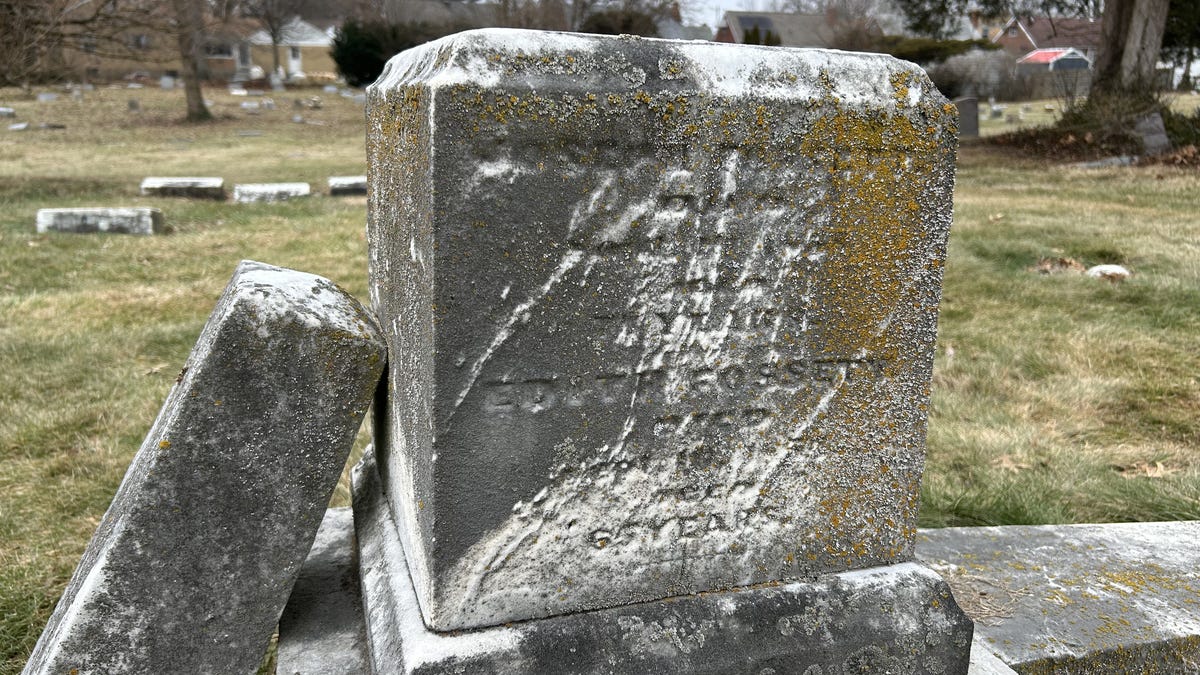
A grave marker in Union Baptist Cemetery in West Price Hill marks the burial site of Joseph and Edith Fossett as well as Peter and his wife, Sarah, a crusader who helped to desegregate Cincinnati’s streetcar.
Sources: Monticello.org, “Mountaintop History” podcast, Cincinnati Sites & Stories, “First Forty Years of Washington Society” by Margaret Bayard Smith, “Jefferson at Monticello” by Hamilton W. Pierson, The New York World.