
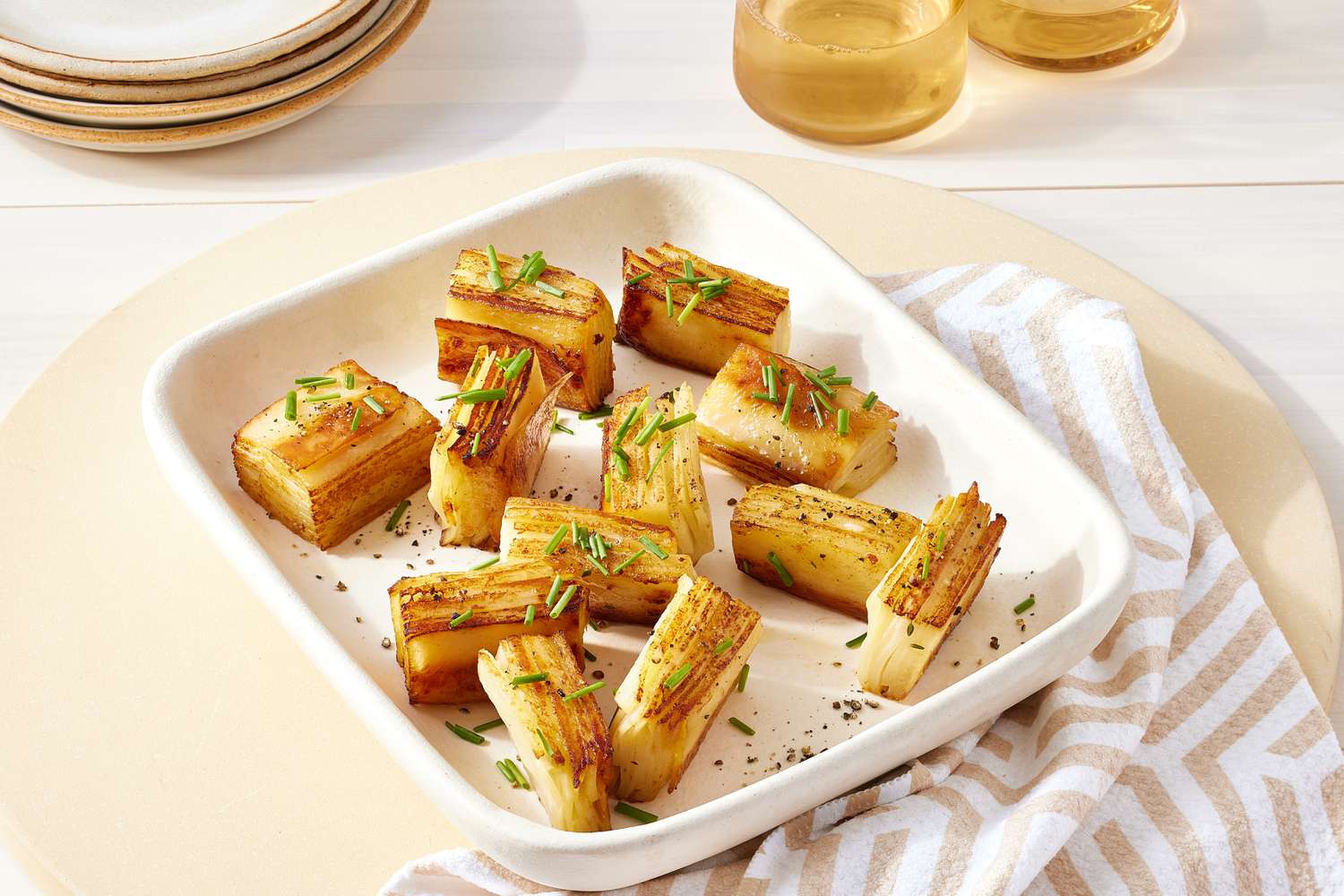
Pavé, the French word for “paving stones,” is a term Chef Thomas Keller uses to describe any such rectangular or square food preparation. His potato pavé is an elegant potato dish that’s essentially a more refined version of scalloped potatoes. When he made the recipe on Martha’s TV show, he showed how he slices russet potatoes into thin rectangles, tosses them in cream, and layers them in a loaf pan. The pavé is baked and chilled overnight. To serve, it’s cut into individual portions and browned on the stovetop. It’s a project, but it’s also meltingly delicious and makes an unforgettable side dish for a special dinner.
Brie Goldman
What Is Potato Pavé?
Pavé means to set as close together as possible and translates to “pavement” in French. Perhaps the most common use of pavé is for diamonds; pavé diamonds are set close together in a way that resembles a road made of diamonds. There is also a Brazilian dessert called pavé, a rich concoction of layers of biscuits (often ladyfingers) and a cream made using condensed milk. It is similar in structure to tiramisu and can be made in different flavors.
To make potato pavé, neat, thin rectangles of russet potato are cut using a mandoline. They are soaked in cream, then carefully layered in a loaf pan with butter and baked. While they cool, they’re weighted down with heavy cans (which help to compress the layers), then refrigerated for at least six hours and up to two days. When it’s time to serve the potato pavé, it’s removed from the pan, trimmed, and cut into serving pieces. Then each portion is browned on the stovetop and served immediately. It’s a potato side dish worthy of a Michelin-starred restaurant.
Equipment Needs for Making Potato Pavé
You’ll need to gather a few pieces of kitchen equipment before making potato pavé, including:
Mandoline: One of Martha’s favorite tools, a mandoline is used for quickly and evenly slicing vegetables paper thin, like for this potato pavé. The blade on a mandoline can be adjusted to create julienned vegetables or the waffle pattern on gaufrette potatoes. If your mandoline came with a safety guard, we recommend using one as the blade is incredibly sharp and can cause injury, especially if the potato slips while being sliced.
Large bowl: You’ll need a bowl large enough to bathe all of the potato slices in cream, which adds moisture and richness while also keeping them from oxidizing. If you’re able to, set your mandoline over the bowl while you slice the potatoes so they’ll fall directly in.
Loaf pan: To create a firm brick of potato slices, a 9-by-5-inch loaf pan is Thomas Keller’s pick for this recipe. Be sure to line it with parchment paper, which will ensure the potatoes release easily from the pan after baking.
Cardboard and foil: Once baked, the potatoes will need to be weighted down with heavy cans as they cool. To create a flat surface for the cans to sit, cut out a piece of cardboard just slightly smaller than the pan, then wrap it in a layer of foil.
Offset spatula: An offset spatula is handy for separating the parchment from the sides of the pan before removing the potatoes. If you don’t have one, you can run a paring knife around the sides instead.
Large skillet: Grab a large skillet for browning the individual portions of potato pavé. Because the potato stacks already contain butter and you’ll be oiling the pan as well, you can use a nonstick, stainless, enamel, or cast-iron pan with equally good results.
The Best Potatoes to Use
Chef Keller uses russet potatoes for this recipe because they bake well, are dry, and hold their shape. Russets are available in most supermarkets and we (and Chef Keller) recommend you use them for his potato pavé. We do not recommend making the pavé with other types of potatoes.
Why You Should Make Potato Pavé Ahead
Potato pavé takes time to make, but much of it is hands-off time for baking, cooling, and a long period of refrigeration. Because of that, we suggest you start the dish the day before you intend to serve it: slice, bake, cool, and weight the potatoes. Store them in the refrigerator until you are ready to use them. Then, brown each portion of potato pavé on the stovetop just before serving.