Explain it to me like I am an idiot, please because I always struggle with this concept, even though I know it is supposed to be very simple and straightforward
by Bold-n-brazen
35 Comments
Ordinary-Play-2211
Cutting against the grain shortens muscle fibers that you are chewing. Muscle fibers are easier to pull away from each (pulling apart sideways) other than they are to chew through (tearing apart lengthwise). That’s why slicing against the grain and shorter muscle fibers feels more tender
KevinFinnerty59
If you cut with the grain you leave all muscle fiber intact which makes it harder to chew when you cut against the grain you cut the muscle fibers into smaller pieces so it makes it easier to chew
inTerabits
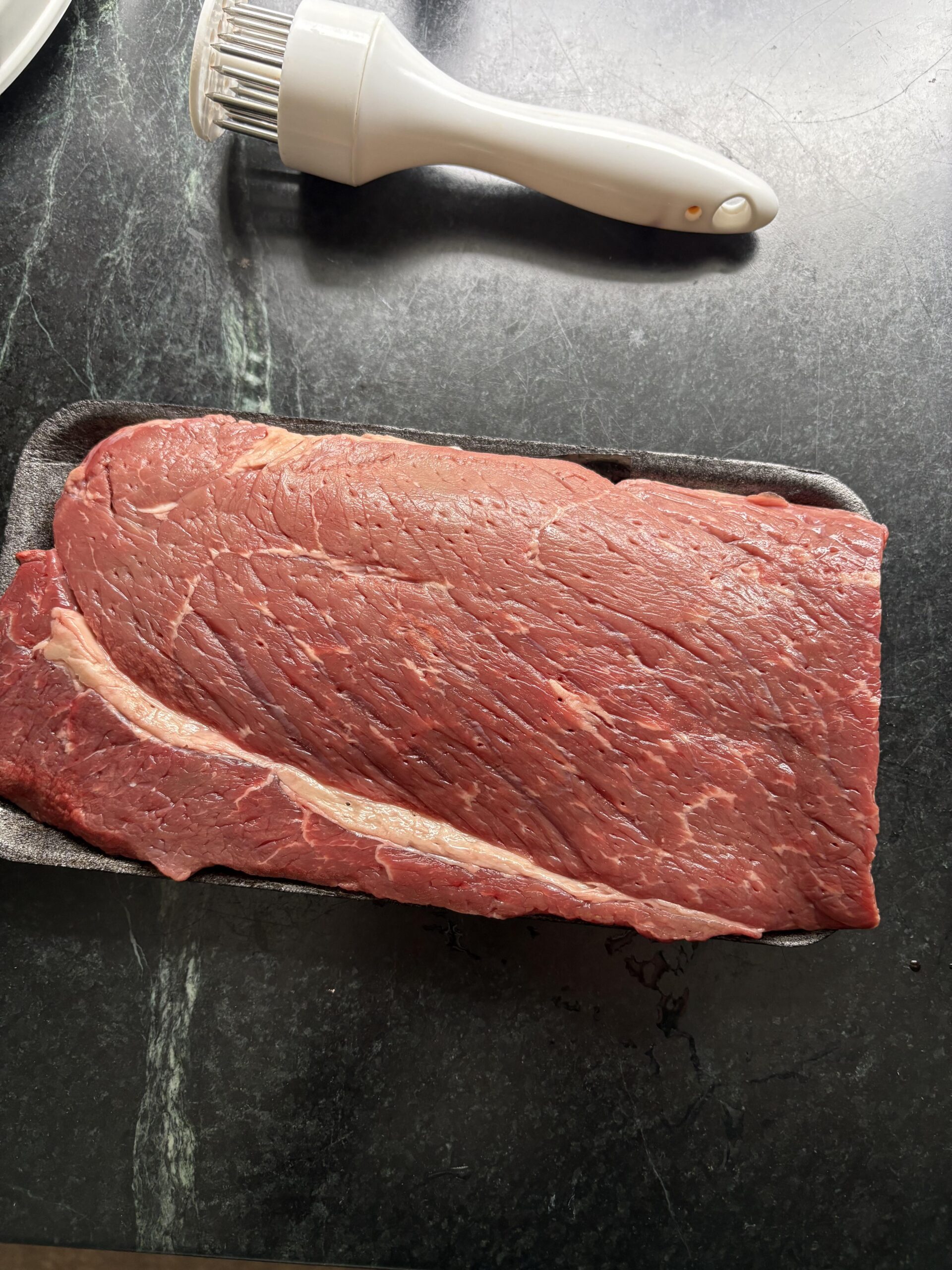
I think maybe OP is asking which way the grain is going in this pic. I’m also curious to know, I’m assuming I would be cutting from top right to bottom left?
Deep_Stick8786
The grain is the direction the muscle fibers run. Cutting perpendicular to that is “against the grain”.
Delicious_Wishbone80
You see the grain, slice against it. So that means: like a crucifix. And only because you explicitly asked for it and I can feel like Dwight Schrude: Get it now? You idiot.
AdmirablePhrases
In this picture, it would be up/down not left/right
On this particular piece of meat, you can see that the grain is mostly going left to right though not entirely. It’s just like a piece of wood, and actually, I’m a machinist, we even have to control for grain in some parts that get bent, because you also bend perpendicular to the grain. And actually now that I think about it the grain on meat that you buy at the store is almost always going to be going left to right probably because they’re also cutting against the grain.
So, if you were to cut this piece of meat so that you drag the knife from left to right each time (if you’re right handed) you’d be cutting with the grain. That will make the meat chewier and not as tender. Because the lines you see are strands of muscle fibers. So you’re cutting these strings into pieces.
You’d want to cut top to bottom.
Sometimes it can be difficult to discern which way the grain is going entirely, or the grain doesn’t go all in one direction on a cut. Actually on this piece you can see it doesn’t quite.
So when I was working in the restaurant industry what you would do is take this piece of meat and angle it at a 45 degree angle, and then cut from top to bottom of the piece, virtually guarantee you’re cutting at least a 45 degree across the grain. As you work your way from the right to left side of this piece of meat your knife is going to have to start changing its angle because as you can see the grain rotates and turns and goes off sort of 90°.
And also, as someone else mentioned, don’t use that spikey think to tenderize your meat. It’s a crap way to do it because all the fat and good stuff is going to drip out. Tenderize by using acidity. A good quick cheap way is to marinate the steak in a bottle of cheap Italian dressing for like 6-8 hours, but even a couple helps. It’ll make your steaks taste world class. The only time in my opinion to use a mallet or anything like that on a piece of meat is if you’re making something like chicken parmesan or cutlets or schnitzel that is supposed to be hammered flat almost.
Otherwise if you have the separate ingredients use things like apple cider vinegar, orange juice, for acidity to break the muscles down, and then garlic, soy sauce, worcester for flavor.
TheRealJamesHoffa
Run the knife perpendicular to the direction all the lines are going
Freedom_fam
With the grain – long fibers in your slice – chewy beef jerky.
Against the grain / perpendicular – short fibers in your slice – delicate filet mignon.
ThePushaZeke
grain for the top portion looks to be going diagonally from north west to southeast.
use your knife to cut along the northeast/southwest direction for your pieces.
the result will be slices that look like medallions or cross sections of a tree maybe, and you should be able to see the little muscle fibers going THROUGH the steak not across anymore. the length of those fibers increase resistance to you chewing. by cutting this way, you can effectively decrease the length for almost all of the fibers in the muscle simultaneously, making the meat marginally more tender.
there are youtube videos online of people that explain this much better than any of us could type it probably.
Sudden-Breadfruit653
The grain here is horizontal in this photo. Cut vertical per the red lines would be against the grain.
MetricJester
Imagine your meat as a bundle of strings, and they are very tightly packed together, and pretty strong too. Now you need to cut those strings so they are shorter in order to eat them. Would you try to cut between the strings? No you’d cut across them.
09kloosemore
Find the grain and just… cut against it. Then you just…fold it in David
zeltroid69er
If you produce a 1” thick steak that was properly cut against the grain, then you will be chewing muscle fibers that are no longer than 1”, ideal. If you produce a 1” thick steak that was improperly cut with the grain, you will be chewing muscle fibers that are as long as the steak itself, very not ideal.
choombatta
“Cutting against the grain” is a colloquialism for what you’re actually doing; shortening the muscle fibers. The “grain” is whichever way the muscle fibers are running, which you can typically see pretty easily. Cut perpendicular, or as close as you can get, to those muscle fibers and you’re doing it right. And bear in mind the “grain” can change direction in a single piece.
Far_Recognition4078
I never knew this
PrinceCastanzaCapone
Perpendicular to, in a nutshell.
kyngston
Note that if you use that blade tenderizer, you will need to cook that steak to well done to be safe to eat.
> If a blade tenderizer (also known as a mechanical tenderizer) was used on a steak, the USDA recommends cooking the steak to a minimum internal temperature of 160°F (71°C) for safety. This is because the tenderizing process can push surface bacteria into the interior of the meat, which is not normally the case with intact cuts like whole steaks.
antipartisant
Left to right or right to left can be interpreted different ways. It can mean where the perpendicular lines start and end or where the knife blade starts and ends. In this OP pic, the knife will be like a clock hand around 1 or 7 o’clock since the grain runs along 4 or 10 o’clock
BadGolferDallas
I feel like a lot of people ignore this when cutting thick chicken breast… the same thing applies to them. They are much more tender when you cut them against the grain.
Hendrix1967
Black is WITH THE GRAIN if you’re trying to divide into individual steaks. Once it’s cooked, you slice AGAINST THE GRAIN (RED LINES) so you wind up with short fibers that pull apart easily. This is especially true for making a Picanha. Hope this helps.
Also, the thinner you slice, the shorter the fibers and easier to chew. Unless you buy a more expensive cut, or braise it for several hours. This but almost looks like we are looking at the end grain, which would then need to be cut with the knife at a heavy angle to the counter (rotate your wrist 45 degrees or whatever your skill allows for)
External_Art_1835
You would simply cut it just like it’s laying. Start on the right side and slice it thin. The grain is running west to east and you want to slice it north to south. This way, it’ll be tender.
You want to always cut it opposite of what the grain is running for the most tender results.
TomboyHomie
Someone gave you a great pic of against the grain. There’s also this fun fact:
It’s easier to eat that way because you’re “interrupting” the long muscle chains by cutting into them. The more they stay together, the more chewing ya gotta do.
Interrupting them means you’re giving the meat its first “chew” with your knife.
cyclorphan
I’d like to add, since I didn’t see it, if you are making a large piece of meat, you may need to cut it into multiple pueces withthe grain. The final cut for a bite-sized slice shpuld be the one against the grain. Some cuts of meat are different than one might expect but usually eyeballing that meat before you cook it will tell you what you need to know.
Crafty_Risk9452
Those pics are great. This is what I always do first hand is take a pic, because after it’s smoked or grilled and covered in a rub or what have you it’s sometimes hard to see it and I forget easily so i just look at the pic from before to remember where the grain is running.
Seismic_Quake
The little lines that kind of wave around the meat going diagonally that is the grain
Against the grain would be perpendicular to that grain pattern
greendemon42
You should be able to see the little lines that are already in the meat, just cut perpendicular to them.
ossifer_ca
Think of a box of wet but uncooked hard spaghetti (it sticks together but is essentially hard and raw). Now you have to eat it like this, but you can cut it either lengthwise (essentially just pulling clumps of long strands) or across the width (creating spoonfuls of short pieces). Which would you rather eat? In your picture the “spaghetti” strands are running left to right, roughly (WNW↔ESE).
WhiteWooden6802
If it’s a tough cut then this is usually done to help reduce chewing long strands of meat
Spinal_Soup
Not your question, but I would avoid using that tenderizing device you have. When you stab the meat like that you can introduce bacteria from the surface into the meat making it less safe to eat unless cooked to well done. I’d use a tenderizing mallet and/or some bromelain. Dry brines can also increase tenderness.
barbiefurby
I know you already got your answer, but maybe to help remember- possibly think of it like making crisscrosses, like a metal fencing or diamond pattern
renee4310
Thank you for asking this because I never really understood it either
ShadowValent
it’s for people with weak jaws. dont let those sissy’s tell you how to cut meat.
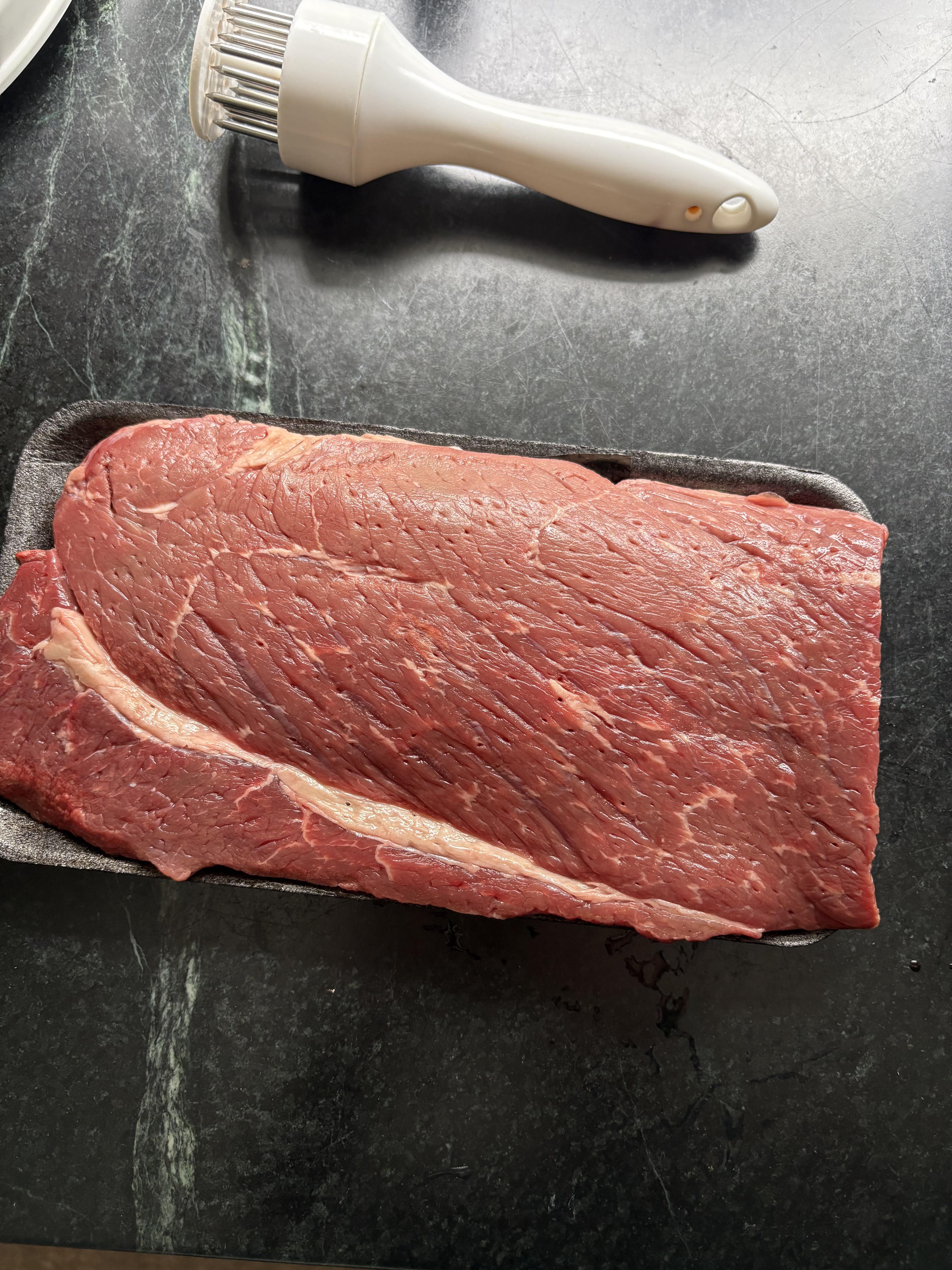

35 Comments
Cutting against the grain shortens muscle fibers that you are chewing. Muscle fibers are easier to pull away from each (pulling apart sideways) other than they are to chew through (tearing apart lengthwise). That’s why slicing against the grain and shorter muscle fibers feels more tender
If you cut with the grain you leave all muscle fiber intact which makes it harder to chew when you cut against the grain you cut the muscle fibers into smaller pieces so it makes it easier to chew
I think maybe OP is asking which way the grain is going in this pic. I’m also curious to know, I’m assuming I would be cutting from top right to bottom left?
The grain is the direction the muscle fibers run. Cutting perpendicular to that is “against the grain”.
You see the grain, slice against it. So that means: like a crucifix.
And only because you explicitly asked for it and I can feel like Dwight Schrude: Get it now? You idiot.
In this picture, it would be up/down not left/right
https://preview.redd.it/9dlz345bv43f1.jpeg?width=877&format=pjpg&auto=webp&s=d4f74e3a867351a5ac477333d4d6b9e426a5834c
On this particular piece of meat, you can see that the grain is mostly going left to right though not entirely. It’s just like a piece of wood, and actually, I’m a machinist, we even have to control for grain in some parts that get bent, because you also bend perpendicular to the grain. And actually now that I think about it the grain on meat that you buy at the store is almost always going to be going left to right probably because they’re also cutting against the grain.
So, if you were to cut this piece of meat so that you drag the knife from left to right each time (if you’re right handed) you’d be cutting with the grain. That will make the meat chewier and not as tender. Because the lines you see are strands of muscle fibers. So you’re cutting these strings into pieces.
You’d want to cut top to bottom.
Sometimes it can be difficult to discern which way the grain is going entirely, or the grain doesn’t go all in one direction on a cut. Actually on this piece you can see it doesn’t quite.
So when I was working in the restaurant industry what you would do is take this piece of meat and angle it at a 45 degree angle, and then cut from top to bottom of the piece, virtually guarantee you’re cutting at least a 45 degree across the grain. As you work your way from the right to left side of this piece of meat your knife is going to have to start changing its angle because as you can see the grain rotates and turns and goes off sort of 90°.
And also, as someone else mentioned, don’t use that spikey think to tenderize your meat. It’s a crap way to do it because all the fat and good stuff is going to drip out. Tenderize by using acidity. A good quick cheap way is to marinate the steak in a bottle of cheap Italian dressing for like 6-8 hours, but even a couple helps. It’ll make your steaks taste world class. The only time in my opinion to use a mallet or anything like that on a piece of meat is if you’re making something like chicken parmesan or cutlets or schnitzel that is supposed to be hammered flat almost.
Otherwise if you have the separate ingredients use things like apple cider vinegar, orange juice, for acidity to break the muscles down, and then garlic, soy sauce, worcester for flavor.
Run the knife perpendicular to the direction all the lines are going
With the grain – long fibers in your slice – chewy beef jerky.
Against the grain / perpendicular – short fibers in your slice – delicate filet mignon.
grain for the top portion looks to be going diagonally from north west to southeast.
use your knife to cut along the northeast/southwest direction for your pieces.
the result will be slices that look like medallions or cross sections of a tree maybe, and you should be able to see the little muscle fibers going THROUGH the steak not across anymore. the length of those fibers increase resistance to you chewing. by cutting this way, you can effectively decrease the length for almost all of the fibers in the muscle simultaneously, making the meat marginally more tender.
there are youtube videos online of people that explain this much better than any of us could type it probably.
The grain here is horizontal in this photo. Cut vertical per the red lines would be against the grain.
Imagine your meat as a bundle of strings, and they are very tightly packed together, and pretty strong too. Now you need to cut those strings so they are shorter in order to eat them. Would you try to cut between the strings? No you’d cut across them.
Find the grain and just… cut against it. Then you just…fold it in David
If you produce a 1” thick steak that was properly cut against the grain, then you will be chewing muscle fibers that are no longer than 1”, ideal. If you produce a 1” thick steak that was improperly cut with the grain, you will be chewing muscle fibers that are as long as the steak itself, very not ideal.
“Cutting against the grain” is a colloquialism for what you’re actually doing; shortening the muscle fibers. The “grain” is whichever way the muscle fibers are running, which you can typically see pretty easily. Cut perpendicular, or as close as you can get, to those muscle fibers and you’re doing it right. And bear in mind the “grain” can change direction in a single piece.
I never knew this
Perpendicular to, in a nutshell.
Note that if you use that blade tenderizer, you will need to cook that steak to well done to be safe to eat.
> If a blade tenderizer (also known as a mechanical tenderizer) was used on a steak, the USDA recommends cooking the steak to a minimum internal temperature of 160°F (71°C) for safety. This is because the tenderizing process can push surface bacteria into the interior of the meat, which is not normally the case with intact cuts like whole steaks.
Left to right or right to left can be interpreted different ways. It can mean where the perpendicular lines start and end or where the knife blade starts and ends. In this OP pic, the knife will be like a clock hand around 1 or 7 o’clock since the grain runs along 4 or 10 o’clock
I feel like a lot of people ignore this when cutting thick chicken breast… the same thing applies to them. They are much more tender when you cut them against the grain.
Black is WITH THE GRAIN if you’re trying to divide into individual steaks. Once it’s cooked, you slice AGAINST THE GRAIN (RED LINES) so you wind up with short fibers that pull apart easily. This is especially true for making a Picanha. Hope this helps.
https://preview.redd.it/0fpjatua153f1.jpeg?width=1110&format=pjpg&auto=webp&s=c1d2eb6c89dde72e646d08f3ca53bb2a55cb1e18
Also, the thinner you slice, the shorter the fibers and easier to chew. Unless you buy a more expensive cut, or braise it for several hours. This but almost looks like we are looking at the end grain, which would then need to be cut with the knife at a heavy angle to the counter (rotate your wrist 45 degrees or whatever your skill allows for)
You would simply cut it just like it’s laying. Start on the right side and slice it thin. The grain is running west to east and you want to slice it north to south. This way, it’ll be tender.
You want to always cut it opposite of what the grain is running for the most tender results.
Someone gave you a great pic of against the grain. There’s also this fun fact:
It’s easier to eat that way because you’re “interrupting” the long muscle chains by cutting into them. The more they stay together, the more chewing ya gotta do.
Interrupting them means you’re giving the meat its first “chew” with your knife.
I’d like to add, since I didn’t see it, if you are making a large piece of meat, you may need to cut it into multiple pueces withthe grain. The final cut for a bite-sized slice shpuld be the one against the grain. Some cuts of meat are different than one might expect but usually eyeballing that meat before you cook it will tell you what you need to know.
Those pics are great. This is what I always do first hand is take a pic, because after it’s smoked or grilled and covered in a rub or what have you it’s sometimes hard to see it and I forget easily so i just look at the pic from before to remember where the grain is running.
The little lines that kind of wave around the meat going diagonally that is the grain
Against the grain would be perpendicular to that grain pattern
You should be able to see the little lines that are already in the meat, just cut perpendicular to them.
Think of a box of wet but uncooked hard spaghetti (it sticks together but is essentially hard and raw). Now you have to eat it like this, but you can cut it either lengthwise (essentially just pulling clumps of long strands) or across the width (creating spoonfuls of short pieces). Which would you rather eat? In your picture the “spaghetti” strands are running left to right, roughly (WNW↔ESE).
If it’s a tough cut then this is usually done to help reduce chewing long strands of meat
Not your question, but I would avoid using that tenderizing device you have. When you stab the meat like that you can introduce bacteria from the surface into the meat making it less safe to eat unless cooked to well done. I’d use a tenderizing mallet and/or some bromelain. Dry brines can also increase tenderness.
I know you already got your answer, but maybe to help remember- possibly think of it like making crisscrosses, like a metal fencing or diamond pattern
Thank you for asking this because I never really understood it either
it’s for people with weak jaws. dont let those sissy’s tell you how to cut meat.