
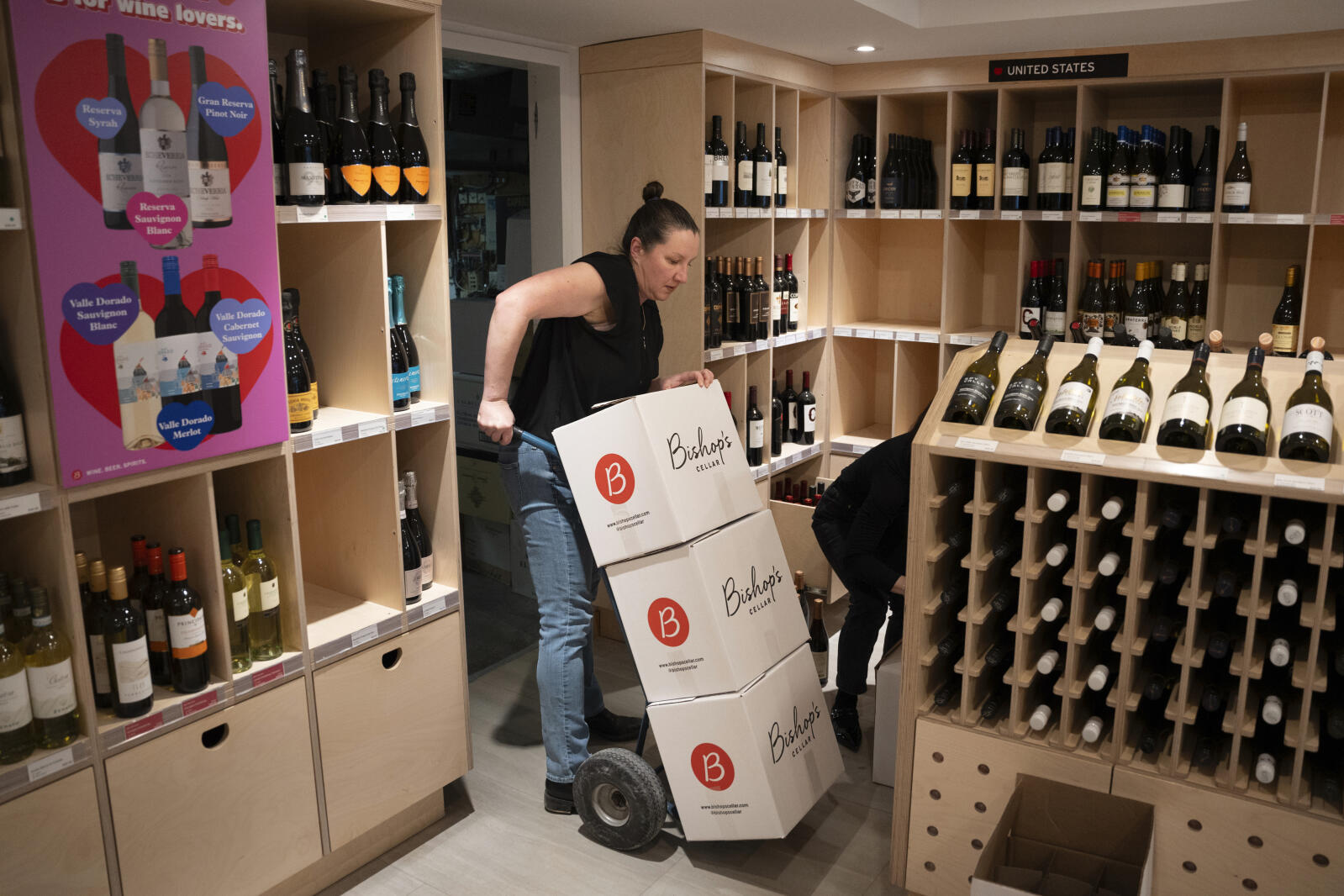
Canada retailers removed American wine and liquor from stores in retaliation for Trump’s tariffs, angering bar owners near the U.S. border and drinkers hoping to consume foreign alcohol.
Giovanni Cassano, a restaurant owner in the Canadian province of Ontario, was not going to let a trade war get in the way of his diners’ thirst for Californian wine, Jim Beam Kentucky bourbon or Texan-made Tito’s vodka.
Soon, however, he and his diners might not have a choice.
When President Donald Trump announced planned tariffs on the country last month, Canadian politicians threatened to pull American alcohol brands off the shelves of government-run liquor stores in retaliation.
On Tuesday, those tariffs briefly went into effect, and American spirits and wine were boxed up and hidden away in much of Canada. Television broadcasts were filled with footage of employees packing up glass bottles and leaving behind barren shelves.
“People are going to get frustrated, but I think they’ll adapt,” said Cassano, the owner of a cafe and an adjacent oyster bar in Windsor, Ontario, a border city that is the heart of Canada’s auto industry and an important battleground in the trade war.
Before Tuesday, Cassano stockpiled just enough cases of American spirits and wine to give himself time to transition to Canadian-made products at his two businesses, which sit not far from the distillery where Canadian Club whiskey is made and largely exported to the United States.
“Obviously, we’re all in this position, but some classics you can’t replace,” Cassano said.
A taste for American liquor could be one of the casualties in the trade war against Canada, after Trump placed a 25% tariff on Canadian exports. Prime Minister Justin Trudeau of Canada retaliated with a 25% tariff on $20.5 billion worth of American goods, which will grow to add roughly another $85 billion of products in three weeks.
On Thursday, the United States announced it would grant Canada a second reprieve, until April 2, on most exports, throwing the two countries’ economic and political relations into more upheaval.
It’s not yet clear what, if anything, the delay will mean for American alcohol and the Canadian drinkers hoping to consume it. But boycotting American products has become part of the country’s national pride, uniting Canadians in online forums and grocery aisles.
In the prelude to Tuesday’s tariffs, Premier Doug Ford of Ontario, the country’s most populous province, warned that provincially owned liquor stores would pull about 3,600 American products from sale.
Every other province has since announced it will follow suit. Manitoba did so with theatrical flair, with Premier Wab Kinew sharing a social media video in which he imitates Trump signing an executive order.
“This order, it’s a wonderful order, it’s a beautiful order,” Kinew said. “This order is pulling American booze off the liquor market shelves.” The staff members behind him erupted in applause.
(Some Canadian provinces allow private liquor sales, so American products won’t disappear entirely from Canada.)
Lawson Whiting, the CEO of the corporation that owns the Tennessee whiskey brand Jack Daniel’s, told investors during an earnings conference call Wednesday that Canada represented about 1% of the company’s sales.
“Not just beverage alcohol, but a lot of American-made products have come off the shelves in Canada, which is tough,” Whiting said, describing it as an overreaction. “That’s worse than a tariff because it’s literally taking your sales away.”
After Trump announced the pause on most tariffs Thursday, Chris Swonger, the president of the U.S. trade association for distilled spirits, expressed hope that the industry could avoid further harm.
“We are hopeful that constructive dialogues continue between the U.S., Canada and Mexico that permanently brings back zero for zero tariffs for spirits trade between our three countries,” he said. “We want toasts not tariffs.”
American alcohol products make up a small share of Canadian sales. In Ontario, the provincial government-owned alcohol retailer said American alcohol generated up to 965 million Canadian dollars in annual sales, part of the retailer’s more than CA$7 billion in annual revenue.
But a grassroots movement to buy domestic products is gathering steam as Canadians protest what they perceive as a betrayal by the United States, the country’s closest ally, as well as Trump’s comments about annexing Canada.
—
This article originally appeared in The New York Times.