
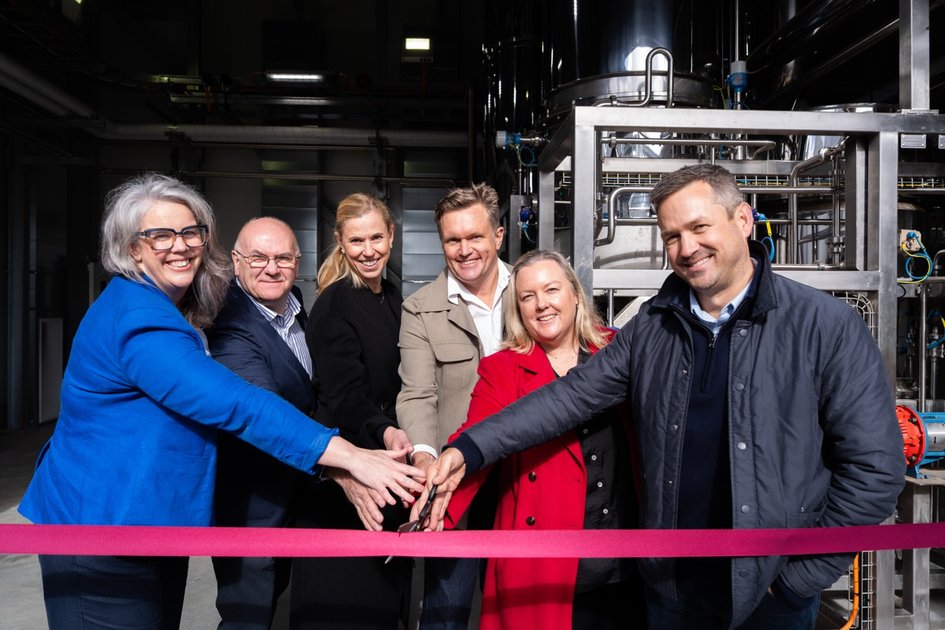
Treasury Wine Estates has opened a new production facility within its flagship Barossa Valley site exclusively dedicated to low- and no-alcohol wines.
More than two years in the making, the $15 million facility features world-leading, and patent-pending, dealcoholisation processes and technologies it claims are capable of preserving the aromatic components usually lost during traditional NoLo production methods.
In essence, the world-first system reuses a wine’s extracted essence as part of the dealcoholisation process, which not only protects the components responsible for flavour and fragrance but also helps to overcome challenges of richness, body, and mouthfeel often associated with the category.
“This world-leading facility cements our position as a global pioneer in winemaking,” says TWE’s Chief Supply and Sustainability Officer Kerrin Petty said. “This state-of-the-art technology and proprietary process for de-alcoholisation is our latest step in building a hub of innovation, technology and sustainability in the Barossa Valley, where we’ve been crafting wine to delight consumers for more than a century.”
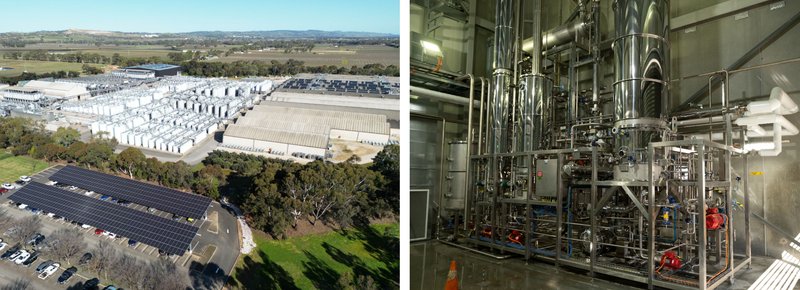
TWE’s Barossa Winery & Packaging Centre (L), and its $15m dealcoholisation equipment
Located within TWE’s new $165 million Barossa Winery & Packaging Centre, which was opened roughly one year prior to the new NoLo upgrade being commissioned, the $15 million site will be tasked with producing the next generation of low and no alcohol wines for iconic brands in TWE’s global portfolio, including Squealing Pig and Pepperjack, which will complement other NoLo offerings in the Matua, 19 Crimes, Lindeman’s, and Wolf Blass ranges.
Joining these established global brands is the new-to-market Sorbet, which will blend traditional varietals such as Prosecco, Rosé, Sauvignon Blanc, and Shiraz with fruit and berry flavours such as passionfruit, mango and lemon at a lower ABV of 8%.
Sorbet will be available from October 2025 in partnership with Endeavour Group. “The new Sorbet range is a high quality, diversified selection of lower-alcohol wine that responds to consumers wanting refreshment in their drink,” says Leigh Firkin, Endeavour Group’s Head of Commercial Wine. “For consumers, the artisanal nature of wine needs to be reflected in lower-alcohol alternatives as much as full-strength versions – and that comes through with a fresh take on classic varietals in Sorbet.”
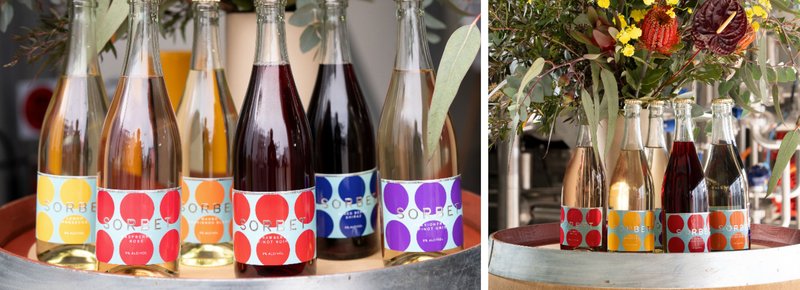
The Sorbet range will launch in October 2025
Research from the IWSR forecasts a 5 per cent compound annual growth rate for the global NoLo wine market between 2024 and 2028. Current data also indicates that half of wine drinkers globally are reducing their alcohol intake, but that taste continues to be the biggest barrier to purchasing reduced alcohol wines.
Furthermore, given AWRI Sensory Scientist and NoLo PhD researcher Eleanor Bilogrevic’s recent suggestion that the global opportunity for Australia’s NoLo industry could dissipate if we do not collectively act fast enough, TWE’s investment could well have come at a critical moment in time for the future of the sector.
Bilogrevic told Drinks Trade in late April: “It’s well worth industry getting involved in the space before some of the big beverage giants like Coke and Pepsi decide they want to. I think we should be experimenting and exploring like there’s no tomorrow … We want to remain competitive. We’ve got plenty of wine. We’ve got plenty of vineyards. It’s a crucial time for industry to innovate, innovate, innovate.”
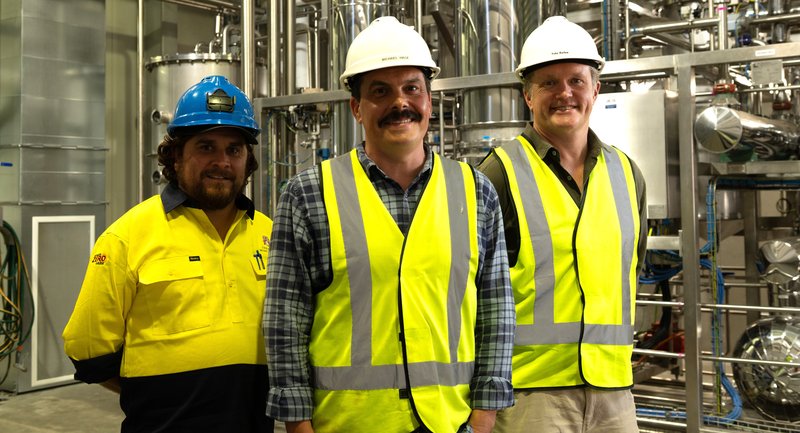
Cellar Operator Liam Donohue, Wine Process Technologist Mick Hage, and Group Winemaker Toby Barlow (L-R)
The emerging global demand for NoLo wine has directly underpinned TWE’s new facility, which follows on from more than 30 years of NoLo category experimentation, dating back to Seppelt’s low-alcohol wines first released in 1993.
Throughout this time period, the limitations of NoLo production have reduced the category’s capacity for growth. As General Manager of Sales and Marketing Sarah Parkes puts it, “flavour has historically been a barrier for wine drinkers exploring a no or low alcohol alternative – this technology has helped us solve the flavour puzzle, and it’s had outstanding feedback from consumers so far.”
Similarly, Group Winemaker Toby Barlow says that “blending our winemaking credentials with customised technology helps us create great-tasting wine that has less alcohol, or none at all,” and that “we’re creating products and consumer experiences that we know wine lovers all over the world are looking for.”
//
If we want to remain competitive in NoLo, Australian wine must act now
Is flavour addition the future of NoLo? AWRI scientist Eleanor Bilogrevic explains