
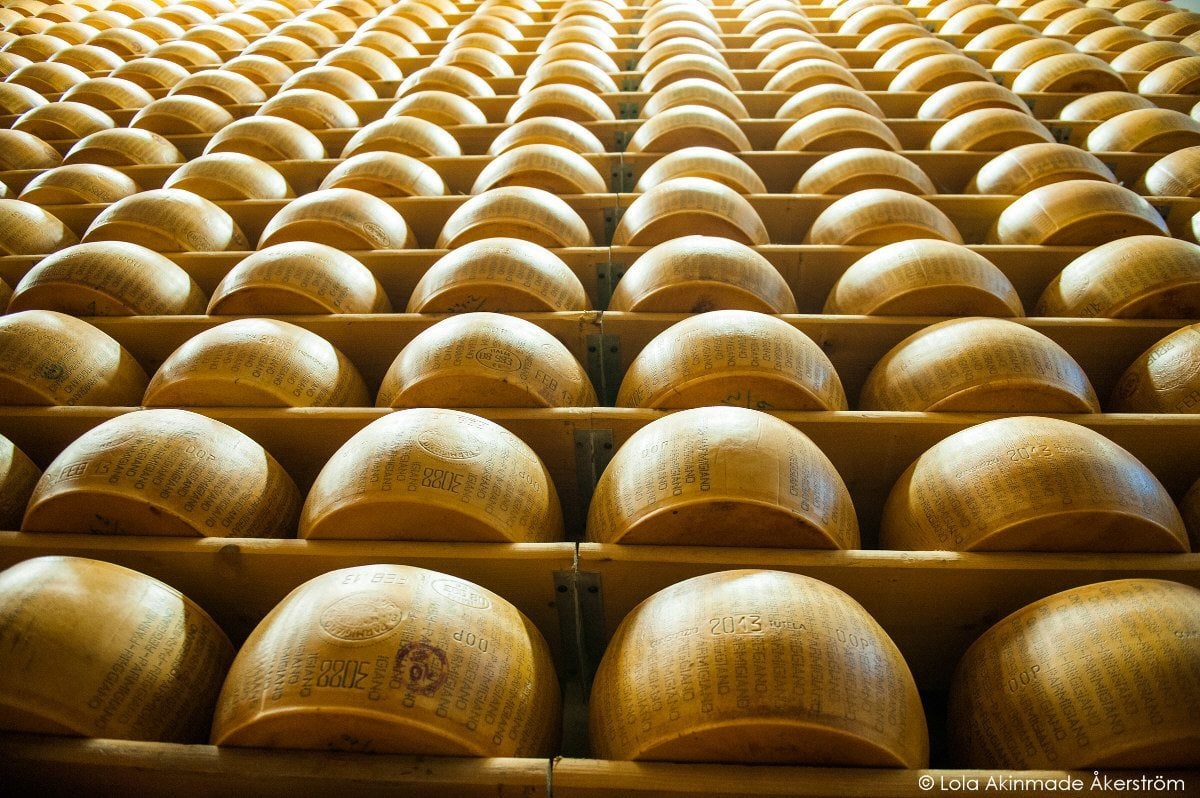
Parmigiano-Reggiano Museum
Position: Corte Castellazzi – Via Volta, 5 | Soragna (Parma)
An ancient circular dairy farm houses the museum dedicated to a unique and inimitable Italian product, Parmigiano-Reggiano, the result of a land where quality is a lifestyle.
Visiting Parmigiano-Reggiano Museum – which tells the history, tradition, and flavors of this PDO product – is an experience that involves all the senses.
At the end of the visit, you’ll have the opportunity to taste Parmigiano-Reggiano cheese of different seasonings, with valuable advice on how to taste it.
Curiosity: once the salting was performed using the white salt of Salsomaggiore, a well-known thermal village in the first Parma hills (today the salt is used above all for its thermal properties).
Parma Ham Museum
Position: Via Fabio Bocchialini, 7 | Langhirano (Parma)
The Parma Ham Museum is located in the town of Langhirano, not far from the city of Parma.
The museum is dedicated to the swine art par excellence and is housed in the former Forum Boarium, where you can still see iron rings used in the past to bind the horses.
In ancient times in this area, the populations of the Etruscans, Celts Galli Boi and Romans were dedicated to raising pigs, thanks to the nature of the Emilian plain that is rich in water and oak woods.
The Museum is composed of eight sections, at the end of which it is possible to taste some products and have some info about the ham factories in the area.
Felino Salami Museum
Position: Strada al Castello 1 | Felino (Parma)
The museum dedicated to the art of making Salami is placed in a stunning old Italian castle in Felino, reflecting the strong bond that this fine product has with its birthplace.
Here visitors can find out more about this salami, produced in eighteenth-century cellars with the meat of mountain pigs, and learn all about its making.
An interesting and tasty journey discovering one of the oldest culinary art of Italy.
Culatello Ham Museum
Position: Strada Palazzo due Torri, 3 | Polesine Zibello (Parma)
The Culatello Ham Museum is located in the great plain of Emilia Romagna: a land dominated by the Po River, where the fog is an essential element of taste.
The birth of the museum is due to the will of the local population, which wanted to preserve its own tradition.
In the beginning, the Spigaroli family – which today owns the museum – was the sharecropper family of the great composer Giuseppe Verdi.
Due to their experience working the meat, in modern times, they have become excellent restaurateurs and butchers, so much that today they run one of the most famous restaurants od the whole Emilia-Romagna region.
Among the Food Museums of Emilia-Romagna, the Culatello Ham Museum is an unmissable spot that reveals everything about the art of Culatello making: the territory, the pig and the secret link with Sant’Antonio Abate and the fine art of the town of Norcia.
Tomato Museum
Position: Strada Giarola 11 | Collecchio (Parma)
This museum is housed in an ancient monastic complex and is dedicated to tomatoes, a precious fruit introduced in Italy by the Americas as an ornamental plant, and today a pillar of Italian daily cuisine.
The headquarters are located right in the middle of the tomato growing areas, in the district where one of the Italian most famous products is transformed and shipped all over the world.
It will be fascinating to undertake the path that will take you from cultivation to the table, finishing your experience with a tasting in one of the local restaurants.
Pasta Museum
Position: Strada Giarola 11 | Collecchio (Parma)
Located in the same place as the Tomato Museum, the Pasta Museum is dedicated to its complementary product par excellence, one of the dishes for which Emilia-Romagna is famous in the world.
Born from the idea of Ettore Guatelli and Pietro Barilla, the museum invites you to discover the path that the wheat makes from the earth to the table, without forgetting any advice on the correct rules of nutrition.
Inside the museum, you will find some gastronomic curiosities as well as the history of the colander, ancient recipe books, and the combinations between different pasta shapes and condiments of the regional tradition.
Olive Oil Museum
Position: Via Bruno Ferrari, 3 | San Secondo Parmense (Parma)
This museum was created to tell everything about a high-quality product such as Italian extra-virgin olive oil.
The Museum is run by the Orsi Coppini family, which has been producing extra-virgin olive oil for generations, with the aim to create a cultural center dedicated to olive oil in the Parma area and to spread the knowledge of a product that is part of local history.
Once crossed the gate, an open amphitheater welcomes visitors before entering the real museum that houses the equipment and reveals the secrets of the art of olive oil production.
The visit to the museum is free on Sunday afternoons, while on other days we recommend booking.
Colli di Parma Wine Museum
Position: Piazza Gramsci | Sala Baganza (Parma)
The suggestive cellars of the Sala Baganza Castle host the museum dedicated to the tasty “nectar of the Gods”.
In an area that has always been suited to wine-growing, finds from excavations testify that the way of drinking wine evolved here for the first time: pure and in glasses, thanks to the Celtic populations.
The exhibition and sensorial itinerary winds through the Fortress undergrounds and the Farnese glaciers, on a journey that goes from archeology to peasant culture, from botany to historical and literary testimonies.
Not to miss a visit to the cellars where you can also drink a good glass of Italian wine.
Porcino di Borgotaro Mushroom Museum
Position: Via Cesare Battisti | Borgo Val di Taro (Parma)
A museum dedicated to the first Protected Geographical Indication (PGI) mushroom.
The exhibition itinerary, which develops in the two locations of Borgo Val Di Taro and Albareto, presents this precious local product at 360°: the territory and the forest, the porcino and its varieties, the various habitats in which it grows, the tools for the collection, the conservation and processing techniques, but also the popular beliefs related to mushrooms and its representation in the modern culture (from the figurative arts to literature to fairy tales), finally ending with an overview related to gastronomy.