
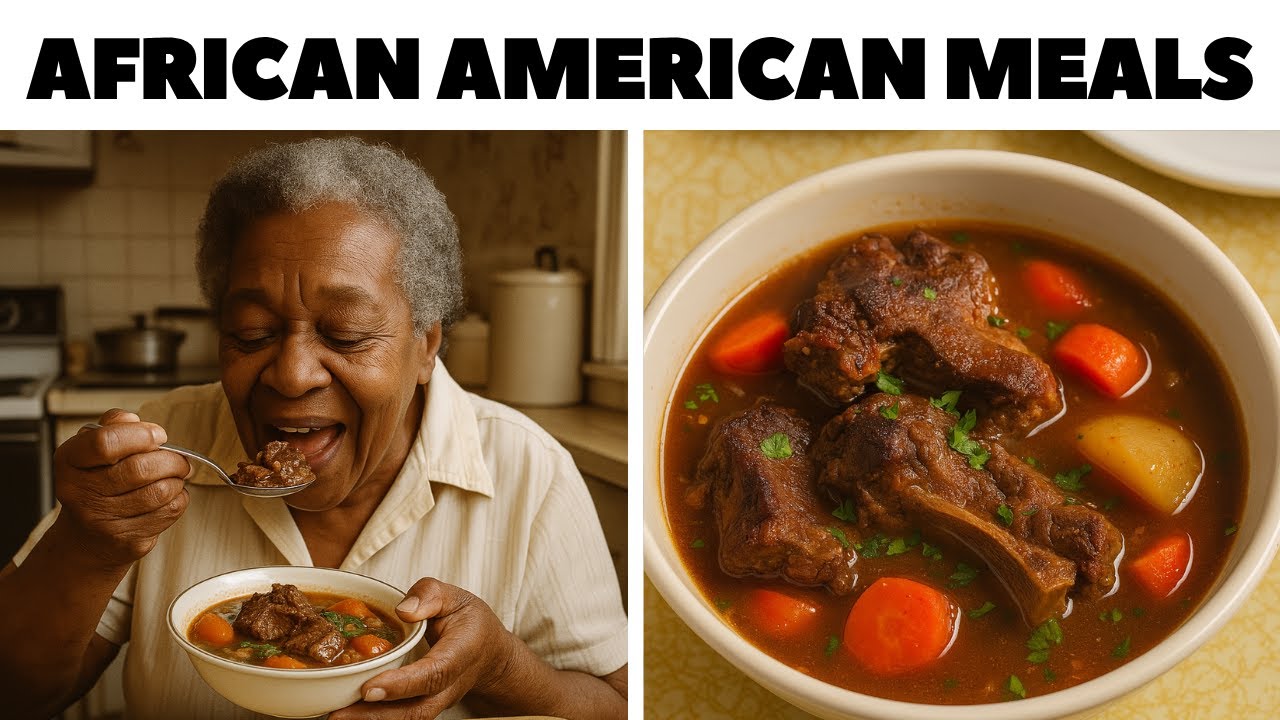
This #historical concept overview explores 25 African American recipes as cultural time capsules. 25 lost #africanamerican #recipes your grandparents knew – The #forgotten flavours of #america ‘s past. Discover 25 African American #soulfood recipes that shaped #blackhistory , #southernculture , and #american family #traditions . From #sweetpotato pie to smothered #porkchops , these #forgotten dishes are rich in flavor and #history .
This is the untold story of soul food recipes that fed generations, preserved #heritage , and created lasting #memories and #nostalgia
They weren’t just meals — they were #moments . Sunday #dinners, backyard #fishfries , #castiron stews, and the comfort of home… all brought back to life in this powerful video. Whether you’re reconnecting with your #pastor learning it for the first time, this is a taste of #americahistory worth remembering.
For those who remember:
👉The pot liquor from grandma’s greens
👉The sound of bubbling chicken and dumplings on a cold night
👉The sweet smell of molasses gingerbread around the holidays
These 25 recipes aren’t just food — they’re #legacy . Hit play. Feel the memory. Pass it on.
💬 COMMENT BELOW:
Which one of these recipes lives in your memory? Which are you passing down next?
🔔 SUBSCRIBE to @theamericaweremember for more food history, cultural throwbacks, and stories from the American past worth preserving.
👉https://www.youtube.com/@theamericaweremember?sub_confirmation=1
👉 If this video brought back a taste of the past—share it. Let’s keep these recipes (and the memories they carry) alive.
They told you soul food was just fried
chicken and mac and cheese. But they never told you about the oxtails simmered for hours
on Sunday afternoon. Some of these dishes were passed down quietly—without cookbooks,because for
generations, Black families weren’t just cooking… They were preserving survival in secret.
These recipes are living pieces of African American history—rich, resourceful, and hidden
in plain sight. And once you taste them… you’ll wonder why no one told you sooner.
1. Smothered Pork Chops This dish is a hallmark of Southern
Black cooking — not just for its flavor, but for what it represented: turning modest
ingredients into something luxurious. During the Great Migration, many Black families brought
with them the practice of stretching ingredients to feed large households. Pork chops were often
considered a treat, especially bone-in cuts that could be bought cheaply at the butcher
or bartered for at community markets. The technique was brilliant in its simplicity
— first, the chops were seasoned with salt, black pepper, paprika, garlic powder, and
maybe a pinch of cayenne. Dredged in flour and fried until golden, then removed while
the pan was still sizzling. Into that same skillet went sliced onions, sometimes green
bell peppers, deglazed with broth or water, and thickened into a rich, golden-brown gravy.
But the magic? That came in the “smothering.” The pork chops were returned to the
skillet, submerged in the gravy, and slow-cooked on low for up to an hour. It
made the meat fall-apart tender and infused it with a depth of flavor that no seasoning
packet could match. Served with white rice, cabbage, or buttery mashed potatoes, this
dish fed the body — but more importantly, it told the story of generations
who turned scraps into soul. 2. Collard Greens with Smoked Turkey Necks
Long before health blogs praised leafy greens, Black families were simmering pots of
collards as both sustenance and celebration. This recipe traces its roots back to West
Africa, where leafy greens were essential to daily diets and often boiled with spices
and meats. In the American South, collards became more than a side dish — they were cultural
staples, served during Sunday dinners, funerals, family reunions, and especially on New Year’s
Day, when greens symbolized money and prosperity. Traditionally, collards were cooked with ham
hocks, fatback, or neck bones. But in more health-conscious generations, smoked turkey
necks became the protein of choice — offering that same smoky, salty depth without the excess
fat. The greens were soaked and rinsed several times (any true Southern cook will tell you:
grit has no place in a pot of greens), then chopped and added to a large stockpot filled with
turkey necks, onions, garlic, red pepper flakes, vinegar, and sometimes a splash of hot sauce.
They were simmered for hours — not minutes — until the greens became tender and dark, soaking
up the broth known affectionately as “pot liquor.” That broth alone could nourish you.
Elders would sop it up with cornbread or save it for sipping. Collard greens weren’t
just food — they were medicine, memory, and tradition passed through the hands of women who
remembered slavery only one generation removed. 3. Sweet Potato Pie
No Thanksgiving table in a Black household was complete without sweet
potato pie — and it was more than dessert. It was the signature of the matriarch. In
many families, only one person “made the pie,” and it wasn’t up for debate. You didn’t
just make sweet potato pie — you inherited it. Brought over from West Africa, sweet potatoes
were a staple of the transatlantic foodways. Unlike pumpkin pie — which dominated white
American kitchens — sweet potato pie used ingredients readily available in the South and
reflected African American flavor preferences: warm, spiced, comforting. The sweet potatoes were
roasted (never boiled — roasting concentrated the sugars), mashed smooth, then mixed with eggs,
evaporated milk, brown sugar, vanilla, nutmeg, cinnamon, and just a hint of lemon or orange zest.
The crust could be homemade or store-bought, but it had to be buttery and flaky —
no shortcuts. Some pies were topped with marshmallows or pecan crumbles in newer
generations, but traditionally, the top was left plain, glossy from the egg and sugar blend.
The first slice always went to the elder — and no one dared ask for seconds until everyone had been
served. It wasn’t just pie. It was praise, legacy, and love served cold the next morning
with coffee and stories from the past. 4. Fried Catfish
If there was ever a unifier at Black family reunions, it was the
fish fry. And no fish was more beloved — or more deeply rooted in African American
culinary tradition — than fried catfish. Catfish was abundant in Southern
rivers and creeks, cheap to catch, and hard to overcook — making it the perfect
protein for families trying to stretch a dollar while still making something delicious.
Fried catfish was more than a meal — it was an event. Families would gather outside with picnic
tables, aluminum pans, gallon jugs of sweet tea, and tubs of cornmeal. The fish was often marinated
briefly in buttermilk, which tenderized the flesh and reduced the “muddy” flavor catfish
sometimes carried. Then it was dredged in a seasoned cornmeal blend — usually mixed with
cayenne, garlic powder, and a bit of paprika. Dropped into hot peanut oil, the fillets would
bubble and crisp, forming a golden shell that snapped with each bite. It was served with hot
sauce — always Crystal or Louisiana brand — a slice of white bread, and maybe a side
of coleslaw or baked beans. Some added lemon wedges, others a tartar sauce their
auntie swore by. And the leftovers? Eaten cold on white bread the next day with mustard.
Fried catfish is a dish that turned survival into celebration. A taste of community,
wrapped in paper towels, shared by hand. 5. Hoppin’ John
This dish carries African spiritual symbolism and Southern practicality in every spoonful. A mix
of black-eyed peas, rice, and pork (often bacon or ham hock), Hoppin’ John was a dish of luck,
legacy, and nourishment. It’s believed to have roots in Senegalese and Gullah food traditions,
where rice and beans were already dietary staples. In the Antebellum South, enslaved Africans adapted
these traditions using the ingredients available on plantations — black-eyed peas grown
in gardens, rice from the Carolina coast, and pork scraps from the kitchen. Hoppin’
John was eaten on New Year’s Day for good luck — with the peas symbolizing coins and greens
(served alongside) representing paper money. But it wasn’t just a holiday meal. It was everyday
ingenuity. The rice and peas stretched to feed large families, and the pork added just
enough richness to keep spirits high even when pockets were empty. Seasonings varied
by region, but almost always included onion, garlic, and bay leaf — some added vinegar,
hot sauce, or smoked paprika for depth. Leftovers were never discarded. Instead, they
were reincarnated the next day as “Skippin’ Jenny,” a sign of frugality — which, in
itself, was a virtue to be celebrated. 6. Hoecakes
At first glance, they look like simple cornmeal pancakes. But hoecakes carry a name—and
a legacy—that speaks volumes about Black survival, labor, and invention. The term “hoecake”
comes from the method once used to cook them: field workers, often enslaved, would place the
batter on the flat side of a hoe and cook it over an open flame in the fields. When there
was no stove, no skillet, no luxury—just grit and fire—this humble cake kept people going.
Made from cornmeal, water, salt, and sometimes lard or bacon grease, hoecakes were economical
and filling. As the generations moved from the plantation fields to freed households, the
recipe stayed—but it evolved. Some versions added buttermilk or eggs, making them fluffier and
more tender. In rural Southern kitchens, hoecakes were often served alongside greens, beans, or
stews, used like bread to scoop up the juices. They were passed down without fanfare. You didn’t
see them in cookbooks. But you’d see them on iron griddles in the morning, crisping at the edges
and golden in the middle, served hot with butter, honey, or syrup. Hoecakes weren’t just
breakfast—they were proof that even with the barest means, Black hands could create something
warm, nourishing, and deeply rooted in tradition. 7. Ham Hocks and Lima Beans
This dish is a perfect example of culinary alchemy—transforming the least desirable
ingredients into a pot of gold. Ham hocks, the joint between the foot and leg of the
pig, were rarely eaten by the wealthy. But for African Americans—especially during
the Jim Crow era—these discarded cuts became treasure. Smoked and slow-cooked, a ham
hock could infuse a pot of beans with a depth of flavor that no seasoning blend could match.
Lima beans, introduced to the Americas through Indigenous and African agricultural exchange, were
a cheap and filling staple in Black communities. When simmered low and slow with ham hocks, onions,
garlic, and pepper, they absorbed every bit of the smoky broth. The beans would soften to a creamy
texture, making every bite rich and savory. This dish wasn’t fancy. It wasn’t served at
banquets. But in Black households, especially during the 1940s–60s, it was a weeknight
miracle—stretching leftovers into a full meal. Children often remembered the rhythmic bubbling
sound coming from the stove and the smell that clung to the air long after dinner ended.
Leftovers were even better the next day, served over rice or sopped up with cornbread.
To this day, some elders still say: “If you know how to season beans
right, you’ll never go hungry.” 8. Gullah Red Rice
If soul food had an anthem, Gullah red rice might be the heartbeat. Born from the rich
coastal cultures of South Carolina and Georgia, this dish was a spiritual cousin to West African
jollof rice. The Gullah Geechee people—descendants of enslaved Africans who lived in relative
isolation on the Sea Islands—preserved more African customs, language, and culinary tradition
than almost any other Black American group. Red rice wasn’t just a side—it was a cultural
bridge. The dish starts with long-grain rice sautéed in bacon fat or oil with onions, bell
peppers, garlic, and crushed tomatoes. Spices like thyme, cayenne, and sometimes celery
seed give it boldness. Smoked sausage, chicken gizzards, or shrimp were often added
if they were available. But even without meat, the dish was rich, tangy, and deeply satisfying.
In Gullah homes, red rice was often cooked for Sunday dinners, birthdays, or church
potlucks. The tomato base symbolized wealth and blessing. Some elders would say that
if your red rice came out too dry or too mushy, you weren’t paying attention—because this
dish demanded care. You had to feel it. In the 21st century, Gullah red rice is
finally getting the recognition it deserves, but in truth, it never disappeared.
It just stayed close to the heart, passed down quietly by those who
never forgot where they came from. 9. Chicken and Dumplings
This dish was born out of necessity but perfected through care. In many Black households, especially
during the Depression and wartime eras, a single chicken had to stretch. Chicken and dumplings
was how mothers and grandmothers made it happen. First, a whole chicken was boiled with onion,
celery, garlic, bay leaf, and black pepper until tender. The meat was pulled from the bones and
returned to the pot. The broth, already rich from fat and flavor, became the base for the dumplings
— a mix of flour, fat (usually shortening or lard), and a bit of milk or water. Rolled thin
and cut into strips or rounds, the dumplings were added to the pot and simmered until soft but firm.
Some families preferred “slick” dumplings—wide and flat. Others liked them puffed up
and biscuit-like. No matter the shape, the result was the same: warm, filling, and deeply
comforting. This wasn’t restaurant food. It was grief food. Cold-weather food. Celebration
food. Food that wrapped around the soul. Eaten with a big spoon and a bigger smile,
chicken and dumplings wasn’t about luxury—it was about making sure everyone at the table
had something hot, hearty, and made with love. 10. Molasses Gingerbread
Before white sugar became widely available—or affordable—Black families used molasses as the
sweetener of choice. It was cheaper, more robust in flavor, and it gave gingerbread a deep, almost
smoky sweetness that white sugar never could. This gingerbread wasn’t the light, fluffy kind seen
in suburban cookbooks. It was dense, moist, and spiced with intention—ginger, cloves, cinnamon,
and allspice dancing together in every bite. It was often baked in cast-iron pans or old metal
trays that had seasoned flavors baked into them. Families made it during fall and winter holidays,
especially when guests were expected. It paired beautifully with black coffee or buttermilk,
and the leftovers rarely lasted more than a day. For many elders, this was the first dessert they
learned to make—handed down without a recipe card. “You’ll know it’s right when the batter hugs the
spoon,” one grandmother told her granddaughter. Today, few people realize just how far back
this cake goes. It’s not just dessert. It’s a direct line to a time when sweetness had to
be earned, and every ingredient was precious. 11. Oxtail Stew
Once dismissed as scraps, oxtails were the kind of cut left for the
poor — too fatty, too bony, too tough. But in African American kitchens, they were
transformed into rich, luxurious stews that rivaled any fine-dining roast. This dish is a
culinary reversal in its purest form: what others threw away, Black cooks elevated into legacy.
The oxtails were first seared until caramelized, then braised slowly in a base
of onions, garlic, tomato paste, Worcestershire sauce, and broth — sometimes
flavored with allspice, thyme, bay leaves, or Scotch bonnet peppers if Caribbean influence
was present. The meat would cook for hours, until it slid off the bone and the marrow melted into
the sauce, thickening it with natural richness. The stew was often served over rice or buttered
noodles, and it wasn’t a weeknight dinner — it was a Sunday dish. A show of effort and
love. And when the pot hit the table, silence followed. The kind that meant reverence,
not absence. Oxtail stew was a reminder that even in a world that handed you bones, you
could still make something unforgettable. 12. Chitlins (Chitterlings)
For many, the mere mention of chitlins stirs a visceral reaction — and that’s part of
their power. Chitlins, made from pig intestines, are a deeply polarizing food, even within Black
communities. But behind the controversy lies a story of ingenuity, resilience, and sometimes
trauma — and that’s why they still matter. During slavery, enslaved Africans were given the
least desirable parts of butchered animals — feet, ears, tails, and intestines. Chitlins were
cleaned thoroughly — sometimes taking hours — then slow-boiled with vinegar, onions, garlic, and
spices to reduce odor and tenderize the meat. The process was intense and sacred. In many
homes, there was a “Chitlin Queen” — the one elder who had the patience and
skill to prepare them correctly. For decades, chitlins were served
during holidays or special occasions, particularly in the South. They were a delicacy
born of deprivation. Eating chitlins today is an act of cultural continuity — an emotional
breadcrumb that connects the table to the field, the present to a past that is hard
to digest, but necessary to remember. 13. Candied Yams
Candied yams were never just a side dish — they were a sugary,
sticky crown jewel of any holiday spread. And despite their name, most didn’t use
actual yams, but sweet potatoes — a crop with deep African roots. In West Africa,
yams were central to ceremonial meals, and enslaved Africans preserved that tradition
in the New World using sweet potatoes instead. The preparation was as thoughtful as it was
indulgent. Thick rounds of sweet potato were layered in a buttered baking dish, then
drenched in brown sugar, cinnamon, nutmeg, and melted butter. Some cooks added orange juice,
vanilla, or even a splash of bourbon. Then they were baked — not just until soft, but until the
syrup thickened and caramelized at the edges. What made this dish special wasn’t just its
taste — it was its timing. Candied yams were almost always made in advance, which meant the
smell teased you for hours before dinner. And once on the plate, they always touched something
— the greens, the stuffing, the turkey — blending sweet with savory in a uniquely soulful way.
They weren’t “dessert.” They were memory. The kind of memory that made your plate
full even before you took a bite. 14. Red Drink
You’d see it before you’d ask. At every family reunion, church
picnic, or Juneteenth celebration — a tall pitcher or punch bowl filled with something… red.
Not cherry, not strawberry. Just “red.” Red drink. While it might seem like a casual beverage, red
drink carries symbolic weight in African American culture. Its roots trace back to West African
hibiscus teas like bissap or zobo — bright red herbal drinks used in ceremonies and community
gatherings. During slavery and afterward, those traditions were adapted into sweetened
red beverages made with Kool-Aid, red soda, or fruit punches. And while the ingredients
varied, the color remained sacred. Why red? Some say it symbolized the blood shed
in the fight for freedom. Others say it simply represented joy — the kind of joy you had to
make for yourself when nothing else was sweet. No recipe was universal. Some families added
pineapple juice or lemon-lime soda. Others steeped hibiscus flowers or used cranberry
concentrate. But one thing was consistent: it was cold, it was bright, and it was made to be
shared. Red drink wasn’t just a thirst-quencher. It was the unofficial flag of a culture that
knew how to celebrate, even in struggle. 15. Grits with Cheese and Butter
Before breakfast bowls became trendy, there was a humble pot of grits on nearly every Black kitchen
stove in the South. Coarse ground corn simmered with patience and care — stirred slowly to avoid
lumps, seasoned lightly with salt, and finished with generous amounts of butter, and sometimes
shredded cheddar, giving it body and depth. Grits weren’t expensive, but they were
sacred. They were the first thing you tasted in the morning and the last thing served
to guests at the table. Paired with fried eggs, sausage, or just eaten plain, grits filled
you up and warmed you from the inside out. But here’s the twist — grits weren’t
just breakfast food. They were dinner, too. Shrimp and grits, for example, originated
as a simple fisherman’s meal along the South Carolina coast. In some households, leftover
grits were poured into pans to set overnight, then sliced and fried crisp the next
day. Nothing wasted. Everything used. And for children who grew up in those kitchens,
the sound of the spoon scraping the bottom of the pot was the signal that breakfast
— and the day — had officially begun. 16. Peach Cobbler
Peach cobbler isn’t just dessert — it’s a warm embrace from history.
The story of this dish begins in the kitchens of the Deep South, where African American cooks
transformed seasonal fruit and humble pantry staples into acts of love. When fresh peaches were
available in summer, families would pick them by the bushel — from backyard trees, roadside stands,
or farms where they worked. Sugar was precious, flour was rationed during wartime, but somehow,
there was always enough to make cobbler. The “cobbled” crust was more rustic than
pie — sometimes spooned over like dumplings, other times carefully rolled into golden
perfection. Seasoned with cinnamon, nutmeg, and a touch of lemon juice to brighten the
sweetness, the cobbler would bubble in a cast-iron pan until the fruit caramelized around
the edges. You could hear it hiss as it cooled. Peach cobbler was served hot, often with a melting
scoop of ice cream or just a splash of cold cream. But more than anything, it was ceremonial.
Made for Sunday dinners, homecomings, repasts, and even first dates — a way of saying, “You
are home now.” For many, the memory of that golden crust and syrupy filling lives longer
than the recipe itself. And the best part? The corner piece, always a little more crust,
always claimed by the eldest at the table. 17. Neck Bone Soup
This dish is a masterclass in thrift, flavor, and storytelling. Neck bones, often
overlooked and undervalued, were once the cuts that white butchers tossed aside. But Black cooks
knew better. They understood that flavor lived in the bone, and that the long, slow simmer of a pot
of neck bone soup could turn poverty into poetry. The recipe varied by region — some added potatoes,
carrots, and celery; others used cabbage, beans, or corn. What remained constant was
the method: browning the bones first, then simmering them with aromatics until the broth
became rich and silky. The meat would eventually pull off the bone in soft, tender ribbons.
Spices were simple: salt, pepper, garlic, maybe bay leaf. But the flavor was profound.
In many families, this was a weekday dinner — quiet, unfussy, and deeply nourishing. For elders
raised during the Great Depression or in post-war cities, neck bone soup was a reminder that
“making do” didn’t mean giving up flavor. It meant honoring every piece of the animal, every drop of
labor. In some homes, children were taught to save the neck bones for “hard times,” but in truth,
this dish was made whenever you needed comfort. 18. Black-Eyed Pea Fritters (a.k.a. Accara)
Before canned beans filled grocery store shelves, African American families made fresh black-eyed
peas by soaking, peeling, and grinding them by hand. The result? Accara — also known as
black-eyed pea fritters. This dish has deep West African roots, particularly in Senegal,
where similar fritters were (and still are) served street-side with spicy sauces and bread.
In the South, these fritters evolved into a beloved appetizer or side, especially in
coastal regions with strong Gullah influence. The beans were blended into a paste with onion,
garlic, and salt, then deep-fried into crispy, golden rounds. The outside was crunchy,
the inside soft and airy. Some versions included chopped peppers or scallions. They were
often served with a dipping sauce — sometimes hot sauce, other times a tangy relish.
Accara was more than just a snack. It was a cultural handshake between continents — a
tangible reminder that African foodways endured, even when names and languages were stripped away.
Eating them today is like time traveling with taste: one bite, and suddenly you’re connected to
something older, deeper, and beautifully unbroken. 19. Baked Macaroni and Cheese (The Real One)
Forget the boxed version. In Black American households, baked mac and cheese was
not a quick fix — it was an art form, often reserved for holidays, Sunday dinners, or
special guests. It wasn’t just about pasta and cheese — it was about structure, richness,
and love layered between elbow macaroni. The key was the cheese sauce: a roux of butter
and flour, slowly blended with milk, and infused with sharp cheddar, Colby, or even Velveeta —
depending on the cook. The mixture was folded with cooked macaroni, layered in a buttered baking
dish, and topped with more cheese or breadcrumbs. Some families added eggs for firmness. Others
used evaporated milk to make it custardy. Then came the baking. No stovetop shortcuts. The
goal was a creamy interior with a slightly crispy, golden top — and a smell that pulled people from
across the house. There was an unspoken rule: only one person made the mac and cheese at any
gathering. That honor was earned, not assigned. And if you took the last corner piece
— the one with the crispy cheese crust? You better pray there was another
pan, because Auntie was watching. 20. Buttermilk Biscuits
If sweet potato pie was legacy, and greens were wisdom, then buttermilk biscuits
were daily grace. In African American kitchens, biscuits were made at sunrise — before school,
before church, before anyone else was even awake. They were made from scratch, without
measuring cups. Just hands, memory, and feel. Flour, baking powder, salt, cold lard or
butter, and tangy buttermilk — folded gently but never overworked. Rolled out and cut
with drinking glasses. Baked until golden, split open, and filled with whatever
was on hand: jam, sausage, eggs, or just butter. The texture? Soft on the inside,
flaky on the outside, with a bottom that crisped on cast iron like it had been kissed by fire.
These biscuits were used to mop up gravy, sandwich leftover meat, or simply comfort a child
after a bad day. Some were dropped by spoon, others rolled into perfect rounds. And when you
saw that biscuit tin come out — usually dented, maybe wrapped in a kitchen towel — you knew
something sacred was about to be served. In truth, no one made them quite like Grandma.
And even if you followed her steps exactly, yours would still taste different — because the
secret ingredient wasn’t technique… it was time. 21. Sorghum Syrup on Everything
Before maple syrup found its way into supermarkets — and long before corn syrup flooded
American tables — there was sorghum. This dark, rich, and slightly bitter syrup was once a
staple sweetener in rural Black households across the South. Grown and milled by hand,
sorghum came from tall, grassy stalks and was boiled down into a thick molasses-like liquid
that carried hints of earth, smoke, and caramel. Its flavor was deeper than sugar. Its texture was
sticky like a story you couldn’t shake. Sorghum syrup wasn’t just poured over biscuits or pancakes
— it was drizzled into grits, used in marinades, brushed on meat, or stirred into coffee when
sugar ran out. In many Black communities, especially in Appalachia and rural Alabama or
Georgia, sorghum was the go-to for sweetness during the Depression and war years, when refined
sugar was either rationed or unaffordable. You might remember an old metal can of it in
your grandparent’s pantry — dark and dented, with a rusted lid — but inside was a taste that
carried generations. Today, sorghum syrup has become rare in stores, but for those who grew up
with it, the taste is unforgettable. It was sweet, yes — but never shallow. It had depth.
Like the people who cooked with it. 22. Liver and Onions
Liver and onions is the kind of dish that splits rooms — you either loved it or you couldn’t stand
the smell. But no matter where you landed, it was a rite of passage. During times of scarcity, organ
meats weren’t just a budget option — they were the option. But for many Black families, especially
during the 1940s–70s, liver became a symbol of resourceful parenting: nourishing, affordable,
and surprisingly flavorful when done right. The liver — usually beef or pork — was soaked in
milk or buttermilk to temper its metallic bite, then seasoned, dredged in flour, and pan-fried
in a skillet with hot grease. Sliced onions were cooked down in the drippings until soft and
sweet, layered on top like a savory crown. Served with white rice or mashed potatoes, the
dish was bold, tender, and intensely aromatic. Children often wrinkled their noses — until
that first bite. Then came the understanding: this wasn’t about preference, it was about
presence. It meant Mom or Grandma had worked with what she had and still managed to put
something hot and healing on the table. It wasn’t fancy. It was necessary. And
that’s what made it unforgettable. 23. Chicken Gizzards
Another often-dismissed cut, chicken gizzards were proof that Black
cuisine wastes nothing. The gizzard — a muscular part of a chicken’s digestive tract
— was cleaned thoroughly, boiled until tender, then either deep-fried to crispy perfection or
simmered in gravy until melt-in-your-mouth soft. Fried gizzards became a soul food staple.
Crunchy on the outside, chewy inside, they were seasoned with cayenne, garlic powder,
paprika, and served in paper bags at fish shacks, gas stations, or community picnics. Sometimes
eaten with toothpicks, dipped in hot sauce or mustard, they were snack food, survival
food, and celebration food all at once. In some homes, gizzards were saved for
“the cook” — the person in charge of the bird — because they were considered special. A
reward. Not everyone could handle the texture, but those who could swore by it. In fact, if
you saw someone at the kitchen counter quietly eating fried gizzards before dinner was served…
you knew they were royalty in that household. 24. Cornbread Dressing
This isn’t stuffing. Let’s be clear. Cornbread dressing is its own sacred dish, with its own
rhythm, rules, and deep Southern Black heritage. It starts with cornbread — made from scratch,
a few days ahead — crumbled into a large bowl. Then came the aromatics: celery, onions,
sage, sometimes bell peppers or boiled eggs. Chicken broth was poured in by feel, not
measure. A couple of beaten eggs added body. The mixture was poured into a casserole dish
and baked until golden brown on top, slightly crisp at the edges, and soft in the center.
It smelled like Thanksgiving. Like home. Like the moment the whole house paused to say grace.
In many families, there was a quiet rivalry over whose dressing was best. Some added oysters. Some
used cream of chicken soup. Others guarded their recipe like state secrets. But what mattered
most was texture and seasoning — it had to hold together, but still melt on the tongue.
And it had to be made by someone who understood memory — not just measurements. Because
this dish wasn’t just about food. It was about ritual. It told you what day it was, who
was home, and who had come back just for this. 25. Blackberry Cobbler
We end where so many memories begin — at the table, stained fingers, and a cast-iron dish
cooling on the windowsill. Blackberry cobbler wasn’t always planned. It came from opportunity —
when wild berries were ripe on the vine, growing along fences, ditches, or even the churchyard.
Children would pick them in old coffee cans, returning home with scratched arms and
purple-stained hands. The berries were rinsed (sometimes barely), tossed with sugar
and a squeeze of lemon, then poured into a buttered dish. The topping might’ve been a
biscuit dough dropped on top, or a lattice crust if someone had time. Then into the oven
until the fruit bubbled and the crust browned. Cobbler was meant to be eaten hot.
But the first bite — tart and sweet, messy and magnificent — made you forget everything
else. You’d fight over the corner pieces. And the leftovers? If there were any, they were breakfast.
Blackberry cobbler was a summer memory you could taste. It didn’t last long. That was the
point. The sweetness was fleeting — just like the season — but it stayed with you forever.
These were 25 African American recipes you’ll wish you knew sooner — not just because they taste
incredible, but because they carry stories that deserve to be told, preserved, and passed on.
If even one of these dishes reminded you of your grandmother’s kitchen, a family gathering,
or a time long gone… then you understand why these meals matter. So don’t just keep it to
yourself — share this video with someone who needs to remember, or someone who’s never known.
And if you’re hungry for more history you can taste — hit that Subscribe button. Because here on
this channel, we bring the past back to the table, one forgotten recipe at a time.
Leave a comment below: which of these dishes do you remember? Which one
are you trying next? We read every one. And now… if you thought these were
powerful — wait until you see the recipes that were almost lost forever.
Click here to watch that next.
1 Comment
Hi everyone . Which one is your favourite recipe? Share your memories with us here 👇