
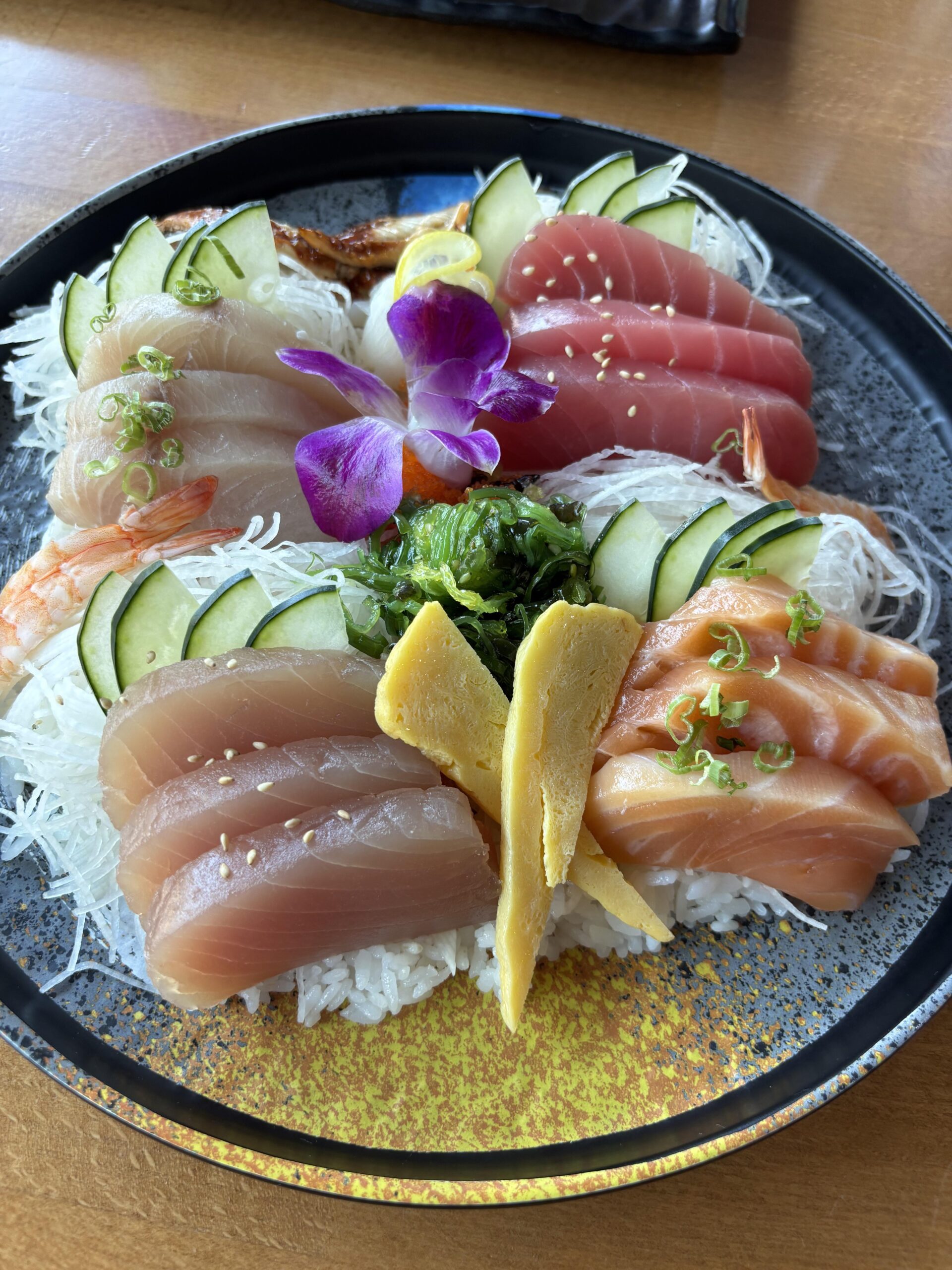
I went to Japan last summer and ever since sushi hasn’t been the same. I love all types of sushi from nigiri to fried rolls with spicy mayo and eel sauce. Yesterday I got this chirashi and none of the fish had any flavor except for the salmon. How can the fish taste so different?Does it have to do with the cut of fish, freshness, cutting technique? It looked so pretty but tasted like cardboard.
by capngills
14 Comments
The two on the left do look aged or old to some degree, I would guess thats part of why (not fresh)
We need a support group I swear. I lived there for 2 years and when I got back I basically gave up chasing what I took for granted for so long.
Actually older fish (if aged properly) has a stronger flavour than fresh fish – most high end sushi restaurants age their fish in kombu or similar to extract umami flavour. From the looks of your chirashi, the fish is either lower quality or from cheaper cuts. For example that tuna is very light/translucent which could mean it is from a smaller breed of tuna such as yellowfin/big eye compared to the bigger more flavourful (but more expensive) bluefin which has a deep red colour.
Japan has a very high standard for fish which usually means you get more bang for your buck. That means unfortunately in other countries you may need to pay more for a similar standard of sushi/sashimi as restaurants can get away with offering lower quality which you can’t do in Japan.
It looks flavorless from the picture. 🙁
So many people I know have been unable to eat sushi outside of Japan after going. I’ve never been, but I accidentally started eating at very high end sushi places in the US that use a lot of Toyosu fish that needs no soy sauce or fake wasabi, and anything lesser just seems flavorless and boring.
Despite how simple it looks (fish on top of rice, duh ezpz), how you clean, filet, and age the fish contribute to the flavor. A fresh caught fish will never taste as good as it has already been properly aged.
Those look like packaged frozen fish, usually those are tasteless. Why? Because they were cleaned and filet in a warehouse, under continuous running water, washing away flavors. Then flash frozen, witnout any aging process. Flash freezing is good if there is a proper defrosting method. However these look like they were defrosted, then frozen again a few times during the storing and transporting process. It destroys the cell structures, so lost proteins, hence flavors.
Especially the bonito (i think?). Bet it just tastes like wet fish.
Because it’s just a picture
Now I understood why Americans love sauce on sushi.
I see two possibilities in this matter.
1. it is not an exaggeration, it really does no taste.
2. the taste buds to perceive the delicate taste of fish have been destroyed due to the daily intake of highly flavored foods.
Personally, I think the possibility of 2 is high. This is because Japanese who eat fish frequently do not usually say that they cannot taste fish.
I always pay attention to the color of Tuna. If it looks faded plasticky pink instead of red, then you have been served less than ideal fish. The tuna on that plate looks clear plasticky pink…
Tokyo and most of Japan have access to fish markets and have a huge fishing/seafood culture as well as implementing preservation techniques and preparation with ingredients that complement the fish very well. In the US there are companies that distribute packaged frozen ready-to-serve fish that sell to restaurants, so the cheaper restaurants but from these distributors over a fancy restaurant that receive whole fish that they process themselves.
There are also many variables and not one single answer to why your fish has no flavor, but it’s a mix of factors like already cut and ready-to-serve fish or lower quality fish or mass produced farmed fish.
I can already tell from the photo that the tuna is packaged and is of lower quality, and the tamago is also packaged and not made fresh in the restaurant.
Because chef sprinkled lemon or lime juice over the fish.
Are you a smoker?
O.O
What? Faints.
You probably got covid