
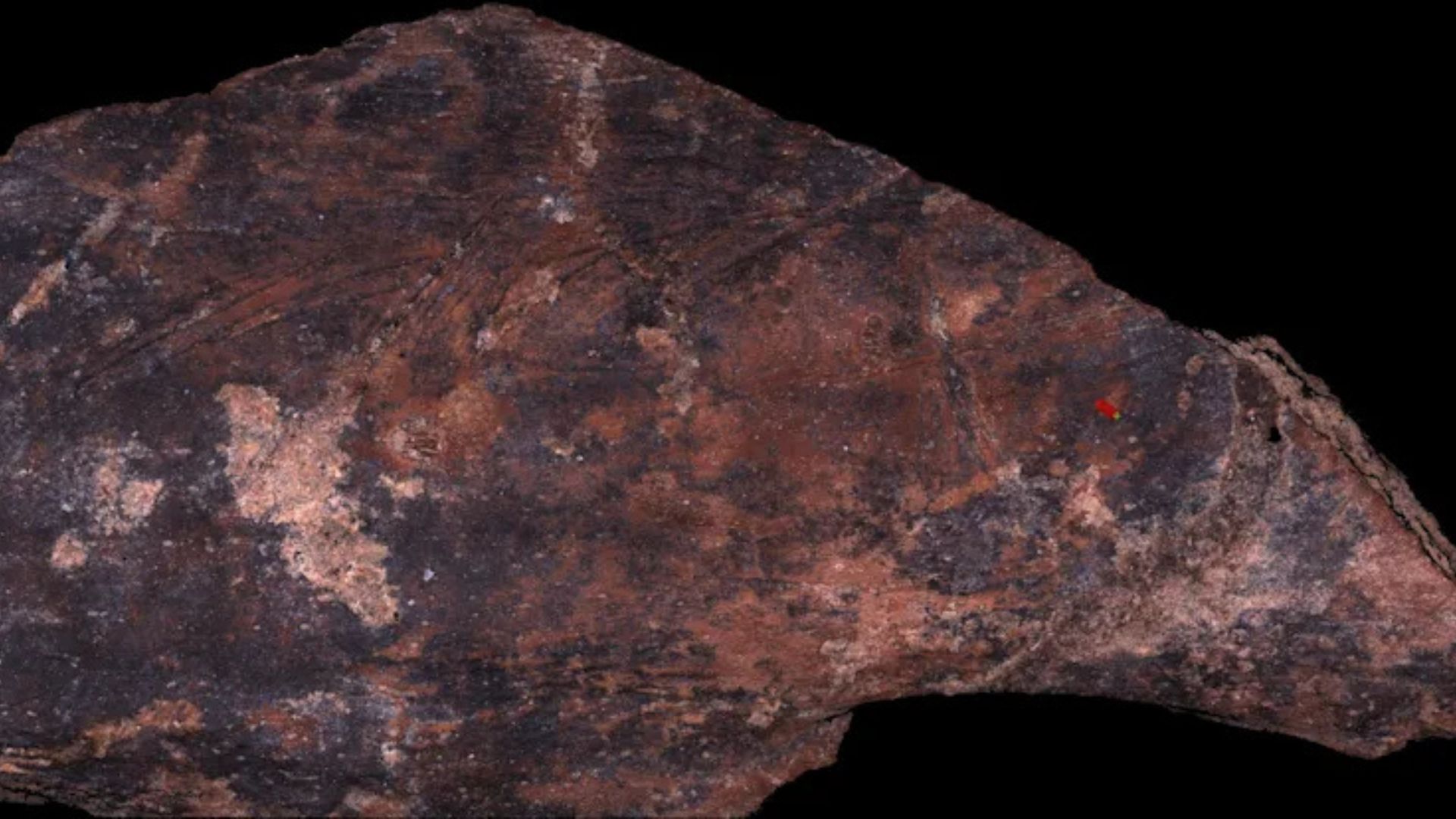
It turns out, Neanderthals likely had something akin to “family recipes.”
Researchers from the Hebrew University of Jerusalem in Israel have revealed that each Neanderthal group may have possessed unique, customary food preparation practices.
The evidence comes from two Neanderthal communities that lived in the nearby caves of Amud and Kebara in northern Israel, roughly 50 to 60,000 years ago. The people living there butchered the same types of animals in their unique ways.
Contrary to being simple, efficiency-driven brutes, ancient Neanderthals probably preserved practices handed down over generations.
“The subtle differences in cut-mark patterns between Amud and Kebara may reflect local traditions of animal carcass processing,” said Anaëlle Jallon, lead author and PhD candidate at the university.
“Even though Neanderthals at these two sites shared similar living conditions and faced comparable challenges, they seem to have developed distinct butchery strategies, possibly passed down through social learning and cultural traditions,” Jallon added.
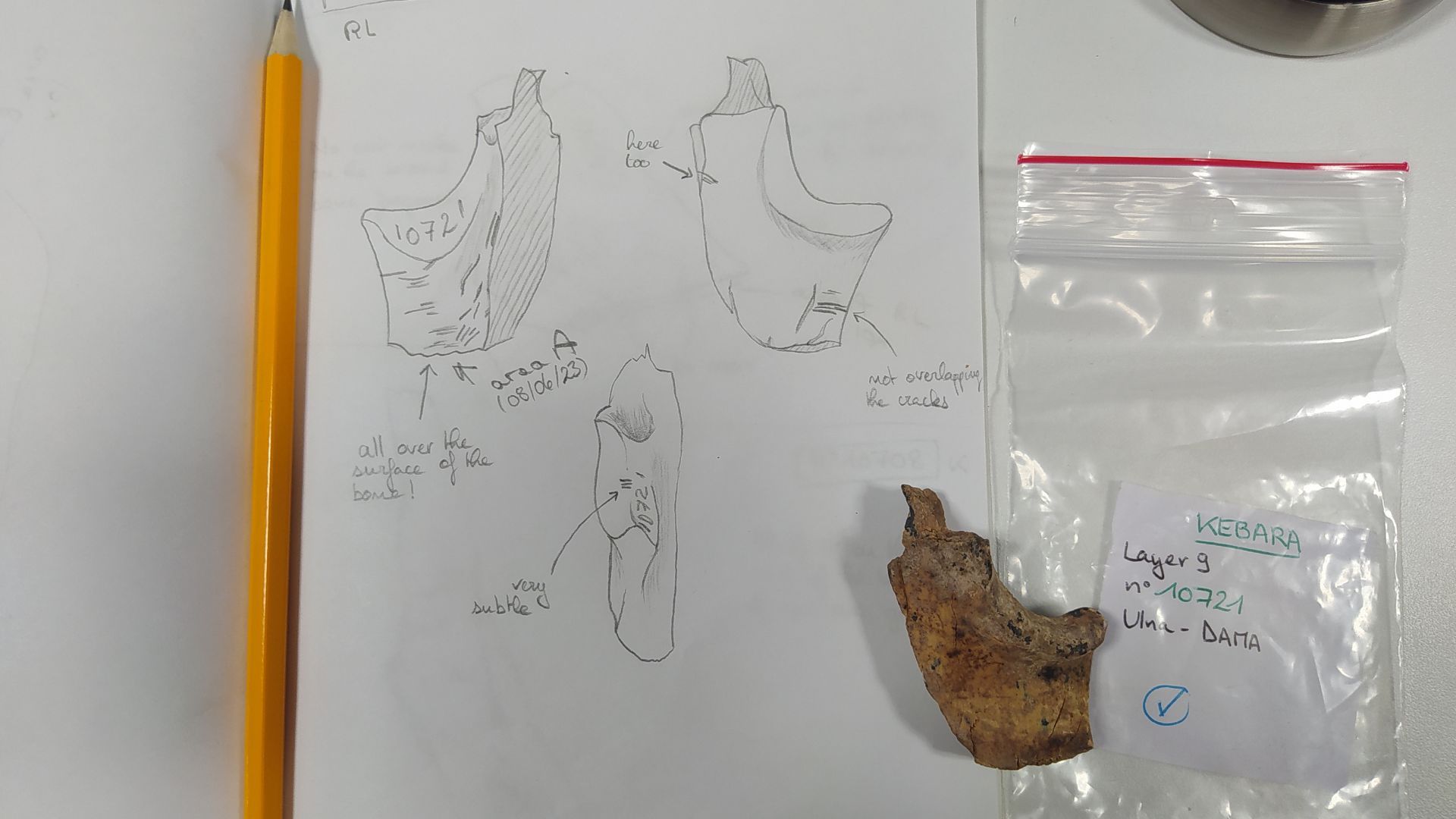 Macroscopic analysis of a bone. Credit: Anaëlle Jallon.
Neighboring caves
These groups were neighbors, separated by only 70 kilometers (43 miles), and they shared a lot in common.
Interestingly, the groups used the same types of flint tools, hunted the same prey – mostly gazelles and fallow deer – and even occupied their caves during the same winter months.
You’d expect their butchery techniques to be pretty much identical, right? But surprisingly, the two groups butchered their food in visibly different ways.
“These two sites give us a unique opportunity to explore whether Neanderthal butchery techniques were standardized,” explained Jallon.
“If butchery techniques varied between sites or time periods, this would imply that factors such as cultural traditions, cooking preferences, or social organization influenced even subsistence-related activities such as butchering,” the author added.
In the caves, Neanderthals left behind burials, stone tools, hearths, food, and animal remains like boar, wild goats, and aurochs.
Unique processing methods
As per the Times of Israel, researchers examined cut marks on nearly 350 animal bone fragments from both sites and noticed peculiar processing methods.
Kebara Neanderthals likely hunted larger prey and often brought entire kills back to the cave for butchering, with less bone fragmentation and about 9% burned bones (likely cooked).
In contrast, at Amud, 40% of animal bones appear burned and highly fragmented, suggesting different cooking or processing methods, and they show less carnivore damage.
The Neanderthals at both Amud and Kebara caves utilized similar toolkits, resulting in comparable cut-mark profiles (angles, surface widths). But distinct butchery practices are evident in the families.
The cut-marks on bones from Amud were more concentrated and less straight than those found at Kebara.
This wasn’t due to different prey, tools, or even the skill of the butchers. The differences persisted even when comparing the same types of bones from the same animals.
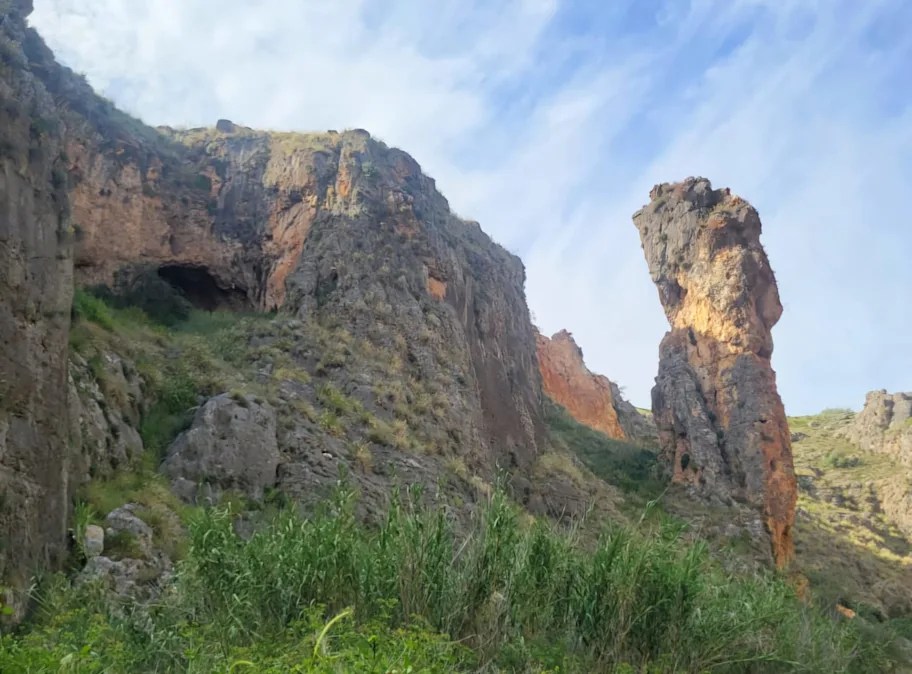 Amud cave. Credit: Anaëlle Jallon.
So, why the distinction? One intriguing possibility is that the Neanderthals at Amud were treating their meat before butchering it.
Perhaps they were drying the meat, or even letting it decompose slightly, similar to how modern butchers might hang meat.
The team says decayed meat is tougher to process, which could explain the more intense, less linear cut marks.
Another idea? Different group organization. Maybe more butchers worked on a single kill at one site, or perhaps the social dynamics of the communities influenced how the work was divided.
The study offers a captivating peek into the complex lives of Neanderthals, even as more research is required to understand their ancient food preparation methods fully.
The study was published in the journal Frontiers in Environmental Archaeology.