Last Updated on 8th October 2024 by Sophie Nadeau
This post may contain affiliate links. Please check out my privacy policy and disclosure for more information.
Apulian food is famous around Italy for traditionally being vegetable-focused. The sun-soaked heel of Italy is home to a cuisine with centuries of history, defined by its simplicity and quality. From sweet eats to speciality pasta shapes, the one thing you must make it your mission to enjoy while in Apulia is all of the local food on offer. Here’s your ultimate guide to traditional Puglia food that you must sample!
A history of food in Puglia
One of the best things about Italian cuisine is how regional it is. Apulian gastronomy dates back to the Middle Ages, a cuisine which has been crafted from recipes upon recipes of mouthwatering foods that have been passed down through generations for centuries. The food of Apulia has often been referred to as a prime example of cucina povera or ‘cuisine of the poor’.
The food is defined by and starts with the people who lived in an area which suffered from poverty, as a result, they adapted culinary traditions to suit their needs, using cheap and simple foods.
Therefore, bread, vegetables and pasta are the main stars of Puglia’s food scene. However fruits, fish and wine are also consumed frequently, but meat tends to play a minor role, if any at all.
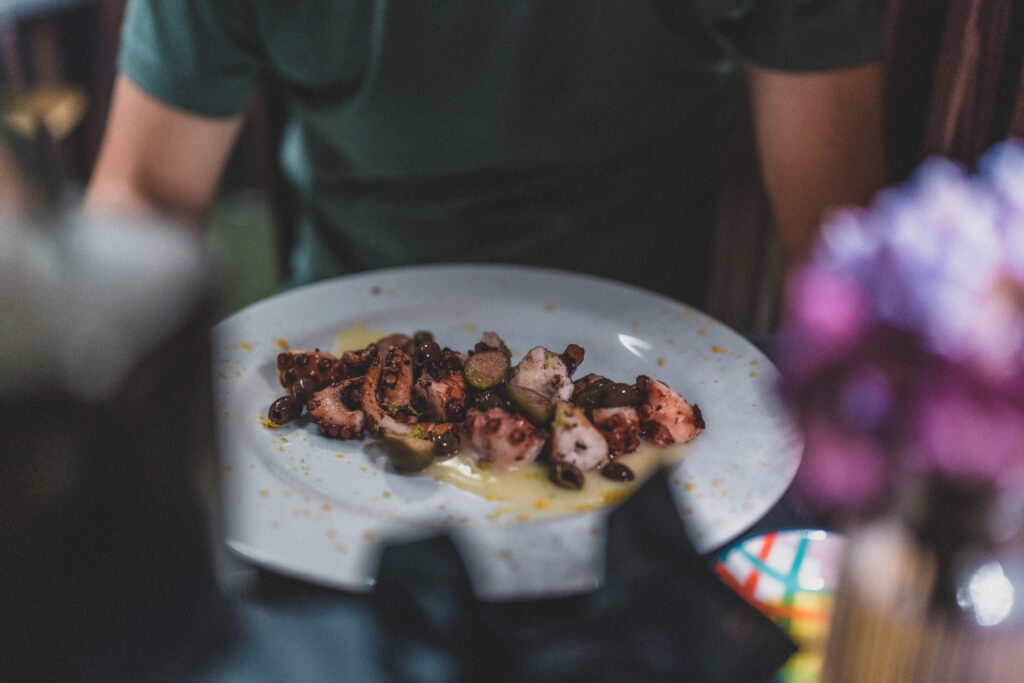
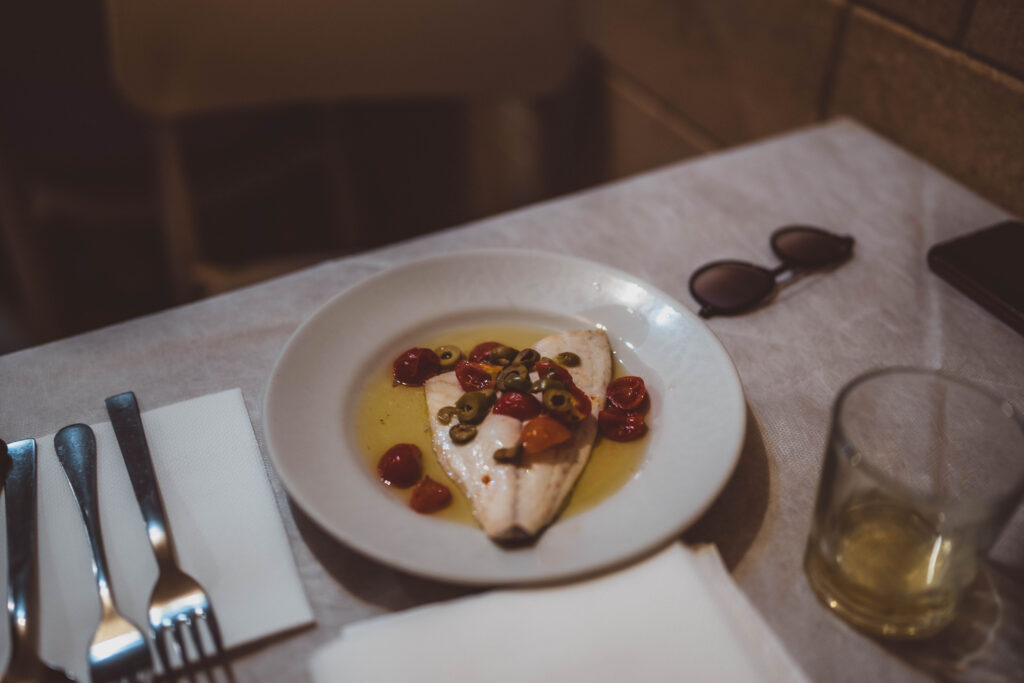 A fish dish cooked simply with olive oil, tomatoes, and olives in a trattoria in Taranto.
In 1504, the first cookbook of Apaulian recipes came out, covering the notability of the cuisine. Also included were recipes not from Puglia, showing that the Apulians were keen to adopt cooking practices from other regions and integrate them into their cuisine.
Gradually over time, these recipes have come to be part of the traditional Apulian gastronomy we know and love today! If you’re planning to spend time in the region, check out our suggestions for how to spend one week in Puglia.
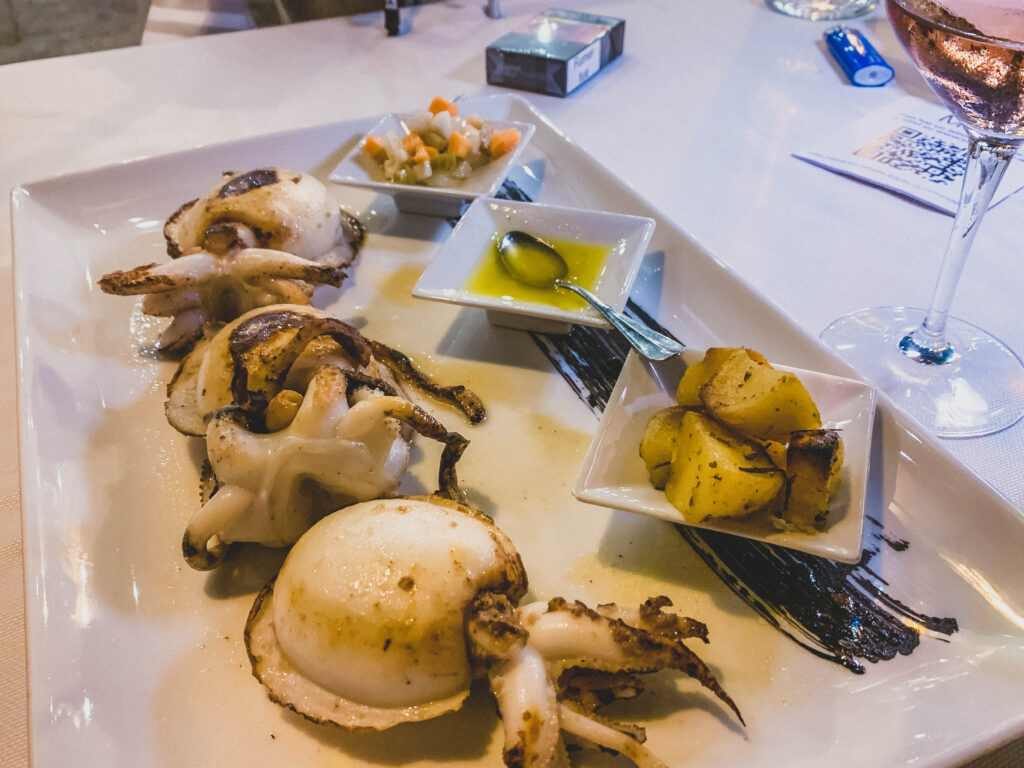 Seafood is a common and popular dish in the heel of the boot region
A vegetarian (and vegan) paradise!
As mentioned, traditionally, Puglia food has been vegetable-focused. The main ingredients of Apulian cuisine consist of vegetables, bread and pasta.
Not only this but unlike the northern region where there is a larger production of dairy products like butter, Puglia relies more on their abundance of olive oil as a substitute. For example, Orecchiette pasta is completely vegan!
However, it’s not to say all the dishes are vegetarian (although the majority are), thanks to the region’s proximity to the sea, you can expect to find fresh seafood included in several dishes. And, Puglia is also famous for its cheeses, which you’ll find out more about below.
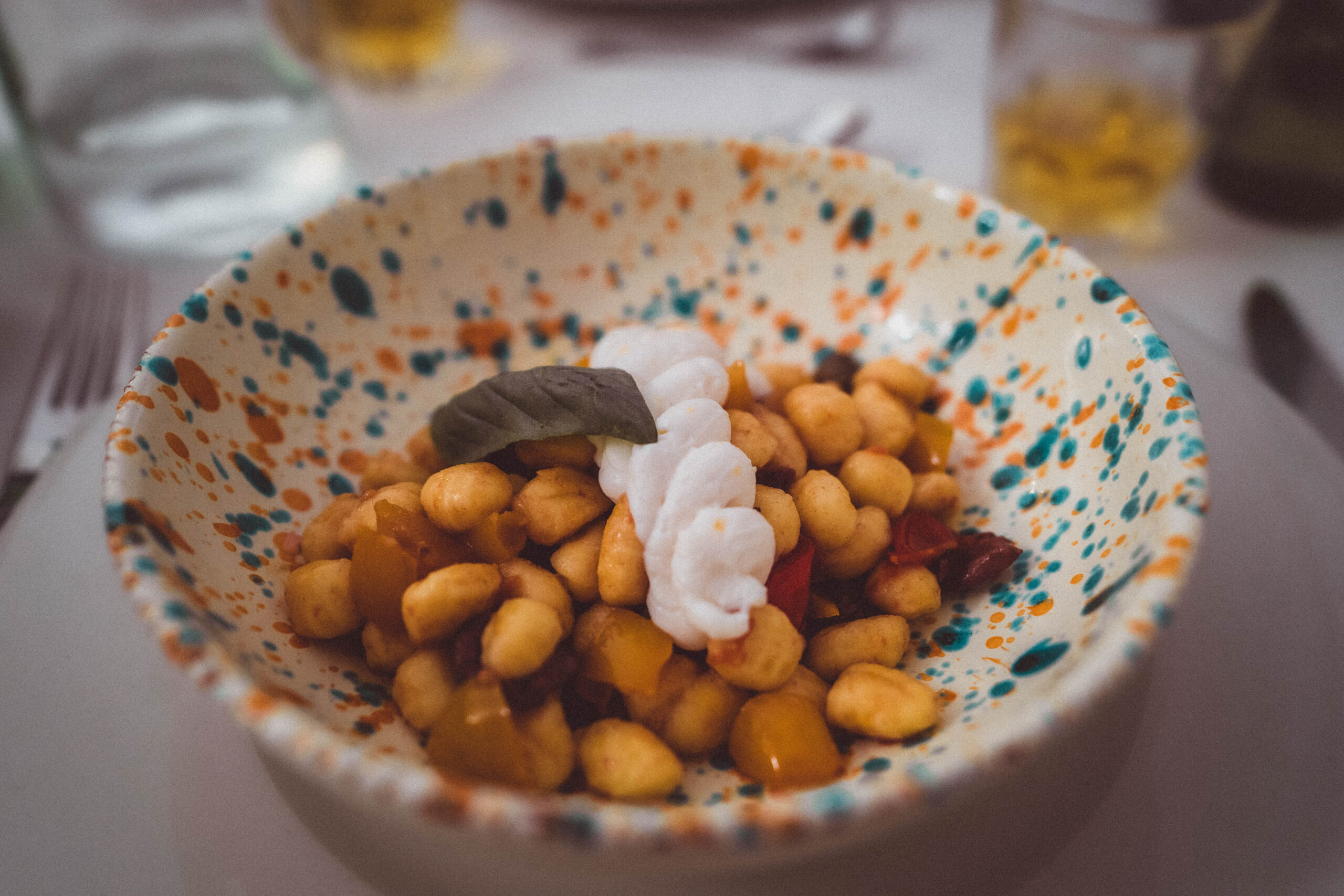 Puglia ‘splatterware’ is one of the more popular ceramics to come from the region. This type of pottery is created with paint splatters and adds beautiful pops of colour to any table set up!
Food to try in Puglia
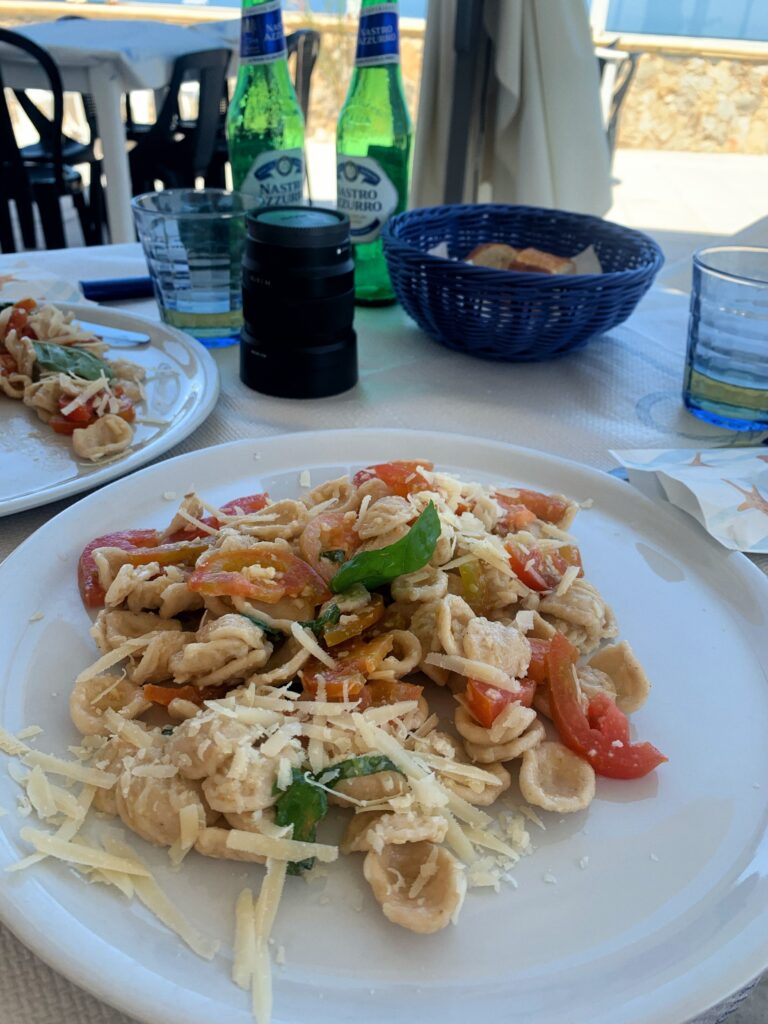
Orecchiette
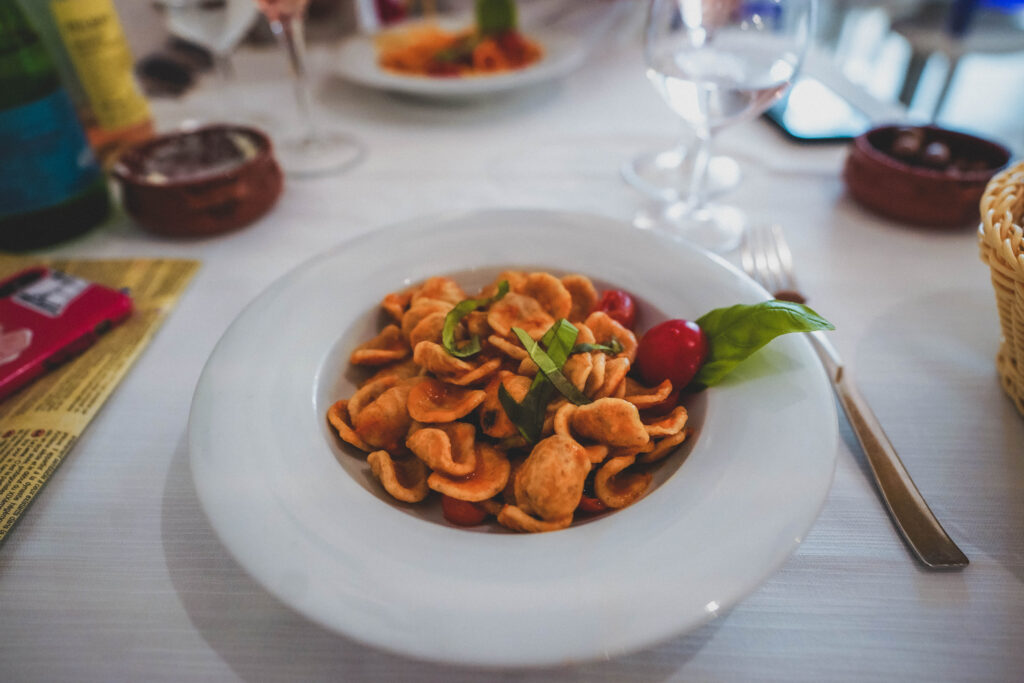
‘Little ears pasta’ is probably the most famous dish to derive from Puglia and is the region’s most famous foodie export. Indeed, if you’ve tried anything from this list before, it’s probably Orecchiette pasta!
Believed to date back to the 12th and 13th centuries, though the exact origin isn’t known, the small ear-shaped pasta is made using only drum wheat and water. The most famous way to consume orecchiette is as part of Orecchiette Con Cima Di Rape, which is made with broccoli and turnip greens.
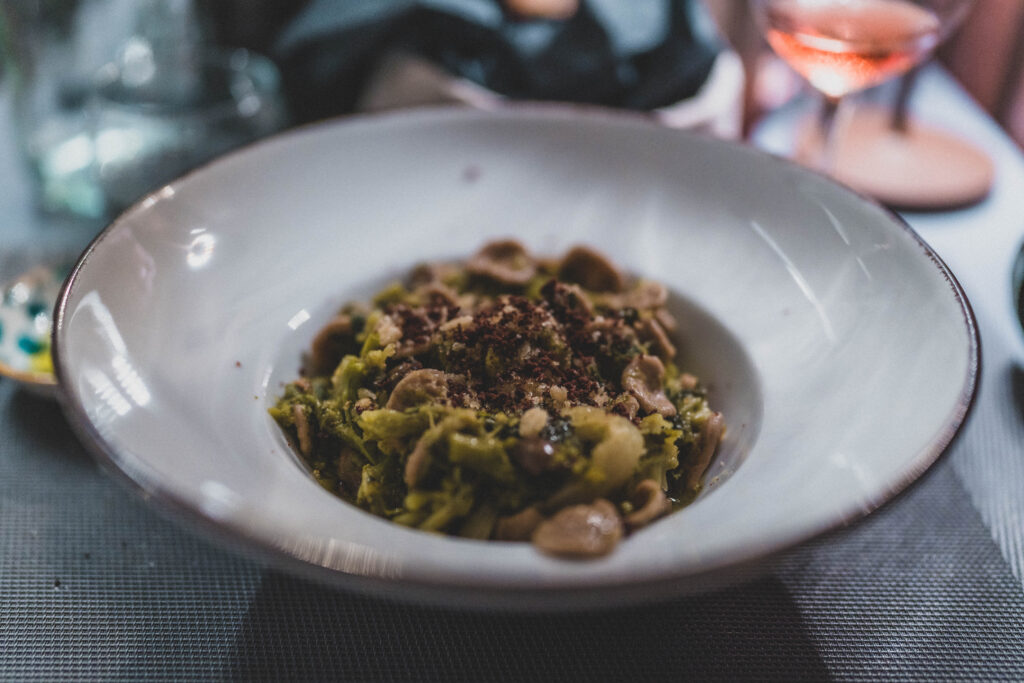 One of the most popular ways to enjoy orechiette pasta is with turnip greens and brocoli.
Ciceri E Tria
Ciceri is the Latin word for ‘chickpeas’ and tria derives from the Arabic word, meaning ‘pasta’ or ‘noodles’, so Ciceri e tria, is a pasta dish that is prepared with both pasta and chickpeas, typically including fried pasta too. The dish originated in the Salento region and has become an emblematic dish of Salentine cuisine, a pocket of Puglia.
Cheese from Puglia
Despite being less focused on dairy production in southern Italy, the region of Puglia is responsible for some of the most divine cheeses in the world! Plus, it was recognised that transforming animals’ milk into cheese was a great way to preserve a precious resource (and also create tasty new avenues!)
Here’s a brief overview of just some of the best Pugliese cheeses:
Burrata – Another iconic food which comes from Puglia is Burrata, which is perhaps the best-known cheese to come from Apulian cuisine. Made from two cheeses, Burrata is a thin pouch of Mozzarella which is then filled with a traditional Puglian Italian cheese made from the shreds of mozzarella made and mixed with fresh cream, known as Stracciatella.
Caciocavallo – A ‘stretched-curd’ style cheese, made from sheep or cow’s milk this hard cheese is crafted to form the shape of a teardrop.
Cacioricotta (goat cheese) – Simple and cylindrical this soft cheese is said to have a chalky texture
Canestrato Pugliese – This popular hard table cheese can be aged anywhere up to 10 months!
Manteca – Ultra-rich, this cheese is characterised by the fact that it has butter at its core.
Ricotta forte – Strong ricotta, this soft cheese is a Pugliese speciality and has an intense flavour.
Fallone di Gravina – Similar to ricotta, this cheese is created using cow, goat or sheep’s milk and two different techniques that include curdling the milk. Best eaten spread over bread.
Ricotta Marzotica – Typically made between February and April, this soft cheese is covered in local herbs for extra flavour. It’s often served with a particular broad bean dish around Easter time.
Pampanella – This unique cheese has been produced as far back as the 1700s and takes its name from the leaf of a fig tree, of which it was traditionally served on.
Pasticciotti
A sweet delight! Pasticciotti is a type of Italian pastry, traditionally filled with sweet ricotta or egg custard (depending on which part of the region you are in), then lightly dusted with powdered sugar.
Pasticciotti were a ‘mishap’ in the kitchen, created by chef Andrea Ascalone in 1745, who used the leftover mixture from a cake to create smaller versions. And just like that, the baked sweet treat was born!
Taralli
This Italian snack food is a wheat-based cracker that is of a similar texture to a grissini breadstick and can be served either sweet or savoury. Shaped like tiny misshaped bagels, these snacks are typically flavoured with salt, pepper, sesame seeds onion etc. and served with a drink alone, alongside cheeses or sometimes glazed with sugar as a sweet snack.
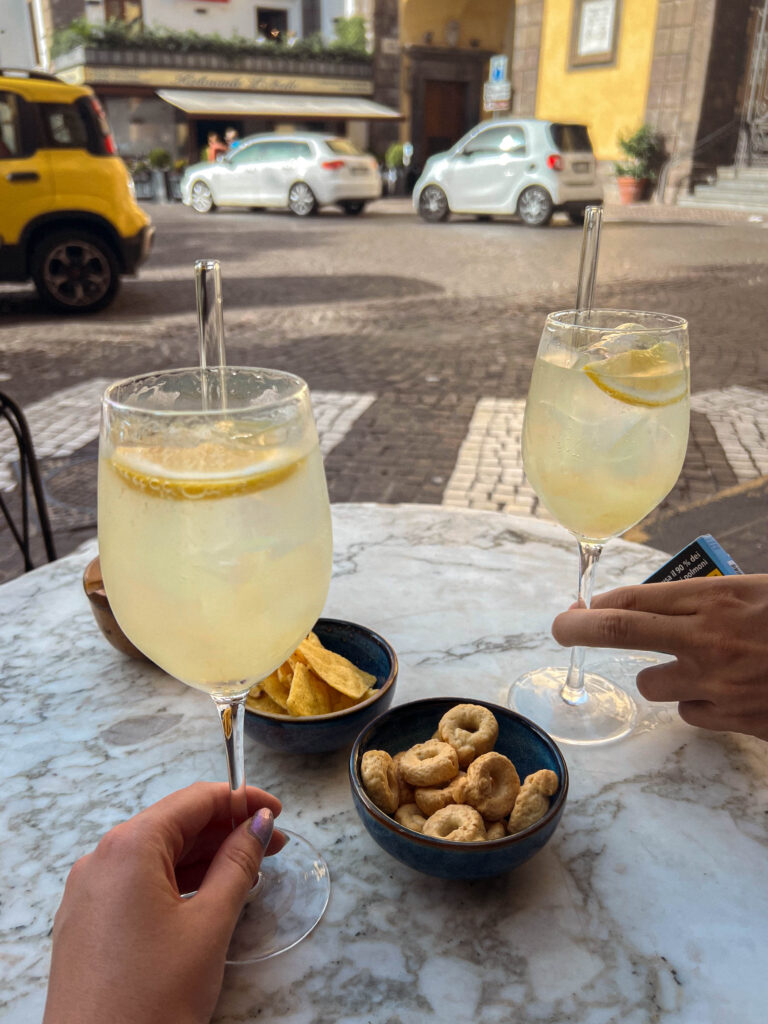 These small crackers are often served as an accompaniment to an Italian apritivio… which has to be said is necessary as these are quite dry snacks!
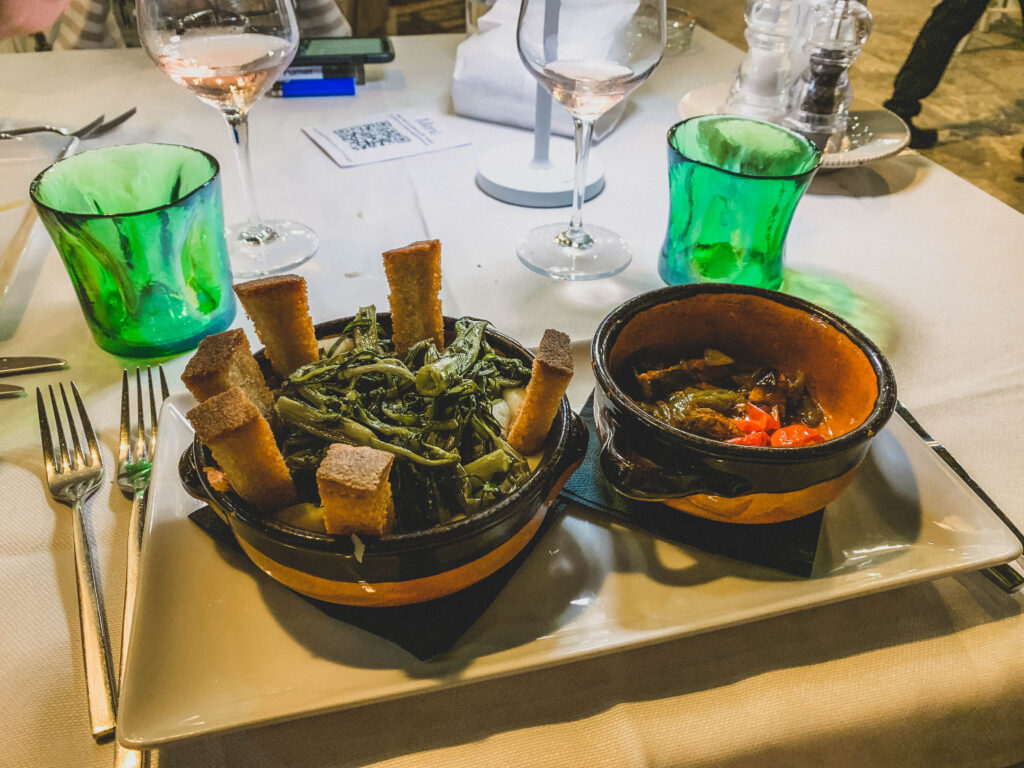
Fave e Cicoria (fava bean with chicory)
One of the most popular dishes/dips of Southern Italy, Fave e Cicoria is a puree of fava beans, garlic and seasoning topped with bitter long-cooked chicory greens and drizzled with olive oil. This is often served as a starter or as a light dish to go alongside drinks.
Parmigiana Di Melanzane / Parmigiana Di Carciofi
A vegetarian’s answer to lasagna…but better! This dish comprises fried slices of eggplant layered with tomato sauce and cheese, which is typically grated fresh mozzarella and grated Parmesan. In Naples, parmigiana is also prepared using fried courgettes or artichokes instead of eggplant.
Several regions of southern regions in Italy claim this dish, though the exact origins aren’t known. One thing for certain is that this dish of very little (and cheap) ingredients is very typical of Apulian cuisine, and very delicious!
Focaccia Barese
The ultimate comfort food, this type of focaccia originated from Bari and is typically served as an afternoon snack. Crispy on the outside, and fluffy on the inside, the ingredient that makes this focaccia so unique is the fact it is made with mashed potatoes added to the dough, then topped with ripe tomatoes, oregano (sometimes olives) and smothered in olive oil.
Acquasale
The peasant’s answer to bruschetta! Also known as cialledda, this frugal recipe is made from stale bread, salt, olive oil, tomato, and oregano. Acquasale translates to water and salt, and this simple yet hearty dish was the traditional lunch eaten by local farmers and fishermen who would be working outside all day.
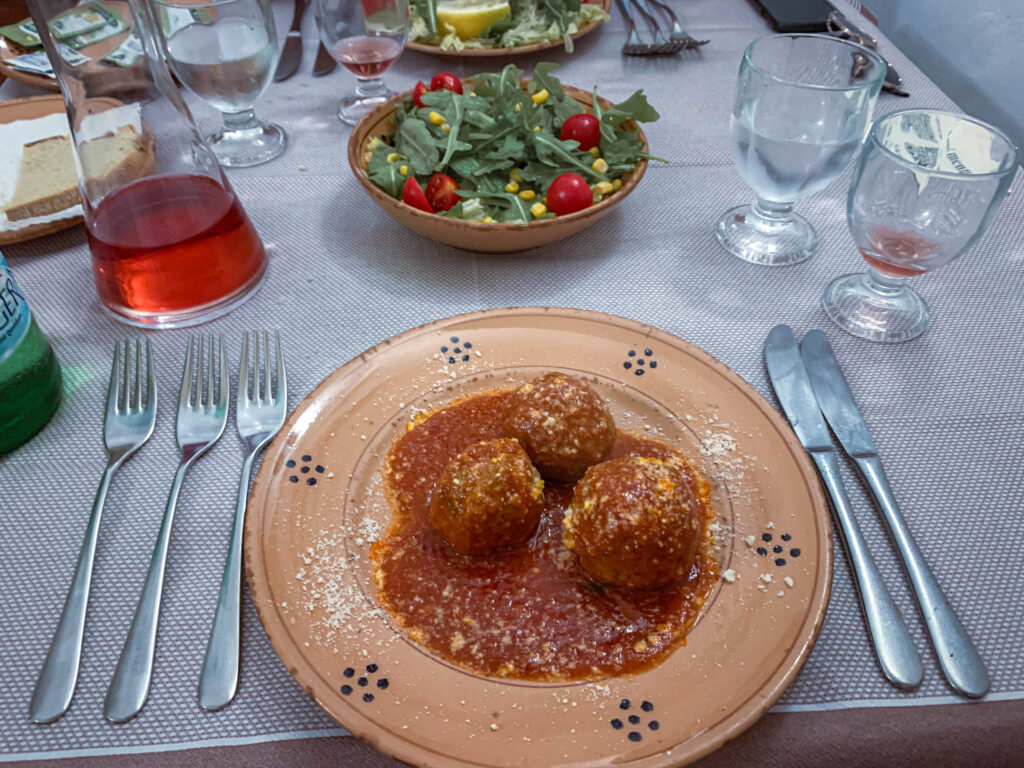
Polpette di Ricotta
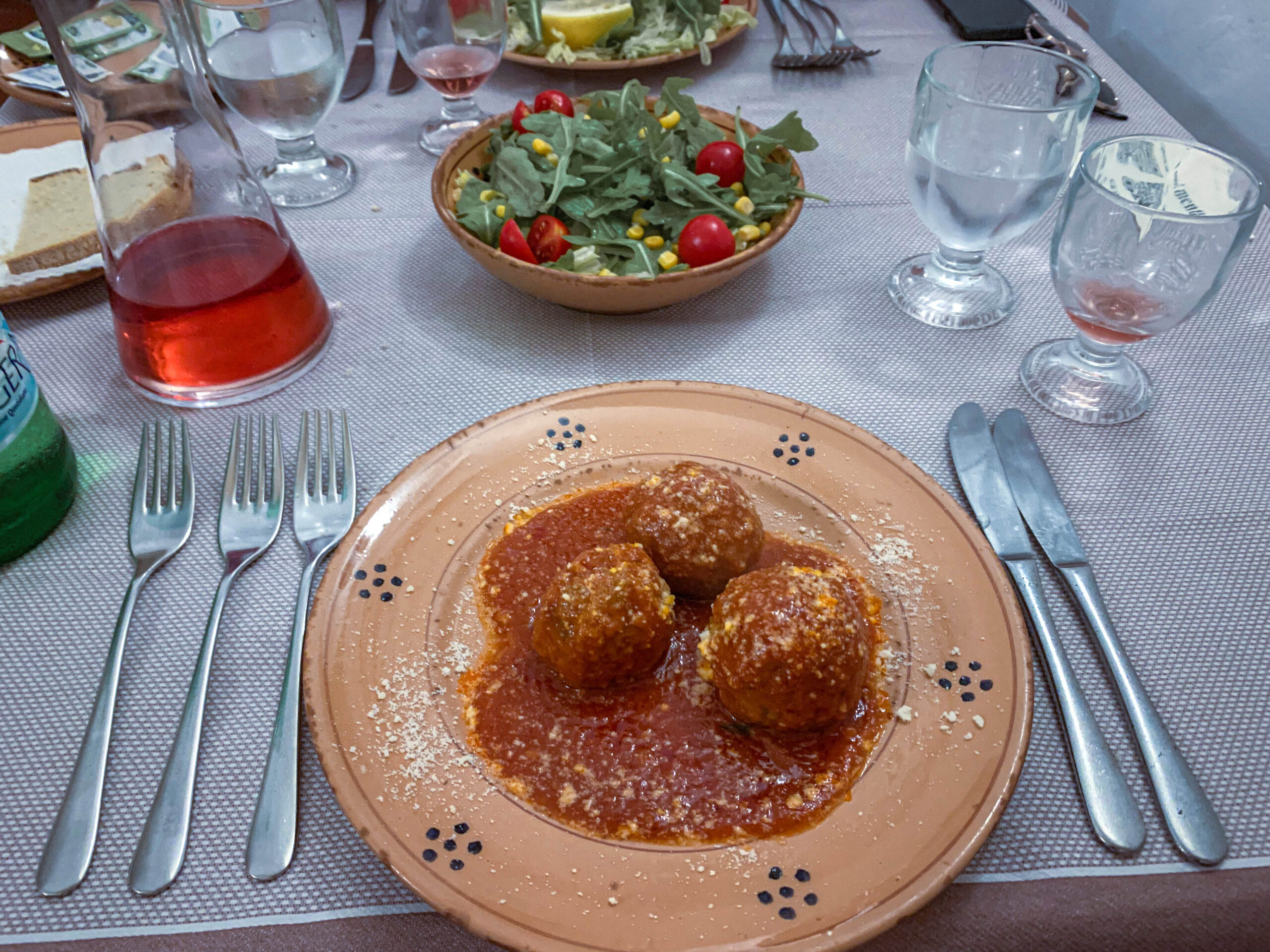
Polpette roughly translates to ‘meatball’ in English, and as Apulian cuisine is so vegetable-focused, you can probably guess they have their very own vegetarian-friendly ‘meatballs’!
Made with ricotta and parmesan cheese along with basil, these fluffy dumpling-like balls are fried and then gently simmered in a slightly spicy tomato sauce. A comforting dish typically served alone, but sometimes alongside pasta.
Polpette di melanzane
Every Italian region and home for that matter has their version of polpette! Another version which is typical of Puglia tradition is stale bread and eggplants formed into balls and fried, served alone or with a warm tomato sauce. These ‘eggplant meatballs’ are typically eaten as a snack or appetizer.
Tiella
A staple Pugliese dish which comprises risotto rice, potatoes, and mussels, layered and baked in a dish that will leave your kitchen smelling of the sea! Reminiscent of the Spanish dish paella, this is because the dish originated during the time of Spanish rule in southern Italy.
Pettole
Sweet or savoury, these small puffed-up deep-fried fritters of dough are a Christmas tradition in Puglia, and the arrival of the festive season can often be tracked by local bakeries selling these simple (yet extremely moreish) snacks!
Pettole can either be eaten plain, dressed with savoury flavours such as olives, anchovies etc. or tossed in sugar and honey and dusted with icing sugar.
Fritto Misto
Another deep-fried delight typical of the Puglia region is fritto misto, which translates to ‘mixed fried’ and is exactly that. A mix of vegetables, seafood and sometimes meat, coated in a light batter and fried, this simple Italian peasant tradition remains extremely popular today! Found across the region as a snack, typically served with aioli as a dipping sauce.
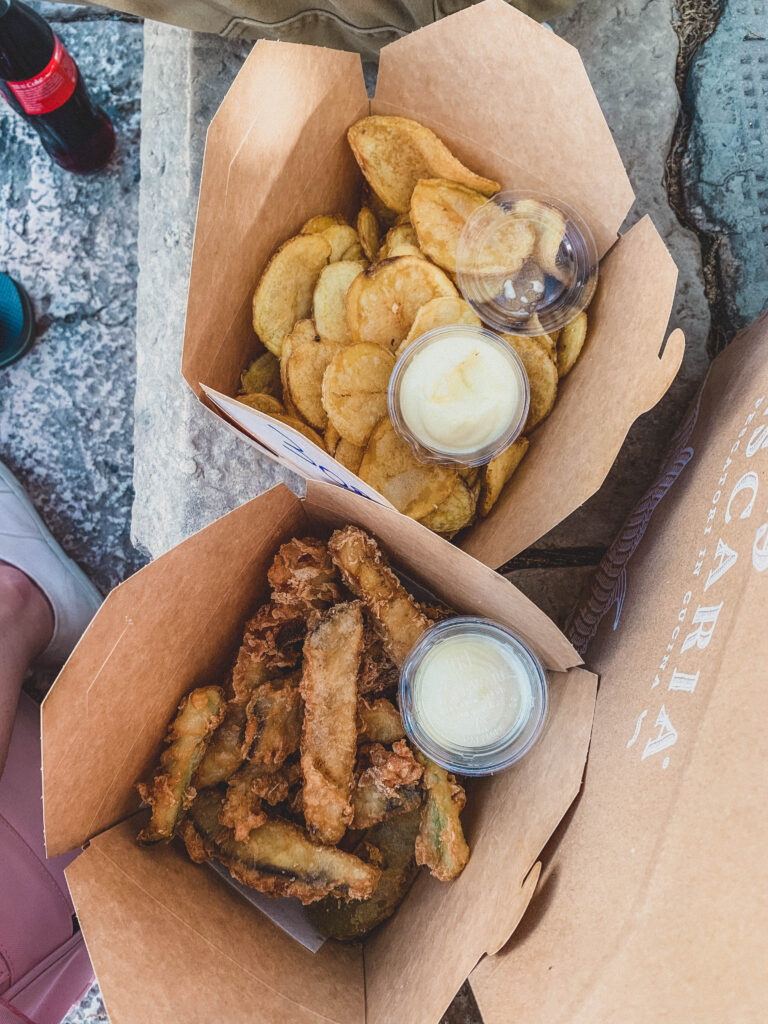 Tempura vegetables are another popular fried product in Puglia
Cartellate
Another festive sweet treat, cartellate is a staple dessert of Apulian cuisine. Made up of a base of flour, sugar, extra-virgin olive oil, and white wine, then deep-fried and soaked in syrup. The syrup often used is vincotto, a dark and sweet grape-based syrup made in the sun kissed rural parts of Italy.
Panzerotti
A savoury turnover, similar to that of a calzone or British pasty, filled with mozzarella, tomato sauce and basil, this super simple dish is emblematic of traditional foods from Apulia!
Baccalla Alla Salentina
A traditional dish from Puglia and Salento, baccalà translates to dried salted cod and the Salento way is to take this speciality, sprinkle it with breadcrumbs, pecorino cheese and fresh tomatoes, then bake it in the oven with potatoes till golden and crispy.
Melanzane Ripiene
Stuffed eggplants are a traditional Puglian dish, filled with a stew of tomatoes, onion and garlic then smothered in olive oil and baked. There is both a meat and vegetarian version of this dish.
Cozze arraganate
Simply baked mussels, a delicious dish of mussels topped with breadcrumbs, seasoned with garlic and parsley then baked.
Bombette Pugliese
One of the more rare meat dishes of Apulian cuisine is bombette, which are pork meat rolls stuffed with cheese, salt and pepper (sometimes pancetta) and then fried off.
Puccia Salentina
Salento’s version of a burger bun, puccia is a type of bread similar enough to pitta bread and is often served as a light snack or lunch item, filled as a sandwich.
Friselle
Another Puglia bread which is more commonly eaten as toast for breakfast is friselle, which is traditionally baked in large, round loaves, and eaten with cheese or jam.
Sgagliozze (Fried Polenta)
Polenta is an Italian store cupboard staple and has roots in peasant cuisine, made from grinding corn into flour, it’s golden yellow in appearance and has a slightly sweet flavour to it. Although polenta originates from Northern Italy, sgagliozze is a signature street food that is popular in the south and can be found all year round in the region.
Fried in a square shape and eaten hot, this dish is particularly popular in Bari and can be found being sold after the mass outside the St. Nicholas Cathedral!
Tette delle monache
A sweet treat known as ‘tit of the nun’ is typical of the Altamura in Apulia, and takes its name from the fact the cupcake shape resembles that of a woman’s breast. Made from the Italian sponge cake pan di spagna, the cakes are stuffed with soft whipped cream and lightly dusted with sugar.
What dishes in Puglia are vegan or vegetarian?
Vegetarian:
Parmigiana Di Melanzane / Parmigiana Di Carciofi
Panzerotti
Polpette di melanzane
Polpette di Ricotta
Vegan:
Sgagliozze (Fried Polenta)
Melanzane Ripiene (though there is a meat version of this dish too)
Orecchiette
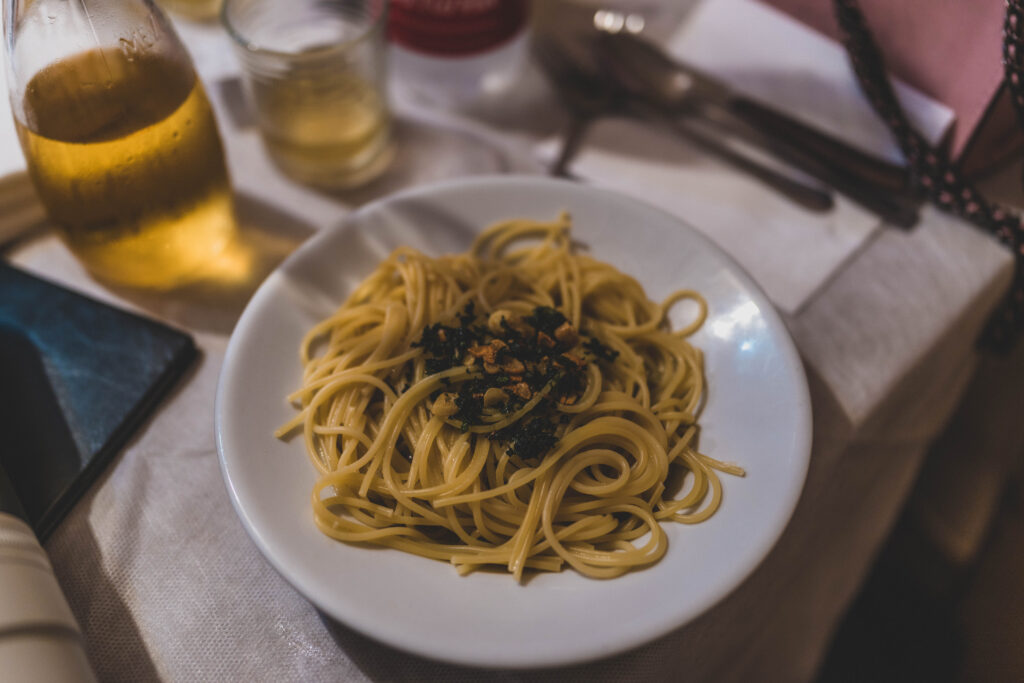 I visited a restaurant which didn’t have any vegan or vegetarian options so I asked for spaghetti with ‘aglio e olio’ (olive oil and garlic only)- it was delicious!
Wine in Puglia
Of course, no food guide to Apulian cuisine would be complete without mentioning the drink that pairs with it so perfectly!
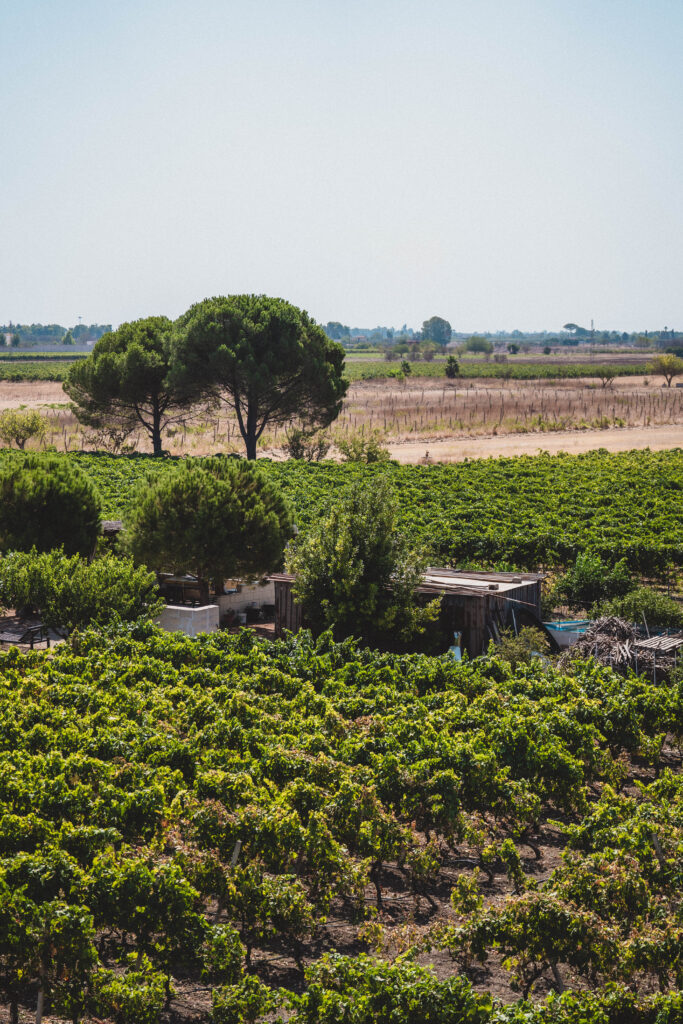
Vast stretches of sun-kissed vineyards cover Apulia, to be precise the Puglia wine region covers 83,000 hectares of land, 80% of which is planted with red wine varieties of grape.
Some of the wines from Puglia include Primitivo, Nero di Troia and Negroamaro, which are known for their richly intense flavours, typically of darker fruits like plums and blackberries, as well as spicy notes like black pepper.
Common ingredients
A last note, here are some of the common ingredients that are worth mentioning as they are particularly special about the Apulia region.
Olives – Although olives are found all across Europe and beyond, Apulian olives have been cultivated on the land since ancient Roman times. The region is overflowed with an abundance of olive groves, as such both olives and the production of olive oil are import exports of Apulia. In fact, the heel of Italy alone produce up to 40% of the country’s olive oil!
Prickly pear – The fruit of a cactus is a popular thing eaten in Southern Italy, and thanks to the sunny climate, prickly pears are found along almost every fence and road (and fruit market) across the region. Only to be eaten once pink in colour, the taste of a prickly pear has been compared to a kiwi or melon…with a hint of bubblegum!
Piselli nano di Zollino – Small peas! These small brownish-yellow colour peas are locally grown and a staple ingredient in many dishes in Puglia.
Enjoyed reading about traditional foods from Puglia? Pin this article now, read it again later: