
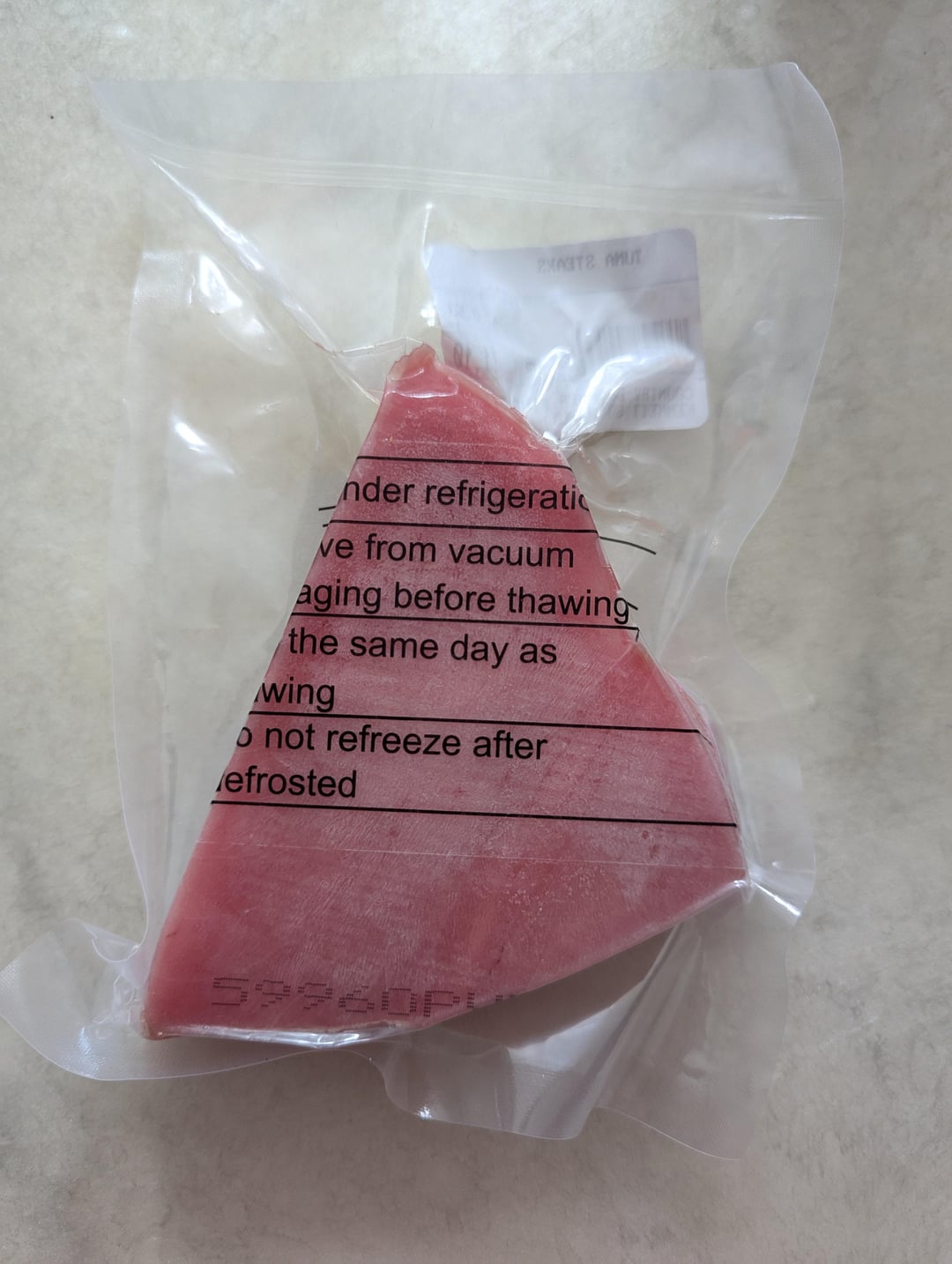
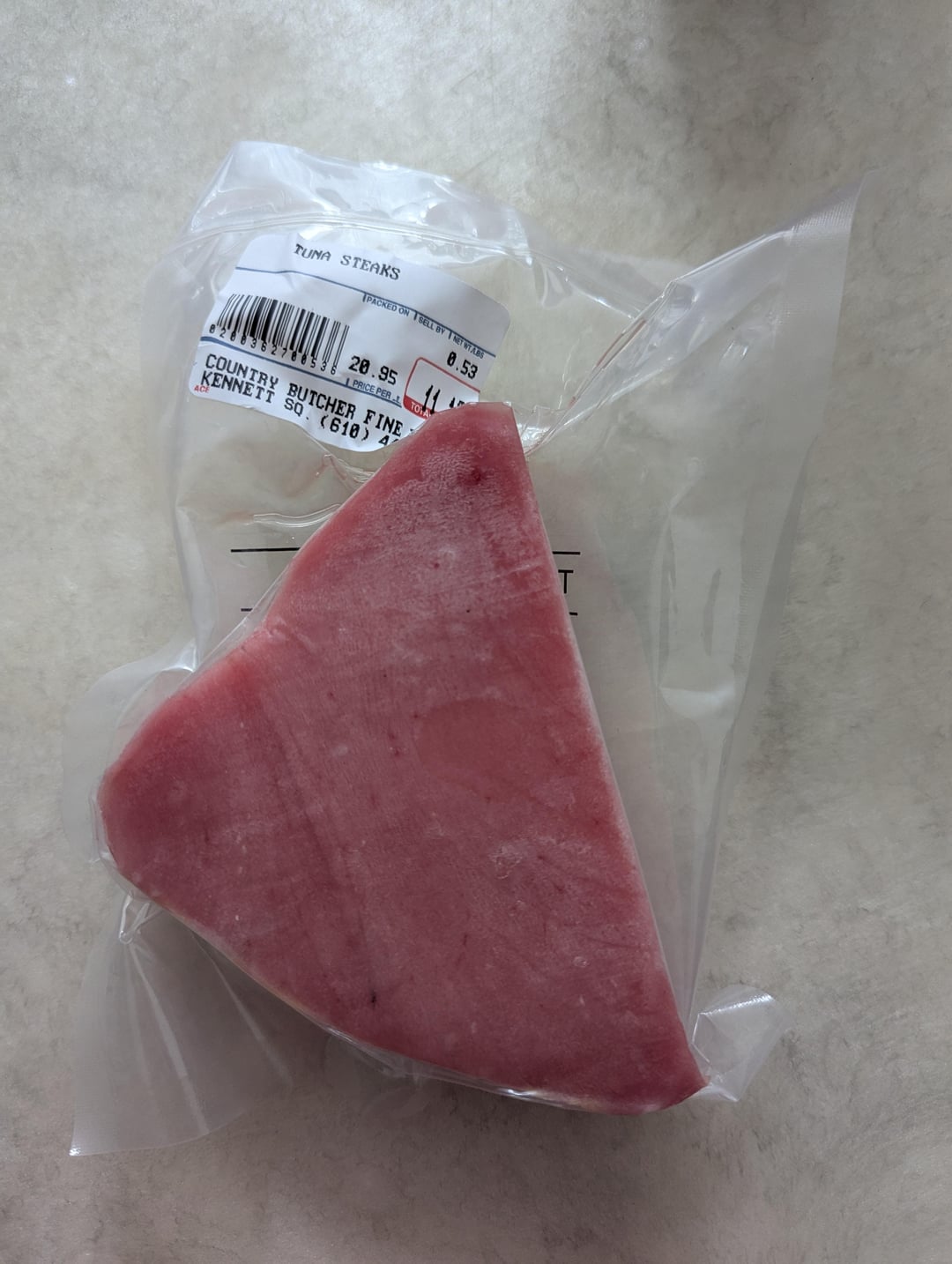
How would I know if this fish is safe to use for sushi? The butcher said it was safe for sushi, but there is no label indicating that I can eat it raw. Hopefully not a dumb question, I just see conflicting information online and I want to be safe about it all. Thanks!
by Creative_Text_7498
19 Comments
Yes.
These are my rules of thumb:
Tuna and farmed salmon is pretty much always safe for sushi, assuming it has been kept cold. If it hasn’t been kept cold, you will know by the smell.
Anything you buy frozen is probably safe for sushi too. Can’t say anything about the quality though, some is going to be great, some not so much.
Wild salmon that wasn’t flash frozen is problematic, unless you know how to look for parasites.
Freshwater fish you should cook.
I have used tuna like that in the past. Make sure you cut open the bag when you thaw just to be safe. I think under the right conditions you can get botulism from not giving it some gas exchange. I am still new to homemade sushi
Frozen is safe EDIT: If you thaw and eat immediately.
I do it all the time
Yes. Just take it out of the bag before thawing. You can put it in another bag if you want though.
Is it safe, yes. I would not eat that raw, simply out of personal taste. Put some black pepper or sesame seeds on that and give it a quick sear, that frozen stuff tends to be slimy no matter what you do.
Just because you might not get extremely sick or die from eating this, it will probably not taste very good at all. I don’t fuck around with eating anything raw, unless it is specifically intended for that purpose. Not everyone follows this rule, but I don’t want to risk it.
“Consuming raw or undercooked meats, poultry, seafood, shellfish, or eggs may increase your risk of foodborne illness, especially if you have certain medical conditions.”
Understand your risks and enjoy!
For raw service, they work, those are frozen quite solid, and I’ve used them before with no issues.
…but you’re gonna have a bit of a time trying to portion it properly. You have like one bit at the top for sashimi, because it’s a steak cut, the middle part for nigiri won’t be easy to get nice, long strips, and you’re gonna have to look out for tendon at the bottom.
That being said, imo It would be easier to chop it up for negitoro to be used in temaki, gunkan, or chirashi service.
always buy flash frozen fish so that the parasites are killed. I use safeway frozen ahi tuna all the time for tar tar. Pretty much sushi grade is flash frozen fish. it doesn’t need a “sushi grade” label if it’s flash frozen and stored properly
Poke hole in bag before you thaw
Maybe
Here’s the two big factors when determining fish being safe to eat raw and the definition of sushi grade fish. Here’s a lot of detail, but I hope you’ll read it all. There’s some good info:
1) Bacteria
2) Parasites
3)Sushi Grade- (fish that is farm raised under specific guidelines and precautions, and fed specific food designed to minimize the possibility of parasites.
1) Bacteria- Literally ALL fish is going have the possibility of having bacteria. Even “Sushi Grade” fish. There’s absolutely nothing you can do about this, except to maybe catch it (by smell, color, etc..) and just throw it out.
2) Parasites- Farm raised fish has a significantly lower possibility of having parasites because of the controlled environment they are raised in and the food they are fed. Is there still a chance farm raised fish can have parasites…absolutely, although it is very slim.
Wild caught fish have got really high chances of having parasites.
3) As I said before “Sushi Grade” is a term used for farm raised fish in controlled environments, and then flash frozen immediately upon death. Flash freezing fish to -20 to -30 below, can pretty much kill any parasites that might be present even when raised in a farm. Again, it’s not 100% guaranteed, but the flash freezing is definitely an extra step to preventing parasites and the growth of bacteria, beyond just being farm raised.
Generally, most people hate the term “Sushi Grade,” because it is not actually a term that is recognized or enforced in the US. In other countries that raise these fish and serve them (New Zealand, Japan, etc..) “Sushi Grade” is a standard and guideline that has to be followed. In the US, we still say it’s sushi grade if it was farm raised and flash frozen, because it technically is sushi grade, even though the USDA and FDA don’t recognize the term or enforced it…since they simply recommend people not to consume raw fish.
So if a fish package says “Farm Raised,” there is an extremely high probability that it does NOT contain parasites, although not 100% guaranteed. The problem is bacteria, which can be present on any fish regardless of wild caught or farm raised. Flash freezing (to that -30 degrees for 3-5 days) is meant to kill any parasites or bacteria, but again…not 100% guaranteed. The problem is whether or not the fish (after being flash frozen) has been de-thawed and refrozen several times, and also how long it has been de-thawed for. Certain bacteria only grow in oxygen free environments (inside the bag) if it’s thawed. Plus the risk of the environments the fish has been around during its entire handling (people’s hands, counter tops, etc…) if those are all dirty or contaminated, then so is the fish.
Ultimately the safest way to eat fish is to cook it. Although “sushi grade” is generally safe for the most part.
Here’s a bonus…
• Tuna is extremely resilient to parasites. So even if tuna is wild caught, it’s very likely to be free of parasites. Although the risk is still there of bacteria like all other fish if not handled properly.
•Salmon, yellowtail, certain other fish are known for having parasites. That’s why salmon and yellowtail pretty much absolutely have to be farm raised to guarantee they are free of parasites. Technically flash freezing right there on the boat after wild caught, is supposed to kill parasites too, but….i would strongly recommend farm raised just to be extra safe. Especially if it’s salmon or yellowtail.
All in all. Buy farm raised for sushi. I’d say no exceptions. And to be very honest with you, simply because of my mistrust of many companies and people and the shortcuts they take, I won’t even buy salmon or yellowtail that’s farm raised to eat it raw….ill go to a trusted local fish monger that has a really high reputation.
As for your tuna steak, I’d say it’s probably safe. Since tuna is so resilient to NSC m parasites anyway; and was most likely flash frozen, it’s most likely safe to eat. In fact tuna is usually cooked with the intention that the outside is going to be seared, while the inside is mostly raw anyway. Just like beef.
My WinCo has these, and I buy them anytime I want to make sushi. Perfectly safe to eat raw.
From what I know parasites are killed when exposed to -20 C or lower for more than 24 hours, ideally 7 days even. But tuna is not prone to parasites either way
It’s frozen, so yes. And the butcher has no incentive to lie about this.
I served a very similar vacuum sealed frozen tuna dish to my family this Easter as a sashimi, no issues/complaints/gastrointestinal parasites!
I eat the frozen Aldi tuna steaks all the time. I just sear the outside
All i can say is I eat it as sushi so if that helps. Looks like frozen aldi tuna.