The Satanic Verses consists of a frame narrative, using elements of magical realism,[6] interlaced with a series of sub-plots that are narrated as dream visions experienced by one of the protagonists. The frame narrative involves Indian expatriates in contemporary England. The two protagonists, Gibreel Farishta and Saladin Chamcha, are both actors of Indian Muslim background. Farishta is a Bollywood superstar who specialises in playing Hindu deities (the character is partly based on Indian film stars Amitabh Bachchan and N. T. Rama Rao).[7] Chamcha, an Anglophile emigrant who has cut himself off from his Indian heritage, works as a voiceover artist in England.
At the beginning of the novel, both are trapped in a plane hijacked by Sikh separatists, flying from India to Britain.[8] The separatists land the plane and take many of the passengers hostage for months, but after negotiations fail, the separatists force the plane to take off and detonate it over the English Channel. While everyone else aboard the plane perishes, Farishta and Chamcha are magically saved. In a miraculous transformation, Farishta takes on the personality of the archangel Gabriel (referred to as Gibreel) and Chamcha that of a devil. Farishta develops a halo that occasionally manifests, while Chamcha grows horns and goatlike legs. After both men take refuge with an elderly English Argentine woman, Chamcha is arrested and is subjected to police abuse as a suspected illegal immigrant.
Both characters struggle to piece their lives back together. Farishta seeks and finds his lost love, the English mountaineer Alleluia “Allie” Cone. However, their relationship is overshadowed by his growing sense that he is the Angel Gibreel and other symptoms of schizophrenia. After attempting unsuccessfully to evangelize in London, Farishta steps into the street and is hit by the car of movie producer S.S. Sisodia. Sisodia takes Farishta to get treated for schizophrenia with Allie and proposes a plan to revitalize Farishta’s movie career. Meanwhile, Chamcha is fired from voice acting and becomes distressed by his increasingly goatlike appearance and behavior, as well as by the revelation that his estranged wife Pamela and friend Jamshed “Jumpy” Joshi have begun a relationship under the impression that Chamcha perished in the explosion. Jumpy convinces the Shaandaars, a family operating a hostel, to let Chamcha stay with them. Chamcha’s devil-like appearance intensifies until he recognizes his anger at Farishta for not defending him from arrest and abandoning him after the plane crash, after which he is transformed back into his human shape.
Chamcha wants to take revenge on Farishta for having forsaken him after their joint fall from the hijacked plane and resents him for his successful return to movie stardom. Aware of Farishta’s pathological jealousy and paranoid schizophrenia, Chamcha harasses Farishta and Allie over the phone, using different vocal impressions and intimate details of Allie’s life to insinuate that Allie is unfaithful to Farishta. Provoked by Chamcha’s calls, Farishta destroys his relationship with Allie.
Jumpy, Pamela, and Chamcha attend a rally in defense of Dr. Uhuru Simba, a controversial Black activist seemingly framed for a series of gruesome serial killings. Simba dies suspiciously in police custody, and Sikh youth on community patrol catch the real murderer, a white man. The police plan a cover-up and raid a popular South Asian nightclub, inflaming tensions and leading to riots. Pamela and Jumpy intend to photocopy and distribute compromising information about the police, but during the riots, masked men set fire to the building they are in, destroying the evidence and killing Pamela and Jumpy. During the riots, Farishta believes that the rioters’ flames are the result of his angelic powers. He realises that Chamcha was to blame for the calls, tracking him down to the now-burning Shaandaar hostel with the intent of killing him, but relenting when he sees that Chamcha tried in vain to save Mr. and Mrs. Shaandaar from the fire.
Both return to India, Farishta to star in a series of movies that turn out to be unsuccessful and Chamcha to see his estranged father, who is terminally ill. Farishta is discovered to have murdered both Sisodia and Allie and visits Chamcha at his father’s estate, seemingly about to shoot him, but he turns the gun on himself. Chamcha, who has found not only forgiveness from Farishta but also reconciliation with his father and his own Indian identity, decides to remain in India.
Dream sequences edit Embedded in this story is a series of half-magic dream vision narratives, ascribed to the mind of Farishta.
One of the sequences is a fictionalised narration of the life of Muhammad (called “Mahound” or “the Messenger” in the novel) in Mecca (called Jahilia in the novel). At its centre is the episode of the so-called satanic verses, in which the prophet first proclaims a revelation requiring the adoption of three of the old polytheistic deities, but later renounces this as an error induced by the Devil. There are also two opponents of the “Messenger”: a heathen priestess, Hind, and a skeptic and satirical poet, Baal. When the prophet returns to Mecca in triumph, Baal goes into hiding in an underground brothel, where the prostitutes assume the identities of the prophet’s wives. One of the prophet’s companions escapes to Jahilia and claims that he, doubting the authenticity of the “Messenger”, has subtly altered portions of the Quran as they were dictated to him, seemingly disproving Mahound’s divine revelation. When Mahound takes over Jahilia, he has Baal and the prostitutes executed, though Hind’s supernatural machinations are implied to have caused Mahound’s illness and eventual death.
The second sequence tells the story of Ayesha, an Indian peasant girl who claims to be receiving revelations from the Archangel Gibreel. She entices all her village community to embark on a foot pilgrimage to Mecca, claiming that they will be able to walk across the Arabian Sea. The pilgrimage ends in a catastrophic climax as the believers all walk into the water and disappear, amid disturbingly conflicting testimonies from observers about whether they simply drowned or were in fact miraculously able to cross the sea.
A third dream sequence presents the figure of a fanatic expatriate religious leader, the “Imam”, in a late-20th-century setting, an allusion to Ruhollah Khomeini in his exile in Paris.[9] The Imam forces Farishta, who has assumed the form of the angel Gibreel, to do supernatural battle with the Imam’s bitter enemy, his exiled homeland’s empress Ayesha.
CatLover0wO
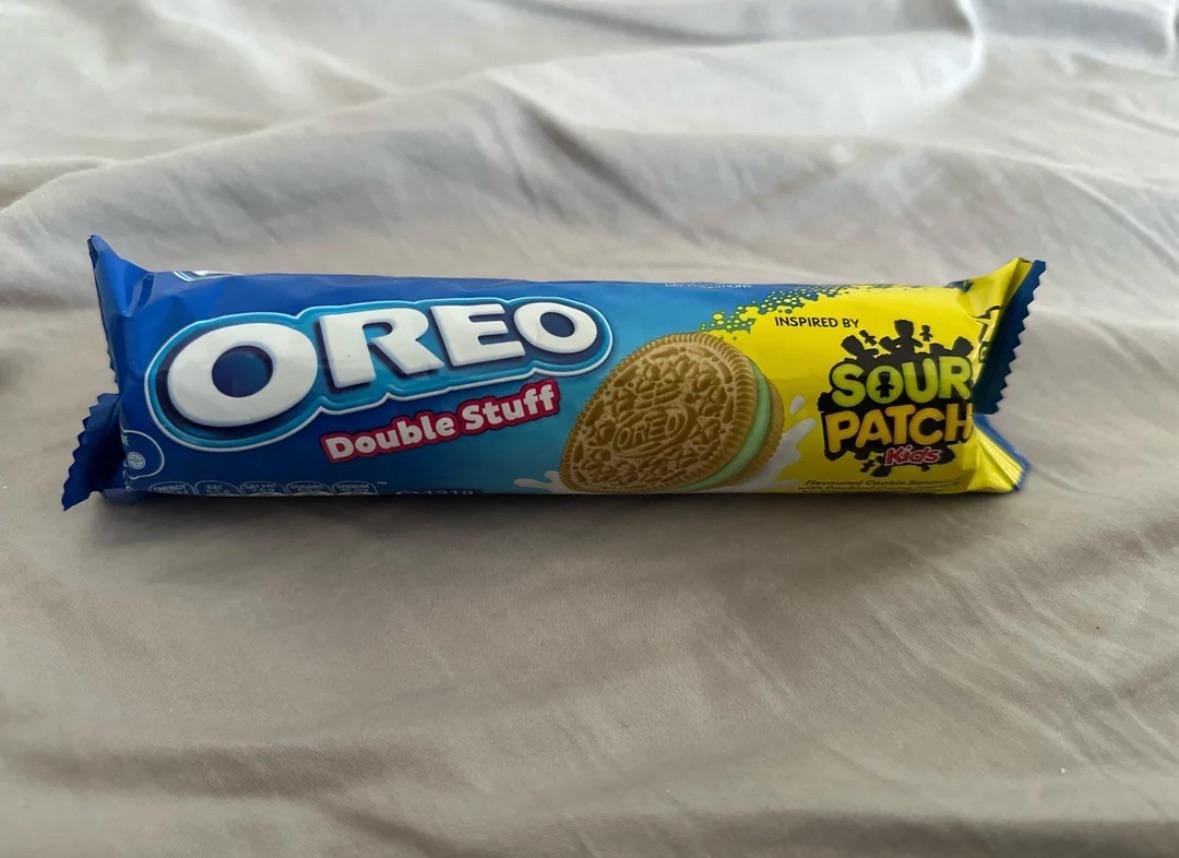
Naw but, it’s tastes good though
ConfidentFloor6601
I like the weird Oreo flavors. They don’t replace the classic ones and they’re fun.

9 Comments
But you bought it 😭😭
Me: Ewww that can’t be good.
Me High: Fuck it I’ll smash
I’ve had these, they’re surprisingly decent
Just no.
America in a tube.
Whenever I see a post like this, I’ve got to post this very relevant skit:
https://youtu.be/CMkYw4dp_NI?si=gaS11d0rJFJIgdwQ
The Satanic Verses consists of a frame narrative, using elements of magical realism,[6] interlaced with a series of sub-plots that are narrated as dream visions experienced by one of the protagonists. The frame narrative involves Indian expatriates in contemporary England. The two protagonists, Gibreel Farishta and Saladin Chamcha, are both actors of Indian Muslim background. Farishta is a Bollywood superstar who specialises in playing Hindu deities (the character is partly based on Indian film stars Amitabh Bachchan and N. T. Rama Rao).[7] Chamcha, an Anglophile emigrant who has cut himself off from his Indian heritage, works as a voiceover artist in England.
At the beginning of the novel, both are trapped in a plane hijacked by Sikh separatists, flying from India to Britain.[8] The separatists land the plane and take many of the passengers hostage for months, but after negotiations fail, the separatists force the plane to take off and detonate it over the English Channel. While everyone else aboard the plane perishes, Farishta and Chamcha are magically saved. In a miraculous transformation, Farishta takes on the personality of the archangel Gabriel (referred to as Gibreel) and Chamcha that of a devil. Farishta develops a halo that occasionally manifests, while Chamcha grows horns and goatlike legs. After both men take refuge with an elderly English Argentine woman, Chamcha is arrested and is subjected to police abuse as a suspected illegal immigrant.
Both characters struggle to piece their lives back together. Farishta seeks and finds his lost love, the English mountaineer Alleluia “Allie” Cone. However, their relationship is overshadowed by his growing sense that he is the Angel Gibreel and other symptoms of schizophrenia. After attempting unsuccessfully to evangelize in London, Farishta steps into the street and is hit by the car of movie producer S.S. Sisodia. Sisodia takes Farishta to get treated for schizophrenia with Allie and proposes a plan to revitalize Farishta’s movie career. Meanwhile, Chamcha is fired from voice acting and becomes distressed by his increasingly goatlike appearance and behavior, as well as by the revelation that his estranged wife Pamela and friend Jamshed “Jumpy” Joshi have begun a relationship under the impression that Chamcha perished in the explosion. Jumpy convinces the Shaandaars, a family operating a hostel, to let Chamcha stay with them. Chamcha’s devil-like appearance intensifies until he recognizes his anger at Farishta for not defending him from arrest and abandoning him after the plane crash, after which he is transformed back into his human shape.
Chamcha wants to take revenge on Farishta for having forsaken him after their joint fall from the hijacked plane and resents him for his successful return to movie stardom. Aware of Farishta’s pathological jealousy and paranoid schizophrenia, Chamcha harasses Farishta and Allie over the phone, using different vocal impressions and intimate details of Allie’s life to insinuate that Allie is unfaithful to Farishta. Provoked by Chamcha’s calls, Farishta destroys his relationship with Allie.
Jumpy, Pamela, and Chamcha attend a rally in defense of Dr. Uhuru Simba, a controversial Black activist seemingly framed for a series of gruesome serial killings. Simba dies suspiciously in police custody, and Sikh youth on community patrol catch the real murderer, a white man. The police plan a cover-up and raid a popular South Asian nightclub, inflaming tensions and leading to riots. Pamela and Jumpy intend to photocopy and distribute compromising information about the police, but during the riots, masked men set fire to the building they are in, destroying the evidence and killing Pamela and Jumpy. During the riots, Farishta believes that the rioters’ flames are the result of his angelic powers. He realises that Chamcha was to blame for the calls, tracking him down to the now-burning Shaandaar hostel with the intent of killing him, but relenting when he sees that Chamcha tried in vain to save Mr. and Mrs. Shaandaar from the fire.
Both return to India, Farishta to star in a series of movies that turn out to be unsuccessful and Chamcha to see his estranged father, who is terminally ill. Farishta is discovered to have murdered both Sisodia and Allie and visits Chamcha at his father’s estate, seemingly about to shoot him, but he turns the gun on himself. Chamcha, who has found not only forgiveness from Farishta but also reconciliation with his father and his own Indian identity, decides to remain in India.
Dream sequences
edit
Embedded in this story is a series of half-magic dream vision narratives, ascribed to the mind of Farishta.
One of the sequences is a fictionalised narration of the life of Muhammad (called “Mahound” or “the Messenger” in the novel) in Mecca (called Jahilia in the novel). At its centre is the episode of the so-called satanic verses, in which the prophet first proclaims a revelation requiring the adoption of three of the old polytheistic deities, but later renounces this as an error induced by the Devil. There are also two opponents of the “Messenger”: a heathen priestess, Hind, and a skeptic and satirical poet, Baal. When the prophet returns to Mecca in triumph, Baal goes into hiding in an underground brothel, where the prostitutes assume the identities of the prophet’s wives. One of the prophet’s companions escapes to Jahilia and claims that he, doubting the authenticity of the “Messenger”, has subtly altered portions of the Quran as they were dictated to him, seemingly disproving Mahound’s divine revelation. When Mahound takes over Jahilia, he has Baal and the prostitutes executed, though Hind’s supernatural machinations are implied to have caused Mahound’s illness and eventual death.
The second sequence tells the story of Ayesha, an Indian peasant girl who claims to be receiving revelations from the Archangel Gibreel. She entices all her village community to embark on a foot pilgrimage to Mecca, claiming that they will be able to walk across the Arabian Sea. The pilgrimage ends in a catastrophic climax as the believers all walk into the water and disappear, amid disturbingly conflicting testimonies from observers about whether they simply drowned or were in fact miraculously able to cross the sea.
A third dream sequence presents the figure of a fanatic expatriate religious leader, the “Imam”, in a late-20th-century setting, an allusion to Ruhollah Khomeini in his exile in Paris.[9] The Imam forces Farishta, who has assumed the form of the angel Gibreel, to do supernatural battle with the Imam’s bitter enemy, his exiled homeland’s empress Ayesha.
Naw but, it’s tastes good though
I like the weird Oreo flavors. They don’t replace the classic ones and they’re fun.