
Much of the information on wine labels is strictly regulated: Grape, place, alcohol content. And then there’s the part where the winery gets to brag.
Just about every wine-producing nation has specific labeling rules that producers must follow, and that’s a good thing. The U.S. Alcohol and Tobacco Tax and Trade Bureau (TTB) outlines its extensive rules for wine labeling (which also governs cider and mead) beginning on this detailed index page. To make the regs even more clear, there’s an online tool outlining The Anatomy of a Wine Label.
Now, here’s where it gets interesting. Certain label elements are mandatory. These include:
the wine’s geographic appellation of origin (if it claims one);
the brand name and class or type of the wine;
the percentage of non-U.S. wine (if any has been included in the blend);
the alcohol content — and color-enhancing ingredients if used;
for imported wines, the country of origin;
the legally required health warning and sulfite declaration;
the producer’s name and address, and
the amount of wine in the bottle.
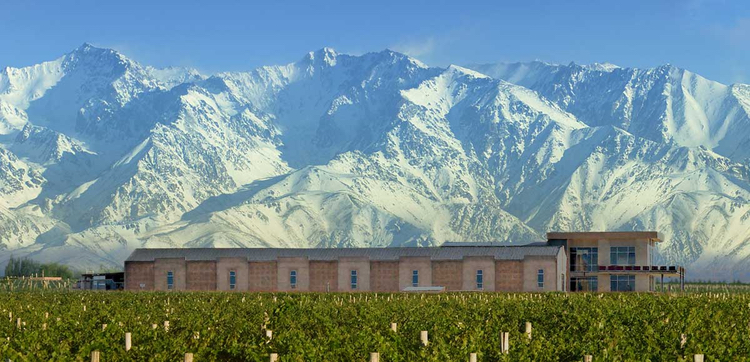
The Argentine Andes form a spectacular backdrop for Domaine Bousquet’s estate in the Tupungato, Uco Valley, Mendoza wine region. Its estate vineyards in the Andes foothills are 4,000 feet above sea level. (Image from the Terroir & Vineyards page on the Domaine’s website.)
Beyond the requirements, further information is optional for the producer, subject, of course, to regulation. Gluten-free and allergen notices are permitted, provided they are accurate. Nutrient, sugar, and ingredient contents may be permitted but are subject to an additional stack of rules.
Perhaps surprisingly, the grape variety is not required on American wine labels, but producers who choose to use it also have a list of rules to follow.
And if you want to label your wine as organic, TTB refers you to the U.S. Department of Agriculture, which governs these claims under its National Organic Program.
Got all that? Good! Now we get to the fun part of today’s dissertation:
Once a winery has satisfied all the rules, there’s still room on the label for, as TTB puts it, “additional (optional) information that describes the wine or provides information relevant to the wine.”
TTB continues: “In general, additional information should be truthful, accurate, and specific, and it may not be misleading. When appropriate, information included on the label about the wine should be supported by records about the wine-making process.”
This is the opening that invites wineries (or their public-relations consultants) to fill the space with alluring tasting notes and glowing language celebrating the lush vineyards served by flights of angels fluttering under the setting sun … well, you get the idea.
Do you trust the wine label? We’re not talking about the legal parts but the back label full of appetizing tasting notes and glowing prose.
Today’s featured wine, Domaine Bousquet Uco Valley Malbec, lured me in with an unregulated claim on an add-on label that made my eyes pop: “IWSC 2023 Best Red Wine,” I thought it said. If this simple Argentine red wine priced from $10 to $15 won such acclaim from The International Wine and Spirits Competition (IWSC), a respected United Kingdom-based operation that’s been judging wine and other adult beverages since 1970, it must be something really special!
And indeed it was good, an excellent, oak-free Malbec that tastes like a much more pricey wine. But a closer look at that label revealed that I missed something important.
The top line read, in a larger font:
IWSC 2023 Best Red Wine
The line under it, typed in a smaller font, added:
Producer Trophy
Heh. In other words, IWSC’s “Best Red Wine Producer Trophy” honored Domaine Bousquet, for its overall performance including some more expensive and carefully curated wines such as Domaine Bousquet Ameri Single Vineyard Malbec, selling at an average U.S. retail price of $35. That’s still affordable, and I’m sure it’s a memorable wine.
It’s important to understand that IWSC lavished praise on Domaine Bousquet and its wines from top to bottom of its portfolio. Today’s wine, modest in price as it may be, is an excellent buy, and I highly recommend it.
But the lesson of today’s sermon is simple: When you’re reading the wine label – especially the less regulated bits – read carefully, and bring your skepticism to the table.
Today’s Tasting Report
Domaine Bousquet 2023 Uco Valley Malbec ($14.99)
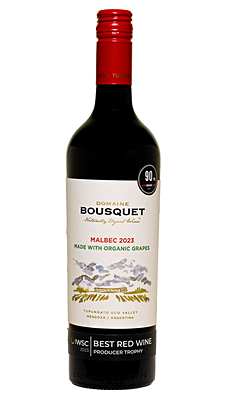
Sustainably grown and made with organic grapes certified by Ecocert, Domaine Bousquet Uco Valley Malbec shows a very dark purple color, almost black, with a thin reddish-violet edge. Black fruit aromas show notes of plums, blackberries, and juicy black raisins that carry over on the palate with unoaked black fruit and a hint of unsweetened chocolate, shaped by a firm acidic structure and soft tannins. 13% alcohol. U.S. importer: Origins Organic, Coral Gables, Fla. (Aug. 30, 2025)
FOOD MATCH: The producer suggests the obvious match for a simple Malbec: red meats, tomato sauces, cheeses, and pasta or pizza involving those treats, including plant-based, tomato-sauced pasta and pizza choices.
WHEN TO DRINK: The fresh, unoaked character of this delicious Malbec isn’t likely to improve with cellaring. I’d drink up this 2023 vintage by the end of 2026.
VALUE:
Wine-Searcher.com’s $11 average U.S. retail, with a few shops offering it for less than $10. It’s still a decent value at my $15 local price tag, but if you can find a better deal, take it!
WEB LINK:
Here’s a winery fact sheet on this wine in English.
FIND THIS WINE ONLINE:
Check prices and find vendors for Domaine Bousquet Uco Valley Malbec on Wine-Searcher.com.
Read about the Uco Valley, a key winegrowing region of Argentina’s Mendoza wine country, at this Wine-Searcher link.
Follow this Wine-Searcher link to brush up on the Malbec grape and find links to many Malbec wines and vendors.
Find the wines you want
Explore Wine-Searcher
Wine-Searcher.com is the place to go online if you want to find where to buy a particular wine that interests you. What’s more, Wine-Searcher.com offers so much more. It’s well worth a visit just to discover its many features, including its popular list of the world’s Top 10 Best Value Wines.
Good wines we’ve tried under $10.99!
Want tips to find more good, inexpensive wines? Here are Wine-Searcher links to vendors and prices for a bunch more wines for $10.99 or less that I’ve told you about in recent years. In some cases, the prices may have risen over the $10.99 mark since I reviewed them, but they should still be excellent bargains. Please tell us about your favorites!
Sponsor the Wine Advisor.
Support The 30 Second Wine Advisor and help us pay the rent while reaching 25,000 dedicated readers with your sponsorship message in this space, at the top of this e-letter, and on our social media. If you’re an established business in wine, food, and similar ventures, there’s no better way to focus your message toward an audience that comes here for just those topics. See our Sponsorship Page, or email Robin Garr for more information.
Wine Forum and Social Media
You’re always welcome to drop by our WineLovers Discussion Group, the Internet’s first and most civil online community. Discussions are open for public viewing, but you must register to post. To request registration, please contact me at wine@wineloverspage.com, tell me your name, mention the Wine Advisor, and briefly say why you’d like to participate in the forum. Sorry about the minor red tape, but this is our simple, low-tech way to deter spammers and bots.
I’d also be delighted to have you visit and “like” our WineLovers Facebook Page.
Dining and Cooking