
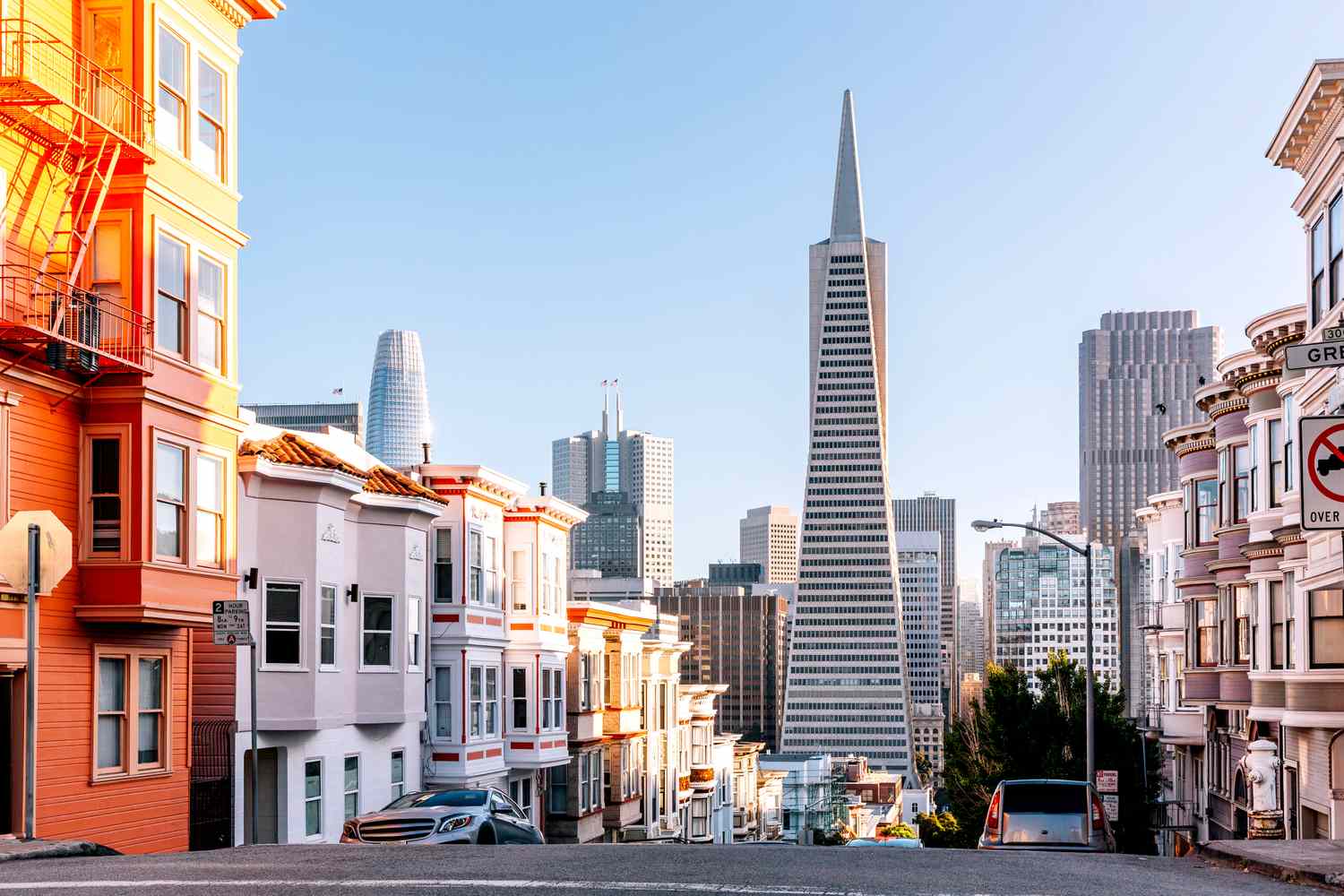
Godzilla stomped by it on his path of destruction, Spock blasted past it on a flying barge, and dozens of tourists a day walk into the lobby asking for a tour. The Transamerica Pyramid is a globally recognized symbol of San Francisco and a destination for many of the city’s 23 million national and international visitors every year, per SF Travel. Originally built by futuristic architect William Pereira and completed in 1972, it rose 853 feet at the crossroads of Chinatown and North Beach. It was the tallest skyscraper west of Chicago at that time, and today it’s admired for its elegant modernist shape and luminous white quartz. But the Transamerica Pyramid has never been known as a dining destination, until now.
Developer Michael Shvo bought the property for $650 million in 2020, kicking off a $400 million redevelopment project, including the surrounding park and a trio of new restaurants. More than a billion dollars later, the pyramid reopened in fall 2024, revealing interiors as luxurious as a private hotel, courtesy of architect Lord Norman Foster of Foster + Partners, also behind the Gherkin in London and Reichstag in Berlin. There’s a coffee shop at the base, a serene lounge halfway up on the 27th floor, and a swanky cocktail bar near the peak on the 48th. (The cafe is open to the public, so anyone can grab a latte and croissant, but alas, only insiders ride the elevator.) Around the back, museum-style exhibitions include an unearthed time capsule from 1974. Wander outside through Redwood Park, shaded with towering trees and dotted with sculptures, and the three new restaurants are across the fountain.
Interestingly, Shvo flew in 2016 F&W Best New Chef Brad Kilgore from Miami, rather than a local contender. Originally from Kansas, Kilgore rose through Michelin-starred Alinea and L2O in Chicago, before opening Alter in Miami, the “brilliant and playful” fine dining concept in a stripped-down warehouse setting. The pandemic shuttered Alter but launched Kilgore Culinary Group, which now partners with developers on half a dozen properties, from Miami to SF, plus Mexico and Honduras. Kilgore was already collaborating with Shvo on another project and jumped at the chance to dive into the California scene. He made the move with his wife and pastry chef Soraya Kilgore, along with their two kids and dog.
“Looking from the outside, it’s always like a culinary mecca,” the chef says of San Francisco. “It’s such an inspirational place to cook. There’s nothing like this area … that comes anywhere near as exciting when it comes to ingredient sourcing.”
So how do a power broker and a star chef reimagine a skyscraper as a dining destination? Well, Cafe Sebastian opened first in November, bringing a bright space to the Financial District, serving babka for breakfast meetings and nicoise and tagliatelle for power lunches. MadLab followed in December, a whimsical gelato and kakigori shop next to the park, tricking out shaved ice with syrups, powders, gold leaf, mini macarons, and cotton candy clouds. The most highly anticipated of them all, Ama promises to be the dinner-and-drinks main attraction. Originally slated for spring, after construction and permitting delays, the team opted to wait out the foggy summer months, and open when locals flowed back to work downtown.
Ama officially opens on Wednesday, September 24, destined to be one of the hottest debuts this fall. In contrast to the airy daytime concepts, it will be a dark and swanky restaurant and lounge, featuring a front dining room called the Copper Room, and a back lounge known as Ama Social Club. Named after Japanese free-diving fisherwomen — who once swam topless — and the Italian word for love, the menu rocks an Itameshi-style mashup of Italian and Japanese influences, with an option for a chef’s tasting in the front and share plates ready to party in the back.
“It’s sort of an escape,” Kilgore says. “People kept asking, ‘Is it fine dining?’ No. We’re fun dining.” Whatever he wants to call it, SF is about to taste what Kilgore is capable of, and he’s definitely into modernist techniques. The city that loves a simple plate of figs should brace itself for foam.
The menu rolls through crudo slash sashimi, pasta and risotto dishes, and steak and seafood. Bites of bluefin tuna ride on crispy rice cakes, piled with tartare and draped with hand-pounded carpaccio. “The soft egg,” Kilgore’s signature dish since Alter, fills a bowl with scallop emulsion and dehydrated gruyere, torched until speckled. Freshly extruded lumache pasta sinks into a vodka sauce laced with two chiles, both Italian Calabrian and Japanese chiles like those used in yuzu kosho. Risotto riffs on chawanmushi, starting with warm truffled custard and ladling prosciutto broth over. An Australian wagyu strip steak ferments in koji for three days, dips in herb-infused tallow for another 10 days, then rips over smokeless binchotan coals. Seasonal kakigori stars for dessert, starting with mango syrup, Lambrusco bubbles, and a butter land mine of yuzu curd buried in the depths.
Only available in the lounge, a monster meatball weighs more than half a pound, grinding together wagyu, sausage, and pepperoni, double sauced with pomodoro and fontina espuma, and torched until bubbling, with garlic sourdough for chasing the sauce. The lounge also gets extra surf and turf: prime rib with that koji and binchotan treatment and lobster tossed into the spicy lumache. For a tableside flourish, cream is whipped by hand and dropped directly on the lobster.
Ama promises to be a cocktail scene, stocked with Japanese whisky and gin. From his personal collection, Kilgore is sharing vintage bottles of Suntory and Nikka from the ‘70s and ‘80s. Fun cocktails include a Negroni blending two gins, two vermouths, and three amari with a hint of barrel-aged soy sauce and torched orange zest; a Whiskey Sour infused with four types of mushrooms, truffles, and black pepper; and a bright and floral drink that features an unusual cilantro spirit and tart umeboshi (pickled plum).
The restaurants live in buildings from the 1930s, but the design borrows inspiration from the pyramid’s era of the 1970s. Designer Kevin Klein recently reimagined the penthouse of The Hollywood Roosevelt hotel, as well as restaurants and bars. The Copper Room takes its name from the gleaming copper bar, reflecting onto burled walnut tables and shou sugi ban (charred cedar) wood panels.
Ama Social Club centers on an oculus light fixture glowing like a UFO over custom circular couches and mid-century-style details. Kilgore loves “the overall ‘70s parents’ basement vibe,” pointing out the modern take on a popcorn ceiling, vintage pinball machines from the ‘70s, and a DJ booth. Diners are asked to put away cell phones in the lounge, which may prove challenging in a tech town, but the goal is retro fun. Perhaps with an air of exclusivity — the restaurant group plans to launch a membership option this winter.
Betting a billion on the revitalization of downtown SF is exciting news for anyone dreaming of visiting or eating in the city by the bay. The Transamerica Pyramid joins other landmarks investing in dining across the country. Le Rock moved into the lobby of Rockefeller Center in NYC in 2022, dazzling diners with steak frites and Art Deco glamour. The Willis Tower in Chicago has a food hall on the first floor, where the flagship Kindling restaurant fired up the live grill and began serving its confit chicken wings in 2023. The Loupe Lounge revolves over a glass floor at the top of the Space Needle in Seattle, replacing the previous restaurant with cloud cocktails and snack skyscrapers as of 2021.
Savvy diners have been known to treat such restaurants with suspicion — if a tourist spot has a stunning view or setting, does the food need to taste good? In downtown San Francisco, the Transamerica dining crew is clearly setting sights high.
Dining and Cooking