
Summary 
The article discusses the increasing popularity of cycling in Italy, particularly in olive-growing regions, with travelers opting for e‑bike tours as a way to explore the landscape and enjoy fresh olive products. Companies like Castello Monte Vibiano Vecchio and Unagri offer customizable e‑bike tours that include olive oil tastings, highlighting the connection between sustainable tourism, outdoor activities, and traditional food products in these regions.
Cycling is booming globally, and Italy is no exception.
According to a report from the National Institute for Tourism Research (Isnart) and the environmental association Legambiente, the number of travelers who have chosen the country as a biking destination more than doubled from 2019 to 2022, rising from almost 4.5 million to more than nine million.
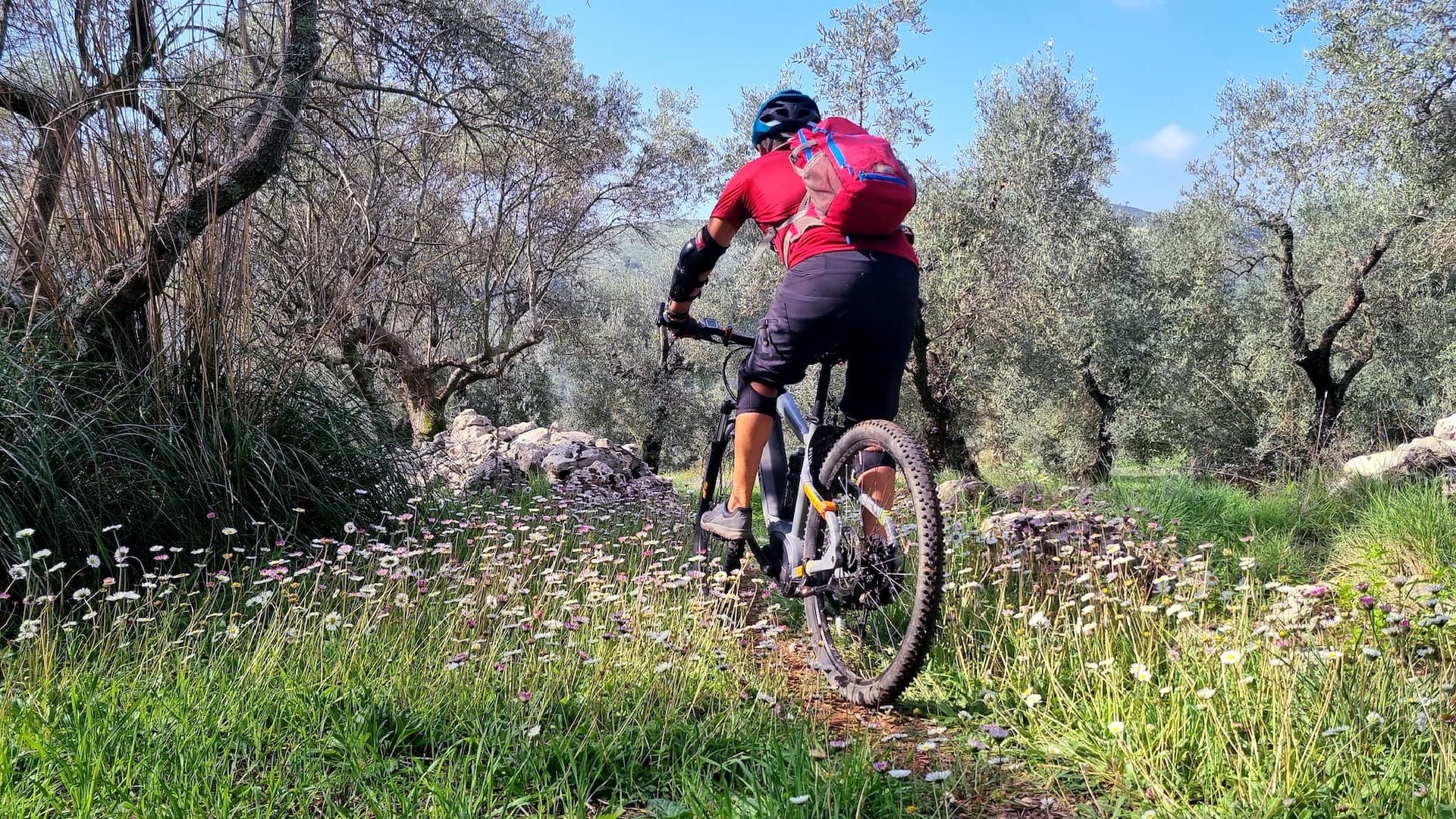
Encouraged by the recent growth in services related to oleotourism, cycling enthusiasts are visiting olive-growing regions. As many opt for e‑bikes, which make it easier to venture into hilly landscapes and dirt roads, olive groves are proving to be an ideal place to ride safely for experienced cyclists and newcomers to the sport.
See Also:Oleotourism on the Rise in Central California
Besides clean air, unspoiled nature and cultural attractions, the highlight remains the opportunity to sample fresh olive products after exercising – regaining energy while delighting the senses.
In Umbria, Castello Monte Vibiano Vecchio organizes e‑bike tours throughout the vast estate. Nestled in the rolling hills south of Perugia, the company produces extra virgin olive oils and wines from autochthonous varieties.
“We started proposing eco-tours with electric vehicles to our guests as early as 2003, and that was a groundbreaking initiative,” Lorenzo Fasola Bologna, the company’s co-owner, told Olive Oil Times.
“Afterwards, it was only natural for us to introduce e‑bikes and offer a sustainable and healthy way of experiencing the farm’s nature,” he added. “The property is a great place for this activity with its suited routes and breathtaking landscape.”
Guests can choose from three itineraries of varying difficulty, which run through olive groves, vines and woods. Since the company’s founding, more than 10,000 trees of different species have been planted to improve the local biodiversity.
The heart of the estate is a historic olive grove with centuries-old olive trees belonging to several autochthonous varieties, including Borgiona, Rosciola di Panicale, Rosciola Umbra, Limona, San Felice, Pocciolo, Nostrale di Rigali and Capolga Umbra.
Frantoio, Moraiolo, Dolce Agogia and Leccino olives are the most widespread in the estate, with around 13,000 trees. There is a project to expand the olive grove with 150,000 new trees in a few years.
“Some ask for a biking guide, while others prefer to ride on their own, as the tour is customizable,” Fasola Bologna said. “However, all those who participate in the experience say that at the end, they feel regenerated, recharged by the energizing combination of the two wheels and the grove. And even those unaccustomed to cycling end up wanting to continue.”
“We propose a final tasting of our extra virgin olive oil and wines, during which our guests can also enjoy a bruschetta as a perfect ending to this experience in a very healthy environment,” he added. “Indeed, we believe that preserving the health of the land where we live and work is the first step to obtaining high-quality and healthy products.”
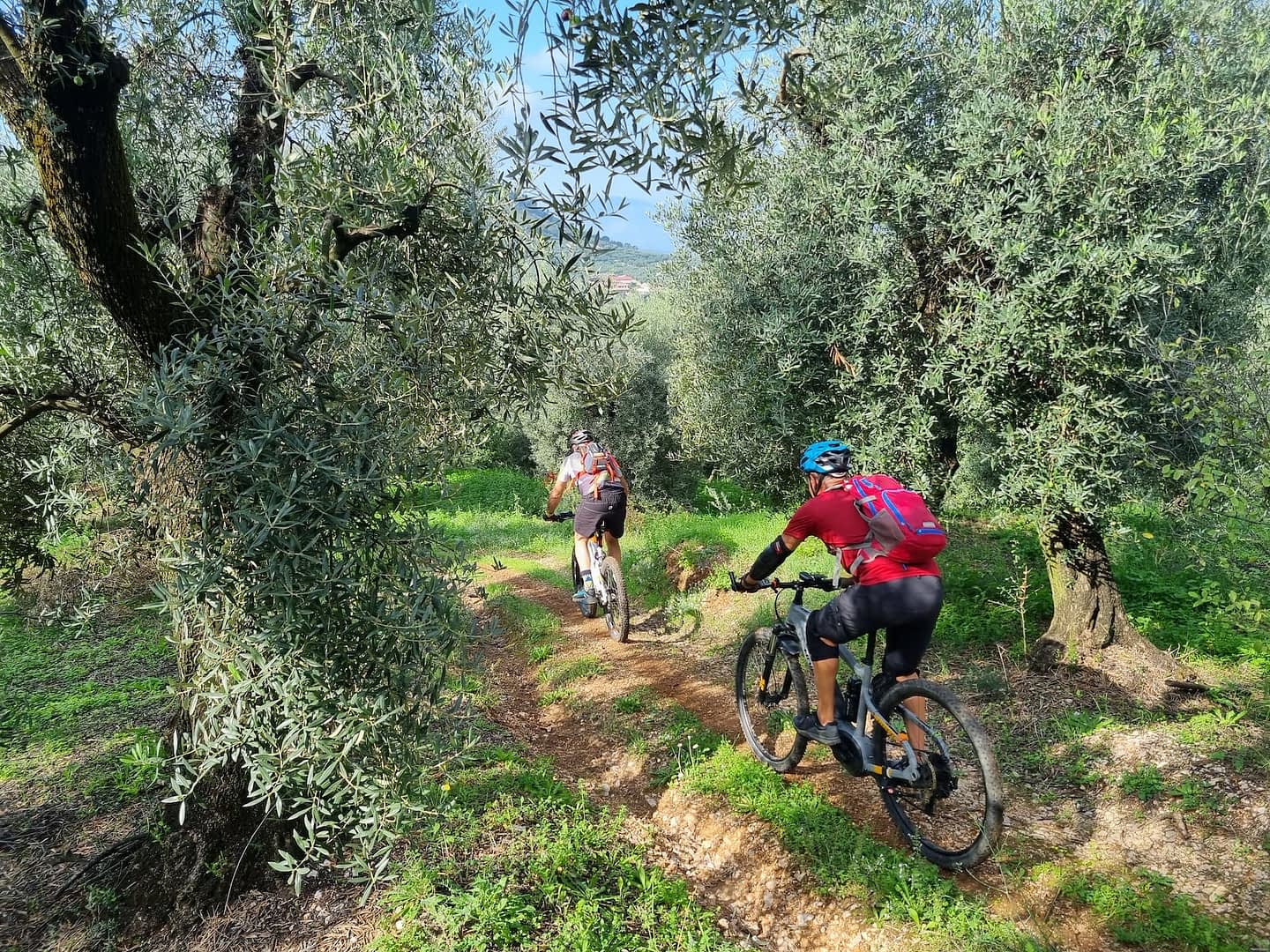 Cyclists enjoy the scenery of the Itri olive grove. (Photo: Maremoto Outdoor Sports)
In Lazio, the Maremoto Outdoor Sports Association has designed a customizable olive grove touring itinerary for e‑bikes as part of their sustainable tourism project, Aurunci Experience.
The trail leads cyclists throughout the olive groves and mills of Itri, located between the regional parks of the Aurunci Mountains and the Ulysses Riviera in the southernmost corner of the region.
“The tour takes place over half a day and concludes with a tasting of high-quality extra virgin olive oil and olives of the autochthonous Itrana variety from two companies in the area,” said Maria Letizia Grella, the association’s president, who is also a cycling guide of the Italian National Mountain Bike Academy.
“A bruschetta or lunch is included at the guests’ request,” she added. “Our project was created in collaboration with a group of food operators in the area that offers archaeology, history, nature, superb landscapes and great food products.”
The customizable tour ranked with an easy difficulty level, winds through roads with little traffic, mountain paths and olive groves. It is suitable for people who can ride a bicycle on accessible dirt roads.
“The e‑bike gives you the advantage of enjoying the ride without much effort since you can choose the level of pedaling assistance,” Grella said. “If you are not very trained, you can opt for higher assistance, while those who prefer a more intense workout can use basic assistance or turn it off.”
“In short, it is very versatile and makes it easy to ride throughout the olive groves, which are mainly located on hilly and mountainous terrain,” she added.
The olive tasting included in the itinerary takes place at the headquarters of Unagri, a 300-member cooperative.
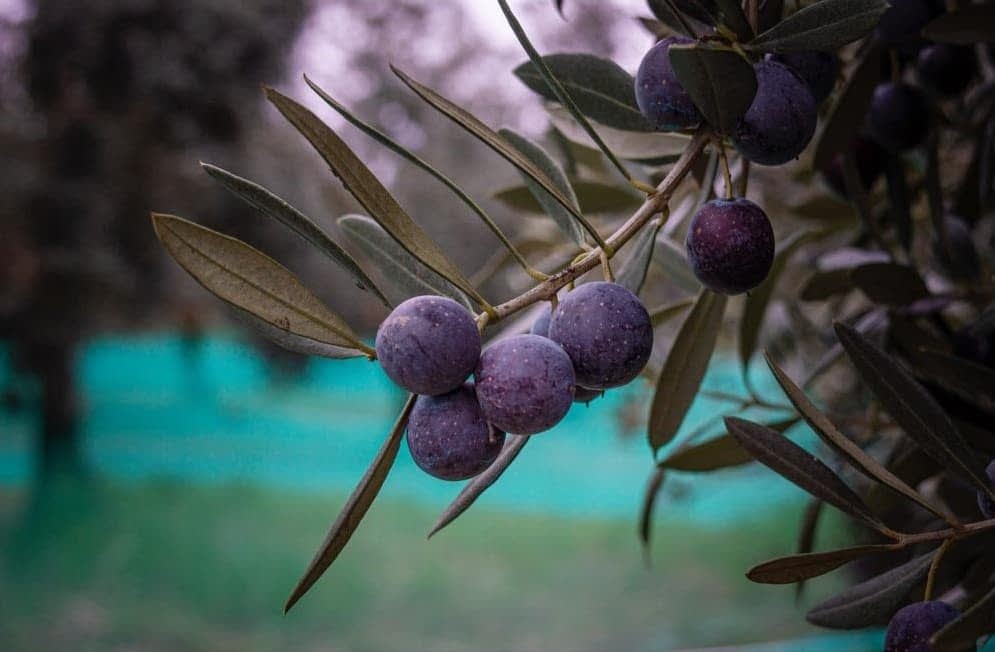 Itrana olives ready to become Oliva di Gaeta PDO table olives (Photo: Maria Capotosto)
“Our cooperative was founded in 1950 as a social olive oil mill and is one of the oldest in Italy,” said Francesco Meschino, Unagri’s president. “Starting from the 1980s, we focused mainly on table olives, to which today we dedicate three-quarters of the fruit provided by our growers.”
“We can say that Itrana has a triple aptitude,” he added. “It can be used to produce extra virgin oil with excellent organoleptic properties and can also be processed according to the ‘Itrana’ method to obtain two types of table olives.”
“We aim to spread awareness about this traditional processing method, based on water and sea salt, which is entirely handcrafted and allows us to obtain high-quality products with excellent nutritional properties,” Meschino continued.
The olives are harvested early, in November, and processed to become the ‘white olive,’ widely appreciated for its firm and crunchy pulp. Some of the olives are left on the trees to be collected in March — they are destined to become Oliva di Gaeta PDO, with a soft pulp and a winey, tangy flavor, more suitable for cooking.
“The traditional method allows the development of unique flavors and aromas within the brines,” Meschino said. “Without preserving agents or stabilizers, our product has a shelf life of 18 months, which is a very long time compared to products with preservatives.”
He added that bike tour participants are always grateful to finish the tour with a tasty and healthy snack that promotes traditional products.
“Combining our valorization program with a sports activity like biking has proved successful,” Meschino said. “Enjoying our olives after cycling through the groves, often in wonderful settings overlooking the sea, is a pure treat.”
Popular walking and cycling paths pass through the territory of Itri, including the Francigena and San Philip routes. Some of them run along the organic farm Masseria Raino, where the Aurunci Experience bike tour participants stop to enjoy an extra virgin olive oil tasting and lunch.
“My family founded this company about 80 years ago,” said co-owner Loredana Ciccarelli. “My great-grandfather already produced olives and olive oil, and then my grandfather established the masseria, the farmhouse at the heart of the estate. From them, we have inherited the love for this land and the olive trees.”
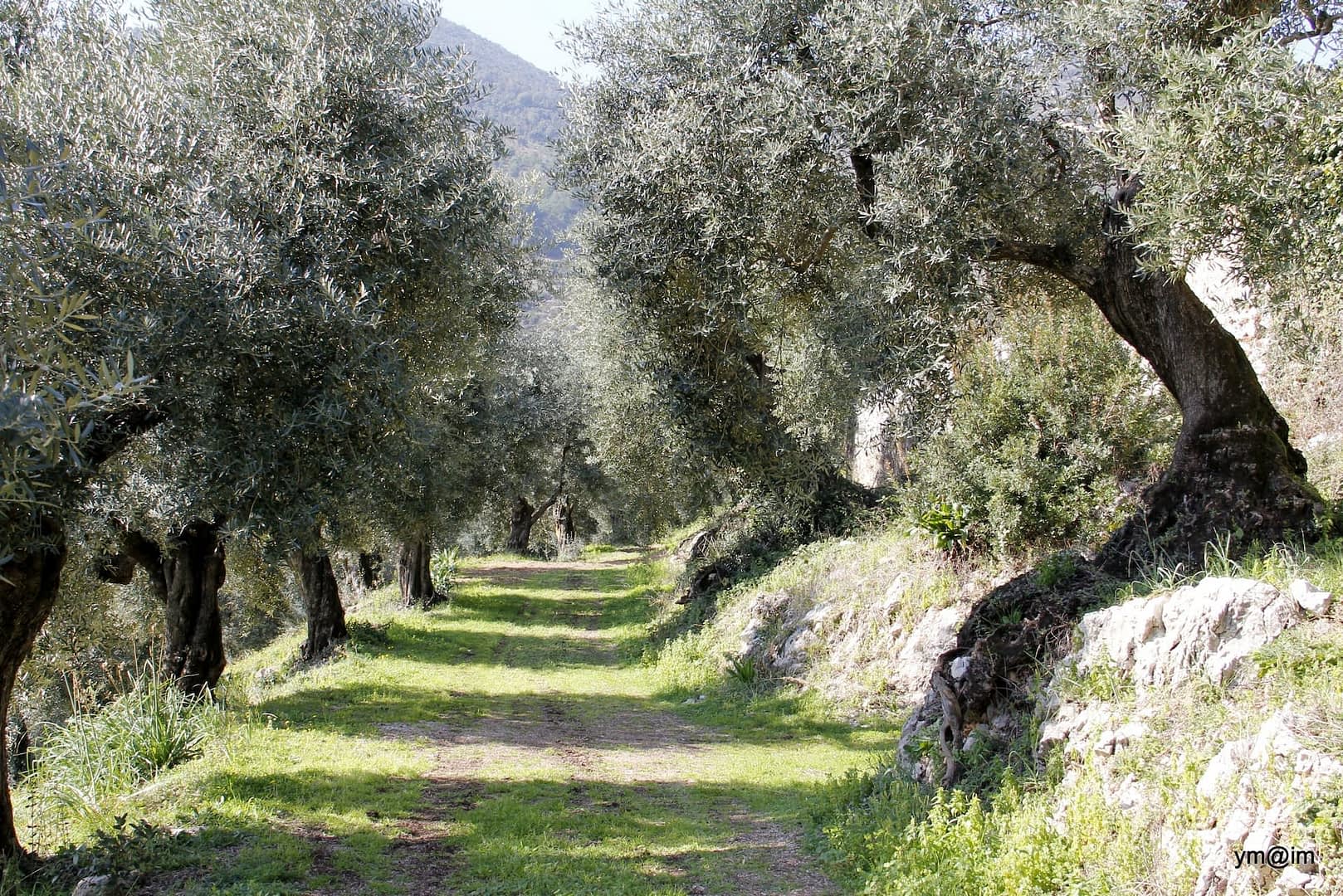 Masseria Raino’s olive groves border a historic pilgrimage route to the shrine of Our Lady of Civita. (Photo: Masseria Raino)
Their groves are bordered by a historic route that has been used by pilgrims since Saint Philip Neri first took it in the 1500s. The path reaches the top of Fusco Mountain, where the shrine of Our Lady of Civita stands. It houses a Byzantine icon from the 8th century.
“Today, the route is used for various purposes by those who look for a spiritual place as well as by sportspeople, hikers and bikers, who often stop by at the farm,” Ciccarelli said. “Our estate stretches over 15 hectares and includes some trails easily covered even by untrained people. The well-exposed terrain lends itself greatly to hiking and mountain biking.”
The property’s paths are flanked by dry stone walled terraces, where olive trees thrive overlooking the sea at an altitude between 400 and 600 meters.
“We currently manage about 2,500 Itrana trees, most of which are centuries old,” Ciccarelli said. “They are interspersed with a few plants of ancient native varieties used as pollinators. Over the years, we have recovered some flatter lands previously used for different purposes, and now and then, we add new trees to these plots.”
Characterized by an intensive aroma of green tomato leaf, the Itrana monovarietal takes center stage during the tasting that concludes the bike tour at Masseria Raino.
“We produce our extra virgin olive oil with the utmost care for the environment,” Ciccarelli said. “By properly and respectfully managing our groves, we want to contribute to the health of this beautiful, precious ecosystem.”
Dining and Cooking