


Image Source: Pexels
Rigorous scientific research has established the Mediterranean Diet (MedDiet) as a gold standard for human health and environmental sustainability, addressing the intertwined crises of malnutrition, chronic disease, and ecological degradation. With 828 million people experiencing stark starvation and 2.3 billion grappling with obesity-related illnesses, global food systems are under an unprecedented strain. The shift toward processed, calorie-dense diets, coupled with sedentary lifestyles, has escalated the prevalence of diabetes and cardiovascular disease rates. Food insecurity, intensified by disruptions such as COVID-19 and the 2022 Ukraine-Russia grain export crisis, which also added to the reduction of global wheat supply, has further compounded these challenges. Agriculture contributes around 30 percent of global greenhouse gas (GHG) emissions, with livestock accounting for 14.5 percent, alongside deforestation and biodiversity loss. The MedDiet—rooted in the traditional eating habits of Mediterranean countries, including Greece, Italy, Spain, and France—offers a scientifically validated model that promotes balanced nutrition, environmental sustainability, and socioeconomic equity, and enhances food security and overall health and well-being.
Agriculture contributes around 30 percent of global greenhouse gas (GHG) emissions, with livestock accounting for 14.5 percent, alongside deforestation and biodiversity loss.
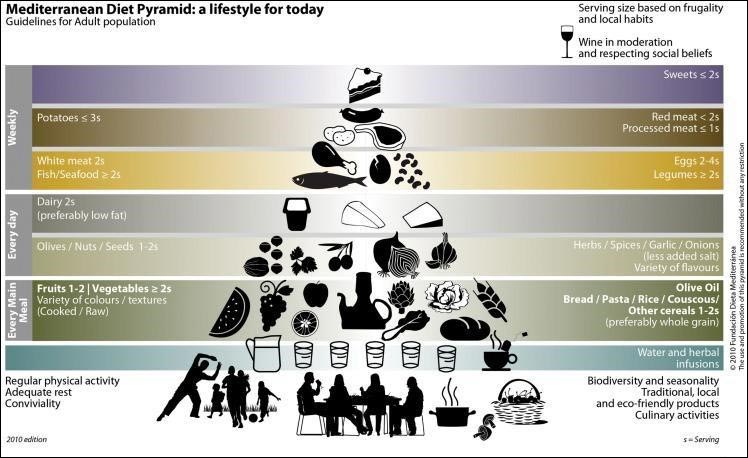
The MedDiet emphasises and consists of whole, minimally processed foods: abundant fruits and vegetables, whole grains such as barley and quinoa, legumes including lentils and chickpeas, nuts, seeds, and heart-healthy fats from olive oil. An umbrella review of 34 meta-analyses confirms the MedDiet reduces cardiovascular disease, type 2 diabetes, cancer incidence, and all-cause mortality with suggestive benefits for cognitive health, driven by anti-inflammatory and antioxidant-rich food. In 2009–2010, a revised Mediterranean diet pyramid (Figure 1) was developed to align with modern lifestyles and diverse cultural and regional contexts. It focuses on the significance of daily meals, moderation to curb obesity, and sustainability through eco-friendly products, biodiversity, colourful produce, local food, and conviviality.
Figure 1: Mediterranean Diet Pyramid
Source: Mediterranean Diet: From a Healthy Diet to a Sustainable Dietary Pattern
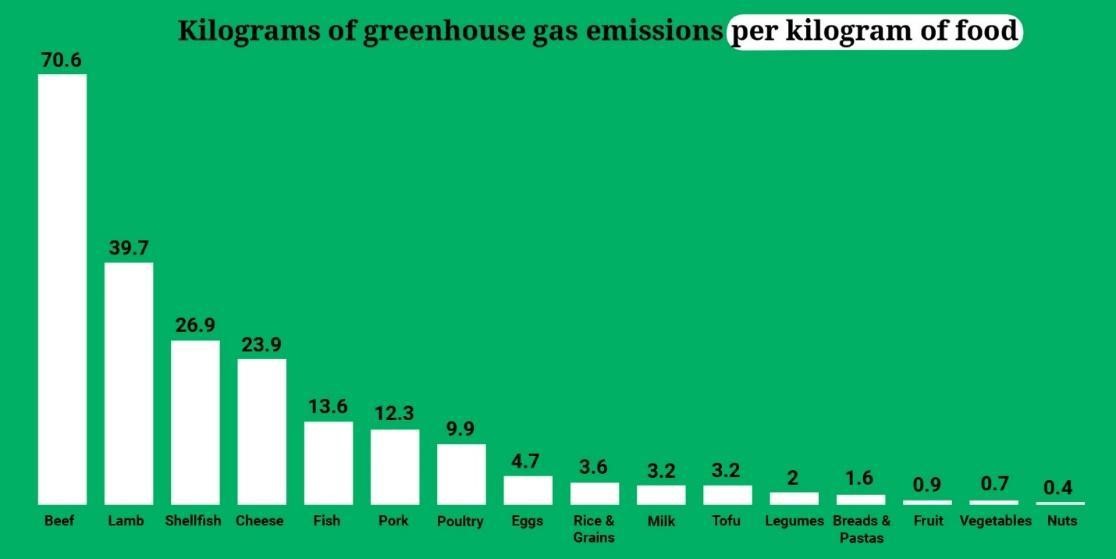
The MedDiet has drawn inspiration for its eco-friendly and health-promoting qualities, stemming from its predominantly plant-based approach, which results in reduced GHG emissions (Figure 2) and water usage compared to less sustainable diets. Experts recommend incorporating MedDiet principles into urban food policies to reduce the food system’s environmental footprint by 72 percent. The MedDiet’s focus on fresh, minimally processed foods also mitigates food safety risks in warmer climates by reducing foodborne illnesses.
Figure 2:Greenhouse Gas Emissions from Food
Source: Food and Climate Change: Healthy diets for a healthier planet
The Mediterranean Diet, rich in olive oil, promotes longevity, better health, and reduces cognitive decline risks due to its polyphenol content, which combats oxidative stress. According to a study, the MedDiet offers considerable potential in reducing breast cancer risk and improving outcomes. Its flexibility allows adaptation to local staples such as amaranth, quinoa across nations, making it globally viable and sustainable. A review of the Med Diet across seven countries established it as a model for heart-healthy eating, influencing global dietary guidelines and public health policies.
A cross-sectional study among Israeli adults found that higher Mediterranean diet adherence was linked to lower anxiety and depression symptoms. On the other hand, a greater consumption of processed food was associated with increased psychological distress. Furthermore, adherence to the MedDiet by older adults was linked to lower cognitive impairment and depressive symptoms, better quality of life, improved sleep quality (with even moderate adherence), and increased likelihood of successful ageing. The recent consensus statement links healthy diets (MedDiet, DASH (Dietary Approaches to Stop Hypertension), MIND (Mediterranean-DASH Intervention for Neurodegenerative Delay)), which contain nutrients such as omega-3 fatty acids, Vitamin B, antioxidants, and polyphenols, to better cognitive outcomes and reduced risk of dementia.
The ‘Mediterranean Way’ is a comprehensive lifestyle that blends environmental sustainability, cultural heritage, and public health. In the early 1950s, Ancel Keys, an American epidemiologist, observed the notably longer lifespans of Pioppi’s residents in post-war Cilento, Italy, despite widespread poverty. He studied their simple diet, centred on local tomatoes, extra virgin olive oil, gragnano pasta, fish, and stone-oven bread and went on to prove that this Mediterranean diet was key to longevity and low rates of cardiovascular disease, contrasting with the unhealthy American diet. In 2010, the United Nations Educational, Scientific, and Cultural Organisation (UNESCO) recognised the Mediterranean diet as an intangible cultural heritage, initially highlighting Greece, Italy, Morocco, and Spain. Later, in 2013, the list was expanded to include Cyprus, Croatia, and Portugal. According to UNESCO, the MedDiet involves “a set of skills, knowledge, practices and traditions ranging from the landscape to the table, including the crops, harvesting, fishing, conservation, processing, preparation and, particularly, consumption of food.”
Global consumption of fruits, vegetables, nuts and legumes will have to double, and consumption of foods such as red meat and sugar will have to be reduced by more than 50%,” to feed 10 billion people by 2050 within planetary boundaries, reducing GHG emissions, water use, and biodiversity loss.
According to the , “transformation to healthy diets by 2050 will require substantial dietary shifts. Global consumption of fruits, vegetables, nuts and legumes will have to double, and consumption of foods such as red meat and sugar will have to be reduced by more than 50%,” to feed 10 billion people by 2050 within planetary boundaries, reducing GHG emissions, water use, and biodiversity loss. There is a significant overlap with the MedDiet, as both promote plant-based, sustainable eating patterns for health and environmental benefits. However, both diets face affordability and accessibility issues, being unaffordable for 1.6 billion people in low-income settings.
A nutritional evaluation of ‘Italian-Mediterranean Dietary Pattern Developed Based on the EAT-Lancet Reference Diet’ was found to be nutritionally balanced, culturally relevant, and a sustainable adaptation of the EAT-Lancet framework. An assessment indicates that both the MedDiet and the Vegan diet offer high nutritional quality with significant health benefits, but they differ in environmental impact.
Yet, challenges persist. A 2023 review found agricultural intensification undermines Mediterranean diets by reducing traditional food diversity, degrading soil and biodiversity, worsening dietary quality, and marginalising smallholders. A study on MedDiet’s market demand and knowledge among tourists and restaurant owners in Italy viewed it as a food diet, missing its cultural and sustainability aspects. This situation requires improved communication and policy measures to promote the holistic and sustainable model of the Mediterranean Diet (MedDiet). While the global trend towards plant-based diets is encouraging, it often falls short due to processed alternatives that lack adequate iron and vitamin B12, provide lower protein quality, and contain high levels of salt, ultimately compromising their nutritional value. Fad diets—popular dietary patterns known to be a quick fix for obesity—promise rapid weight loss but often lack evidence and sustainability, risking misinformation and health issues.
A nutritional evaluation of ‘Italian-Mediterranean Dietary Pattern Developed Based on the EAT-Lancet Reference Diet’ was found to be nutritionally balanced, culturally relevant, and a sustainable adaptation of the EAT-Lancet framework.
Adherence to MedDiet highlights the importance of embedding sustainable diets into international nutrition strategies, climate commitments, and food system transformations aligned with the Sustainable Development Goals (SDGs). Policies that integrate nutrition education, sustainable agriculture, and responsible consumption are essential to scaling its benefits. From its roots in Mediterranean villages to its adoption in global urban centres, the MedDiet serves as a timeless model for sustainable food systems, balancing human health and planetary well-being for future generations.
Shoba Suri is a Senior Fellow with the Health Initiative at the Observer Research Foundation.
The views expressed above belong to the author(s). ORF research and analyses now available on Telegram! Click here to access our curated content — blogs, longforms and interviews.
Dining and Cooking