
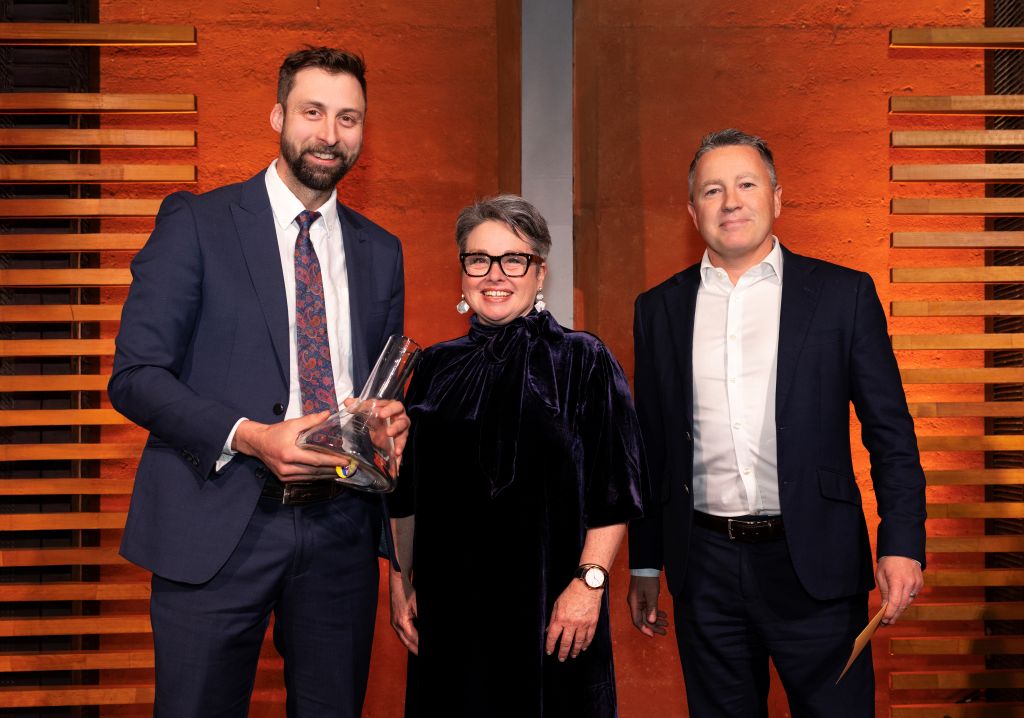
SAWIA Environment Excellence Awards Small to Medium Business winner Kaesler Wines, represented by Tim Dolan, with SAWIA President Kirsty Balnaves and award sponsor Export Finance Australia, represented by James Gallagher. Image courtesy Ben Macmahon and South Australian Wine Industry Association
South Australia’s grape and wine community came together last night for the 2025 South Australian Wine Industry Dinner, hosted by the South Australian Wine Industry Association (SAWIA) and held at the National Wine Centre in Adelaide. The dinner highlighted the wine industry’s positive impact on South Australia’s economy and culture in spite of recent industry pressures, celebrating the themes to “Connect, Honour, and Inspire”. It also recognised outstanding achievements through the SAWIA Excellence Awards, Vinehealth Australia’s Biosecurity Champion Award, and the Great Wine Capitals Best Of Wine Tourism Awards. In her opening address, SAWIA president Kirsty Balnaves acknowledged the recent additional pressure on the industry’s growers and winemakers.
“The announcement last week that wine bottles will be included in the container deposit scheme, or CDS, as it’s known, is yet another blow for our growers and winemakers. The pressure keeps mounting,” said Balnaves.
“Under the CDS, [one] bottle of wine… can be returned for a 10-cent refund to the consumer, that would cost us winemakers at least 20% a bottle on average, if not more… If you look around this room, there are 318 bottles of wine—that will be a refund, $31.80 for the consumer—but for the industry, the cost will be $63.60. Now that might not sound like much, but think about South Australian wines across Australia. The total cost of national CD schemes will be $40 million per year to South Australian winemakers. And another way to look at it is, for our industry, CDS is a cost equivalent of about $194 per tonne of grapes. It’s flawed logic to assume that every winemaker can pass these costs on to consumers, especially given the cost of living crisis and the state of our industry.”
Balnaves said the dinner was a powerful reminder of the industry’s strength and purpose.
“Our grape and wine industry in South Australia is a world leader, and it’s important to come together to recognise this, especially given the current challenges. Our growers and winemakers continue to set the standard for global excellence in viticulture, winemaking and wine tourism,” said Balnaves.
Award winners
2025 SAWIA Environment Excellence Awards
Small to Medium Business, sponsored by Export Finance Australia: Kaesler Wines – recognised for regenerative vineyard practices and refrigeration innovations that have halved winery electricity use.
Large Business, sponsored by Green Industries SA: Hill-Smith Family Estates – honoured for long-term sustainability initiatives, major revegetation projects, and international climate action leadership.
Individual Champion, sponsored by the Department of Primary Industries and Regions: Jessica Williams, Kingston Estate Wines – commended for her leadership in Sustainable Winegrowing Australia certification and community collaborations.
2025 SAWIA Work Health & Safety Excellence Awards
Large Business, sponsored by the National Wine Education & Training Centre: Vinarchy – awarded for its Handle with Care program, which reframed safety as care and achieved dramatic reductions in workplace injuries.
Individual Champion, sponsored by the National Wine Education & Training Centre: Chris Albanos, Kingston Estate Wines – recognised for championing workplace safety beyond his formal role, and engaging colleagues with practical solutions.
Vinehealth Australia Biosecurity Champion Award
This award celebrates individuals and businesses who demonstrate outstanding commitment, leadership and innovation in biosecurity.
2025 Winner: Craig Markby, Henschke Wines – celebrated for his biosecurity leadership at Henschke’s Lenswood vineyard, implementing rigorous hygiene practices and industry training to protect South Australian vines from pest and disease threats.
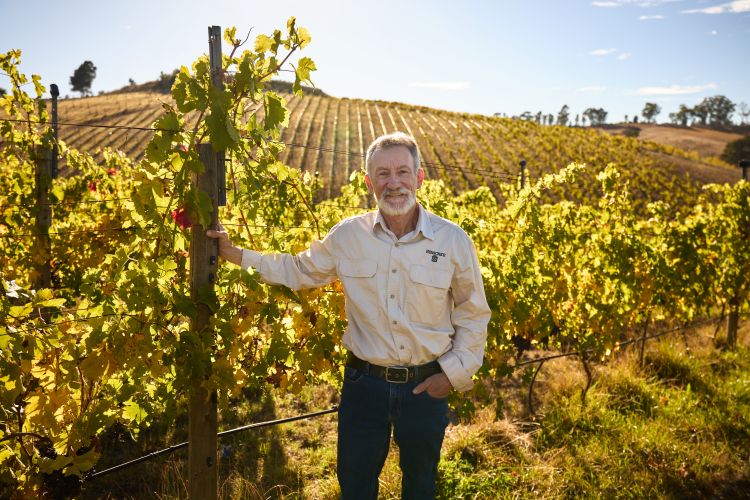 Craig Markby. Photo: Duy Dash
The award was presented by Vinehealth Australia Chair Di Davidson AM, celebrating Markby’s exceptional contribution to biosecurity innovation, preparedness, and regional resilience.
Markby’s achievements span practical vineyard measures, structured staff training, and groundbreaking innovation projects including clonal DNA work, virus standards, outbreak simulations, and hyperspectral imaging. His work has not only strengthened the health and longevity of the Henschke vineyards but also delivered significant benefits to the wider industry through propagation health and leadership in preparedness.
“Biosecurity is the foundation of a strong and sustainable wine industry,” said Di Davidson AM, Chair of Vinehealth Australia.
“Markby’s dedication to innovation, his willingness to share knowledge, and his leadership at both a business and regional level exemplify what it means to be a true biosecurity champion. His work ensures that South Australia remains at the forefront of vineyard protection, and we are proud to recognise his achievements with this award.”
Vinehealth Australia also congratulated Rae and Drew Noon, from Noon Winery in McLaren Vale, who were named as finalists for their long-term advocacy of biosecurity. Their efforts in raising awareness through cellar door conversations, signage, media, and regional training have played a vital role in embedding biosecurity awareness across their community and the wine sector.
Nominations for next year’s Vinehealth Australia Biosecurity Champion Award will open in July 2026.
Are you a Daily Wine News subscriber? If not, click here to join our mailing list. It’s free!
Dining and Cooking