
TAMPA — For his first restaurant, chef Yousef Samara started out small.
Small, as in just 45 seats. It was a good start, but the demand was high: Even at lunchtime mid-week, the dining room got packed, and there was usually a wait.
Now, Samara’s wildly popular Middle Eastern restaurant is about to get a lot bigger. And that’s a very good thing.
Olive Tree by Chef Yousef sits tucked away in a strip mall off North 56th Street in Tampa, near the University of South Florida. The area is home to a vibrant immigrant community, and the restaurant is just one of dozens of international eateries dotting the busy thoroughfare, part of a growing multi-cultural tapestry.
Samara, 53, is from Jordan. A former software engineer, he moved to the Tampa Bay area eight years ago as part of his quasi-retirement plan. That didn’t last long. Soon enough, Samara was researching how to turn his lifelong hobby — cooking — into a second career. He traveled and explored different cuisines. He studied recipes and got a job working in a kitchen. And, last year, together with two of his cousins, he finally opened his own restaurant.
Samara might have come to professional cooking late in life, but as far as second acts go, Olive Tree is a solid one. The restaurant, which as of this week includes an extended dining room that can seat roughly 140 people, specializes in Eastern Mediterranean and Middle Eastern fare with an emphasis on cuisines from the Levant, in particular Jordanian and Palestinian specialties.
There’s an all-day approach, which includes a breakfast spread that is in the process of being expanded. For now, it runs the gamut from egg-forward dishes like ejjeh ($12), an herb-flecked omelette with Palestinian and Jordanian roots, to shakshuka ($13), a tomato-rich stew with eggs, garlic and parsley.
Lunch and dinner are the highlight for now, with a menu that spans multiple categories — appetizers, soups, salads, sides, specialties, grilled items and sandwiches. Every meal begins with complimentary Palestinian pita bread and a dipping dish full of za’atar (a Middle Eastern spice blend with sumac and sesame seeds) and shatta (a preserved red chile paste) swimming in a pool of bright green olive oil. Each dunk results in a bite that’s got a little bit of heat and a ton of flavor.
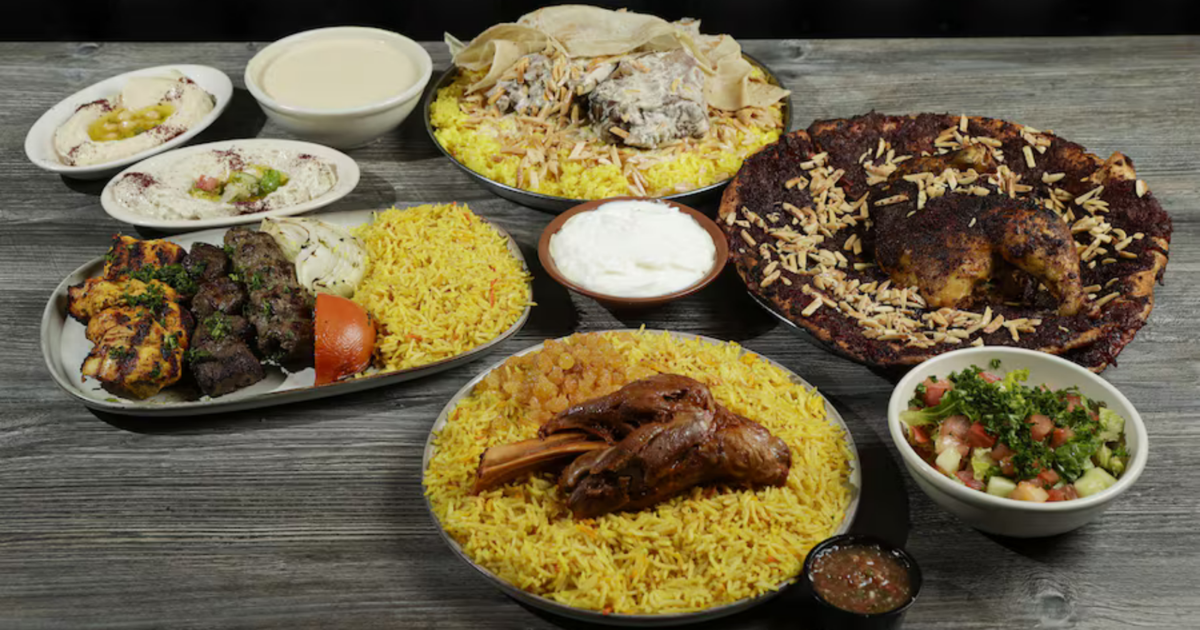
Starters include a number of classic Middle Eastern spreads and dips, and the best way to try as many as possible is to order the Olive Tree sampler ($16), which will get you two dark golden-fried pucks of kibbeh (ground bulgur, beef or lamb with pine nuts); creamy hummus and labneh (a thick strained yogurt); silky, smoky baba ghanoush (a roasted eggplant dip); and crispy falafel.
Those same falafel also find themselves on an excellent falafel sandwich ($8), which manages to hit the perfect falafel-to-filling ratio and includes creamy tahini, cucumbers, lettuce, tomatoes and hummus in a pita wrap. Also very good are the grilled meat selections “from the fire,” which include tender filet mignon ($27) grilled to a medium rare; smoky kufta kebabs ($20) made with ground lamb seasoned with parsley, onions and spices; and smoky grilled chicken known as shish tawook ($19). My suggestion? Order the Olive Tree mixed grill ($27) and get one of each, all served with an aromatic “mandi” rice — a smoky dish with Yemeni roots infused with spices like coriander and cinnamon. The best part might just be the creamy, garlicky toum sauce served on the side for dipping.
Olive Tree has already culled a strong following, and the large-format dishes make it a solid choice for families and large groups adept to sharing (the servings here are very big). The section of dishes on the menu titled “Chef Yousef Classic” are undeniably the highlight, and will easily feed a few mouths apiece.
While the rest of the menu might fall into a broader Middle Eastern canon, there are several dishes that pay tribute to individual cuisines. There’s the mulukhiyeh ($21), an Egyptian classic served with either lamb or chicken that features a brothy stew made with chopped jute leaves; mandi ($21), the hallmark Yemeni dish featuring lamb or chicken over a bed of smoky and aromatic yellow rice; and Egyptian bamya, a flavorful tomato-rich okra stew heavy with onions and garlic served alongside grilled lamb ($23) or chicken ($21).
But there’s one showstopper plate you must order here: mansaf ($25), the national dish of Jordan. Samara prepares the classic dish with lamb shoulder, cooked until it’s fall-off-the-bone tender in a fermented yogurt sauce (called jameed), and served over a bed of marigold-hued rice dotted with almonds and tucked under a thin sheath of unleavened bread called shrak. The toppling plate of lamb and rice is served alongside the bowl of citrusy and lamby jameed, which can be ladled to a diners’ discretion over the dish.
Mansaf holds a deep cultural significance in Jordan as a symbol of community and hospitality. Traditionally, the dish is eaten by hand, though everyone I saw was using utensils, including our table. Regardless of how you chose to eat this, it’s an incredible dish, brimming with tart, bright flavors and juicy hunks of lamb.
There’s no alcohol served at Olive Tree, but there is a selection of Sama drinks from the Jordanian Sama Food Industries that decently mimic traditional soda flavors, along with Turkish coffee and mint tea. Dessert is still a work in progress, but very soon will include selections from a shop next door, including confections like baklava, knafeh and ice cream. (You could also, as I have, hop across the street to the Jerusalem International Food Market for a bar of Dubai chocolate.)
Olive Tree’s expansion feels right on time: When I popped in for lunch and dinner on two separate occasions, the dining room was packed, and there was a slight wait for a table. The expansion, which gives the restaurant the opportunity to host large private parties, will also allow for additional menu items, an added emphasis on breakfast and the ability to make reservations.
One thing’s for sure: Olive Tree was always very good. Now, it’s about to get big.
Dining and Cooking