
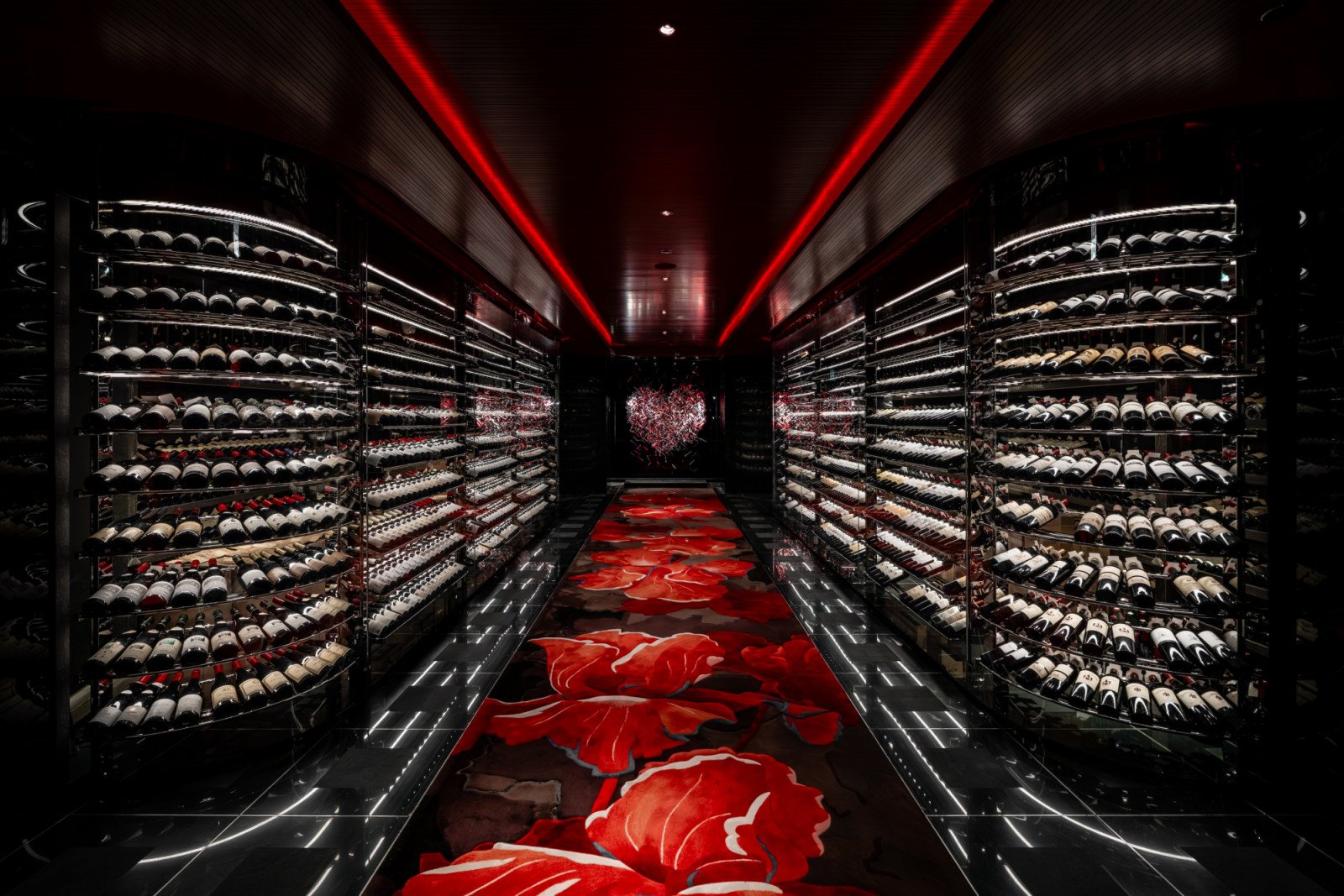
After an eight-month hiatus for relocation and renovation, Robuchon’s Hong Kong atelier reopens, carrying forward its philosophy with new fire and local nuance
Hong Kong thrives on reinvention. Dining rooms appear, dazzle and vanish; the carousel never stops turning. But when L’Atelier de Joël Robuchon closed its doors for relocation earlier this year, the absence felt a little different. This was a restaurant that had shaped the city’s understanding of French gastronomy for nearly two decades. The reopening, eight months on and in its new Landmark address, may carry the perfume of nostalgia, but it also marks the beginning of a story about how legacy can adapt while remaining true to itself.
For executive chef Julien Tongourian, also of Robuchon au Dôme in Macau, who worked alongside Joël Robuchon for 25 years, the reopening is both weight and privilege. “We don’t want to change the philosophy of Monsieur Robuchon too much,” he says. “We are back with our signature dishes: the caviar jelly, the langoustine ravioli, and of course, the Rossini.”
These signatures have lost none of their theatre. Le Caviar Impérial de Sologne arrives as a shimmering mosaic of caviar and cauliflower cream, layered with lobster jelly and fresh crab. Deceptively simple, technically relentless. The langoustine ravioli, glossed with truffle, is luxuriously filled, one of those dishes that reminds you why Robuchon’s name carries such weight. And the Rossini: Wagyu châteaubriand paired with foie gras, is slow-cooked until it yields like velvet.
“For our guests, it should feel like going back home,” he says, though quick to stress this isn’t a nostalgia act. “We want to bring back the French tradition of having a dinner party. Big pieces to share, beautiful plating, and private rooms where guests can enjoy together. Always with the philosophy of Robuchon, but more in the spirit of Hong Kong, where people love to share.”
That attentiveness to the city is something chef de cuisine Fabiana Miccoli has taken to heart. She talks of simplicity as Robuchon defined it: not absence, but exacting technique. “The most challenging thing to achieve is the simplest one. Mr Robuchon taught us that simplicity is the hardest. You must master techniques and choose the right produce every day. That is how we keep authenticity alive.” She adds a local lens: “It’s more about understanding the culture. Going for dim sum, understanding textures people love, and the balance between salt and sugar. Even the first time I went to Sai Kung and saw tanks of live fish, I thought, Wow, we need to do that. So now we choose the freshest local fish, sometimes Japanese if not local, but always the best nearby.” Miccoli admits the challenge is immense. “It’s an honour. We wake up every day and do what we can to provide the best. It’s a big challenge, but a beautiful one.”
Dining and Cooking