
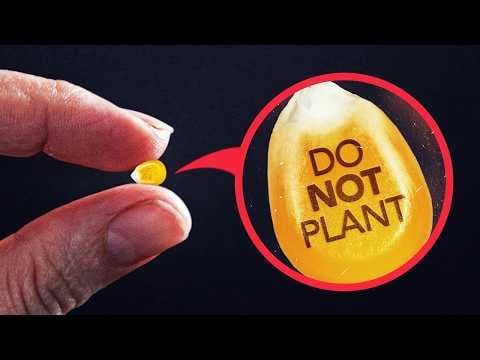
I recently watched a video that showed arguments from multiple sides that do not agree on the health impact of non-organic food : https://www.youtube.com/watch?v=CxVXvFOPIyQ
I checked the Wikipedia article about one of the synthetic herbicides that they mention, https://en.wikipedia.org/wiki/Glyphosate , there is a recurring pattern in different countries of planned bans that are then postponed/annulled/revoked/reversed (to each their own).
I was wondering what is the take in this community, do you still buy non-organic vegetables?
by choose_a_guest
8 Comments
Almost exclusively.
I agree there are benefits to soil health and local environment from organic agriculture. But, that comes at the cost of lower yields (requiring more hectares to be tilled), higher fertilizer and crop-protection input costs (any organic farmer will admit the volume of their inputs is far higher), and higher consumer costs. And having examined the scientific literature on on nutrition or health benefits, they’re negligible.
If you buy organic to support a better agricultural system, great. There are places like salad vegetables where it works pretty well. Just don’t expect personal health benefits. And don’t expect the world to follow, so long as we need to feed 8.25 billion, as arable land under organic agriculture might only support 3-4 billion. We’re in a predicament of our own making, and the main reason to support organic farming may be to retain those skills that will be needed through the bottleneck centuries.
Definitely.
Organic agriculture methods tend to be better for the land they are cultivated on. That being said, the term is broadly defined and there are plenty of workarounds that can make the practices of “organic” farms more environmentally detrimental than conventional (e.g., the rampant misuse of peat moss, which is harvested at the severe detriment of the ecosystems in which is exists.
From a health point of view, the main risk of pesticide and herbicide exposure is to those who are applying them (the ag workers), and potentially the people in the surrounding area that might be drinking contaminated water from runoff. The benefits of fruit and vegetable consumption far outweigh the possible impacts of trace pesticide and herbicide exposure, as far as I’m aware.
I try to opt for organic and fair trade primarily for ethical reasons (though the politics and bad economic incentives at play in those designations make the effectiveness somewhat questionable), but I think there are definitely some cases where conventional crops are more nutritious (higher nitrates in conventional beets and arugula) and where organic is better (higher salicylic acid in most organic veg)
I usually choose non-organic as it’s often less pesticide use and doesn’t use animal byproducts (but I’m vegan, not just plant-based), an generally no or negligible apparent health differences. Organic inputs can sometimes have more prevalent heavy metals and other contaminants in them as well.
I eat a lot of organic incidentally since the local tiny food co-op I buy groceries at stocks a lot of locally grown, organic stuff. If it weren’t for that I’d probably buy mostly non-organic, especially for staples.
I love the clean 15 and dirty dozen lists on ewg.org. They help me save me money. If it’s on the clean 15, I’m buying non-organic. Dirty dozen? Organic.
i notice the synthetic pesticides are a lot more of a burden on my body, generally tend to get organic. but I try to get low pesticide produce from farmers market as I feel pesticide damage to environment and human health is very not understood and is much more impactful then instiutions thinks
I live in Europe and in my country organic produce (and products) are very available, so that’s all I buy. Yes, the cost is higher, but it’s worth it for me. It’s not about organic vegetables having more healthy ingredients (the differences are usually small), it’s about what’s NOT in them, namely pesticide residue. Of course there are upper limits and food safety is pretty good in my country, but personally I try to keep my toxic load as low as possible due to chronic illness. Will it be perfect? No, but nothing is in this world. We can only try.
So every food I buy to cook with is organic – vegetables, fruits, grains, legumes, herbs, spices etc. Even a lot of my personal care products are organic or have organic ingredients as well as my cleaning products. The only exceptions are supplements (including some herbal supplements) that aren’t available in organic form and whenever I’m eating out or get takeaway.
I’ve also started to focus on clothes and try to keep an eye out for GOTS certified organic cotton and linen. But that’s sometimes hard to find and can get crazy expensive, so it depends. I’d say most of my underwear, socks and pyjamas are GOTS cotton by now though. Some of my bed linens too.
All in all I’m definitely spending more money on that, but I’m okay with that. I’d rather have organic food at home than every own a designer handbag.