
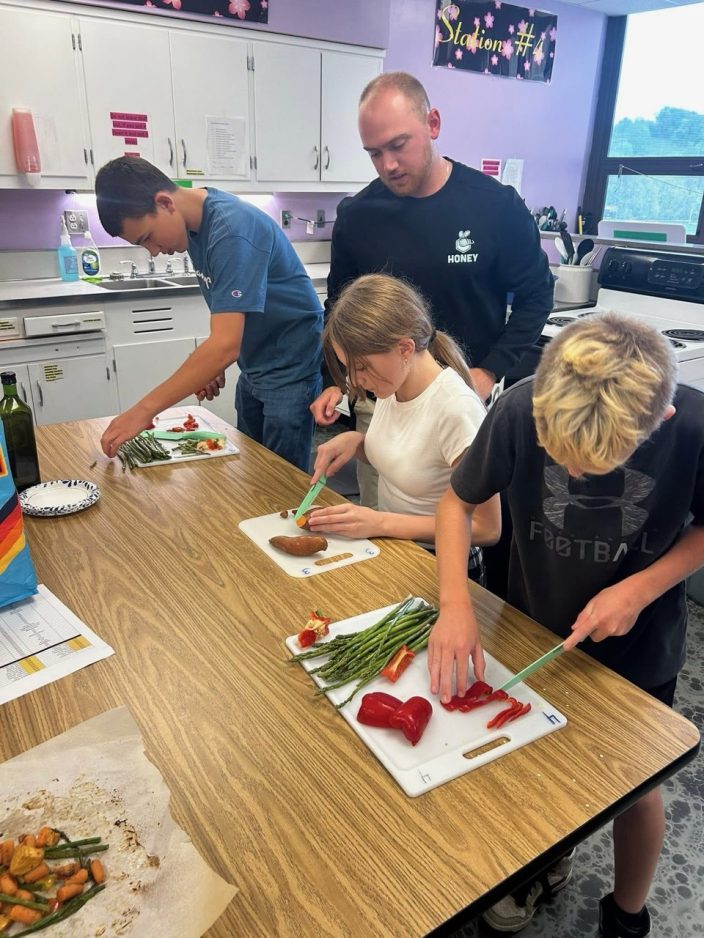
Dillon Shields, project coordinator for HONEY, shows Southeastern Greene School District students how to prepare meals during a cooking class. The program teaches cooking and provides recipes to Greene County residents 12 and up.
A single meal out might be cheaper and faster than stocking a pantry, though those costs reverse over time.
But to reach that point, people have to get over their hesitancy to cook — whether it’s skill, cost or time commitment.
There are local programs and counselors trying to help demystify the process and show people creative ways to cook at home.
Andrea Drew advises people both in her role as dietitian nutritionist at WVU Uniontown Hospital and in her own business of Preparing 4 Maternity Leave, where she advises mothers-to-be on planning and prepping for nutritious meals.
She said she’s seen more people looking for advice on how to cook more at home. Some of that is driven by growing interest in health and nutrition. Many are also looking to save money.
Prices for eating out and home cooking continue to increase, though conscientious choices at home remain the smartest bet, Drew said.
The most recent Bureau of Labor Statistics data put the cost of cooking at home up 2.7% over August 2024, while eating out increased by 3.7%. Both had the largest month-to-month increases since 2022.
“I don’t think anyone would argue that groceries are just so expensive,” Drew said. “Eating out is so expensive. So I definitely think people are looking to eat at home more to be more money conscious.”
Her number-one tip is to plan out meals. It will save money, and nearly always be healthier, she said.
Restaurants are geared more to taste than nutrition (think butter and salt), and they’re less likely to exercise portion control.
“We usually don’t have the stuff we need at home up and ready to go, so we eat out and end up spending a lot more money, and it’s not nearly as nutritious,” Drew said.
Plotting out your meals can even result in better grocery shopping, avoiding empty-calorie impulse buys, Drew said. Another way to avoid temptation: using grocery pickup or delivery services.
When prepping, cooks should also write notes for important steps, Drew said — say, pulling the chicken from the freezer, or marinating pork chops.
Since 2021, a program in Greene County has also been helping students and other county residents learn more about cooking and healthy lifestyles. Cornerstone Care began its HONEY program through a four-year grant from the Health Resources Service Administration.
The program travels to all five Greene County school districts for cooking classes, builds individualized nutrition plans and also hosts monthly nutrition seminars and counseling at The Way.
Those classes take the cost of healthy eating into account, said project coordinator Dillon Shields. In Greene County, healthier options can be more limited — and when shoppers can track them down, more expensive.
HONEY confronts that obstacle head-on, building price-conscious meals with locally sourced ingredients, Shields said.
“All of our meals are designed to stay under a $20 budget, helping participants learn how to eat healthier while managing the rising cost of groceries,” he said.
To save money, Drew also recommends putting pencil to paper to take inventory of what foods are already in the house.
“Sometimes we’re planning meals and purchasing things totally from scratch, when we maybe don’t have to, and we just have to get a bit more creative with what we already have,” she said.
The ensuing adventure of stretching out supplies is one Drew compared to the show “Chopped.”
She recommends building around a protein, be it meat, lentils, fish or eggs.
Frozen vegetables are easy add-ons, Drew said. Home cooks can also turn vegetables into a main dish, adding some Worcestershire sauce to give them a hearty meat flavor.
For a more nutritious variation on the “constant potato side dish,” Drew recommends high-fiber, high-protein items like quinoa, which “eats like a starch.”
As a breakfast-for-dinner option, Drew enjoys a frittata, a protein-heavy baked egg dish that’s also a good way for cooks to throw in foods like vegetables or cheese before they go bad.
Also useful for that purpose, Drew said: soups, or turning half-empty salad dressings or condiments into marinades.
The thing that might stoke the most fear in fledgling cooks is the time it takes to prepare meals, Drew said.
But it doesn’t have to mean giving up their Sunday.
People can make a little extra throughout the week, freezing them for future meals, Drew said. Or they can flash-freeze individual ingredients in pieces on a sheet pan, then store them for later.
“There’s different types of meal prepping to fit whatever lifestyle people have, and what would work best for them,” she said.
The HONEY program currently serves 194 people ages 12 and up in Greene County, Shields said.
For the in-school cooking classes, sessions are usually 45 minutes to an hour. At HONEY outreach events outside of schools, they can go longer and involve more complex recipes, Shields said.
Many of the students are new to cooking, Shields said. They learn about kitchen safety and the nutritional value of their ingredients — new-to-many foods like avocados, dragonfruit, asparagus, squash and more.
In every class, he has tips and tricks tailored to the individual, Shields said.
“We meet students right where they are, showing them practical ways to use what’s available in their own communities,” he said. “Our hope is that they carry this understanding of health and wellness with them into the future.”
Dining and Cooking