
Summary 
The village of Postira on the Croatian island of Brač has gained international attention by hosting events like the International Symposium on Olive Oils and the World Championship of Olive Picking, showcasing the island’s olive-growing tradition. The competition brought together teams from around the world, with France ultimately winning first place by harvesting 64 kilograms of olives in 45 minutes, solidifying Brač’s reputation for producing top-quality olive oil.
The picturesque village of Postira, on the Croatian island of Brač, is becoming an increasingly global stage. After hosting the International Symposium on Olive Oils of Croatia and the Adriatic Coast in September, organized by Olive Oil Times, the spotlight returned from October 9 to 11 for the eighth World Championship of Olive Picking.
“We’re building a destination brand that doesn’t imitate but inspires,” said Ivana Jelinčić, director of the Postira Tourist Board. Alongside the Tourist Board, the event was supported by the Municipality of Postira, the local agricultural cooperative and the Aldura Sport agency — transforming a small fishing and farming village into a global story.
Competitors from Every Continent
“Thanks to the World Championship, the whole world has heard about our small town,” Jelinčić added, noting that the event, which blends island olive-growing tradition with creative tourism, once again brought together 12 teams and 48 competitors from around the world.
 Team France
Each team consisted of four members — two women and two men. At the opening ceremony, teams from Croatia, Bosnia and Herzegovina, Finland, France, Lithuania, Poland, Romania, Slovakia, Serbia, Sweden and the United Kingdom were introduced, along with a Digital Nomads team whose members came from the United States, Malaysia, the Canary Islands and Bolivia.
“In these eight years, we’ve hosted competitors from every continent, even from countries where olives aren’t grown,” Jelinčić said. “This year, 70 percent came from countries without olive cultivation, which shows how popular this Mediterranean fruit and this event have become.”
Hand Picking and Secret Weigh-In
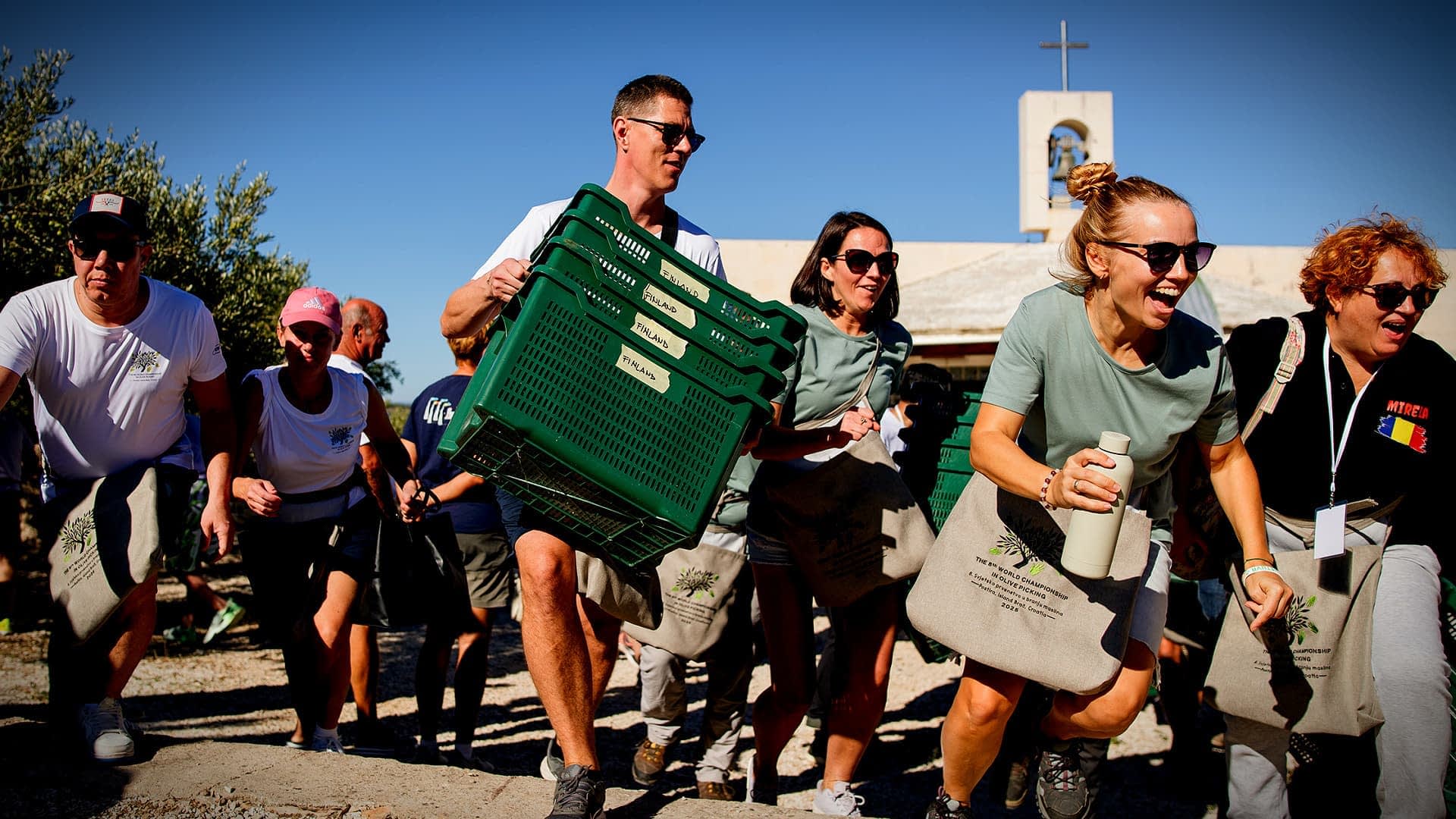
The competition began Friday at 10:30 a.m. in St. Joseph’s olive grove above Postira under sunny, almost hot conditions. Despite the challenge, spirits were high. In keeping with tradition, the olives were hand-harvested. Competitors filled burlap aprons — known locally as sakete—then transferred the olives into team crates.
After 45 minutes, crates belonging to last year’s Lithuanian champions, as well as those of the French and Finnish teams, appeared the fullest. Many expected the Croatian “All-Stars,” led by basketball legend Dino Rađa, to contend for the podium. Rađa, a former Boston Celtics player, was easily the tallest competitor in the grove.
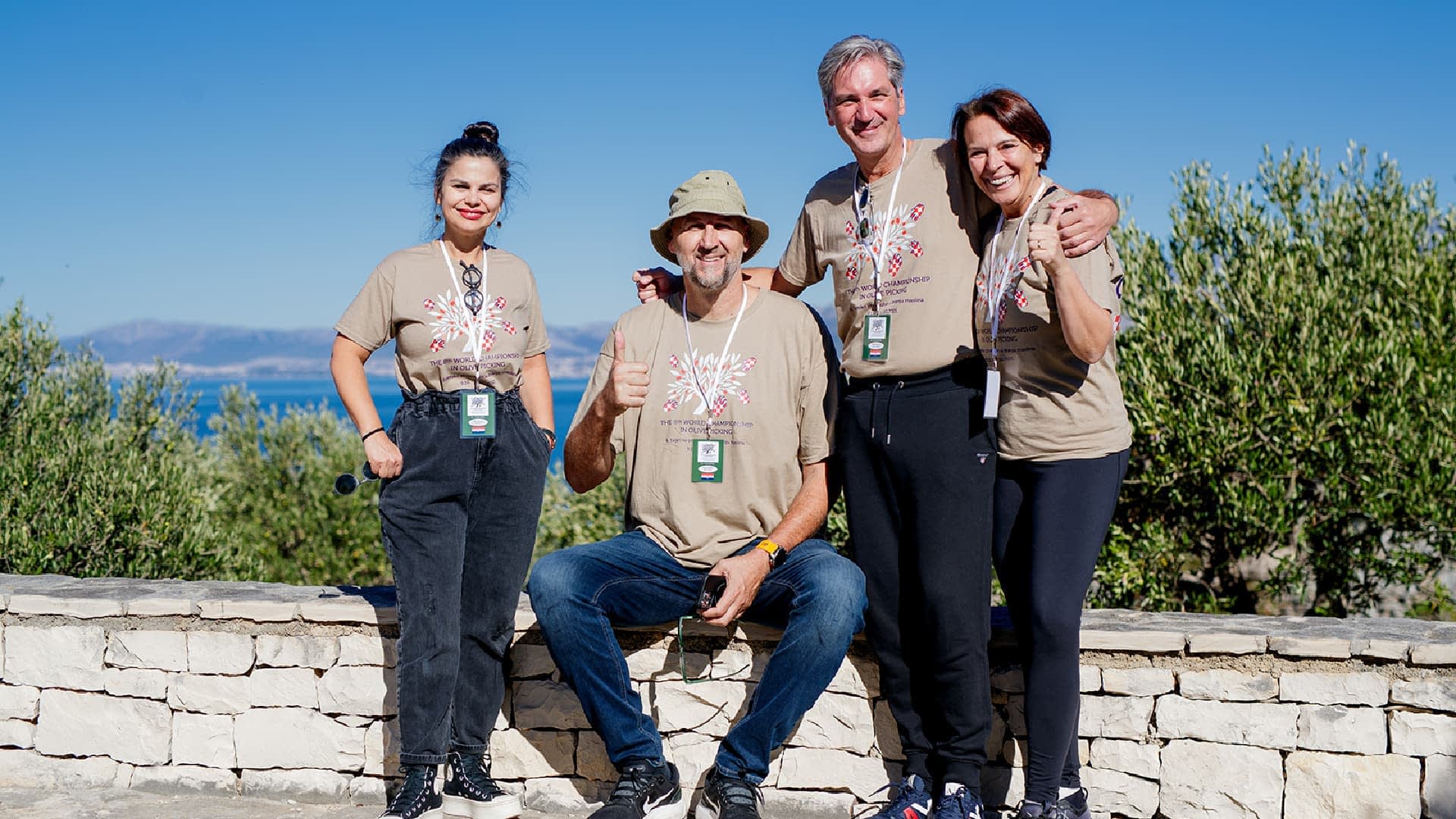 Third Place: Croatians with celebrated basketball player Dino Rađa
He was joined by Dr. Ivica Lukšić, director of Zagreb’s Dubrava Clinical Hospital and a native of Sutivan; Ivana Vladović, head of the Split-Dalmatia County Tourist Board; and artist Tisja Kljaković Braić.
Speed and skill were evident throughout the grove, but the winner would be determined solely by weight. The official weighing took place under the supervision of Miljenko Cvitanić of the Postira Agricultural Cooperative. Results were kept secret — only team captains saw their totals — until the Saturday evening gala, when the champions were announced.
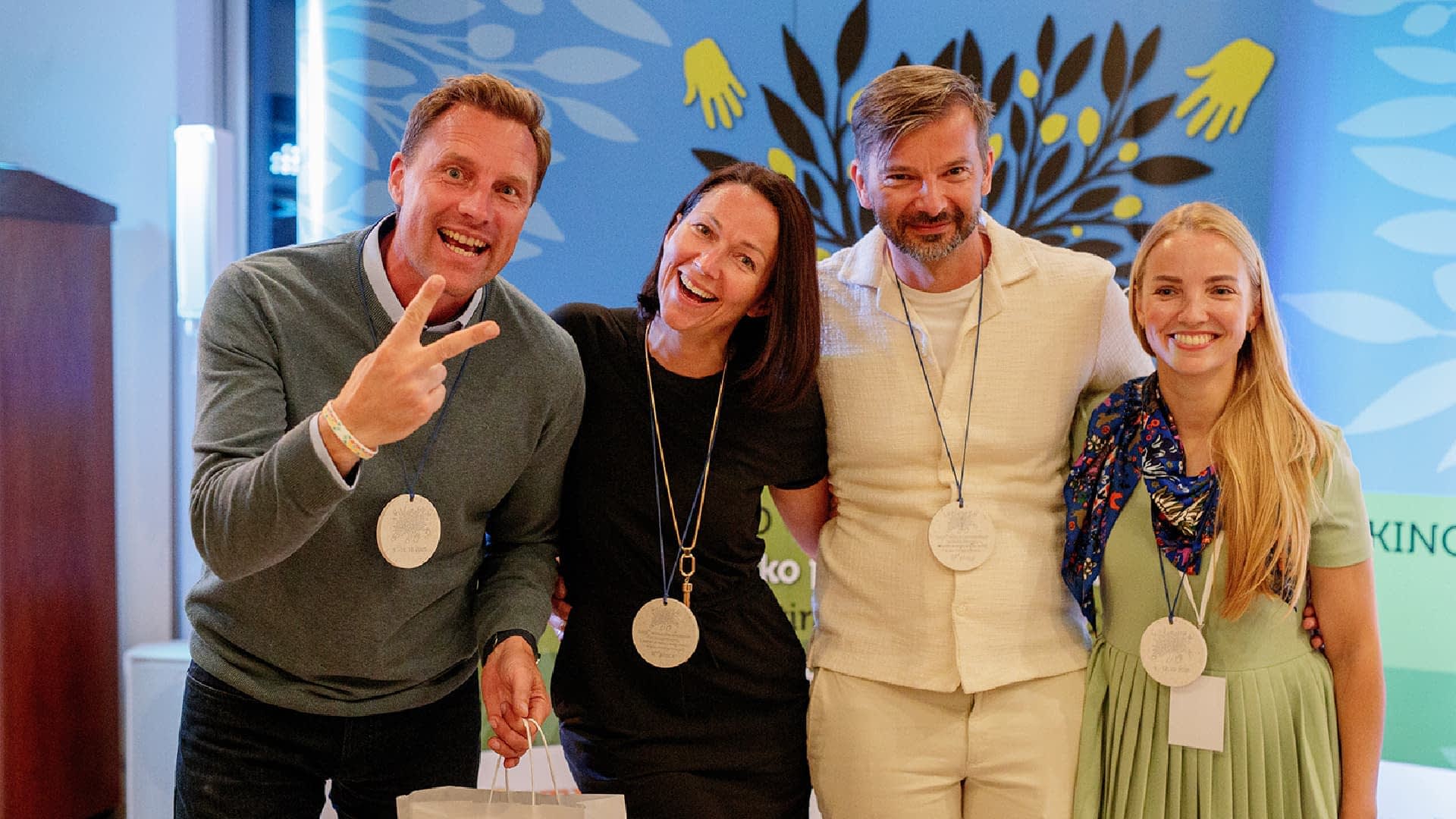 The Lithuanian team
The harvested olives were later processed at the cooperative mill, and each participant received a bottle of extra virgin olive oil made from the olives they had picked themselves.
Announcing the Champions
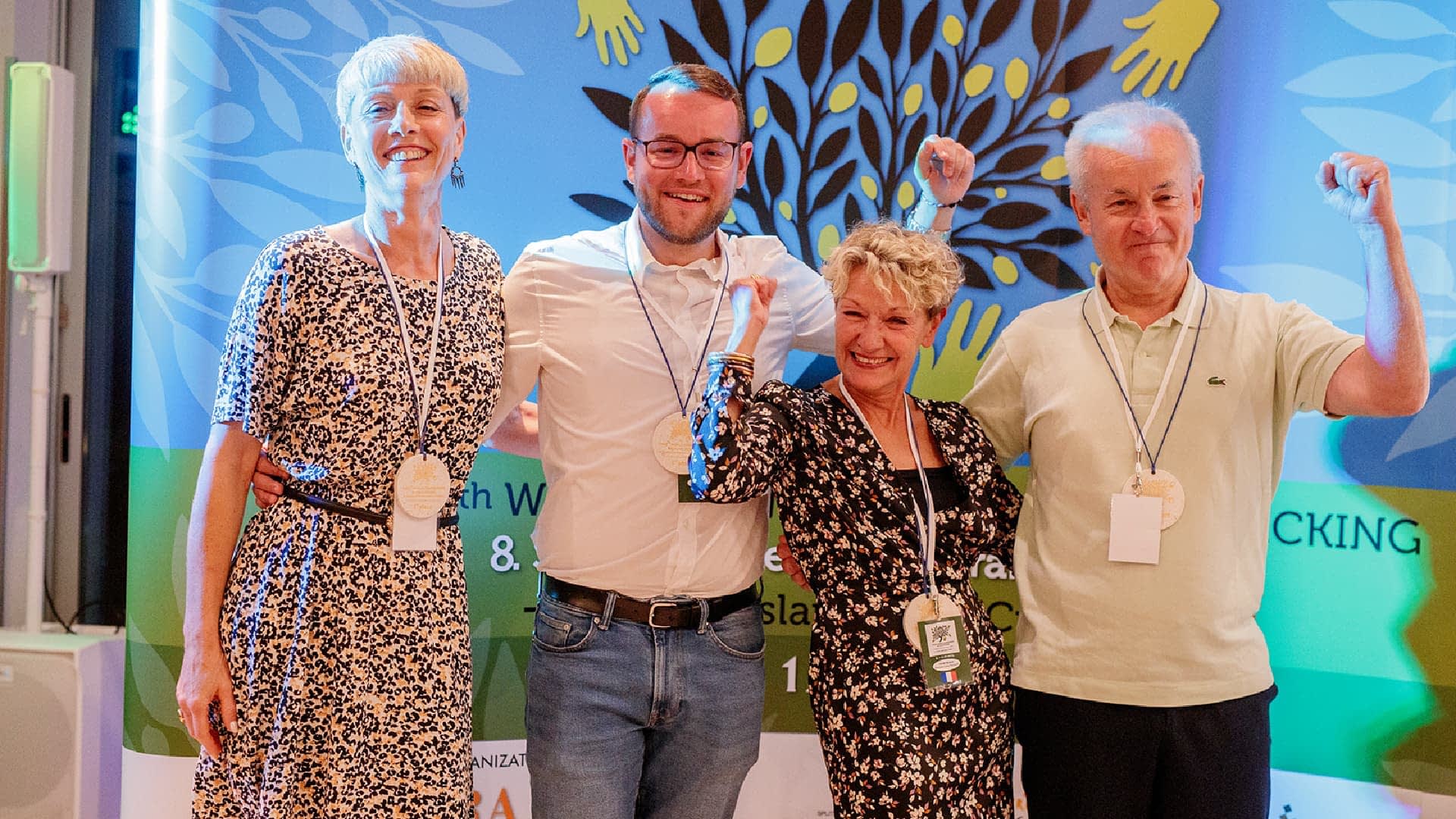
At the awards ceremony in Hotel Pastura, the four-member team from southern France claimed first place after harvesting 64 kilograms in 45 minutes. “Although we’ve been in olive growing for 25 years, we didn’t expect to win on our first appearance at the World Championship,” said French captain Guy Pacouill. “We enjoyed every moment — meeting teams, exchanging experiences and tasting some excellent oils from Brač.”
Lithuania, last year’s champions, finished second with 63 kilograms, while Croatia, led by Rađa, earned bronze with 59 kilograms.
Final Results:
1. France – 64 kg
2. Lithuania – 63 kg
3. Croatia – 59 kg
4. Finland – 58 kg
5. – 6. United Kingdom and Digital Nomads – 46 kg
7. – 8. Sweden and Serbia – 45 kg
9. – 10. Bosnia and Herzegovina and Slovakia – 40 kg
11. Poland – 39 kg
12. Romania – 30 kg
In total, 575 kilograms of olives were harvested, yielding 92 liters of extra-virgin olive oil. As tradition dictates, the championship concluded with a song, dance, and celebration that lasted late into the night.
Lunch and Poetica Gin
After the weighing, competitors enjoyed a classic Dalmatian marenda—a late-morning meal prepared in the grove by chefs from the Association of Chefs of Mediterranean and European Regions (ŠKMER). Students from the Vladimir Nazor School in Postira contributed traditional Brač desserts, accompanied by music from the local Trio Naranča.
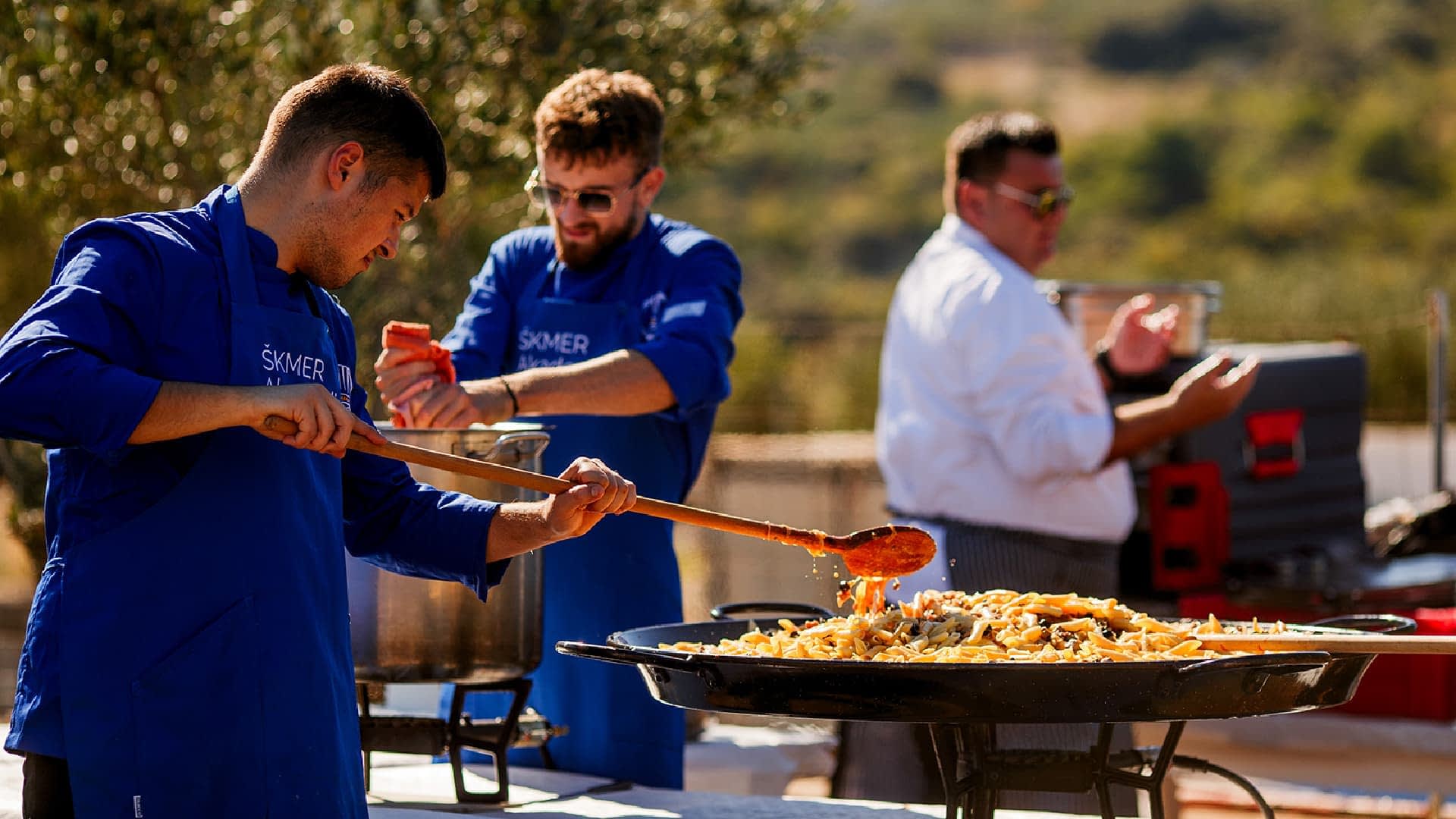 Traditional Dalmatian lunch for the weary contestants
Complementing the island wines, olive oil and Ožujsko beer was Poetica Gin, produced by Jelena and Drago Nosić of Vrgorac in the Dalmatian hinterland. “Poetica has been a proud partner of the World Championship in Olive Picking for three years now,” the couple said.
Their Poetica Olive Infused Gin — made with Brač’s native Oblica olives — won a silver medal (92 points) at this year’s IWSC competition in London.
Excursions to Škrip and Dol
On Saturday, participants toured Škrip, Brač’s oldest settlement, visiting the Olive Oil Museum to see how oil was once produced with stone mills and manual presses. They learned to recognize quality olive oil and sampled olive-based delicacies.
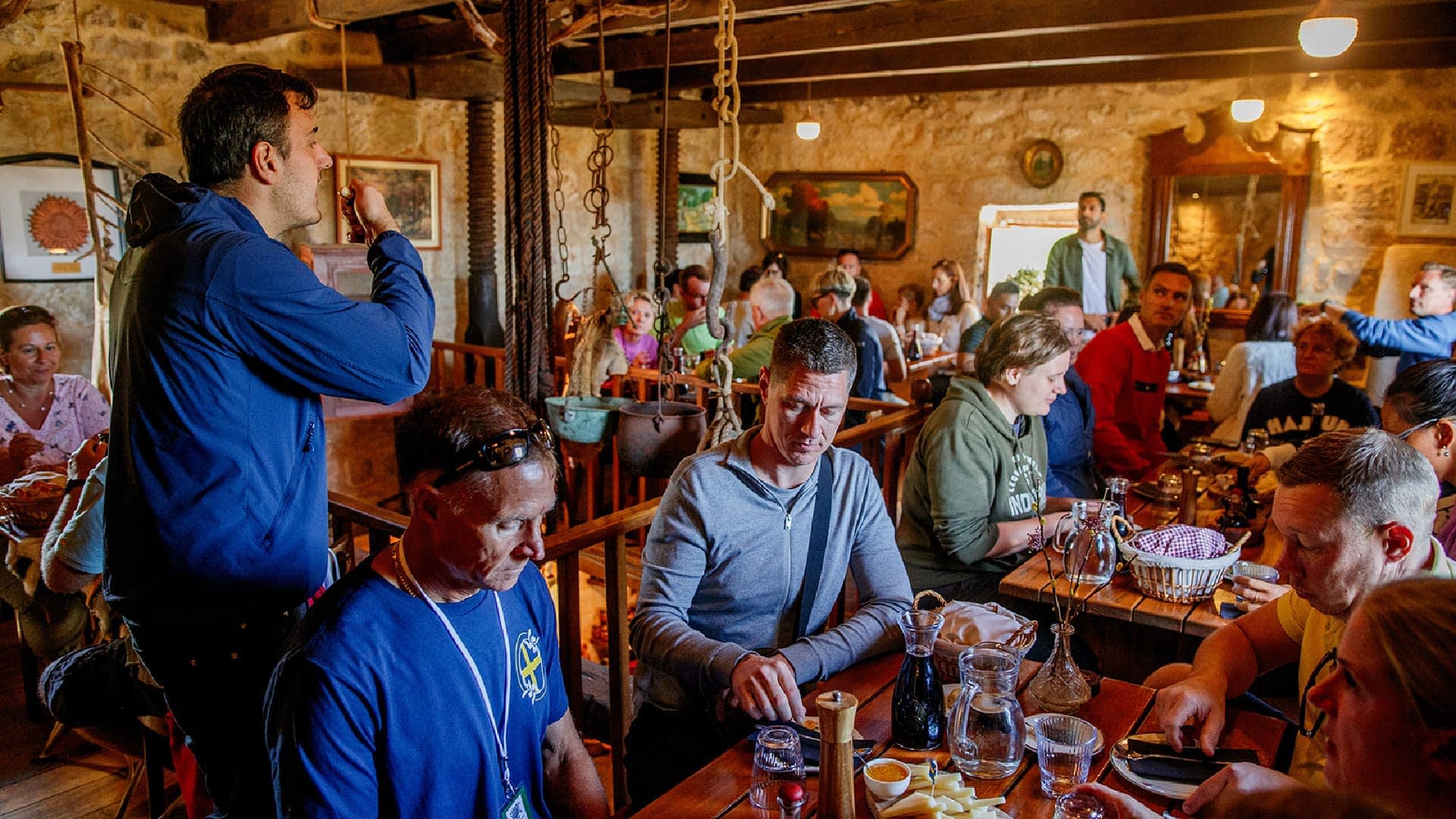 At the Olive Oil Museum in Škrip
The group then continued to Dol, a picturesque village surrounded by steep terraced groves where pickers often secure themselves with ropes for safety. The event once again impressed visitors and competitors with its organization and atmosphere.
“It’s that spirit — the joy, the friendships and the beautiful memories teams take home from Postira, Brač and Croatia — that gives us the energy and inspiration to keep improving every year,” Jelinčić said.
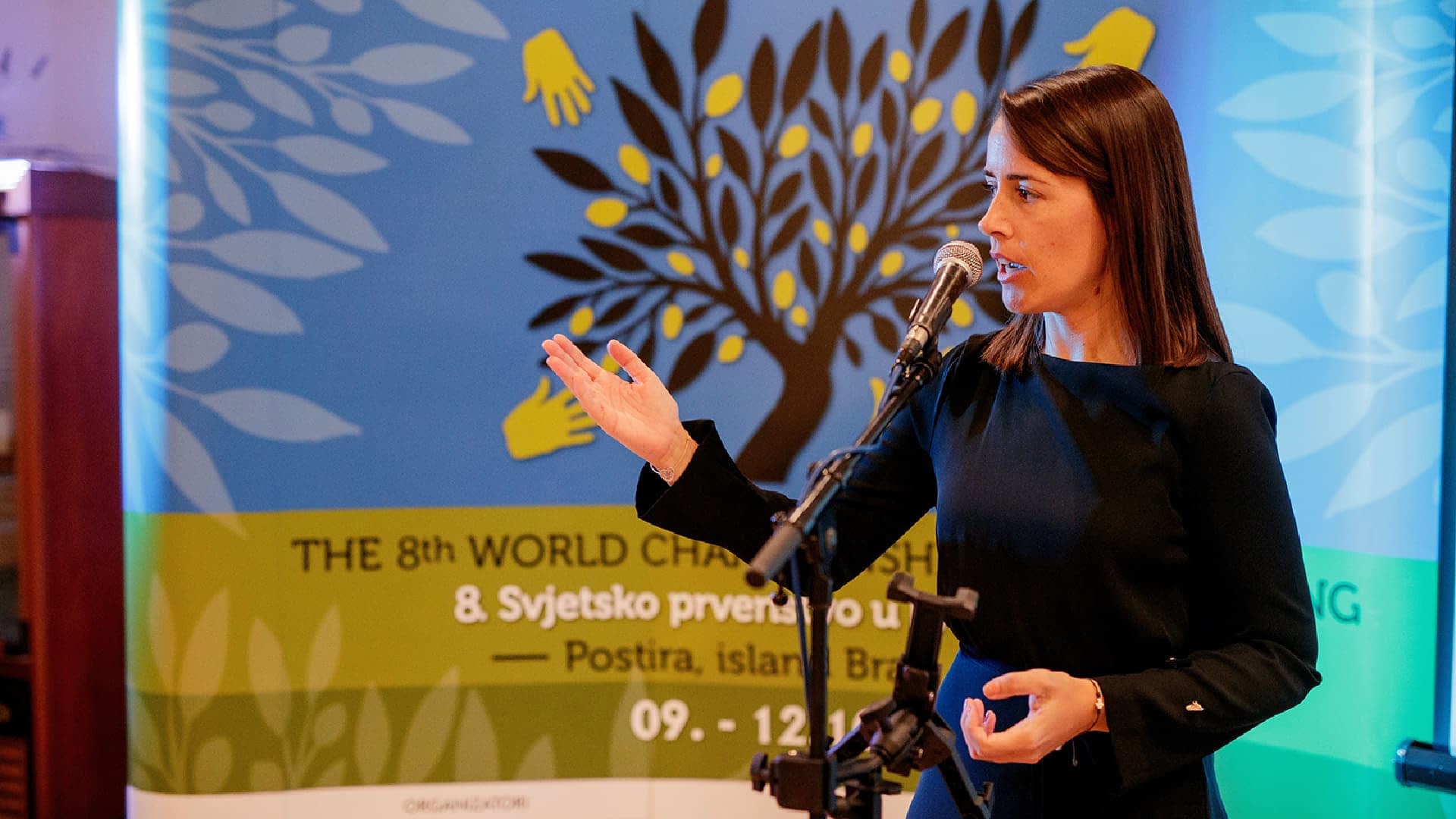 Ivana Jelinčić, director of the Postira Tourist Board
Ancient Roots
Olive cultivation has long been a central aspect of Brač, the largest island in Dalmatia. Written records of olive growing date to the Roman geographer Strabo in the first century B.C., while Emperor Diocletian mentioned it again in the third century. The Venetian Republic later promoted olive planting to expand production. In the 16th century, its Senate decreed exile for anyone who damaged or felled an olive tree, while grooms were required to plant a set number before their marriage.
By the late 18th century, more than 500,000 olive trees grew on Brač, producing more oil than the entire Dalmatian mainland. Today, around one million trees cover two-thirds of the island’s farmland, mainly of the hardy, drought-resistant Oblica variety.
In 2022, Brač olive oil earned the EU’s Protected Designation of Origin (PDO) status, and Brač producers continue to win top awards, including multiple awards at the NYIOOC World Olive Oil Competition in New York.
Olive Oil and Tourism Hand in Hand
“We’re proving that agriculture and tourism can thrive together—šotobraco, as we say on Brač,” Jelinčić explained. “This creates an authentic experience for visitors and a healthy, fulfilling life for locals.”
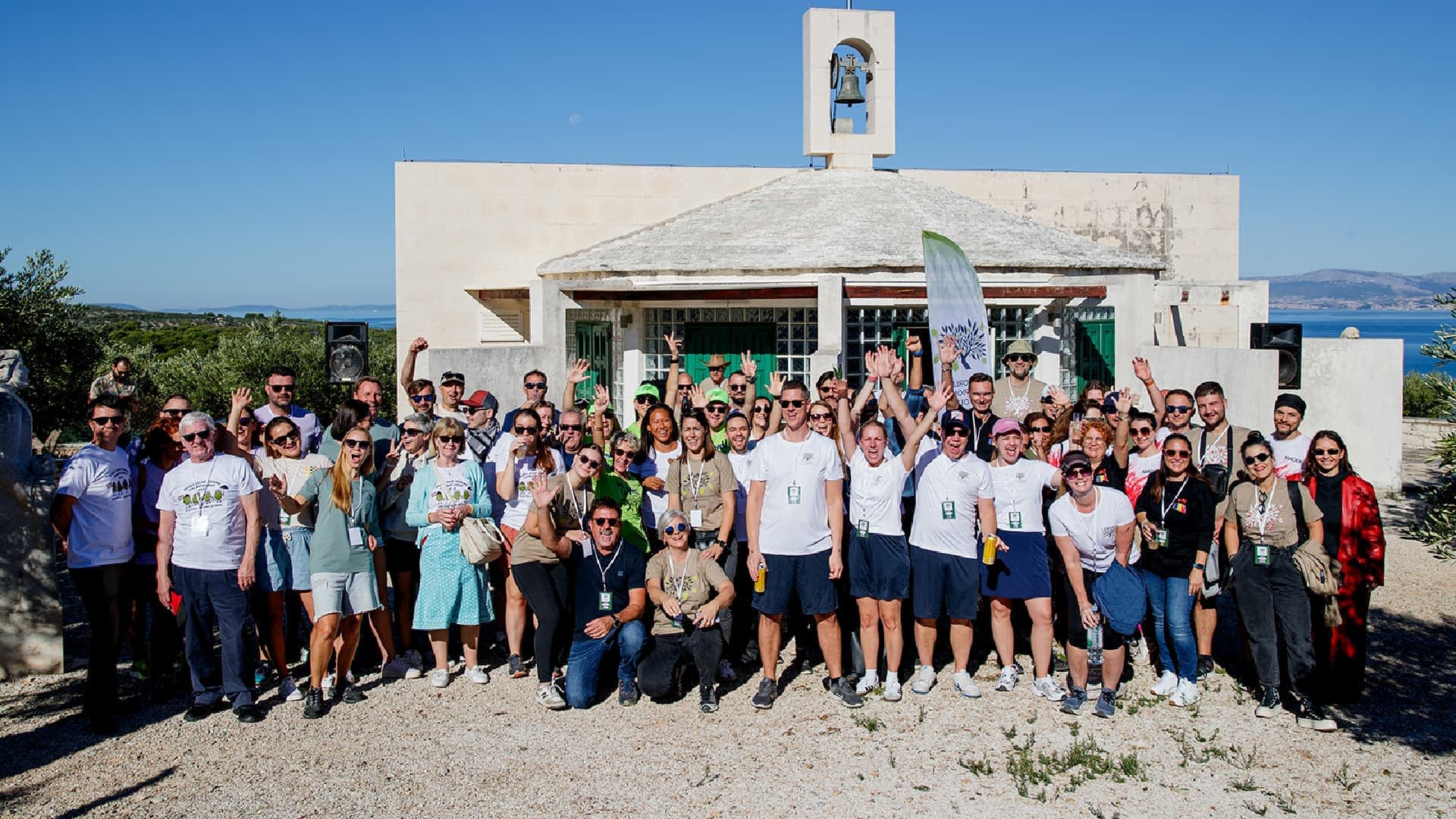 A commemorative photo of all participants of the World Championship
The event’s success was recognized internationally in 2019 when the Creative Tourism Network named the World Championship the Best Creative Tourism Experience at Madrid’s FITUR Fair, selected from 160 projects worldwide. “That award was a great honor — but also a responsibility to keep improving,” Jelinčić said. “Congratulations to the new world champions, and thank you to everyone who made this year’s island gathering unforgettable. See you next year.”
The warmth, joy and sense of community born in those groves will continue to glow in participants’ hearts long after the event has ended.
Dining and Cooking