
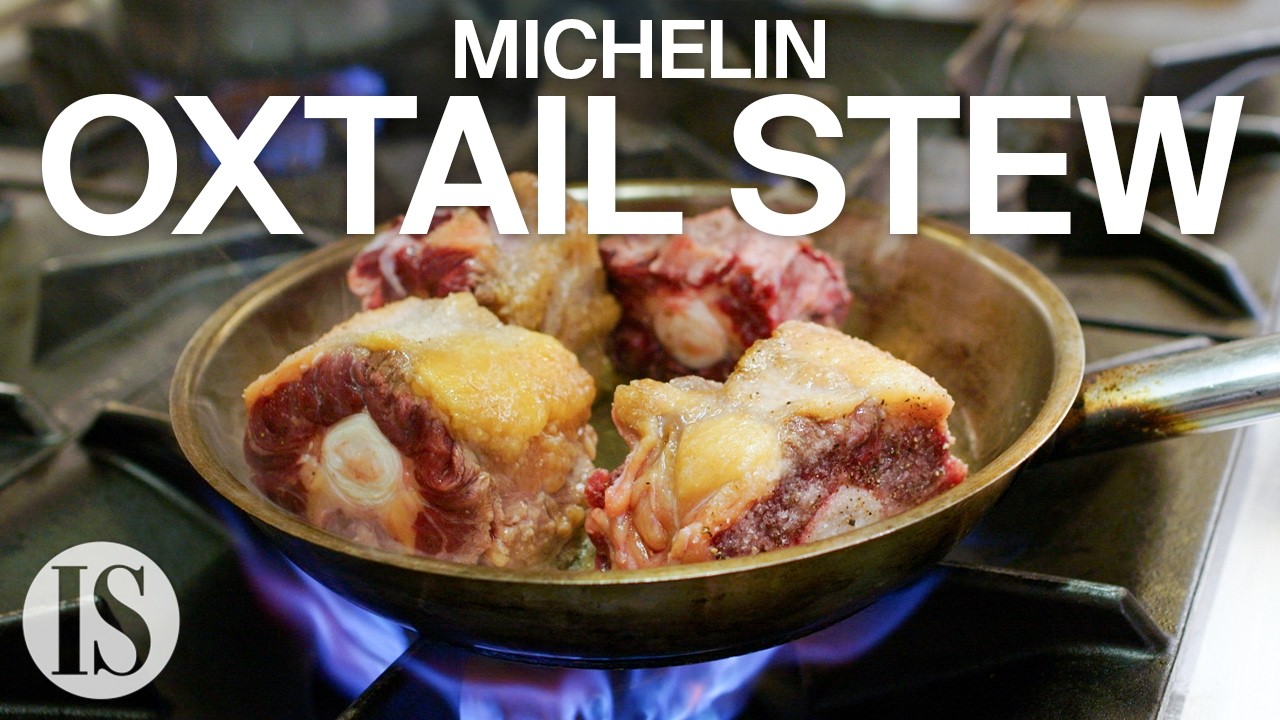
La coda alla vaccinara è un piatto che appartiene alla grande tradizione romana del Quinto Quarto. Una ricetta di origine popolare, che si trova in tutte le osterie della città, ma che per la sua importanza e versatilità si è fatta spazio anche nelle cucine dell’alta ristorazione. Daniele Lippi, giovane chef due stelle Michelin dell’Acquolina di Roma, presenta le sue versioni: una carnivora, strettamente connessa alla tradizione, e una creativa e vegetale, assolutamente inedita, insieme a un’idea per una pasta con gli scarti della coda e del suo intingolo.
In collaborazione con Artisia https://artisia.com/
Guarda il video dedicati alla carne da ItaliaSquisita https://www.youtube.com/playlist?list=PLWKLqE-7K4-YGwGKfZi7jmuOBBn9e2Eiz
Scopri i libri e la rivista di ItaliaSquisita: https://shop.vertical.it/
Visita:
http://italiasquisita.net/
Shop:
https://shop.vertical.it/
Seguici su:
https://www.facebook.com/pages/ItaliaSquisita/147031685608
Tweets by italiasquisita
https://www.instagram.com/italiasquisita/
Contattaci:
info@italiasquisita.net
Hi everyone, I’m Daniele Lippi, I’m the chef of the Aquolina restaurant for 5 years now. Aquolina restaurant conquered its two Michelin stars about 3 years ago. In Aquolina we offer a cuisine with Mediterranean roots with an innovative vision and in fact today I am here with Italia Squisita to present you one of the historical dishes of Roman cuisine, namely Roman-style oxtail. In the first version we will represent it according to my own reinterpretation, but keeping a firm connection with tradition. Instead in the second version we will have a completely vegetable
expression of Roman-style oxtail. This dish was born in Testaccio, one of the
historic neighborhoods of Rome and it is said that the cattle drivers who worked at the
slaughterhouse, not being able to enjoy a salary, were paid through
cuts of meat with little value, then the tail, the tongue, the sweetbreads and all of the offal. So, according to this anecdote, the cattle drivers prepared this tail by stewing it for hours with a vegetable base made of carrot, celery, onion, aromas such as bay leaf, juniper, some lard,
they drowned everything with wine, tomato and let it cook for hours. It is said that there is a small addition of cocoa and raisins and pine nuts inside the oxtail and in this case we will reread this dish in a completely Mediterranean
key by replacing the cocoa with the carob which comes from this legume tree,
an ancient plant from the Mediterranean that has these fruity and
aromatic notes similar to those of cocoa. So starting from the tail – it is cut into
pieces and added with salt and pepper. In a saucepan we begin to brown it on all sides, as if we had to make it braised, just to to caramelize the proteins of the tail well
which will then give more flavor to our fond. Then we use the pressure
cooking technique. All of this to speed up cooking times.
In the pressure cooker we will add a vegetable base such as carrot, celery, onion, an aromatic
bunch consisting of garlic, rosemary and bay leaf, cloves and some juniper. Once the tail is browned, we will move it inside the pressure cooker. Then we will add some red wine. Let’s close the pressure cooker
and give it more or less thirty minutes of cooking. Once our 30 minutes have passed, we will take the tail out of the pressure cooker.
We will debone it and we will create a cylinder with the help of some film. And once it is cold, we will slice it. Once we create this cylinder
with the tail, we will heat it up just to dilute it for about ten minutes in the steam oven at a temperature of 70-80°C, just to allow the collagen and the fats to dissolve. The liquid inside the pressure cooker
will be filtered. We will then cool it completely so that the fat
and water parts separate. Once the mixture is stabilized, we will deglaze, thus obtaining only the juices of the tail, this very tasty gravy that we will then
use to structure the sauce. We will then add it with a carob extract. The carob extract
in this case is made with the pods of the carob plant
that we’ll first toast in the oven. We will then place them
in a vacuum pack with water and we will steam them for 4 hours at 95°C. This will therefore allow us to extract all the flavor from the carob, thus obtaining this broth
full of flavor of cocoa, of toasting. We will reduce it until we get a syrup. This syrup will then be added to the tail gravy. I don’t want to call it a fond because it is not exactly a fond, but I like to use this term because it is basically the sauce you’d eat as a child when
you stripped the meat from the tail and your hands would be covered
with this very tasty sauce. Another ingredient we didn’t mention,
but at the same time it has an important value within the Roman-style oxtail stew
as a historic preparation: tomato. The tomato is in this case baked in the oven. It’s date tomatoes
seasoned with salt and pepper. They are roasted in the oven until until the sugars are caramelized well
and the water dried well, creating this very tasty concentrate
that we’ll add at the base of the dish. Now let’s move on to plating. Once the tail is heated, we’ll place it on top of this handmade tomato paste. We will then glaze it with this base of tail and carob. And we will garnish the dish with veils of celeriac and chanterelles in vinegar. Traditionally, Roman-style oxtail was eaten as a second course and
sometimes its sauce, together with some meat scraps, was used to season the famous rigatoni with
oxtail stew sauce. Here is how the idea of reusing the
tail sauce through a particular pasta format made by Artisia,
or a 3D pasta. In this case, the pasta format we are going to use is petal. The oxtail stew is chopped. Once we boil our petal, we will cool it and once it is cold we will fill it
with the pulp from the tail. Once the 3D pasta is filled, we will create a skewer that in turn
we will glaze with its gravy. We will toss it on the grill to roast it,
as if it were a gratin pasta. Next we will glaze it with the gravy from the tail and serve it. This 3D pasta skewer can also
be served as an aperitif. I have a particularly strong bond with
the Roman-style oxtail because it reminds me of my grandfather
and I remember him always telling me
about the oxtail stew – I recommend you add a lot of celery
when you make Roman-style oxtail. There is where the idea of reinterpreting the Roman-style oxtail in a vegetable version was born, starting from the main element which is the celeriac, that will entirely replace the protein, meaning the tail. First of all, with the help of a mandolin, we will make celeriac ribbons which we will then wrap to create a sort of medallion, or rose. After we create the celeriac medallion, we will season it with butter, salt, pepper and a bay leaf. We’ll wrap it with baking paper
and aluminum foil. After we wrap it, we’ll bake in the
oven at 160°C for an hour and a half. Then we will create our famous gravy, the famous oxtail sauce fond, but
we’ll create it using all of the scraps from celery and other vegetables, Jerusalem artichokes, apples, carrots, onions, tomatoes, mushrooms, an aromatic bunch consisting of rosemary, garlic and bay leaf. They will all be browned in the oven, as if we were to make a meat fond.
We’ll then be roasting these vegetables. Once roasted, we will cook them
in a saucepan with water. They will have to cook for about 4 hours. After 4 hours, we will filter everything and obtain this vegetable
broth that will be added with a small percentage of carob reduction,
just as a reminiscence of the concept of cocoa
and the Roman-style oxtail. And we will reduce it again until we obtain a sort of glaze. As a side for it all, we made
a sauce that allows us to clean your mouth a little and refresh it, always through the same celeriac, but with the addition of vinegar and of olive oil that will be, let’s say, a sort of purée, a sort of cream that will accompany this very tasty, glazed and
roasted celeriac medallion, and will refresh everything to allow us to obtain
the right balance in the mouth. Before moving on to plating, we will be slicing our celeriac medallion. We will make a skewer and roast it
on the grill. Then we will repeatedly glaze it with this roasted vegetables fond. Then we will move on
to the plating, so in this case we’ll place this roasted celeriac
medallion on the plate. We’ll glaze it with our vegetable fond and as a side to the medallion, we’ll add this celeriac cream with an addition of vinegar that will allow us to balance perfectly the sweetness of the roasted
celery with the acidity of the puree. Today I showed you my two
versions of the Roman-style oxtail. Try to make them at home, both the vegetable and the
more traditional one. Greetings to all friends of Italia Squisita.
See you in the next video!
39 Comments
Noooo nooo nooo la carruba nooo! Il cacao noooo. Per favore niente salse dolci che sembrano piene di gelatina o grassi, che sembrano salse cinesi , USA da fast food, o altro.
Potreste rimane all'interno del "NON FATELO STRANO", voi rendete tutte le pietanze uguali, siano carni, brasati, roast beef. La salsa copre con sapori agro dolci non opportuni tutto.
Presentate pastasciutta per valorizzare condimenti diversi e battere i dazi USA sulla pasta ESPORTANDOLA NEL MONDO ANCOR DI PIÙ!!!!
BASTA RAMEN, MA … TAGLIOLINI ALLE COZZE, SPAGHETTI CALAMARI E CARCIOFI, MAFALDINE.CON PANNOCCHIE, TAGLIATELLE CON CAFALO DAL BOTTON D'ORO (PULITO DOPO LA GRIGLIA), PENNE MELANZANE AL FUNGHETTO E SARDINE, ECC. INSOMMA FATE DI PIÙ dei soliti piatti insipidi, con poco sapore o con sapori perduti tra troppi ingredienti (gamberi + caviale + funghetto + fiori)
Bravissimo. Superlativo pulizia e tanto amore
👏👏👏
❤
A me non piace ma l' aspetto è invitante!
Al Tordomatto la faceva come polpettina fritta!
ipnotizzanti questi video… <3
Passione e classe, il miglior pretesto per venire a Roma. Grazie a quel nonno che oggi, grazie alla passione e alla saggezza del nipote, ha dato vita a questo piatto così suggestivo. Complimenti !!!
Grande Chef sei bravissimo de lo dice uno chef anziano
Che meraviglia
mani d'amianto, top chef
Tutto molto, laborioso come al solito, ma bello. Dopo mille video di cucina dovevo arrivare ad un due stelle per vedere una pentola a pressione al lavoro. Unica cosa: l'albero delle carrube è il carrubO non il carrube, sennò si 2 di stelle, ma 4 in grammatica. Mi associo sul discorso plastica e microplastiche per cui anche il sous vide non mi convince (nonostante dia pietanze buonissime).
Complimenti ❤
Canale squisito
Notevole
Bravissimo, solo applausi!
Provate a rifarlo a casa????? 😂😂😂
👏🏻👏🏻👏🏻
Questa è una coda ma non alla vaccinara.
Peccato per l'uso delle plastiche a caldo che sono legali, ma non stabile dal punto di vista chimico.
Plato espectacular, con una presentación muy elegante.
En España el rabo de toro es un plato muy bueno y muy exclusivo, se realiza parecido al rabo de toro en España, aqui se realiza también con rabo de vaca.
Muy bien ejecutado y presentado.
Auguri, i Grazie al nonno.
Se non c'è la coda non dovresti chiamarla coda
Wow ! I would love to work in this kitchen
This bull beef IS very traditional and ancestral to andalusian Córdoba food. Córdovan bull.
Love me some oxtail. The celery version looks good too. greetings from germany
Versione veggy della coda alla vaccinara…chiudo subito il video , vergogna.
Sarebbe stato utile sapere il costo di questi piatti al ristorante stellato … 😊 Forse sarebbe meglio se la deriva gourmet si tenesse lontana da piatti popolari quali questi della famiglia del "quinto quarto".
Porzioni imbarazzanti
Bravo!
quanta sensibilità
grande Chef
Belle le ricette, ma si dovrebbe iniziare a pensare a ricette che usino meno plastica…
🥰
La coda alla vaccinara vegetariana 😂😂😂😂
Ma a questo punto chiamiamo i piatti con i nomi delle autostrade o di cose a caso, tanto non ha senso.
パスタの焼き鳥
30 minuti in pentola a pressione? sicuro sicuro? non 1 ora e 30 minuti? ma poi perchè usare la pentola a pressione in un due stelle michelin ? tralasciando il risparmio di tempo non credo che il sapore e la consistenza del cibo ne traggano alcun beneficio
It’s only a 2 star, wow
Ne zuzzus agg penzat prim ijjj bucchi
Caramellizzare le proteine 😂😂😂
A total waste of effort and time frankly