
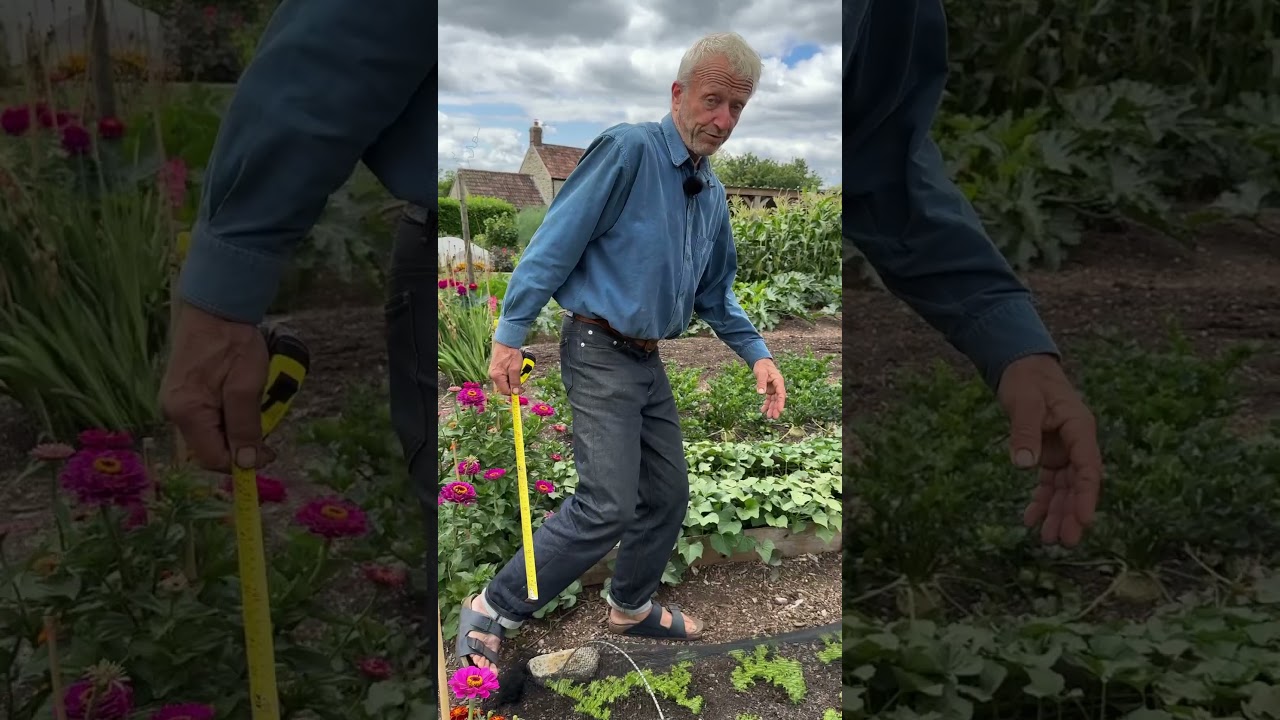
Every vegetable needs a different amount of space to grow successfully and healthily. In this short, I show you how correct spacing improves plant health and cropping over time.
From wide gaps for courgettes and sweet potatoes (70cm), to tighter spacing for salad leaves (22cm), each plant thrives best when given the room it needs. I also share tips on multisowing—where several plants grow in one spot, so spacing changes for that.
We’ve even removed lower leaves from the courgette to make better use of the soil, allowing light and air in while roots thrive beneath.
These spacing principles help your plants stay healthier for longer and make more efficient use of your garden space.
#nodig #growyourown #homegarden #kitchengarden #growingvegetables
spacing. It makes a fantastic difference to get spacings good and they’re different for every vegetable. Like corettes, which are in the ground for a long time, take a lot of space and moisture. 70 cm I’m giving them. That’s 2 feet and a third. And it looks a lot when you put these little plants in the ground, but boy do they use it all. And we’ve even taken some lower leaves off as you can see which leaves soil that looks bare between the plants but actually the roots are using it all very profitably. Whereas here the slurry obviously don’t get so big. Uh but I’m still giving them quite a decent spacing. It’s around 40 cm. That’s 16 in and it’s an equidistant spacing. So 40 cm always. Uh it’s called planting on the square. So you can see there’s a lot of beetroo plants in that uh sorry plants in that bed. And you you got choices. You you can vary these spacings a bit according to what you want. Like going closer obviously gives you smaller roots. And whereas with something like sweet potatoes here we’re on 70. So I’ll put it this way around for you. 70 cm again just over two feet similar to corettes actually. And that’s only five sweet potato plants there. So they take a lot of space although it takes them quite a long time to use it. Whereas all salad plants I put pretty close 22 cm 9 in is enough for them. And that’s about this one here. You know that a much space for lettuce and eve spinach for salad salad rocket whatever you’re growing for salad leaves they can be packed in quite tight again on the square. Whereas tall plants like these climbing beans, there’s so much leaf there, so much photosynthesis happening that they need a lot of root run. You can see there’s a nice little bolotti beans there on each plant. And it would be a mistake to cram these in close. So there’s only six plants per tepee and between each tepee is 1.2 m or 4 feet and I think I could have gone even a bit wider there. I love to put a maragold or two in the space between. Finally, we have multis sewn, which changes it a bit because you got several plants together, not plant them quite so close as you might if it were singles. And I do beetroot at 30 cm, 1 foot, four in a clump. So, actually, there’s a lot of beetroot. You could also do the same for onions and radish and turnips. Sorry, radish is half the space turnips. So, you can fit a lot of plants in. It’s really good to have these spacings in mind when you come out with your plants and it just makes the whole process go much more quickly. Efficiently.
21 Comments
Beautiful garden as always Charles.
In my experience I'm able to pack more plants in than the traditional wisdom would recommend, but I have to mulch more, fertilize more, and water more.
Wider spacing gives you less production, but it's also less work.
I am sure I planted too many cucumbers for my space, but they're producing. So I plan to thin when damage and disease dictate. Thank you Charles! Peace and Blessings 🌻
What a great video again, not talked about enough. Spacing is an art really. Each years I get better and better, but again this year there are areas that are over crowded, some not enough. Its always inspiring to watch your garden, looks perfect all the time. Knowledge and experience is a beautiful thing.
Love this thank you ❤
😃
I’m guilty of over planting. I’m getting better. I’m grateful I have no disease at this time. Great video. 😊
I've grown a few zucchini vertically it definitely saves on space
Brilliant as always, just bought your book, next year will be no dig for first time in my life, can't wait, could never get close to this, but I will try 😊
Hi Charles, thank you for taking the time to look at my plot on the email I sent you, I normally plant plants by eye, if I plant cabbages I will plant close, the heads won't be as big but still a good harvest, Steve Colwell
Seeing your garden is always such a pleasure, and knowing how full of life you soil is, the crops must be gold class!! Ah to live near you and to be able to buy your produce, what a luxury!
Would you ever interplant between any of these, (except for the marigolds)? Great video as always! Thanks
Grow the zuchinnis vertically.
Interesting. I have learnt this first year of no dig i have planted too close. However everthing has been used even if small. Getting plenty of veg for us two per week. Will try better spacing in future. 😊
Thank you for sharing your spacings, Charles!
It’s a nice look in your abundant tidy garden!
I was wondering if you have issues with pests or diseases by growing the sweet potato vines on the ground? I’d like to grow mine that way instead of on a trellis so that I can use my trellis for other vining plants, such as cucumbers.
Do you have problems with Chipmunk
How did you get started gardening?
donde esta mintie 🤔.. es un toque en tus videos ❤️🐱
gracias por la información.. nunca se me hubiera ocurrido darles ese espacio a las plantulas
Your 'no dig' book (yellow cover) is excellent regarding spacing. I use it all the time as a reference
I increase my spacing every year, my cauliflowers get bigger each year. They look so far apart when you plant them.