
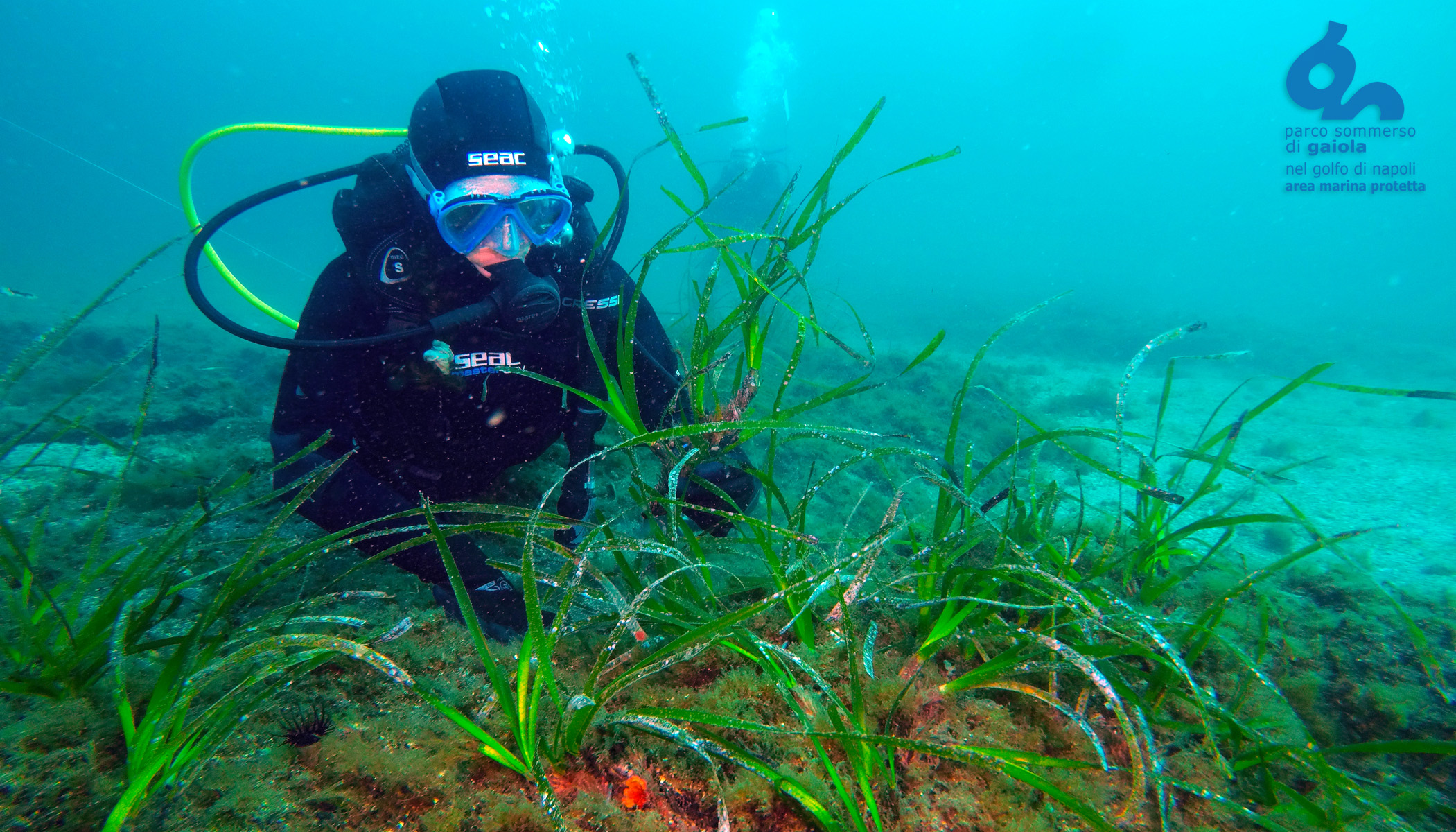
Along the Ligurian coast, the construction of ports and marinas has physically altered the coastline, disrupting the natural habitat where the meadows thrive. Increased pollution and runoff have reduced water clarity, which is essential for the survival of Posidonia oceanica. The plant needs clear water to get enough sunlight for photosynthesis.
When subjected to these threats, the once-dense meadows begin to fragment. “A healthy, dense meadow can withstand storms, but when it’s broken into patches, the edges become vulnerable and the degradation can accelerate,” said Francesco Pelizza, a PhD candidate at the department of environmental science (DISTAV) at the University of Genoa.
In Liguria, researchers at DISTAV closely collaborate with local MPAs to stitch Posidonia patches back together. Their work is a form of marine horticulture. First, they source their crop. They dive in search of areas on the seafloor where fragments of Posidonia, detached by currents or ripped up by anchors, accumulate. “It’s a way to give new life to material that would otherwise be lost,” said Chiara Robello, also a PhD candidate at DISTAV at the University of Genoa.
Back on their boats, the researchers prune the cuttings and insert them into biodegradable mats made from coconut fibre. They dive again to peg these mats to the degraded seafloor, creating dense clusters that mimic a natural sprouting. These patches will eventually grow, stitching together the two edges of the wound.
But there is no one-size-fits-all solution. “The technique has to be adapted to the site,” Robello explained. “The choice of materials and anchoring depends on local conditions.” For example, in the Bergeggi island MPA, bout 60km West of Genoa, where bottom currents are strong, the mats need to be firmly secured. In the Portofino MPA, about 50km East of the Ligurian city, the sediment is very soft, so the anchoring pegs must be longer and sturdier to get a good grip.
In other areas still, such as the Cilento coast, just south of Naples, researchers are experimenting with different clamping techniques. One intervention involves anchoring bioplastic, star-shaped modules to the seabed using large screws, explained Pulcini, who is coordinating the project. This method provides a stable, slightly elevated frame that lifts the delicate young plants away from the sediment.
Using detached cuttings avoids collecting them from healthy prairies. But researchers have to deal with the unpredictability and variable quality of the sourced material. “You never know how long a fragment has been detached,” said Robello. “One year, you might find fresh, healthy cuttings just after a storm. The next, the material you find might have been detached for weeks and has a much lower vitality”.
This variability makes it difficult to standardise the process and guarantee consistent results. What if, instead of relying on chance finds, researchers could grow the crop from seeds?
Dining and Cooking