
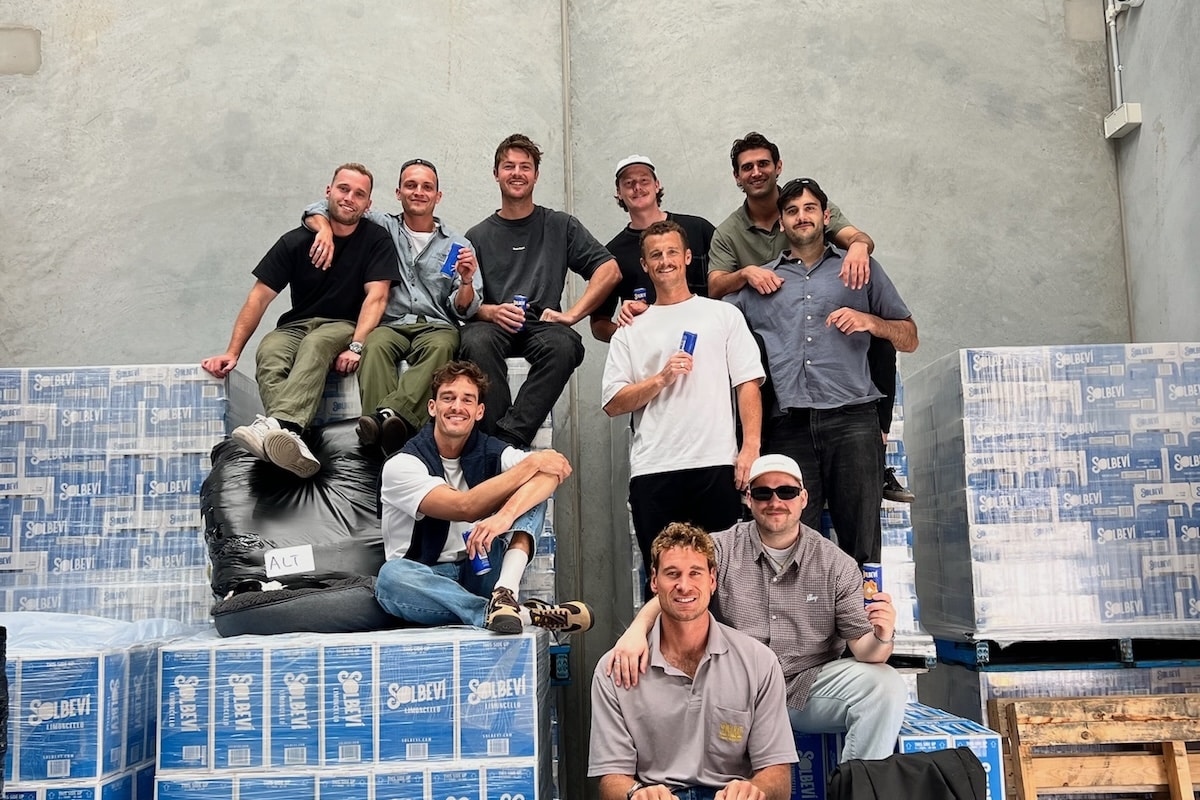
Translated into English as “sun drink”, Solbevi, a beverage company, brings Italian limoncello to life with a cherished traditional family recipe.
Many business ideas are rooted in tradition. But how do these ideas come to life in the fast-paced, innovation-packed industry? For Solbevi, it began with a relaxing afternoon with friends on a sunlit balcony in 2020. Sipping on a homemade limoncello, they realised no one had ever created a ready-to-drink limoncello spritz.
Growing up in an Italian household, 28-year-old founder Stefan Di Benedetto explained that the family cherished limoncello recipe was passed down through generations and central to every gathering. To bring this feeling to life, Solbevi was born.
Di Benedetto pointed out that even the name reflects Italian roots. Solbevi is derived from “sole”, meaning sun, and “bevi”, meaning drink, blended into a unique brand name that could be trademarked internationally. Now two years on, Solbevi has quickly positioned itself as an innovative young beverage company in Australia.
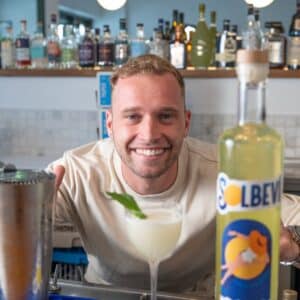 Founder Stefan Di Benedetto.
According to him, Solbevi is behind the world’s first limoncello spritz in a can and is stocked in retailers such as Dan Murphy’s, Liquorland and Super Liquor across Australia and New Zealand, with international expansion well underway.
This global mindset has been part of the company’s DNA since day one. Di Benedetto has long envisioned Solbevi products sitting alongside Aperol and Campari in venues worldwide, reinventing limoncello for a new generation and taking it beyond its traditional heritage.
Early stages with limoncello recipe
Before entering the drinks sector, Di Benedetto worked in commercial construction and consultancy. With no background or technical experience in beverage production, he began experimenting at home using a soda stream. What started as a kitchen project soon developed into a commercially viable idea.
One of the brand’s most distinctive features is its approach to product development. For example, unlike many ready-to-drink spritzes, Solbevi’s limoncello does not include Prosecco. While some purists may debate the absence of sparkling wine, the decision was deliberate, setting it apart in a competitive market.
Manufacturing has evolved since the company’s early days. Di Benedetto explained that limoncello was “simple” to produce and could be made using a large vessel or an intermediate bulk container (IBC).
Although the process was “simple”, he faced challenges with scaling operations. Using a 300-litre distiller for ethanol, the company relied on a small manual bottling machine, which only bottled five bottles at a time.
“We’re talking pretty low volumes at this rate,” he said.
As demand grew, this method quickly proved unsustainable. To navigate through this challenge, the company had to seek other business models.
Moving to a contract manufacturing model
“While we were making the liqueur ourselves, we outgrew the ability to bottle the products ourselves,” admitted Di Benedetto.
As most start-ups discover, a hands-on approach during the product development stage is unavoidable. Juggling between manufacturing limoncello and growing the brand, Di Benedetto had to shift Solbevi to a new model.
“With the cost required to produce everything ourselves, we moved into a contract manufacturing model instead,” he said.
The contract manufacturing model allowed the company to scale flexibly, access high-quality equipment without the burden of owning it, and maintain consistency across different markets.
 Solbevi retains tight control over product formulation and compliance.
“It’s a great model,” Di Benedetto said. “Once you organise all the ingredients and place an order, the completed product will be sitting there for you.”
Solbevi works with separate manufacturers for bottling and canning. After sourcing and providing the right packaging and ingredients, the manufacturers blend and bottle. Recipes and ingredients are designed to be easily replicated with safety and precision.
The model also supports Solbevi’s international strategy, as recipes have been developed to be produced anywhere in the world. For instance, when entering the US market, the company plans to manufacture locally to reduce freight costs and simplify logistics.
By keeping the supply chain adaptable, Solbevi aims to grow in regions where volume and accessibility are key to profitability.
Expansion plans and challenges
The export market is now a focus for Solbevi. Southeast Asia has been identified as a prime region for growth, given its large populations, warm climate, and strong appetite for premium beverages. Launched in Malaysia and Singapore, the company plans further expansions in Thailand and Philippines. Di Benedetto highlighted the importance of improving operational efficiency.
“If we can boost the number of cans we make at a time, we can lower our cost per unit and increase our margins,” he said.
Stricter labelling laws are set to come into force in 2027. To prepare, Solbevi retains tight control over product formulation and compliance. The company partners with external consultants to meet requirements and ensure products are safe and regulated.
“We work with food scientists to make sure our products are compliant through stability and corrosivity testings,” said Di Benedetto.
 Solbevi translates to “sun drink”.
Additionally, the company has received help from consultants providing advice on labelling and regulatory requirements. Packaging is sourced locally wherever possible, with all labelling and most materials produced in Australia to maintain quality standards and avoid risks associated with cheaper overseas options.
Looking ahead
Alongside expansion in Asia, the company continues to strengthen its domestic presence. Solbevi recently secured national ranging across Australian and New Zealand retailers, supported by placements in hospitality settings including Formula One events and Qantas and Scoot Airlines flights.
“We have a big vision, and that’s to have our products sit next to brands such as Aperol and Campari in every venue around the world,” said Di Benedetto.
In the immediate future, the company plans to consolidate its position nationally, maximising its recent retail wins and building stronger recognition. In the longer term, the United States represents the ultimate market opportunity.
From its modest beginnings in a Melbourne kitchen to being recognised as the “Liqueur of the Year” at the USA Spirit Ratings, Solbevi embodies the entrepreneurial spirit reshaping the beverage industry. With an adaptable production model, solid brand identity, and ambitious international plans, the company is excited to bring the traditional Italian Australian limoncello recipe to new audiences across the globe.
Dining and Cooking