
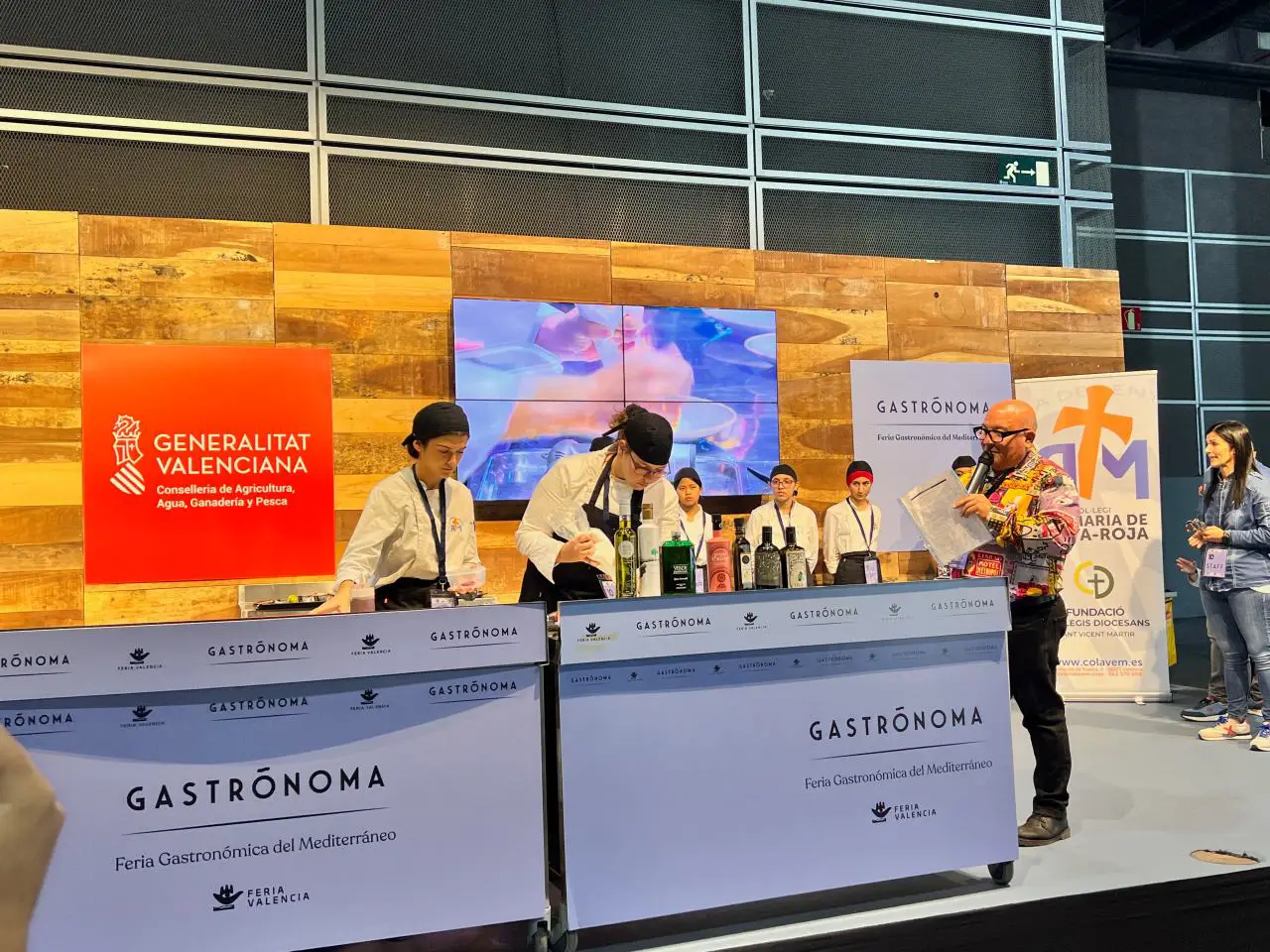
Gastrónoma 2025 concluded this week at Feria Valencia after three days celebrating the best of Mediterranean cuisine, innovation, and craftsmanship.
The 10th anniversary edition of Spain’s leading gastronomic fair brought together 290 exhibitors, 200 speakers, and 28,000 square meters of exhibition space, marking a 25% increase from last year and reaffirming its position as one of the country’s most influential culinary events.
Held from October 26 to 28, the fair attracted chefs, producers, sommeliers, and industry professionals from across Spain and abroad. Organized by Feria Valencia with support from regional tourism and agricultural authorities, the event’s milestone edition focused on innovation, collaboration, and the future of gastronomy under the theme neXt.
A Decade of Culinary Evolution
Since its debut, Gastrónoma has evolved into a major meeting point for the food industry. “In these 10 editions we have hosted more than 1,250 activities, 2,000 speakers, and 2,100 exhibitors who have welcomed over 167,000 professionals,” said Alejandro Roda, Director of Gastrónoma. “All of this makes us proud to have built a benchmark event managed with humility and collaboration, with the noble goal of adding value to the sector.”
The 2025 edition placed strong emphasis on product quality, sustainable production, and new culinary concepts. Visitors experienced dishes such as persimmon nigiri, paella gyoza, nougat cocktails, and desserts made with tiger nuts, combining traditional flavors with cutting-edge creativity. The program also addressed key industry challenges, including the impact of artificial intelligence in hospitality, restaurant no-shows, and emerging business models.
The fair’s Central Kitchen – L’Exquisit Mediterrani – served as the main stage for live cooking and debates featuring top chefs. Sunday’s opening day honored Valencian traditions with a focus on rice, grilled cuisine, and the local custom of esmorzar, while the following days highlighted national and international culinary figures.
Star Chefs and Regional Highlights
Among the featured guests were Dominik Utassy of Geiger Alm in Austria and Bernd Knöller of Riff in Valencia, both Michelin-starred chefs who collaborated on a showcase blending alpine and Mediterranean cuisine. Sara Ferreras of Taller Arzuaga in Valladolid presented dishes inspired by the Ribera del Duero landscape, while Fierro of Valencia and Valdenvira of Jaén explored the growing issue of restaurant no-shows and their economic impact.
Iñaki Aldrey of Atempo by Jordi Cruz represented a new generation of chefs shaping Spain’s gastronomic identity. Sommelier David Seijas, formerly of elBulli and winner of Spain’s National Gastronomy Award, shared his insights on adapting to changing industry trends, while leading bartenders and restaurateurs discussed innovation behind modern bars and tapas culture.
Gastrónoma also recognized excellence within the industry through its awards program. The “Uno de los Nuestros” prize honored Casa Gerardo from Asturias and Bernd Knöller of Riff for their dedication to culinary heritage and Valencian gastronomy. The “Ambaixadors de l’Exquisit Mediterrani” awards celebrated contributions to the region’s culinary identity and promotion abroad.
The event’s 10 congress spaces and seven experiential areas covered every corner of the culinary world, from breadmaking and pastry to wine, olive oil, and craft products. The Wine Experience, one of the fair’s most popular sections, featured guided tastings led by experts such as Seijas, who examined the trend of non-alcoholic wines. It also hosted the grand final of the Sparkling Wine Master competition and paid tribute to women pioneers in winemaking with the “Damas del Vino” session.
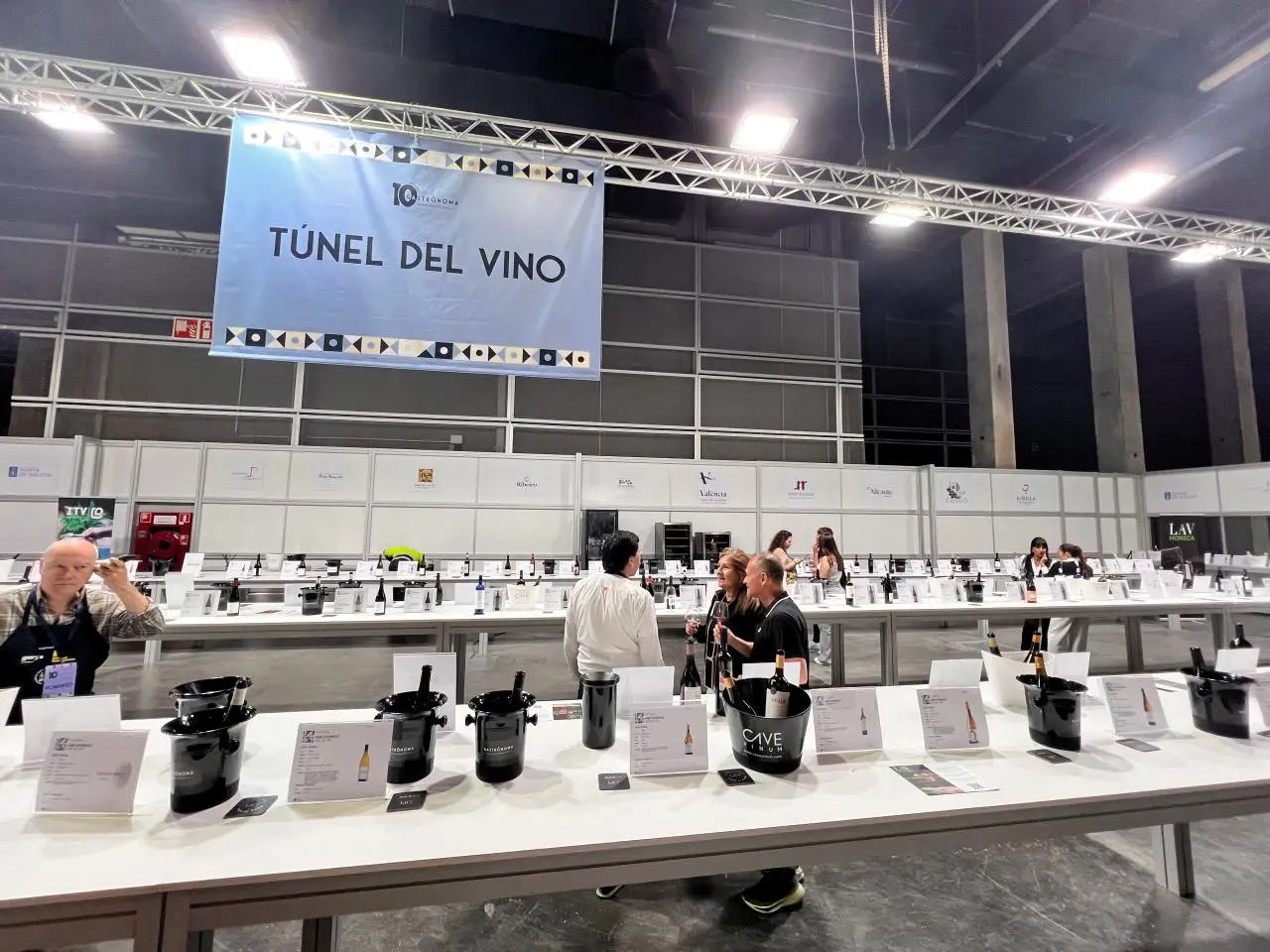 Attendees explore 160 curated wine selections at the Túnel del Vino during Gastrónoma 2025, held at Feria Valencia.
The Túnel del Vino expanded its selection to 160 Spanish wines curated by the Association of Sommeliers and Enophiles of Valencia, while the Entreolivos space celebrated olive oil as a Mediterranean cornerstone. Japanese taster Keiko Tagawa discussed the sensory connection between Spanish extra virgin olive oils and Japanese culture, adding an international perspective to the program.
Other highlights included the Plaza de la Artesanía for local producers and the Plaza de la Felicidad, a social hub with live music, cocktails, and Valencian cuisine. The “Día Costa Blanca” showcased Alicante’s culinary diversity, featuring top chefs such as Susi Díaz and Cristina Figueira, and honored Restaurante Alfonso Mira for its career contributions to the region’s gastronomy.
The “Be Sweet” zone spotlighted pastry and confectionery talent with demonstrations by Pablo Morales, Ricard Martínez, and Carito Lourenço, as well as rising stars including Adrián Ciaurriz and Lucila Carmero. On the same stage, Spain’s national pastry team presented its proposal for the 2027 World Pastry Cup in Lyon. Meanwhile, the #PandeVerdad area featured live breadmaking by Spain’s best bakers and a Guinness World Record tribute to Alicante’s coca de mollitas.
Supported by Turisme Comunitat Valenciana, the Conselleria d’Agricultura, and the provincial governments of Alicante, Castellón, and Valencia, Gastrónoma 2025 reaffirmed the city’s role as a hub of culinary excellence. With record participation and an emphasis on innovation rooted in tradition, this year’s edition underscored how Valencia continues to shape the conversation about the future of Spanish gastronomy.
Dining and Cooking