
(Sorry in advance for the long post!!)
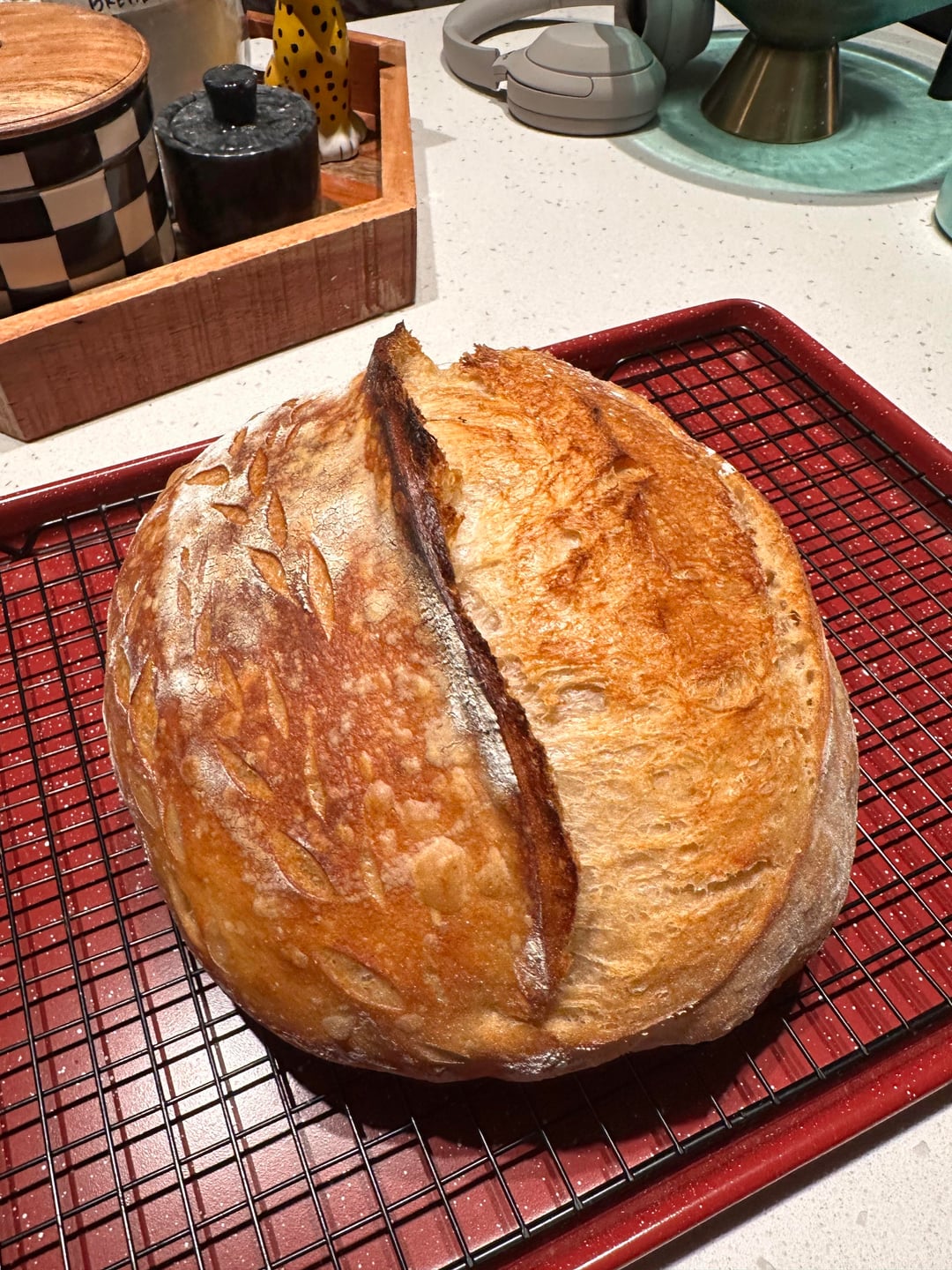
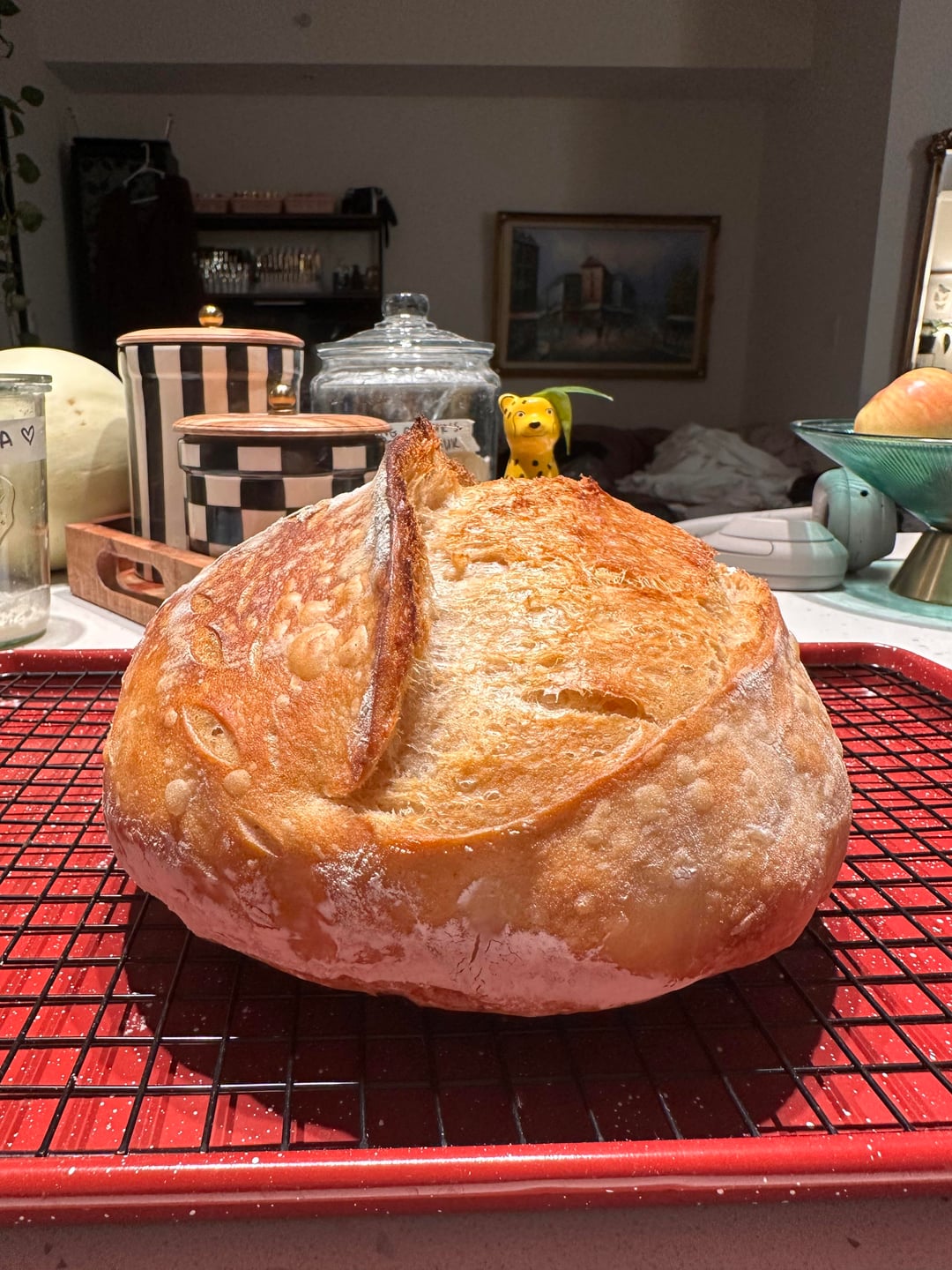
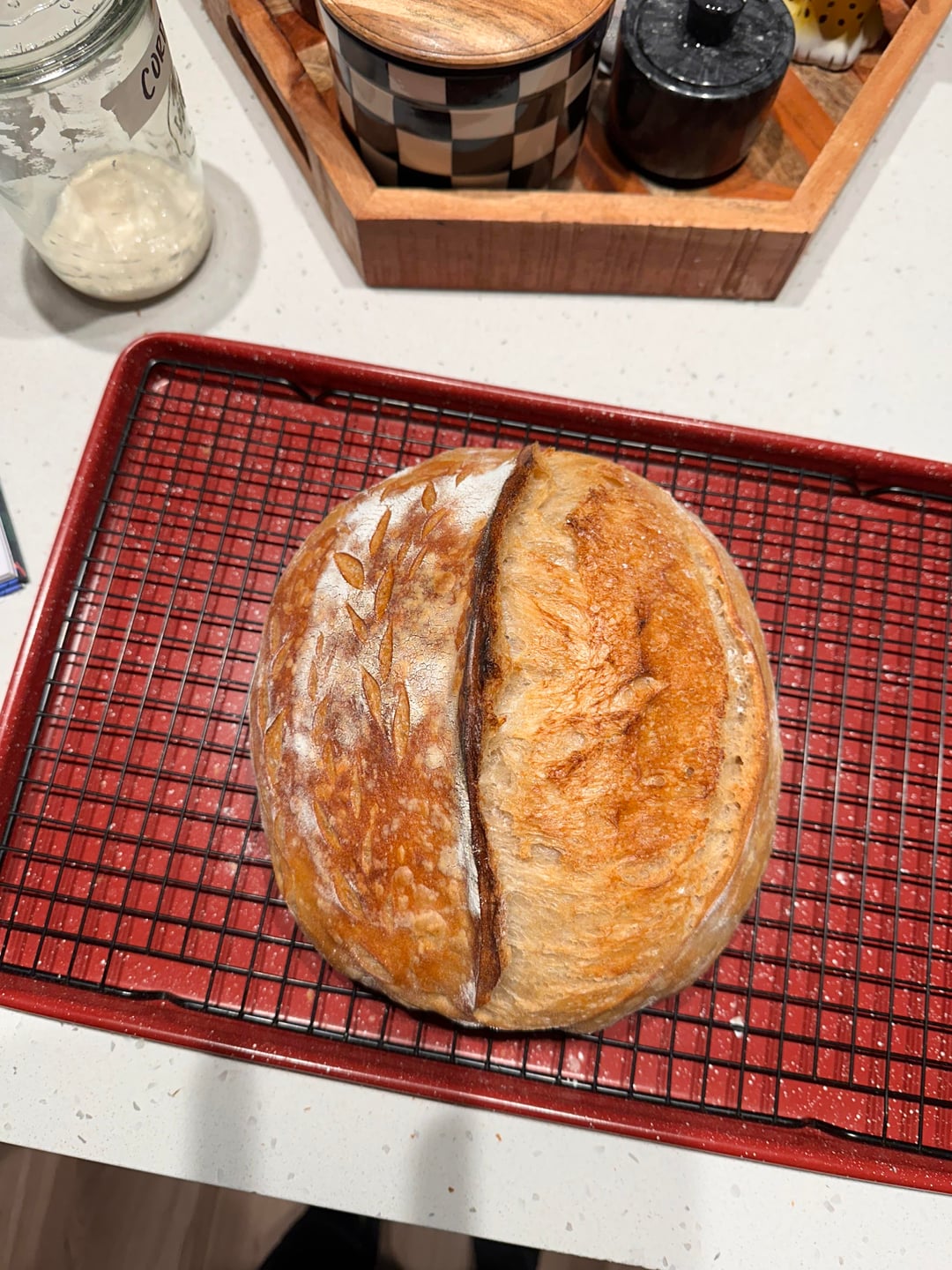
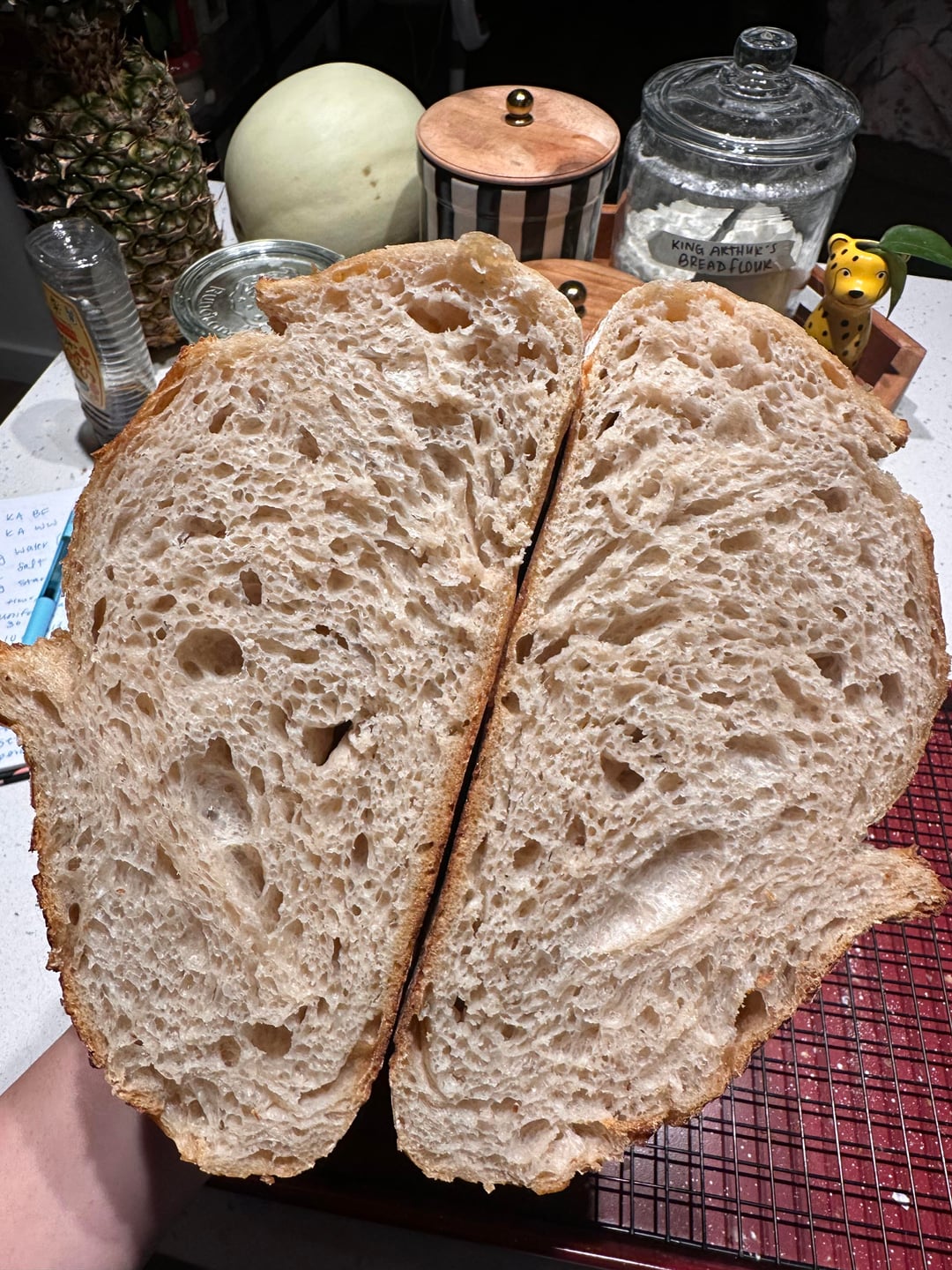
I think I did it? Seriously, last night I think I baked my best loaf yet. She was soft and pillowy in the middle, zero chewiness and absolutely melted in my mouth. She also had the best exterior, a thin crispy crust on the top and a bit thicker bottom that gave the best crunch. Also, she had the best oven spring I’ve seen since I started baking sourdough.
I’ve been going over all my different techniques and what I did differently this time, and the only BIG difference is my kneading. A lot of people on this thread have said that it is pretty impossible to overwork your dough with hand kneading, and I am here to tell you that is a completely false statement. I have routinely and consistently overworked each loaf I have baked because I attested the lack of oven spring to poor gluten development (which I think was actually from my poor shaping techniques and a weak starter in the beginning of my journey).
From what I have realized, if you feel the dough getting tight while doing any type of kneading (slap and folds, stretch and folds, coil folds, ect), STOP. Seriously, if the dough is tight and hard, stop kneading and let the dough rest. You are at the point where you are risking tearing the gluten structure you have just spent so long developing. What does that look and feel like? Basically, you kind of see the smooth surface of the dough split (the dough looks smooth, dull and matte, and then suddenly there is a part that is shiny, textured, and sticky) then the dough starts to feel loose and incredibly sticky as a whole. Honestly, it’s a freaking mess and a nightmare to work with. With sourdough you are told that if the dough feels too sticky you need to work it a bit more and it will come together. I am with the strong belief that that is only true in the beginning stages of kneading.
Before this loaf, even when I used the same measurements and bulk fermented the same length of time, I either had bad or decent results. The loaves I believe I overworked were dense, foam-like, and awful to chew. They still had consistent bubbles throughout the crumb that showed they were properly fermented, they just didn’t have a great texture. Another thing I noticed was that when I would cold proof, they had little to no rise.
Here is the recipe:
450g King Arthur’s Bread Flour
50g King Arthur’s Whole Wheat Flour
100g Active Starter (100% Hydration – 80g KA BF, 20g KA WW, 100g Water)
10g salt
375g Spring water
Mix starter and water till milky, then add flour and mix until shaggy and well combined. Rest 30 minutes.
Dimple in salt and mix until well incorporated and salt grains are melted into the dough (this took about three minutes for me). Rest for 30 minutes.
Stretch and folds for about 5 minutes, until the dough feels tight and comes together in a rubber like ball. Rest 30 minutes.
(2) Coil folds until dough feels tight. Rest 30 minutes.
(1) Coil folds, very gently until the dough comes together in a nice ball. At this point the gluten seemed to be formed and the dough had not relaxed into a puddle the same way the other folds had previously after it rested.
Rest 5 hours (Bulk ferment total 8 hours)
Shape and put into fridge for cold proof. I did 16 hours.
Preheat oven and dutch oven to 450F for 45 minutes (I do 465F because my oven sucks and my internal thermometer shows 440F even when I preheat to 465)
score cold loaf (for me it had proofed and risen about 40% in the fridge)
Bake 22 minutes covered with (2) ice cubes, remove lid and parchment paper (if I don’t remove the parchment the sides of my loaf don’t brown) and bake additional 25 minutes.
After it’s done I let it rest a minimum of 2 hours before cutting into it.
Note: I am by no means an expert and if you have any tips to share, I am more than willing to listen and implement them. I just wanted to share my experience and potentially offer some advice to other newbies who are struggling.
Also, I wanted to say a big thank you to everyone on this thread, all the crumb shots, recipes, and critique have been a huge help to my sourdough journey. I might have been a silent lurker till this point, but it still helped me so much.
by Traditional-Quit-459
4 Comments
A slight point. Yes tearing the gluten during S&F isn’t ideal.
That being said, it typically spends so much time bulk fermenting that any tears have plenty of time to heal. The Bread Code intentionally over kneaded a loaf using a stand mixer and it still came out just fine.
Still, obviously not ideal and makes a mess.
And also all that tearing makes it harder to capture air and so your volume measurement for when to end bulk fermentation will likely be off leading to overproofing. So, I agree, generally DON’T DO IT!
However, you’re pointing out a very important thing. Good rise and crumb is actually getting a good balance in the tension of your gluten network. You want the tension from the shaping to help push the dough upward. But you want everything relaxed so that the gas bubbles can expand!
This might also lead to what’s happening with the fridge. Either it’s not cold enough so your dough just overferments. Or perhaps the cold dough isn’t expanding enough during the bake. Or it’s lost all tension.
If the room temp Final Proof is working better for you then that’s awesome! I am confused why you say that but then also have the dough in the fridge though. Maybe I misunderstood something.
Keep up the baking!
I am not sure of it since I didn’t test this extensively, but I’m sorta with you on this. I am always amazed as to how long people slap and fold or rhubaud their dough while mine gets all tense up after I mix salt in. Maybe it is a hydration thing? I don’t know. What I can say is when my starter became amazing (i feel like it just happened) nothing else mattered. I tried doing multiple coil folds vs lamination vs one beginning knead and it all came out fine. I get why gluten is important for bread but what I don’t get is doesn’t it have time to knead itself during fermentation? This is all weird stuff for me, honestly
That is a very nice loaf and you make some good points. For the benefit of a new(er) baker, bulk fermentation is not dictated by time, but by the environment the BF is happening in. Ambient temperature and humidity of the environment dictate the fermentation. Happy baking
FWIW, I follow a no-knead recipe and my loaves look like this and their texture is consistently great. Never bothered to try a loaf recipe with this much hassle 🤷🏼♀️