
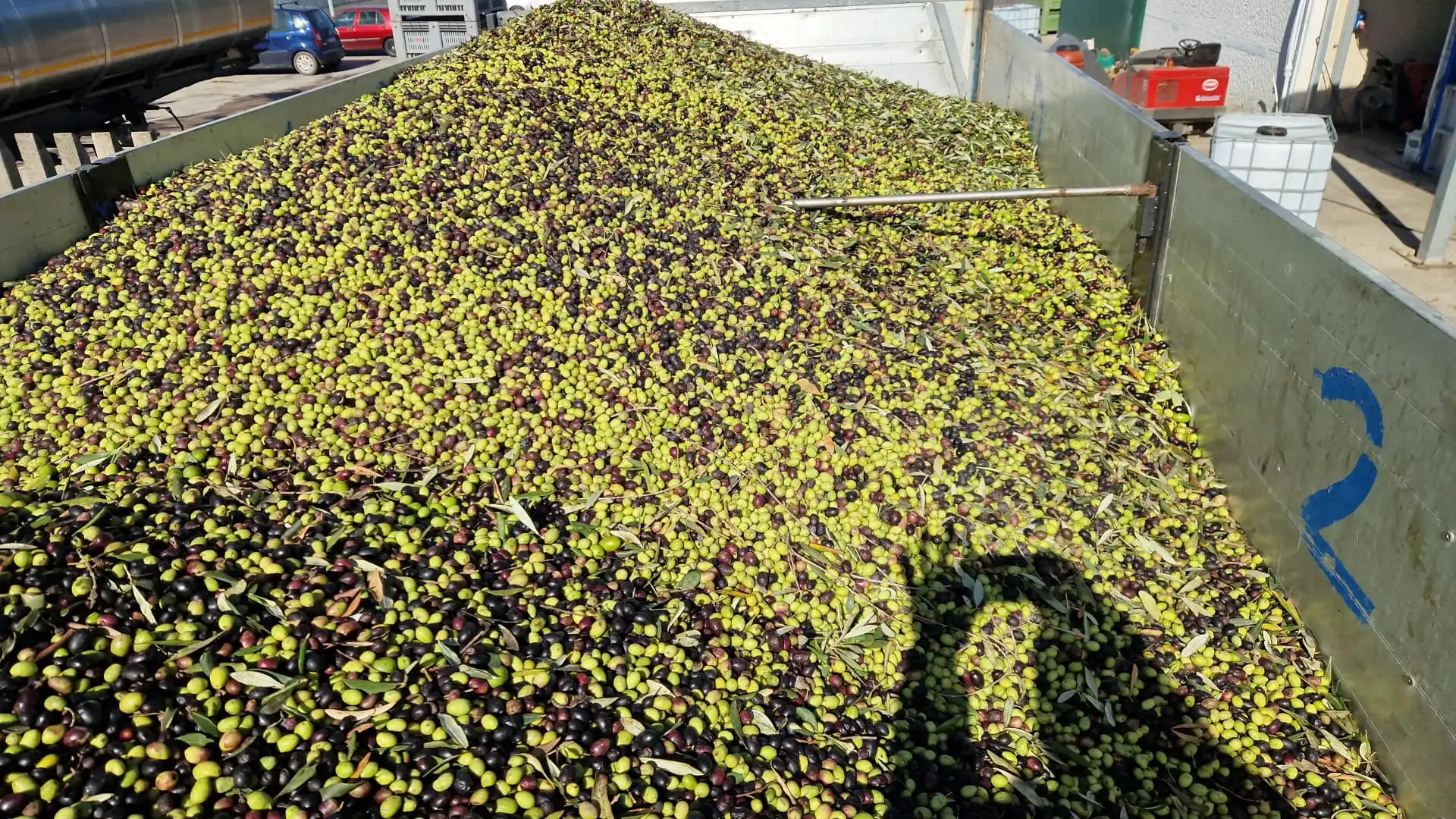
With the olives already sold out in many areas of central and northern Italy, truckloads are starting to arrive from Puglia to supply mills that would otherwise face early closure. This is a dramatic situation for a campaign where the fly has caused incalculable damage, including fruit drops and damaged olives.
In recent days, we’ve cited cases of olive growers who managed to contain the problem with timely agronomic measures. But in most cases, the fearsome pest has left its mark. Many hobbyists They’ve even abandoned harvesting altogether, several contract mills have refused to press severely damaged olives, and even established olive growers, especially those operating organically, have struggled to salvage a modicum of production. So much so that olives from Puglia—a region that has begun harvesting at a rapid pace and where the olive fly hasn’t been as aggressive—are considered a godsend, even for blending existing oil, thus improving its overall organoleptic characteristics.
 Da Aipo, the Interregional Association of Olive Producers We have been informed that deliveries from Puglia to the northern regions began several days ago.
They are games of peranzana which arrive in significant quantities and at interesting prices: healthy and leafless, the olives are paid 135/140 euros per quintal, defoliation and transport included (with a yield estimated around 14%). The olive grower is recognized a price that varies from 95 105 to EUR depending on the quality. Three types of vehicles are used for transporting olives: the driving force who can load it 150 tonnes, the truck that arrives at 250 tonnes, finally the trailer truck that touches the 280 tonnes.
Widespread bookings and first arrivals also for the Coratin, whose collection is subsequent to the peranzana. From what Aipo has learned, the prices for this last variety – Corato area – are higher and, to date, reach 150 euros per quintal, defoliation and transport included. Please note that the yield is estimated between 11 and 13%.
In the coming weeks, when even in the Andria area the harvest will start at a fast pace, there will be new and more updated prices, also taking into account the yields. two elements of attention: the quantities of Coratina are significantly higher than those of other varieties and its characteristics are superior and capable of completing the organoleptic profile of the oils that are produced.
Dining and Cooking