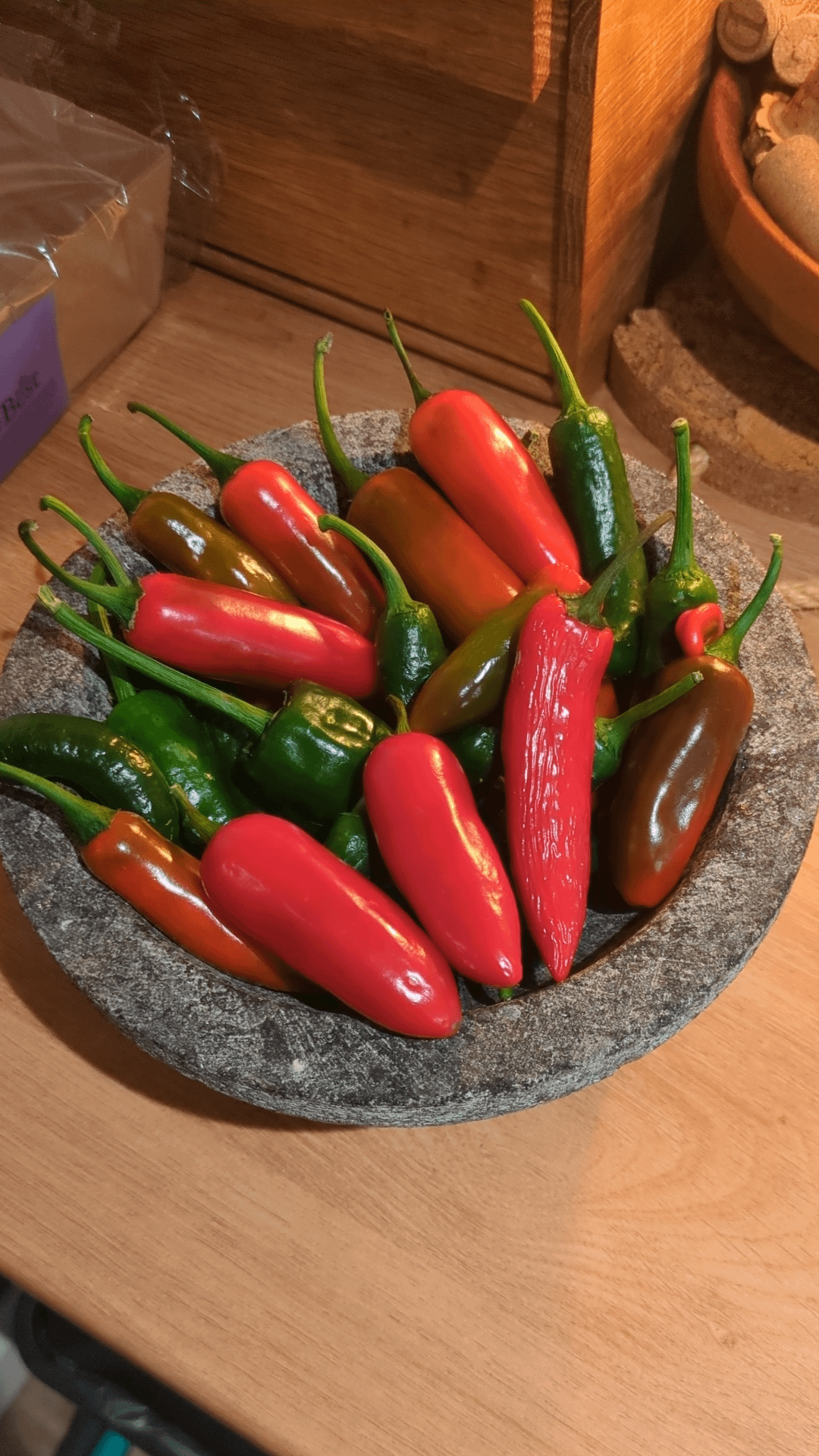
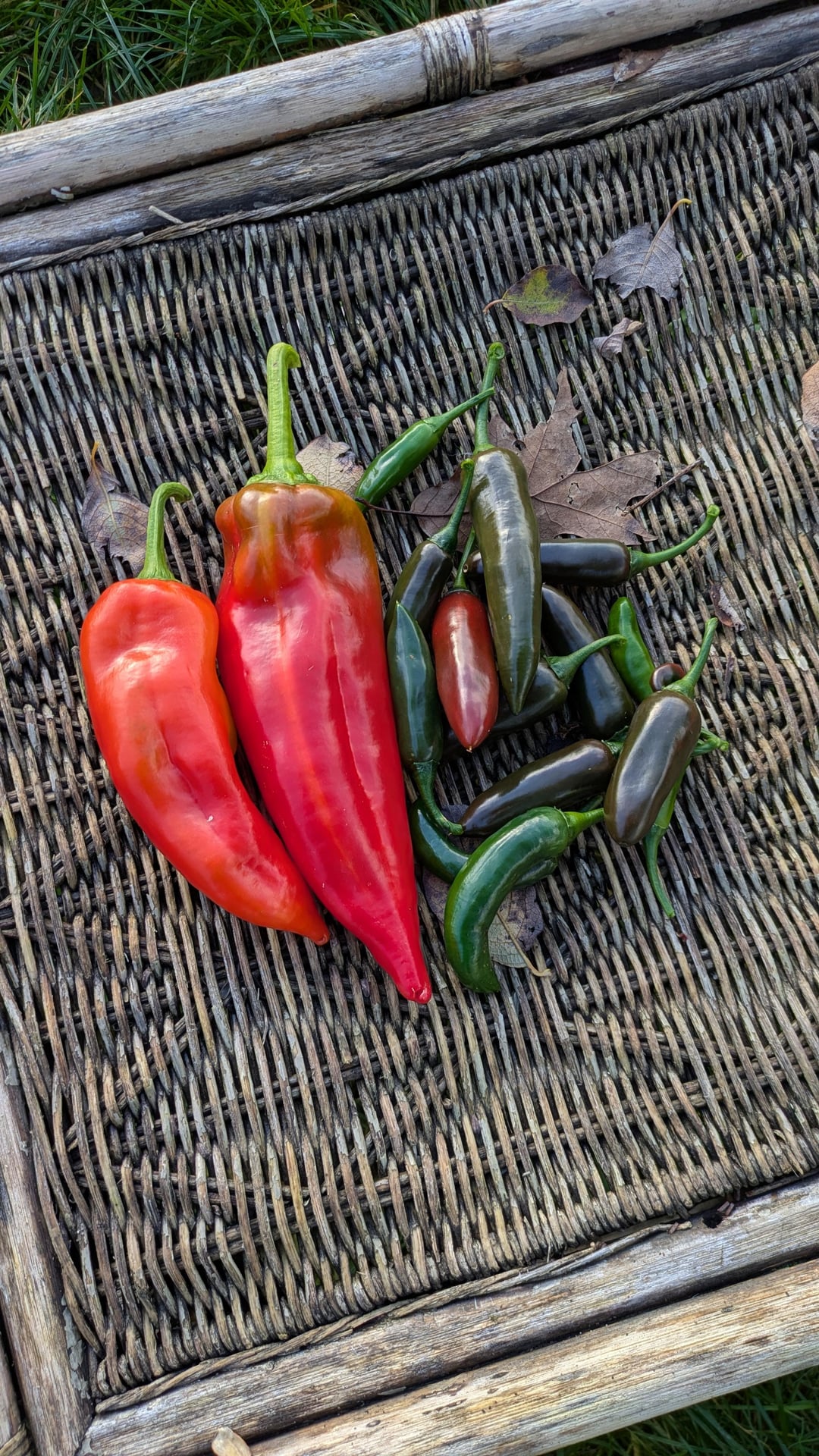
I am confused- I thought that chili’s do not ripen once they have been picked, but my jalapenos have categorically gotten more red since I’ve picked them and brought them inside. What’s going on?
I am confused- I thought that chili’s do not ripen once they have been picked, but my jalapenos have categorically gotten more red since I’ve picked them and brought them inside. What’s going on?
by iBeatYouOverTheFence
19 Comments
potagerMB
It’s always been my experience that they keep ripening even once picked.
iBeatYouOverTheFence
I was gonna make green chilli jam but I think that’s off the cards now…
Critical_Valuable_19
They are ripening after they’ve been picked
Hope this helps!
swim08
Ethylene gas will ripen them but the seeds tend to stay bitter if they weren’t ripe enough when they were picked
crazygrouse71
They’ll change colour, but the flavour won’t improve very much.
KunigMesser2010
As long as they don’t start to rot, and depending on circumstances they will continually ripen even after picking. I actually use this to my advantage with productive hot peppers to let nearly ripe peppers finish off the plant and let the smaller ones get more energy and nutrients to grow more. It’s a trick a lot of gardeners use. It’s how i got nearly 70 or so Scorpion peppers off a single plant this year, and well over 150 Thai chilies of a plant the year before.
classwarriornorway
Have you, at one point in time, bought a somewhat green banana?
Harlots_hello
It’s only the color change. Ethylene doesn’t work this way with chili, unlike some other veggies.
DropstoneTed
What’s going on? They’re ripening. Whoever told you that doesn’t happen is wrong.
Slow_Tornado
My habs did the same thing. Though the plant ripened ones definitely tasted better and had a better texture.
WakelessTheOG
In my experience, the only pods that continue ripening off the plant are those that already started. Green peppers don’t typically respond to things like ethylene gas or other ripening tricks, but they ripen well on the branch even if the branch breaks off the plant sometimes
diluxxen
They dont ripen, they just change color. Flavor, heat and seedviability will stay the same.
LnktheWolf
They still change xolor, but they dont really “ripen” off the vine like a banana or something would. It’s moreso a “step on the way” to rotting, and less “getting ready to produce seeds and sugars” like climacteric fruits do or how peppers do on-the-vine.
Asleep_Onion
They’ll “ripen” off the plant, but it’s a little different than ripening on the plant.
Ripened off the plant, they’ll change color and their seeds will become more viable, but they won’t get hotter and their flavor won’t really change.
Complex_Crew2094
Some of my “Thai pepper” are turning red, some on the branch in a vase and some just in a bowl. Haven’t eaten any yet.
They are also getting shriveled.
night-theatre
Peppers do change colors after picking thus they ripen. The problem with peppers is their very thin walled fruits and the ripening process makes them softer very quickly. In my opinion, the flavor deteriorates quickly after picking so ripening off the plant isn’t worth it.
theegreenman
They can definitely get a deeper color although they won’t get any sweeter.
This information comes from a combination of plant physiology research regarding fruit development and agricultural extension guidelines from major universities. Here is the breakdown of the sources used to form that answer: 1. The Botany: “Climacteric vs. Non-Climacteric” The core of the answer relies on the biological classification of fruits. * Source: Plant physiology literature (e.g., studies from the Max Planck Institute of Molecular Plant Physiology and Journal of Experimental Botany). * The Science: Scientists classify fruit into two categories: * Climacteric (e.g., Tomato, Banana, Avocado): These fruits experience a massive burst of ethylene production after harvest, which triggers respiration, sugar production, and flavor development. * Non-Climacteric (e.g., Pepper, Strawberry, Grape): These fruits produce very little ethylene and do not have that post-harvest “burst.” Once severed from the plant, their sugar content is fixed. * Why this matters: This is the scientific basis for why a pepper will change color (chlorophyll degradation) but will not get sweeter (no starch-to-sugar conversion) after picking. 2. The “Bag Method” (Ethylene for Color) This is a standard post-harvest handling technique validated by agricultural science but often clarified by university extensions for home gardeners. * Source: University of Minnesota Extension and Penn State Extension. * The Finding: These institutions explain that while peppers are non-climacteric, they are still sensitive to ethylene. Exposing them to ethylene (via a banana or apple) accelerates the breakdown of chlorophyll (green pigment), revealing the carotenoids (red/orange/yellow pigments) underneath. * The Caveat: They consistently warn that this process is cosmetic. The pepper looks ripe, but chemically, it is still a green pepper. 3. The “Hang Method” (Energy Transfer) This is a traditional gardening technique supported by horticultural practices regarding “senescence” (the process of plant aging/drying). * Source: Royal Horticultural Society (RHS) and various Master Gardener programs. * The Logic: By keeping the fruit attached to the stem, you maintain a connection to the plant’s remaining moisture and sugar reserves. As the plant slowly dies (senesces), it translocates available carbohydrates to the seeds (fruit) in a final effort to reproduce. This results in a pepper that is biologically riper (and often sweeter) than one picked green and gassed in a bag. Summary of Consensus | Claim | Source Type | |—|—| | Peppers don’t get sweeter after picking | Plant Physiology: Capsicum lacks the starch reserves to convert to sugar post-harvest. | | Ethylene turns them red anyway | Post-harvest Technology: Ethylene is commercially used to “degreen” citrus and peppers, proving it affects pigment even if it doesn’t affect flavor. | | Hanging plants works better | Horticultural Practice: Based on the translocation of sugars during plant senescence. | Next Step: If you are interested, I can explain how to check if your specific pepper variety is one of the rare “pseudo-climacteric” types (like some hot Habanero strains) that actually do ripen slightly better off the vine.
AThousandBloodhounds
We pulled our Thai Chili plant, brought it inside and put it in a vase of water. The whole plant ripened over the period of about 10 days.
Lordd_lightskinnn__
I’ve had green ghosts, habs, etc all ripen off plant. Flavor is about the same with little variation.

19 Comments
It’s always been my experience that they keep ripening even once picked.
I was gonna make green chilli jam but I think that’s off the cards now…
They are ripening after they’ve been picked
Hope this helps!
Ethylene gas will ripen them but the seeds tend to stay bitter if they weren’t ripe enough when they were picked
They’ll change colour, but the flavour won’t improve very much.
As long as they don’t start to rot, and depending on circumstances they will continually ripen even after picking. I actually use this to my advantage with productive hot peppers to let nearly ripe peppers finish off the plant and let the smaller ones get more energy and nutrients to grow more. It’s a trick a lot of gardeners use. It’s how i got nearly 70 or so Scorpion peppers off a single plant this year, and well over 150 Thai chilies of a plant the year before.
Have you, at one point in time, bought a somewhat green banana?
It’s only the color change. Ethylene doesn’t work this way with chili, unlike some other veggies.
What’s going on? They’re ripening. Whoever told you that doesn’t happen is wrong.
My habs did the same thing. Though the plant ripened ones definitely tasted better and had a better texture.
In my experience, the only pods that continue ripening off the plant are those that already started. Green peppers don’t typically respond to things like ethylene gas or other ripening tricks, but they ripen well on the branch even if the branch breaks off the plant sometimes
They dont ripen, they just change color. Flavor, heat and seedviability will stay the same.
They still change xolor, but they dont really “ripen” off the vine like a banana or something would. It’s moreso a “step on the way” to rotting, and less “getting ready to produce seeds and sugars” like climacteric fruits do or how peppers do on-the-vine.
They’ll “ripen” off the plant, but it’s a little different than ripening on the plant.
Ripened off the plant, they’ll change color and their seeds will become more viable, but they won’t get hotter and their flavor won’t really change.
Some of my “Thai pepper” are turning red, some on the branch in a vase and some just in a bowl. Haven’t eaten any yet.
They are also getting shriveled.
Peppers do change colors after picking thus they ripen. The problem with peppers is their very thin walled fruits and the ripening process makes them softer very quickly. In my opinion, the flavor deteriorates quickly after picking so ripening off the plant isn’t worth it.
They can definitely get a deeper color although they won’t get any sweeter.
This information comes from a combination of plant physiology research regarding fruit development and agricultural extension guidelines from major universities.
Here is the breakdown of the sources used to form that answer:
1. The Botany: “Climacteric vs. Non-Climacteric”
The core of the answer relies on the biological classification of fruits.
* Source: Plant physiology literature (e.g., studies from the Max Planck Institute of Molecular Plant Physiology and Journal of Experimental Botany).
* The Science: Scientists classify fruit into two categories:
* Climacteric (e.g., Tomato, Banana, Avocado): These fruits experience a massive burst of ethylene production after harvest, which triggers respiration, sugar production, and flavor development.
* Non-Climacteric (e.g., Pepper, Strawberry, Grape): These fruits produce very little ethylene and do not have that post-harvest “burst.” Once severed from the plant, their sugar content is fixed.
* Why this matters: This is the scientific basis for why a pepper will change color (chlorophyll degradation) but will not get sweeter (no starch-to-sugar conversion) after picking.
2. The “Bag Method” (Ethylene for Color)
This is a standard post-harvest handling technique validated by agricultural science but often clarified by university extensions for home gardeners.
* Source: University of Minnesota Extension and Penn State Extension.
* The Finding: These institutions explain that while peppers are non-climacteric, they are still sensitive to ethylene. Exposing them to ethylene (via a banana or apple) accelerates the breakdown of chlorophyll (green pigment), revealing the carotenoids (red/orange/yellow pigments) underneath.
* The Caveat: They consistently warn that this process is cosmetic. The pepper looks ripe, but chemically, it is still a green pepper.
3. The “Hang Method” (Energy Transfer)
This is a traditional gardening technique supported by horticultural practices regarding “senescence” (the process of plant aging/drying).
* Source: Royal Horticultural Society (RHS) and various Master Gardener programs.
* The Logic: By keeping the fruit attached to the stem, you maintain a connection to the plant’s remaining moisture and sugar reserves. As the plant slowly dies (senesces), it translocates available carbohydrates to the seeds (fruit) in a final effort to reproduce. This results in a pepper that is biologically riper (and often sweeter) than one picked green and gassed in a bag.
Summary of Consensus
| Claim | Source Type |
|—|—|
| Peppers don’t get sweeter after picking | Plant Physiology: Capsicum lacks the starch reserves to convert to sugar post-harvest. |
| Ethylene turns them red anyway | Post-harvest Technology: Ethylene is commercially used to “degreen” citrus and peppers, proving it affects pigment even if it doesn’t affect flavor. |
| Hanging plants works better | Horticultural Practice: Based on the translocation of sugars during plant senescence. |
Next Step: If you are interested, I can explain how to check if your specific pepper variety is one of the rare “pseudo-climacteric” types (like some hot Habanero strains) that actually do ripen slightly better off the vine.
We pulled our Thai Chili plant, brought it inside and put it in a vase of water. The whole plant ripened over the period of about 10 days.
I’ve had green ghosts, habs, etc all ripen off plant. Flavor is about the same with little variation.