
👨🍳 Want to cook like a Maestro? Join as a channel member and get access to exclusive cooking courses from world-class chefs like Marco Pierre White and Pierre Koffmann.
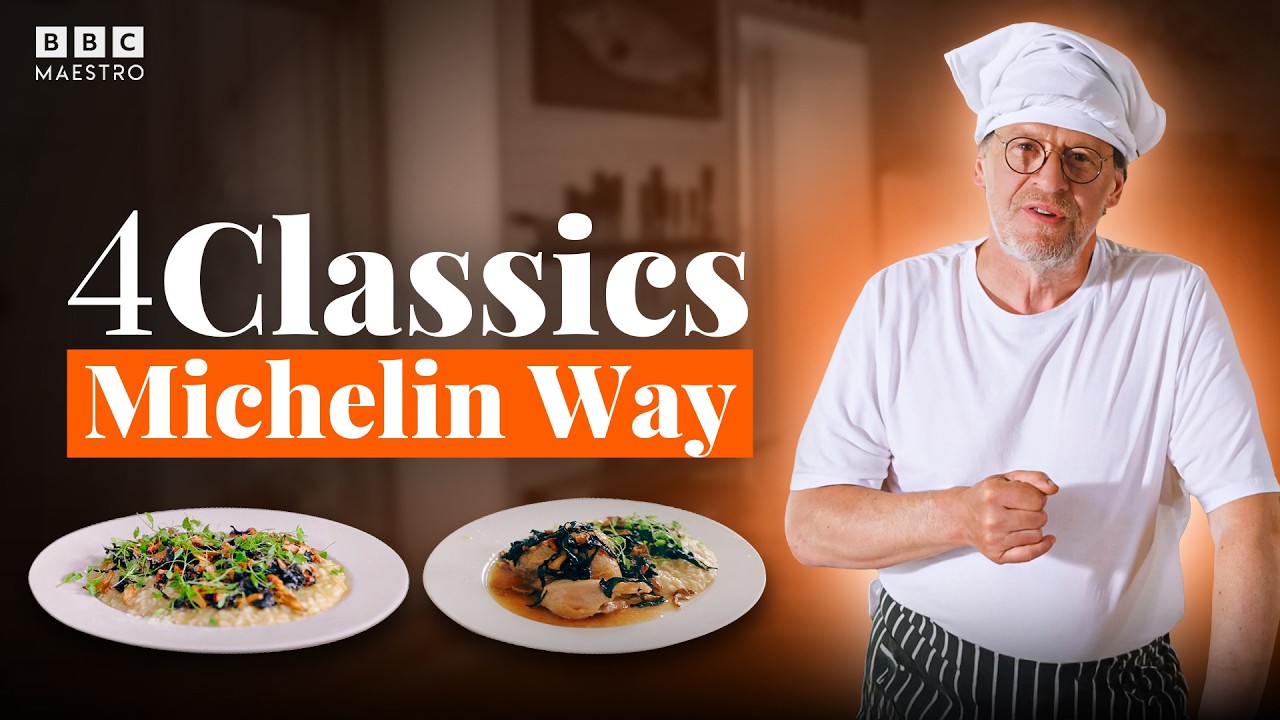
Marco Pierre White shows you how to cook four dishes every home cook should master. Learn his recipes for veggie lasagne, scrambled eggs with smoked salmon, chicken risotto, and ratatouille, all made simple and delicious.
Find out more:
Explore Marco’s BBC Maestro courses to learn his essential techniques, philosophies, and recipes that bring confidence to your cooking.
Useful Links:
Explore Marco’s Courses:
https://bit.ly/bbcm-dfcsLF54
https://bit.ly/bbcm-dvcLF54
See all courses on our Home page: https://bit.ly/bbcm-homeLF54
Check out our YouTube memberships: https://www.youtube.com/channel/UCIIcUq-DNRXGoADi8slTSyg/join
🤳 Stay connected with BBC Maestro
Facebook: https://www.facebook.com/bbcmaestro
Instagram: https://www.instagram.com/bbcmaestro
TikTok: https://www.tiktok.com/@bbcmaestro
a ragu bologn traditionally with beef and pork but we’re going to make it with vegetables celery carrots cerak cauliflower garlic onions thai bay leaf and then a tomato sauce to bind it once you’ve made your ragu bolognese we can make lasagna we can make a papidelli with the king oyster mushrooms with the rau bolognese. It’s delicious. So, it’s quite versatile. It’s very simple. Just take our carrots, celeric, and celery. All exactly the same. So, it’s slightly larger than a bum, but smaller than a massedin. It’s about an eighth of an inch square, maybe a 16th. Can you see? There we are. And you do your cileria conser exactly the same. It doesn’t have to be perfect because remember we’re going to cook it down in olive oil. So that goes there. So with the cauliflower, what we do, we just break it. There we are. And just very simple, quite coarse. Just slowly slowly work it round. [Applause] There we go. You can see we’ve got all the main core there. And then what we do is just push it to one side. Just run your knife through it. You can see all that texture and that will break down through the cooking a little bit. Don’t try and make it perfect. There we are. And there’s our cauliflower. Run your knife through one last time. But what’s interesting by the way I make the bolognese it’s intense but it’s quite meaty. It’s not soggy. Most people boil vegetables and by boiling them they’re not allowed to release their water and also you don’t get that intensity of flavor as you do with roasting or frying vegetables. One thing you’ll notice is when I do boil something I boil them in their own juices. One for texture and two for flavor. When I put it inside the sousvid pouches, seal it and then pouch it. So, it’s all about intensifying the flavor and preserving and protecting the texture. The rau bolognese made with vegetables without meat. Olive oil. Now we take the onions and the garlic which has been grated. There we go. And same as always, we cook to remove the water content, to remove the acidity. [Music] But slowly slowly the scent becomes less acidic and more sweet. And if you listen to the sound, the frying, it gets gentler and gentler because the water is evaporating. [Music] Work the onions across the base of the pan. In with the carrots. In with the cileria. In with the celery. In with the cauliflower. in with the thyme. And in with the bay leaf, a little salt, little pepper, which is optional. So season with salt and pepper. But remember, remove the blinkers. If you wish to put chili flakes in to give it a bit of heat, that’s your choice. If you wish to finish it with some fresh chilies, that’s your choice. Allow your palette to dictate. This is just a base and allow your imagination and your palette to take you somewhere you like to go. Bring it down from the edges. Stay with her. Don’t turn your back on her. Allow her to sweat down slowly. Keep on working and working her and working her until all the water basically is evaporated. The vegetables are cooked, but the intensity of flavor is enormous and that texture is real. If you listen, the sizzling is very gentle. What that tells me is the water has now evaporated. When I first threw in the vegetables with the hot oil, it’s releasing. But as the water releases, the sound gets much gentler. Okay. So we have the fresh tomato sauce which you would have seen me make in my first BBC maestro course. And now what we do is we cook that down to the texture that we require because what we don’t want is it to be loose and sloppy but at the same time we don’t want to be dense and heavy. It’s that balance. If you don’t wish to make a sauce then use pata. It’s fine. So now cook it down slowly to the texture required. but to retain that texture of the vegetables so they don’t go mushy. You still want texture. It’s very important. My recommendation when you make that a guru bolognese but with vegetables is to make it a day in advance so it matures. It’s even more delicious. Okay, there we are. Remove the thyme and the bay leaf. Wow. So, the first layer is the vegetable. Rather than use sheets of pasta, use sheets of celerak. You see now I cook it. I cook it an entire and I slice it. There we are. It’s just like building a jigsaw. So then what we do is take some white sauce, which is just a classical white sauce. And then a little sprinkling of Italian vegetarian hard cheese. We slowly build up the layers. There we are. And the bolognese you can use with pasta. Yeah. When you make your spaghetti bolognese rather than make a bolognese with meat. There we are. Okay. Little bit of cheese. Now that’s all Just use up your trim so it doesn’t go to waste. Clip your little gaps. So just apply a little pressure. Now work your white sauce, your bashimal over the surface of your lasagna. Okay. Now take your cheese. We cook the lasagna at 160 for approx 30 minutes. [Music] And there we have it. Wow. So there we have it. Our lasagna alono which is classical with ragu bolognese made without pasta made without meat vegetable bolognese and the pasta was replaced with the sheets of cilerak now it smells sensational Now there we have it. And just a little crystal salt. There’s something rather delicious about crystal salt. When it hits the tongue, dissolves and that explosion of the sea is just extraordinary. Remember when you season them, season twice, at the start and at the end. And there we have it. I love simplicity. I love it when food makes sense. I love a classic combination. I love a perfect marriage. Basil and tomatoes, madera and mushrooms, scrambled eggs and smoked salmon. But how do you take scrambled eggs and smoked salmon and make them three-dimensional? Because food is all about taking it to another level. So, crack your eggs. Butter. Most people like to sit their eggs and whisk them with a fork and turn them into baby food. I don’t eggs in the pan. Then I punch the yolks and cook slowly. If my palm can’t take the heat of the pan, then the pan’s too hot. Once again, invest time. You make scrambled eggs creamy by cooking them slowly, not by cooking them fast. Don’t mess with them. Eggs are one of the most natural things on earth. Why do you want to change it? In with the eggs. Just punch them. Now just work them slowly. And by working them slowly, what you want is ribbons. Ribbons of white and ribbons of yolk. Just work them slowly. The other side of the pan. My palm can take it. just that tells me it’s the perfect temperature to create the perfect scrambled eggs. If you have to take your pan off the stove, then you’re lacking understanding in temperature. Question why you’re doing what you’re doing. There we are. Just slowly. Let’s take some toast. Toast one side. So when it comes to finishing it, just flip it and toast it again. So it’s ready at the same time as the eggs. I’ll tell you how serious I took cooking. Before I retired, I employed a chef just to toast the bio and the sourdough. That was his job every service. Firstly, bio toast quicker than sourdough. So timings had to be perfect. And then we used to take the beg canal from underneath. Slip the hot toast into the hot bea canal which is a napkin the shape of a duck’s breast. Always served on the side. So you got your telling defaguar, you got your puffy dewagla. It always had hot toast. And that’s the key. There we are. It’s not a race to see who can cook scum with eggs the fastest. It’s about the eggs and only the eggs. Just work it very slowly. No need to rush it. If you’re rushing it, the reason why you’re rushing it is cuz your pan’s too hot. Just work it slowly. But keep on feeling the side of the pan. So you can see I can just take it. So let’s take some smoked salmon. sensational endis in Grimsby in my opinion smoke the best smoked salmon. Why? Because they don’t use oak, they use pine. The problem with oak is the oak becomes dominant. So you taste the oak and then the salmon with end of you taste the salmon with the scent of smoke. So the eggs are coming together. I can see the white and I can see the yolk. Can you see how creamy the eggs are becoming? They’re still walking just a little bit longer. The French use a word called babas. That’s for omelets and scrambled eggs. They must walk. It’s like when you get the perfectly cooked omelette, you cut it open, she just pours out. That’s extraordinary. We’re almost there. You can see how creamy the eggs are becoming without cream. And that’s because we’re not rushing them. Think about the length of time it’s taken us to cook them. Just be patient. Never rush things. Never push things. If we push things, then we tend to break them. Just gently work. Trust me when I say invest time. When you taste it, you’ll see the difference. See, for me, they’re now perfect. But I like my scrambled eggs the French way, not the English way. Now, a little salt. A tiny little bit of white pepper. A thing of the past. Just work them and taste. A little bit more salt. A little bit more pepper. Don’t rush them. Only a fool would rush scrambled eggs. They’re exactly where I want them. For some people, they might be a little bit wet, but everyone has a different palette. And now, a tiny bit of cream just to stop the cooking. Not to make it creamy. There we are. In with our secret surprise. So, there’s our scrambled eggs. the way the French and myself like them. Right. Toast the bread. So, always toast your toast that little bit more. Take in consideration the spreading of the butter, the melting of the butter and the scrambled eggs. There we are. So, just put your eggs just on your toast. There we are. Can you see how they walk across the toast? There we are. Then we take the surprise. A tiny bit of butter, a little crystal salt. Then the smoked salmon. Never be mean. Always be generous. And then a little bit of parsley. Just give it some life. And voila. When you eat it, you get toast, egg, and smoked salmon. A bit more texture with the poached egg. Enjoy. If I take myself back to the late ‘ 70s when I was that very young cook at the boxree, inspired by the boys from the boxree, they used to tell me stories about the great restaurants of France. And there was one name that stood out. His name was Roger Vier. He had a three-star mission called Muland De Mo in the south of France. I bought his book called Cuisine of the Sun. I started to read it. I became inspired with Province Al Cuisine. Very simple food but deliciously tasty. Anyway, years later, I interviewed a young man who had done his apprenticeship and served his time with the great Roger Ve. He spent five years there. I employed him as a chef to party and then he was made sue chef and then he became my head chef. His name was Robert Reed, an extraordinary cook, great pallet, gifted, talented, consistent. For many years, he stood by my side. And the truth is, had it not been for Robert, we would never have won our three stars in the Misham. And what he did was introduce me to the south of France like no one had ever introduced me before. So let’s take you now back to the south of France. And the dish I’m going to cook is a very simple ratatouille. So pan olive oil. And as you can see the onions they’ve been minced with the garlic. And it’s the same principle as always. You must be now getting bored of me. Cook your onion to reduce the water content to remove the acidity. It’s as simple as that. Just spread it across the pan. There we are. You can see the water within the onions. That’s all got to go. Cuz if we don’t remove the water, then that acidity and that water stays within the ratatouille. So while that’s reducing down, let’s prepare the corettes. Take off the nose. Cut lengthways in half and then cut them in half again. And then what we do is remove the seeds. Keep the flesh. There’s nothing worse than having a ratatou which is sloppy and wet. Off with the nose and just dice now. Off with the tail. Off with the nose. And now we do little lemon juice because what you want is a nice creamy yellowy oagene, not gray. Now, we’re almost there. One thing you have to do is train yourself to keep the eyes on the job, the ears in the pan. So I knew exactly what was happening even though I was over there dicing the oberines and the corettes. What I can taste is that scent of acidity, but what I can really taste is the sweetness of the onion coming through. And that’s the importance of investing a little bit of time. So next, the red peppers and the green peppers have been minced. And then the tomatoes. You can almost guess what I’m going to say. Same procedure. Reduce it down until all the water content has evaporated. Then we have the sweetness of the onions, the garlic, the red pepper, the green pepper, and the tomatoes. There we are. Okay, next stage. So, here we have a surface top fryer. And now what we do is we fry them very quickly. There we are. So we fry the o jeans at 180 in olive oil and arished oil for about 2 minutes. But the one thing I know that they’re all cooked consistently in a pan. They stew this way. They’re cooked rapidly and that retains freshness. So now it’s time to add the thyme and the bay leaf. So there we are. Put the herbs at the very end so you get the freshness of the herb. Just imagine you’re making a pot of tea. You put the tea in the pot in with the water. Allow it to infuse. Put it into your cup. Little milk. Delicious. The second cup is never equally as delicious. Why? Because it’s lost its freshness. It’s now started to stew. The first cup is always the best cup. And so treat herbs like a cup of tea. Oberines. Drain them well. There we are. Season. So proceed with the corettes. There we are. So now now we add the fresh pata which we made with the skins and the red peppers, the insides of the tomato. There we are. Just work it through. And now we take it down to texture. There we are. You can see it’s wet. It’s flooded. And by reducing down the pata, it gives it that intensity. But you must reduce it past to retain the freshness. And always bring it down from the sides. Otherwise, you’ll stain your sauce. Drain. and season. So, we add our corettes at the very end when they’ve cooled because if they’re really red hot and the sauce is hot, they continue to cook. They continue to braze within their own juices and that’s not where we’re going. So, you can see the sauce is now starting to thicken once again through. It’s too wet. That tells you it’s too wet just by running that through. So, we’re not far away now. I’m just pulling the spatula through. I can see the sauce leaking out. So stay with it when you get to this stage. Don’t wander off and get another job. It’s very easy to be distracted. You must stay focused. Take the bay leaf out. 30 seconds is a lifetime when cooking food. 30 seconds is the difference between it being perfect or it being over reduced. It’s as simple as that. We’re almost there now. So, in with the corettes and the oagene. Don’t be shy to use your hands. The more you touch food, the more you understand her. Bring off the heat. Tiny bit of olive oil. Why? One for flavor, two to slow down the cooking. Little bit of salt. Work it through. So now, if you watch, when I put it through, it doesn’t leak. So onto a cold plate to remove the heat. Just spread her out to get the heat out of her. You can make ratatouille finer and visually it looks really pretty, but it doesn’t have the texture. And that’s what we’re after, the texture. You can refine things too much. It’s about the eating there. I just work it. Get the heat out of it to retain the freshness. ratio of sauce to corettes and oene has to be perfect. It’s got to have that balance of texture and sauce. And there we have it. Provinile cuisine on a plate. Those sunshine flavors of Roger Ve. Most of us know how to roast a chicken. Most of us carve a chicken. I don’t. If you carve a chicken, you have a loss of heat. You have a loss of juice. It becomes rather boring. What I want is texture and heat, right? A chicken. Take off the wing tips. Now, what you should always do with the chicken is take out the wishbone. Whether you’re carving or chopping. There we are. Bring over the neck. We have no string. So, we have to improvise and through there. And there’s our chicken. A little salt, but only season the cavity. Never season the bird. Why? Because the sediment which is created through the roasting I want to use. If you imagine if I season the outside of the bird as the fat renders it runs off and that sediment now is highly salty. Why would I want that? All I do is a little olive oil. So that in there’s our roast chicken. A chicken of this size should take about 35 minutes to 40 minutes with a good rest. at 180. But remember, time is only a guide, right? I was born Italian. My mother was Italian. I was brought up with the Italians. What I ate was simple things. Pasta, risoto, noki, palenta, minestrones. That was my early life. I used to sit on the side watching my mother cook without realizing she was my first chef. I was her apprentice. I took everything in. No one ever taught me how to cook pasta. No one ever taught me how to make. It was all there in the filing cabinets of my subconscious. So, as I’ve said before, we have so much knowledge in our past. These last 20 years, I’ve had time to reflect, to know the people who influence me. So, I’m going to cook now with wild mushrooms and roasted chicken on the side and then see what we can do with it. Right. A little olive oil, little butter. You know by now I love butter. Why? because it makes everything taste more delicious. If it wasn’t for butter, we would never have won three stars. And the truth is, since we’re talking stars, I never won three stars. I never won two. I never won one. It was the young men and women behind me who won the stars. They were the orchestra. They created the symphony. I was just the conductor, the composer. That’s all I was. They made my dream come true. But I hope I made theirs come true as well. Anyway, let’s slowly cook our onions. One thing you’ll learn about me, I like to digress. Today, I’m digressing with words. But how many times I went to wandering in my mind when I was cooking because the beauty of a kitchen is the silence. When you work in three styles, they’re very silent. You’re not really allowed to speak unless it’s about the job. The mind wonders. As I’ve always said, gastronomy is the greatest form of therapy any misfit could ever be exposed to. I was that misfit. And I learned about myself through food. She’s a great teacher. So, let’s get back to the boring technical stuff. I’ve said this many times. Why do we cook an onion? To remove the water content. To remove the acidity. And by doing that, you bring out the natural sweetness of the onion. It’s as simple as that. So, the onions are now where we want them. Time to add the rice, which has been washed. Let’s work our onions through the rice. And let’s toast it. Okay. Now we add the white wine and then we reduce. Why? One to remove the acidity from the wine and two the alcohol. So therefore you just got the taste of the wine. Bring that in. In a few moments what you’ll see is the rice starting to absorb the wine and at the same time release the starch. There we go. Keep on working. The acidity within the wine is all gone now. So, we start to add the mushroom stock. The base stock is very simple. It’s chicken stock, but you can use fish stock. And all you do is infuse it with some dried porchi mushrooms. It’s just like making a cup of tea. Just drop them in, bring it off the stove, cover with the cling film, and leave it for 15, 20 minutes for the infusion, and then pass. It’s that simple. There we are. Bring it down from the sides. You may ask, why so much stirring? Well, firstly, so it doesn’t stick to the bottom. Secondly, so you’re rotating the rice so it all cooks evenly. Because if you didn’t do that, it would stick on the bottom and that would become overcooked. The bit in the middle may be overcooked or perfectly cooked. So you have to keep on working the rice so not to stick and to rotate it as well. Okay. As you can see now the rice is absorbing the stock and releasing it starch. That’s why it becomes so creamy. There we are. My mother came from the region in Italy where they eat the ventor region. And my mother was born on the edge of Lagadiga a little village called Badolino. And so as a child I watched my mother make a misotto every week of our lives. And so subconsciously I was taken in. And my mother when she made the risotto it used to walk across the plate. And also as a young boy I was taught to heat risotto from the outside in never from the center out because what you want to do is retain the heat so it stays wet otherwise it will set up. So making is one thing eating it is another. As you see, I’m stirring. Stop. Comes back to the simmer. You see? Stir. Stop. Back to the simmer. That’s perfect. And that’s what you should look for. There we are. Now, we’ve got to do three things. One, we got to prepare the mushrooms. Lots of mushrooms. olive oil under the grill to the chicken should be ready. There we are. So now it’s time to finish. So what we do parmesan butter. Just squeeze it over it. Allow the butter to melt by 80 to 90%. I know certain recipes say cold butter, but all that does is stiffen it. Can you watch what happens when I work it? So, now the chicken. So, there’s our juices in the juice. In the juice. in the juice. And the juice. There we are. Keep it somewhere warm. Bring the spatula. And I’ll start to work the risotto. Work in the butter. Little seasoning. Bring that butter in to make it nice and creamy. There we are. Nice and creamy. Okay. Right. The result of first, [Applause] mushrooms, thumbs. And there we have the micro parsley pott of mushrooms. Now once again rotto roll your chicken the juices. Take the mushrooms and then a little parsley and just serve with the zukra. The zukra means the roasting juices of the chicken and just a little salt. And there we have roast chicken with risotto of wild mushrooms and just the roasting juices. Just those natural juices with the gr the fat and then a risotto of wild mushrooms. Is that a no?
27 Comments
Brain surgery. It's very simple. Follows with explanation
God made a few perfect cooking machines. He is one of them.
3:40 'L'olivowl
Marco is the David Attenborough of cooking.
Watching this while eating a bowl of Kellogg Fruit Loops
I clicked on this video, it was my choice
I love your stove is that a aga
You are not going crazy.
This was already posted before, but they split it in 3-4 videos.
And they had that funny intro song at the beginning.
Now they released this 40 minute monster video.
I think he's got a bad back
What if you roasted the eggplant and zucchini
Italian Vegetarian………hard cheese?
The Master
You are never going to get all the water out lol. Sauteed veg is still 80% water. He just means cook until they are sweated or caramelized depending.
the bob ross of cooking
hey you morone i am spouse to know what white souse is ?
Never new bob ross is into cooking
1:22 ‘wurgunnacookidownolivoil’
fucking genius
"Question why you are doing what you are doing."
I am now rewriting my CV.
The trims in the gaps. That 's what separates cooks from 3-star chefs.
I said MPW in the mirror 3x. I now hear whispers of “There we are”. I have to sell my house. It was my choice.
"Now it's time to add the thyme."
There we are
Is it just me, or does everyone else get anxiety when he describes exacting techniques but gets off on a tangent when he should tend to his time-sensitive processes? Love this guy!
the scramble eggs thing is a dig at gordan ramsay and his "hot pan on and off" technique
My therapist
Wow 😮. I wish I was young again and learn in your kitchen.