
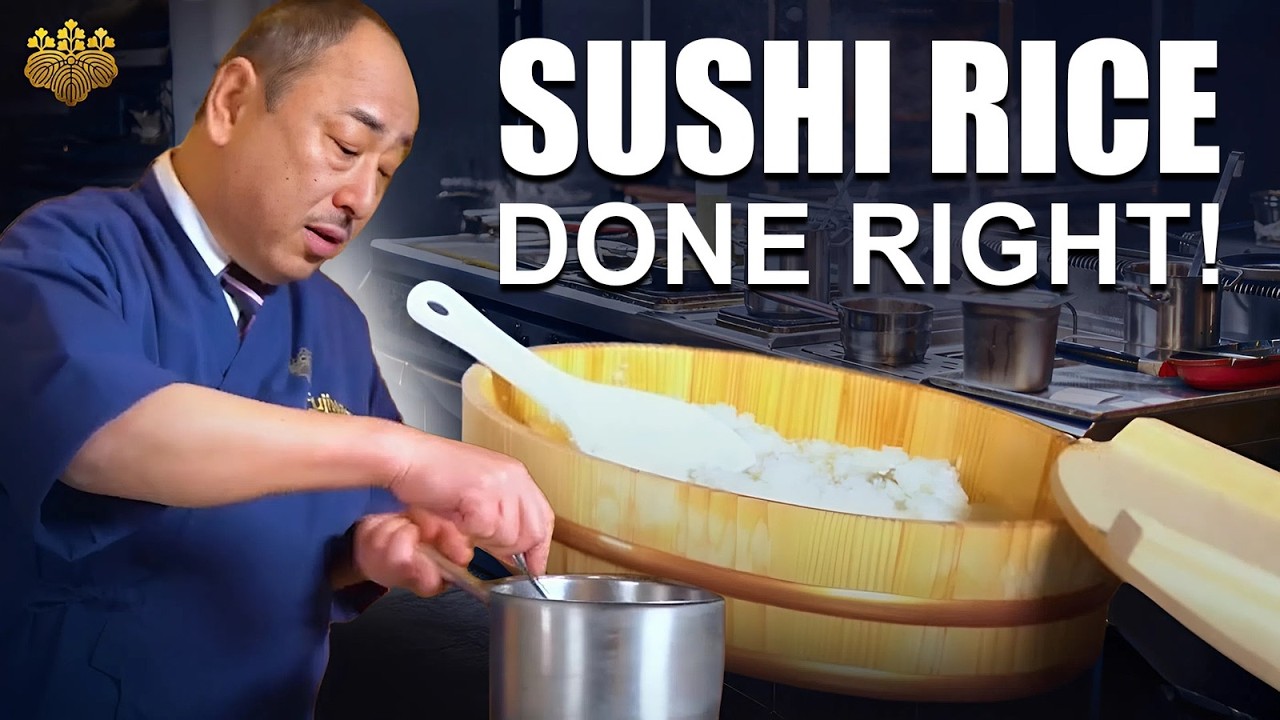
Friends! Today we’re diving into the heart of sushi — the rice!
If you’ve ever wondered what makes sushi rice taste so perfect in Japan — soft, sticky, and full of flavor — this video is for you. We’ll walk through the step-by-step process of making authentic sushi rice from scratch, using traditional Japanese techniques that bring out the best in every grain. From selecting the right type of rice to rinsing, soaking, cooking, and seasoning it just right — I’ll show you everything I’ve learned from real Japanese kitchens.
————————————————————–
🔔 More recipes, giveaways, and exciting guests coming soon – subscribe to my channel:
👉 https://www.youtube.com/channel/UCbSDn9kKfEsQMNiPSd1RdHQ
————————————————————–
Did you know that sushi rice is considered more important than fish in Japanese cuisine? In this video, you’ll learn how to make perfect sushi rice at home — fluffy, flavorful, and ready to roll. I’ll share the secret of “new rice,” how to rinse it properly, how to make the dressing, and my favorite way to mix it without damaging the grains.
Join me in the kitchen, cook along, and share your sushi creations in the comments below!
————————————————————–
📝Ingredients:
Rice – 1 liter
Water – 1 liter (per 1 liter of rice)
📝Seasoning for 2 kg of cooked rice:
Rice vinegar – 200 ml
Sugar – 160 g
Salt – 50 g
Kombu seaweed – 5 g
————————————————————–
🎬 Watch the previous videos while waiting for the new episodes:
BEST way to fillet salmon! How to do salmon right? 3 marinades from a Japanese chef! Yoshi Fujiwara
Sushi etiquette EXPLAINED: how to eat sushi the right way? Can you dip rice? What is ginger for?
Can you make Teriyaki Chicken better than a restaurant? Achieve perfect Teriyaki glaze in minutes!
————————————————————–
🔵 Follow Fujiwara YOSHI restaurant on social media to stay updated on events and offers:
⭐️ Website: https://yoshi-fujiwara.ua/uk/golovna/
⭐️ Instagram: https://www.instagram.com/fujiwara_yoshi_pechersk
⭐️ Facebook: https://www.facebook.com/yoshifujiwara.ua/
⭐️ YouTube: https://www.youtube.com/channel/UCbSDn9kKfEsQMNiPSd1RdHQ
Let’s start with rice. Did you know that in Japan, short grain rice is typically used for sushi? Here it is. But the kind of rice is not all. We only use new rice. Rice of the last harvest. It retained moisture. It is soft and smells fresh. We also use old rice, but not for sushi. It is suitable for snacks, crackers, and awful. For delicious sushi, you need new rice. But in any case, rice is necessary to rinse well. We cook our meals in the restaurant from new rice, necessarily fresh harvest. It is brought to us exclusively directly from Japan. You can order it from us on the website. First, be sure to measure the volume. Not weight, but volume. I have exactly one liter here. Wash under running water. It can be cold. Drain the first water very quickly. You see it’s cloudy like milk. This is dust from rice polish. You need to get rid of it as soon as possible. Fill with water again. And here such movements. Gently wash each piece. It’s like washing clothes. This should be done carefully so as not to damage the grain. How many times do you need to change the water? There is no exact answer for this amount of rice. Five or six times. It all depends on the quality of the rice. You see the water will still be cloudy and it should be transparent. [Music] Here we are already approaching the desired result. Quite a bit more. Now in Japan and in Europe in supermarkets you can buy rice musenai it is already washed at the factory. Many do not wash it at all. Just fill with water and cook. But I still recommend rinsing. Maybe not so long. But washed rice it still turns out much tastier. Here it is. Clear water. Perfect. If you have seen this water, finish rinsing. Wet rice should be left to dry slightly, 15 minutes before cooking, but not longer than 30. And while the rice dries, let’s prepare the dressing. You can just mix the ingredients, but it is better to heat them slightly on the fire. Let’s get started. Here I have rice vinegar just 200 milliliters. [Music] From 1 kilogram of dry rice, you get about 2 kg of cooked rice. Dressing is just enough for this amount. That’s how you calculate it. Add sugar. Now salt. [Music] Mix everything well. See what happens. The dressing should be absolutely transparent. So we turn on the heat. Not too high so it doesn’t boil. Otherwise, all the vinegar will evaporate. Stir until the sugar dissolves. Well, look, the sugar almost melted. But the dressing is still cloudy. You need to keep on fire for a few more minutes. It must be completely liquid. That’s right. See? Not a grain of sugar. When the dressing becomes clear, you can add a small piece of comoo seaweed. Just look at how transparent it has become. [Music] Let the dressing steep. And now it’s time to cook the rice. It’s already dried. It’s very important to maintain the right proportions. For one liter of rice, one liter of water. This is if you are cooking new rice. The drier the rice, the more water it needs. For old rice, you can safely add 10 to 20% more water. Look, I have exactly one liter of water here because the rice is new and it’s exactly one liter. We pour it in. And one more thing, the water level above the rice should be approximately one finger’s width, like this much. In Japan, a rice cooker is in every kitchen. It is most convenient to cook rice in it. But rice cookers are not so popular in Ukraine. If you don’t have one, cook the rice in a pot with a diameter of about 30 cm, like this one. And be sure to put on the bottom a sheet of foil folded in half [Music] so that nothing burns. And if there is a hole in the lid, stuff it well with paper. That way, the rice grains won’t float. But I have a rice cooker. Close. Turn on. Very easy. The rice will cook for about 15 minutes. Never open the lid and don’t even try to look inside until the rice cooker gives a signal that it’s done. The reason is that under the pressure of the steam, all the rice grains line up in the same horizontal position. If you open the lid, your perfect rice will be ruined. [Applause] The rice is ready, but don’t rush to open the lid. It should cook for another 15 minutes in its own heat. Right now, the center is still undercooked. If you let in air, the temperature will drop and the rice will become tough. We need soft, tender rice. While it’s resting, I’ll prepare the container for the rice dressing. In Japan and at our restaurant, we use Hungiri. This is a cedar tub. It is very convenient to mix rice in it. But you can take any other utensils, stainless steel pan or large bowl. The main thing, not aluminum or enamel. In the vinegar dressing, it can react and it’s not very good. The rice is still hot and very tender. evenly as much as possible. Pour the dressing around it like this over the spatula. It turned out great. And now we mix here such movements from the edges to the center. Very carefully so as not to damage the rice. Look very carefully. You need to break all the lumps. Just don’t press on the rice. And here it is with quick movements as if rolling it along the bottom. Each grain should be covered with dressing. Now cover the rice with a damp towel and leave for 10 minutes. You can cover it with plastic wrap if you want. The idea is to let the dressing soak into each grain of rice, not evaporate into the air. The rice has cooled down a bit. It needs to be mixed again. Stir with the same movements and leave it to cool down, but without a towel. It has absorbed the dressing well enough. The rice is practically ready. Let’s mix it one last time. Don’t worry if it seems a bit too wet. Very soon the rice will absorb all the dressing and become perfectly delicious. Actually, you can already place it on nori sheets. The dressed rice keeps for no longer than 2 days. It should be stored under a damp towel and it is better of course to eat today. The main thing do not put it in the refrigerator otherwise it will glaze and spoil. But if you prepared it in advance and it has already cooled down, it’s not a problem. Just reheat it before working with it in the microwave. Warm rice is always tastier and more pliable. The rice has co-ubscribed to the Fujiwara Yoshi channel. It’s very tasty here. And hit the bell so you don’t miss any notifications. I’ve checked myself and it’s really delicious here. And by the way, if you don’t know what the red subscribe button looks like, it’s the color of my jacket, but it says subscribe on it. Press it. It’ll be easy for you, and it’s nice for us. [Music]
13 Comments
The sushi dressing by your recipe tastes so good 😊 Thank you
What a nicely done video! Thank you very much!
.
Good job .❤
Thanks❤
Caring so much about rice and suddenly adding low-grade supermarket-auality vinegar…
AI bullshit
when you wash the rice with that strainer your damaging the rice already.
The ratios do not add up. For 1000 grams of rice, you said to use 200 ml of rice vinegar (20%), 160 grams of sugar (16%) and 50 grams of salt (5%) but, you pour the entire bottle of vinegar (355 ml). I tried mixing 200 ml of vinegar, 160 grams of sugar, and 50 grams of salt, the liquid is too thick like syrup but in your video shows a very thin liquid amount, which means, you LIED!
The rice vinegar for this recipe should be corrected to reflect 35.5% of the amount of rice. Sugar 16% and salt 5%
So, if I use 100 grams of rice, I will use 120% water and for the rest, 35.5% rice vinegar, 5% salt, 16% sugar. Cook rice in a regular pot, once water starts to boil, add rice, covered with a towel and the lid. Lower heat to low and cook for 15 minutes. Let it rest for another 10 minutes. Add the vinegar mixture. No special instrument just the right proportions. It works every time even if you do not have enough rice, just follow the ratios.
My rice came out perfect for the naysayers among you 😅
Thank you for the great video! 1 question please… Don't you add Mirin?