
Summary 
Two extra virgin olive oils from Nippon Olive Company in Japan’s Ushimado region won Gold Awards at the 2022 NYIOOC World Olive Oil Competition. The company’s success is attributed to its Mediterranean-like climate, decades of olive growing experience, and dedication to quality production methods. Nippon Olive Company is expanding production to Spain to meet the growing demand for high-quality olive oil in Japan, with plans to continue focusing on quality and sustainability in their operations.
Two extra virgin olive oils from a region of Japan known for its unique climate have won Gold Awards at the 2022 NYIOOC World Olive Oil Competition.
The groves of Nippon Olive Company sit above the Seto Inland Sea, in southern Japan, which boasts a Mediterranean climate. However, officials at the company also attributed its success in the competition to a decades-long history of olive growing and dedicated research.
I think most Japanese households still do not recognize high-quality extra virgin olive oil… but I feel that people are increasingly enjoying olive oils’ unique flavors when cooking.- Yasuhiro Yoshida, production director, Nippon Olive Company
“Locals describe our region as the Aegean Sea, a tribute to a climate which closely resembles the Mediterranean climate,” Yasuhiro Yoshida, the company’s production director, told Olive Oil Times. “So much so that our city, Ushimado, is an official sister-city with Mitilíni in Greece.”
The formally trained olive oil taster and agronomist is the driving force behind the success of the company’s Ushimado and Ushimado Superior brands.
See Also:Producer Profiles
Yoshida’s work follows the path set by the company founder, Waichiro Hattori, who began growing olives in the area in 1942 and launched its first olive product in 1949.
Great-grandfather of the current Nippon Olive president, Hattori wanted to create a product that could heal and feed people. Over time, the company expanded its olive groves over about 10 hectares, where it manages more than 2,000 trees.
After nearly five decades of experience growing Mediterranean olive varieties in Japan, the company expanded its production to Spain in 1992.
In Tortosa, Nippon Olive Company manages more than 3,000 trees on 45 hectares. This expanded production helps the company reach the volumes needed to keep pace with the growing demand of Japanese consumers for its high-quality extra virgin olive oils.
The need to increase yields does not come as a surprise. According to the latest data from the International Olive Council (IOC), Japan is currently the fourth largest importer of olive oils globally, behind the United States, the European Union and Brazil.
The company’s expansion into Spanish olive production was also not a surprise, with 93 percent of Japanese olive oil imports coming from the country. Still, Ushimado Garden, the core of Hattori’s vision for the landscape, remains the focus of the company’s operations.
Yoshida emphasized Nippon Olive’s strong relationship with Ushimado’s unique lands. The location of the city and its culture, greatly influenced by the Seto Inland Sea and the related trade opportunities, made Ushimado a significant port until the end of the Edo era in the 19th century.
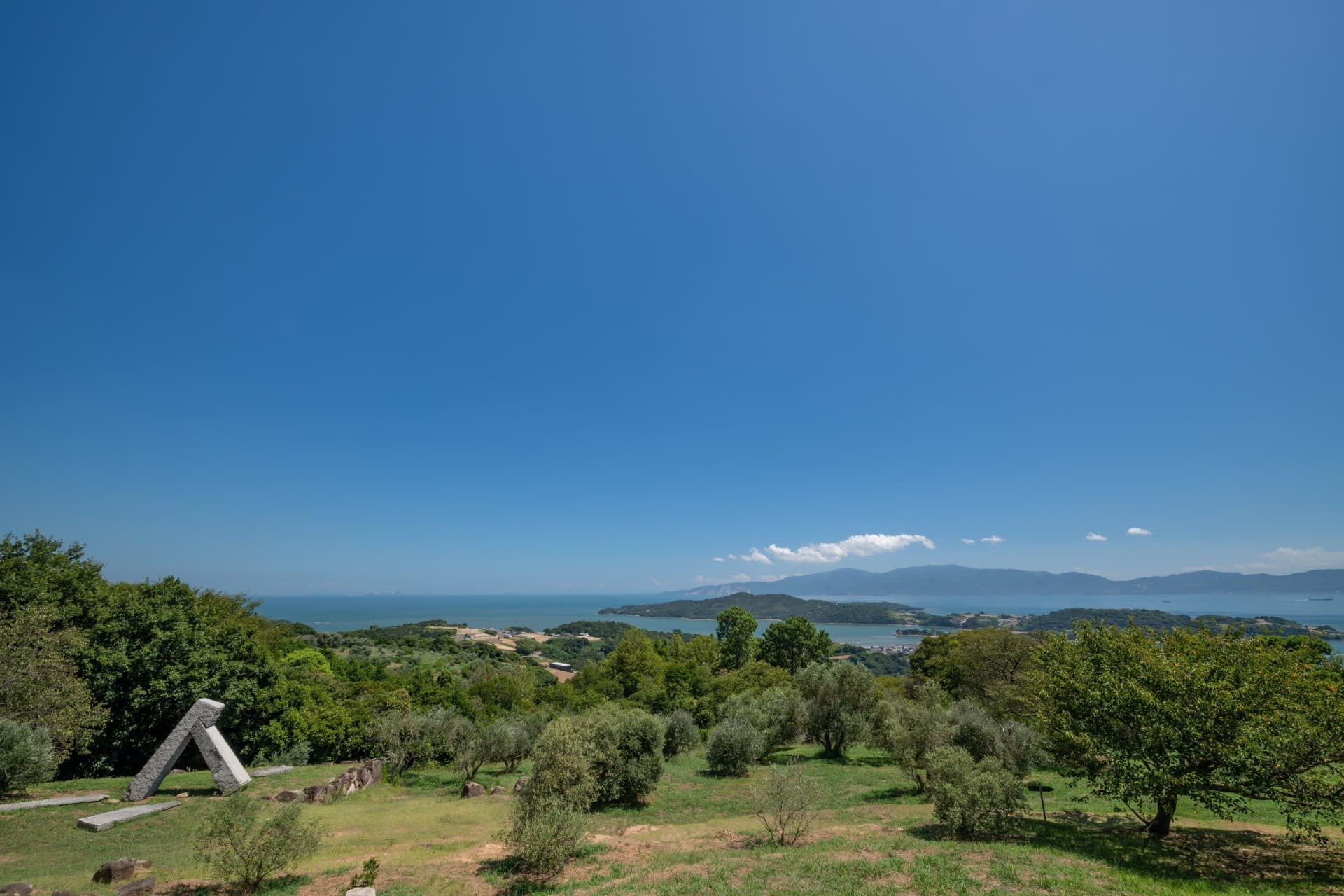 Photo: Nippon Olive
Many visitors to the area explore its unique character by climbing Ushimado Garden’s olive-tree-dotted hills for views of the Seto Inland Sea and its islands.
“Visitors come here not only to see the trees, but also to enjoy the wonderful scenery of the olive groves, the blue sea and the colorful fields, and to seek out the high-quality olive oil,” Yoshida said.
Ushimado is now one of the major tourist attractions of Okayama prefecture, hosting 90,000 visitors annually.
In homage to the land, Yoshida named the company’s farm after the land. Ushimado is a blend of Arbequina, Mission, Manzanillo, Lucca and Nevadillo Blanco olives. It is a sweet extra virgin olive oil with mild notes of bitter and piquant.
Meanwhile, Ushimado Superior is sourced from carefully selected olives of Manzanillo, Lucca, Nevadillo Blanco and Mission varieties.
“We create our Ushimado blends adapting to the opportunities given us by the seasons,” Yoshida said. “We follow the weather and the trees in the pursuit of quality.”
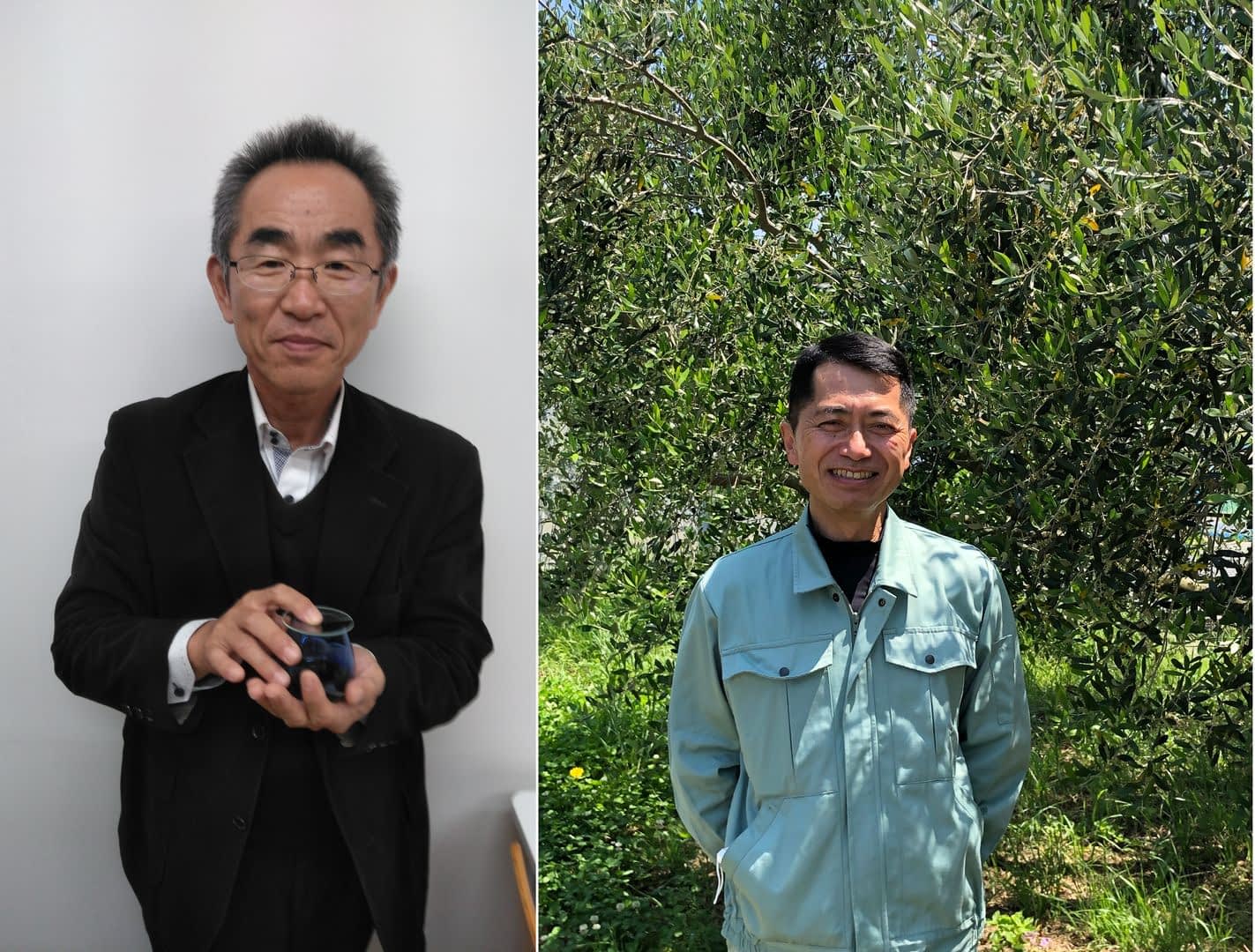 Photo: Yasuhiro Yoshida (left) and Masayuki Kurihara
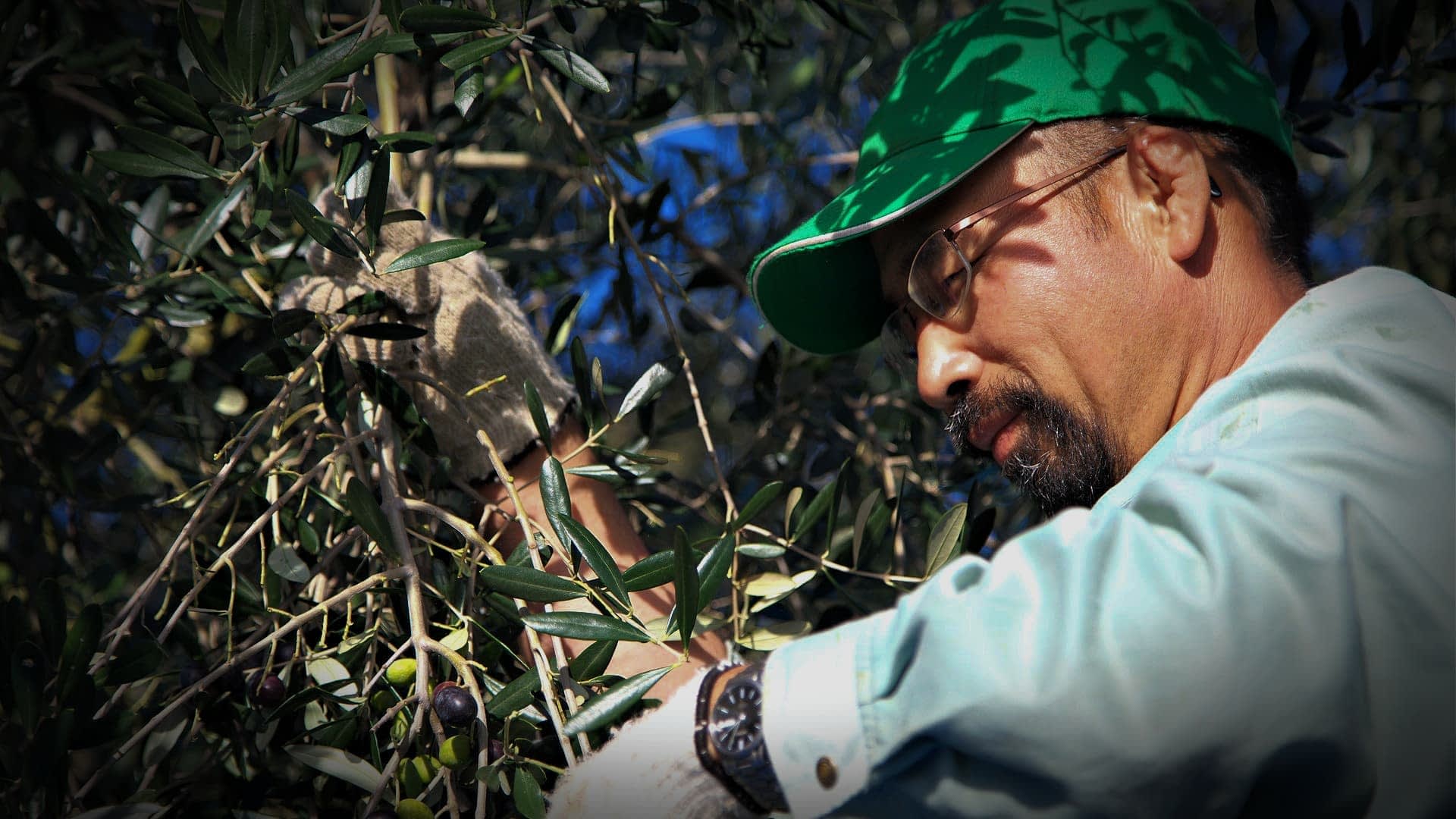
One of the keys to Nippon Olive’s sustained success at the NYIOOC is the daily monitoring of the trees, to detect potential threats and keep them healthy.
“Pest control is essential, of course,” Yoshida said. “But we especially focus on pruning correctly, which enables us to keep the trees healthy and aim at the best product quality.”
“I would say that the basics of our work have not changed over time, but the quality has improved,” he added. “This is because of a better assessment of the harvest times and increased care in the oil extraction process, which preserves the unique flavors of our olive oils.”
While the climate in the region is mostly ideal for olive growing, the weather remains one of the major challenges for the olive farm.
“That is mostly true for the long rains that often occur before harvest, with the rainy season of Japan traditionally taking place between June and July,” Yoshida said.
“Other problems might come from fierce heat often experienced from the second part of July to the end of August, a period characterized by the absence of water, which can also have an impact on our trees,” he added. When needed, drip irrigation is provided.
The company is anticipating an emerging shift among Japanese consumers toward using extra virgin olive oil at home, partially due to more widespread knowledge about its health benefits.
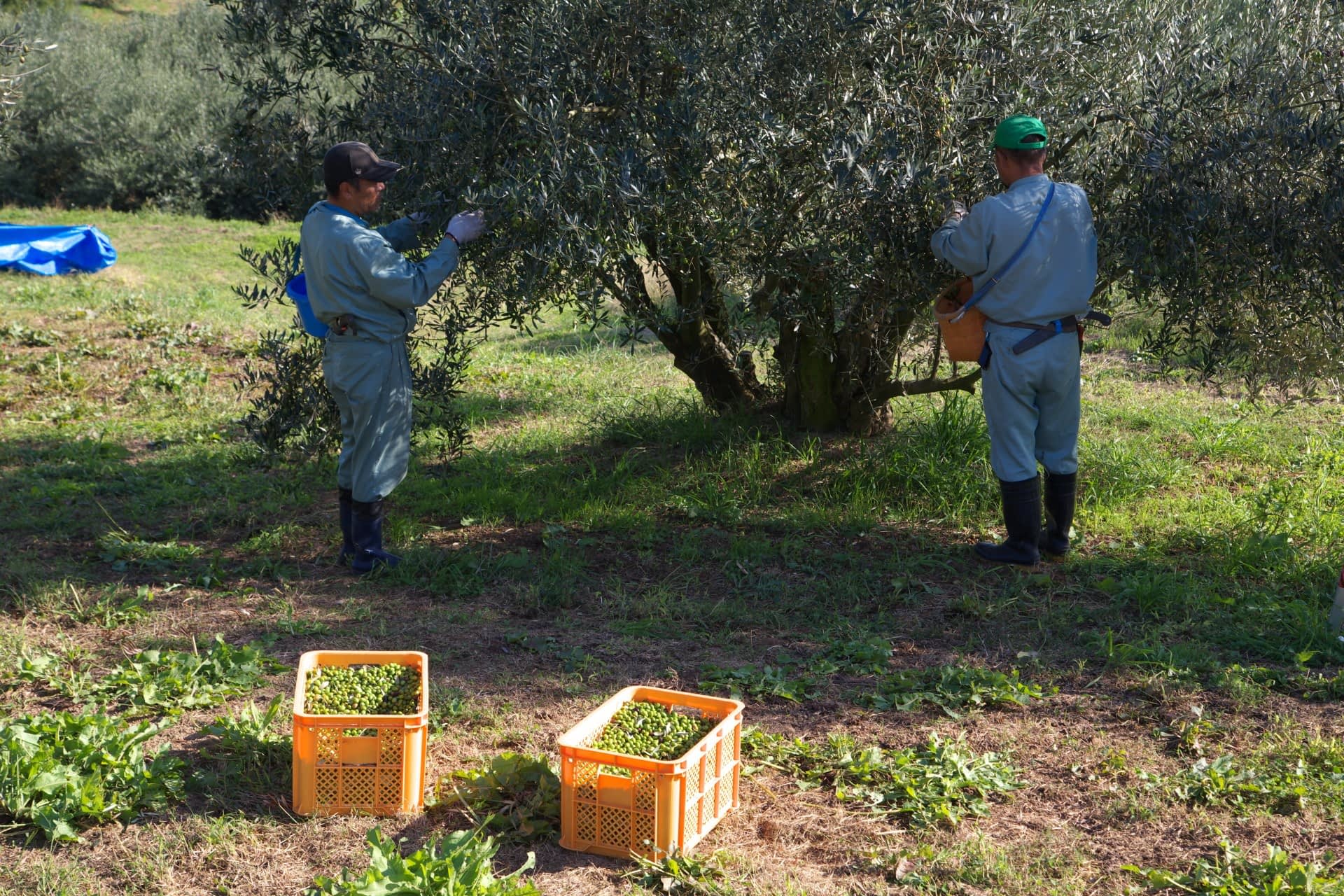 Photo: Nippon Olive Company
“Today olive oils in Japan are mainly used in restaurants for Mediterranean-type meals such as Spanish or Italian cuisine,” Yoshida said. “Still, we see that consumption seems to be growing, and that happens mostly with extra virgin olive oils.”
“It seems its use is spreading to the ordinary Japanese households, which are shifting from a health-conscious approach to the pursuit of good taste,” he added. IOC figures show that virgin olive oil comprises 77 percent of Japan’s olive oil imports.
“I think most Japanese households still do not recognize high-quality extra virgin olive oil as opposed to lower quality olive oils, but I feel that people are increasingly enjoying olive oils’ unique flavors when cooking,” he added.
According to Yoshida, extra virgin olive oil is also an ingredient that can seamlessly be fused into traditional Japanese dishes.
“High-quality olive oil can be used in a wide variety of dishes of Japanese cuisine,” he concluded. “Our employees, for instance, use it on their miso soup, onigiris, tofu and nattos.”
Dining and Cooking