


Barry King/Getty Images
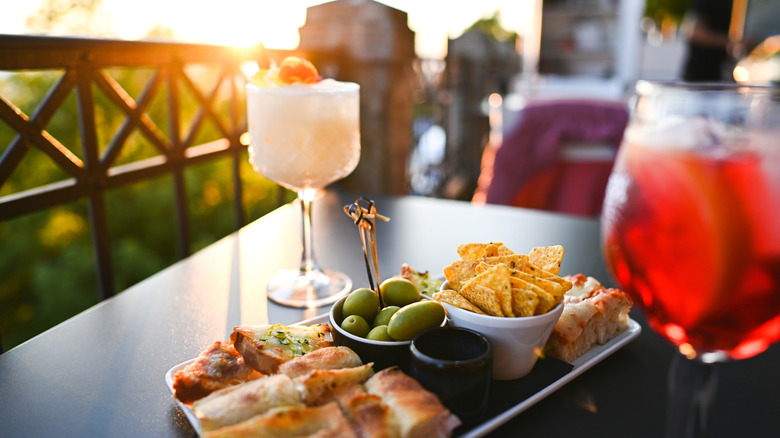
Rick Steves has spent decades tracing Europe’s best food traditions, but few charm him quite like the aperitivo — an enviable Italian ritual that transforms the hours between work and dinner into something worth lingering over. In Italy, the neighborhood café isn’t just for caffeine; it’s a “bar” in the local sense, where regulars drift in for espresso at dawn and return later for wine or cocktails. As dusk settles, those same bars trade croissants for charcuterie, turning the counter into an impromptu spread of small bites and conversation that captures the pace of everyday Italian life better than any postcard.
Steves notes that the whole day seems to move in step with it: Mornings belong to coffee, late afternoons to another quick sip, evenings to a plate of something salty with a cool drink in hand. It’s not a party or a happy hour so much as a built-in pause — a communal reset before dinner begins.
What seems like a simple snack break is really the prologue to something larger. Behind the clinking glasses and easy chatter lies a story that reaches from ancient Rome to modern Milan — a centuries-old habit that explains how Italy mastered the art of unwinding, one aperitivo at a time.
Tracing centuries-old roots of Italy’s aperitivo
Yuliya Taba/Getty Images
Of all the customs Rick Steves has encountered across Europe, few capture daily life quite like Italy’s aperitivo hour. Long before spritzes and buffets, the Romans kicked off their feasts with a gustatio — an appetizer paired with sweet wine meant to “open” the stomach. That word, aperitivus, is where “aperitivo” comes from, and even then, it was less about indulgence than intention: easing into a meal rather than rushing toward it. Centuries later, in 18th-century Turin, herbal wines like vermouth were used to stoke appetite and steady the stomach before dinner.
By the 19th century, the ritual had moved beyond prescriptions and into cafés, where locals gathered for drinks that came with something small to eat. Both Turin and Milan helped shape what aperitivo became — Turin refined the vermouth ritual, while Milan gave it appetite with generous spreads, eventually inspiring the aperitivo-dinner hybrid known as apericena. By the time Steves joined locals for one in Siena’s Piazza del Campo, the ritual had become an entire meal in disguise.
Its reach now stretches far beyond Italy, echoed from New York to Hong Kong as a celebration of pause and pleasure. But in Italy, it still defines how people connect — and what every traveler should know about Italian cuisine. For those hoping to eat their way through Italy, start here — it’s a tradition that rewards curiosity with a plate of snacks.
Dining and Cooking