
Needless to say, the series provides a different vision for the food system with emphasis on local food producers, preserving cultural foods transitions and providing economic benefits for communities.
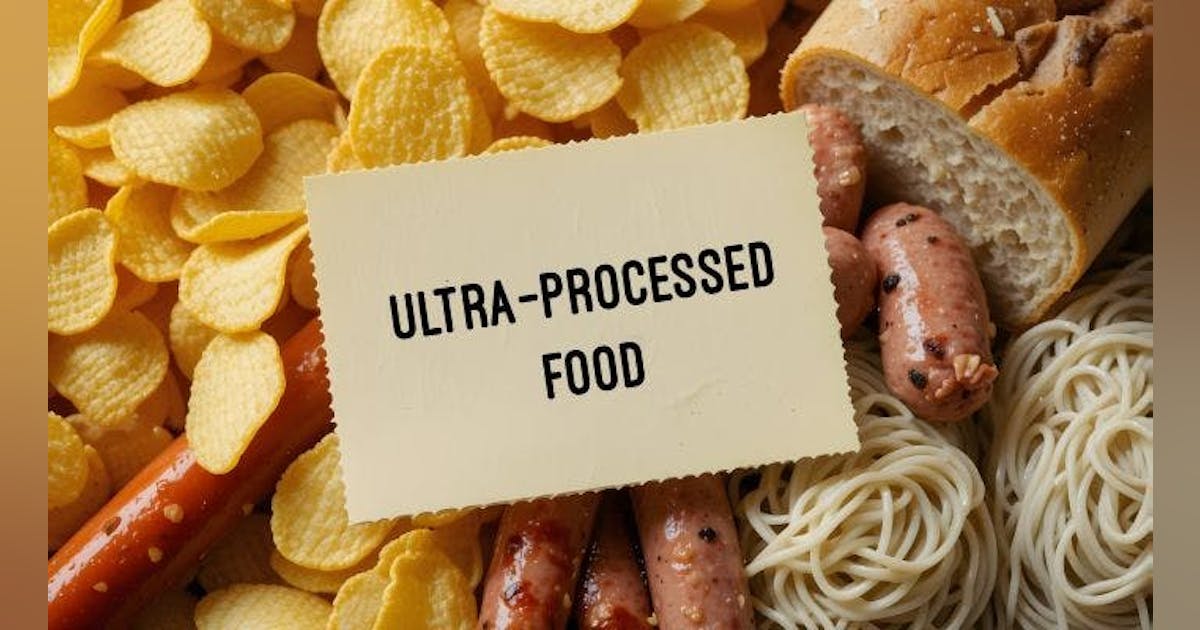
Now, backtracking: The first paper, “Ultra-processed foods and human health: the main thesis and the evidence,” repeats nothing you haven’t already heard. It creates and supports three hypotheses:
1.That ultraprocessed foods globally are displacing long-established diets centred on whole foods and their culinary preparation as dishes and meals.
2.That this pattern results in deterioration of diet quality, especially in relation to chronic disease prevention (confirmed by, among other evidence, gross nutrient imbalances; overeating driven by high energy density, hyper-palatability, soft texture and disrupted food matrices; reduced intake of health-protective phytochemicals; and increased intake of toxic compounds, endocrine disruptors and potentially harmful classes and mixtures of food additives.
3.This pattern increases the risk of multiple diet-related chronic diseases through various mechanisms.
The second paper is titled “Policies to halt and reverse the rise in ultraprocessed food production, marketing, and consumption.” It scrutinizes UPF manufacturers, fast-food corporations, supermarket/retail corporations and food supply chains. “We also examine policies to protect, incentivise, and support dietary patterns based on fresh and minimally processed foods, particularly for lower income households.
“We emphasise the importance of advancing this agenda in all countries, irrespective of their development status, to promote healthier diets among populations.”
Now, back to that third paper; its summary ends:
“A coordinated, well resourced global response is essential — one that confronts corporate power, reclaims public policy space, and restructures food systems to prioritise health, equity, and sustainability over corporate profit.”
One of the 20 authors of the first paper is Prof. Carlos Monteiro, MD, from the University of Sao Paulo, Brazil. He was the author of the 2009 paper that first used the term ultraprocessed foods, the last of four groups of food based on their amount of processing and added ingredients.
The second paper’s authors include professors Marion Nestle and Barry Popkin, well-regarded critics of the food & beverage industry. Monteiro, Nestle and Popkin also contributed to the third paper.
Dining and Cooking