
Summary 
Slovenia opened the world’s first olive oil fountain in Marezige, offering self-serve tastings of local extra virgin olive oils to promote Istrian gastronomy and olive oil culture. The fountain serves as a promotional hub and educational center, with plans for a Competence Center for Mediterranean Cultures in Plavje focusing on olive growing and other Mediterranean crops.
Slovenia has opened what might be the world’s first olive oil fountain in the village of Marezige near Koper. The attraction, inaugurated on November 26, highlights the region’s extra virgin olive oils and aims to promote local producers.
“This project is highly significant. It enhances the visibility of olive oil and promotes Istrian gastronomy,” said Slovenian Agriculture Minister Mateja Čalušić at the opening ceremony.
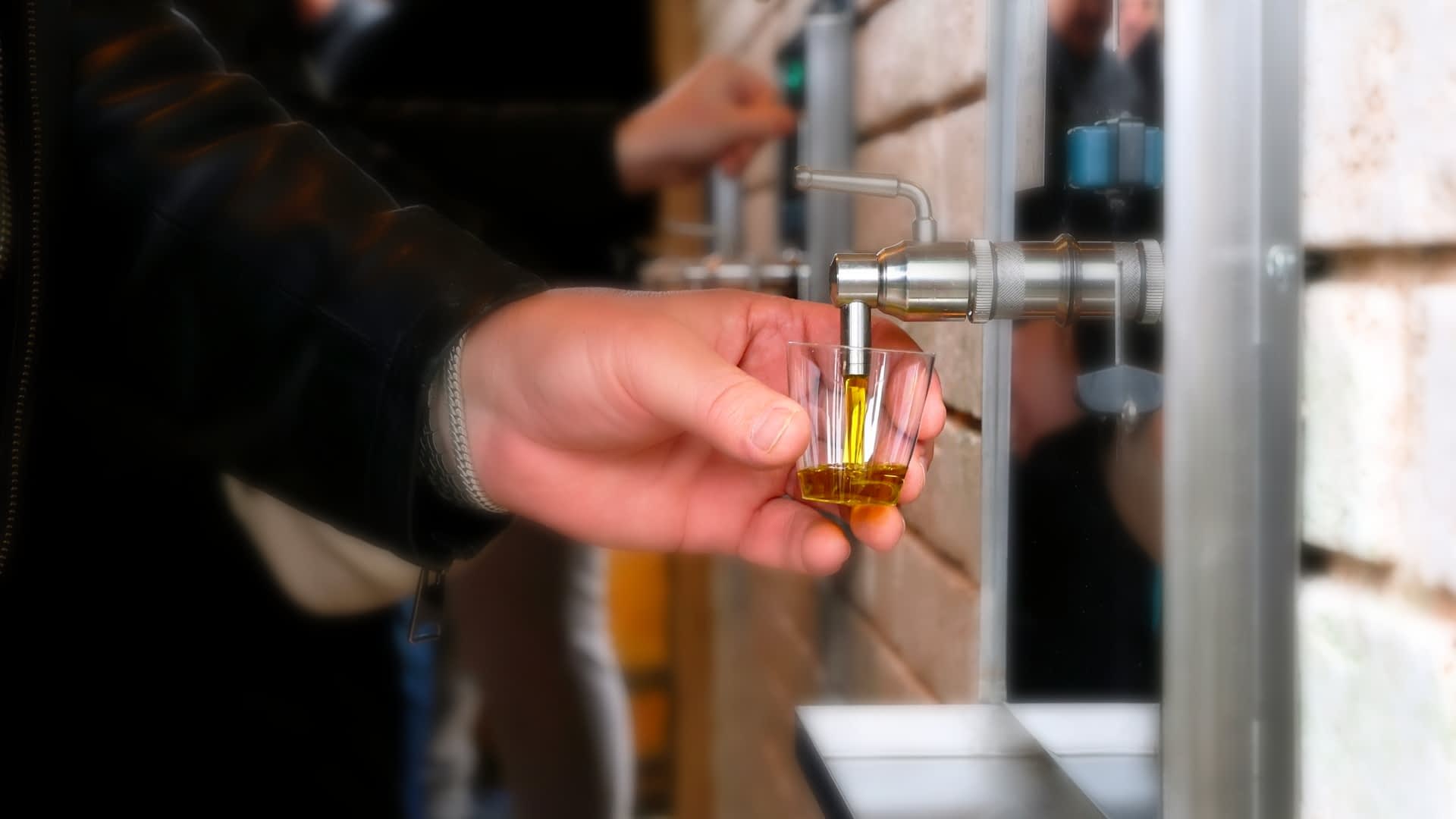
The “fountain” is a self-serve olive oil tasting station. Visitors purchase tokens and use them to dispense small portions of local extra virgin olive oils onto wooden tasting trays, similar to the village’s popular wine fountain. The aim is to create an interactive, educational way to explore Istrian olive oils.
Promotional and Educational Hub
Despite its modest production volumes, Slovenia has earned a strong reputation for quality. Extra virgin olive oils from Slovenian Istria are known for their pronounced aromas, rich flavors and high production standards — qualities repeatedly recognized at the world’s premier olive oil competition in New York.
According to the minister, the new olive oil fountain will serve as a promotional point, gathering place and educational center dedicated to olive growing and olive oil culture.
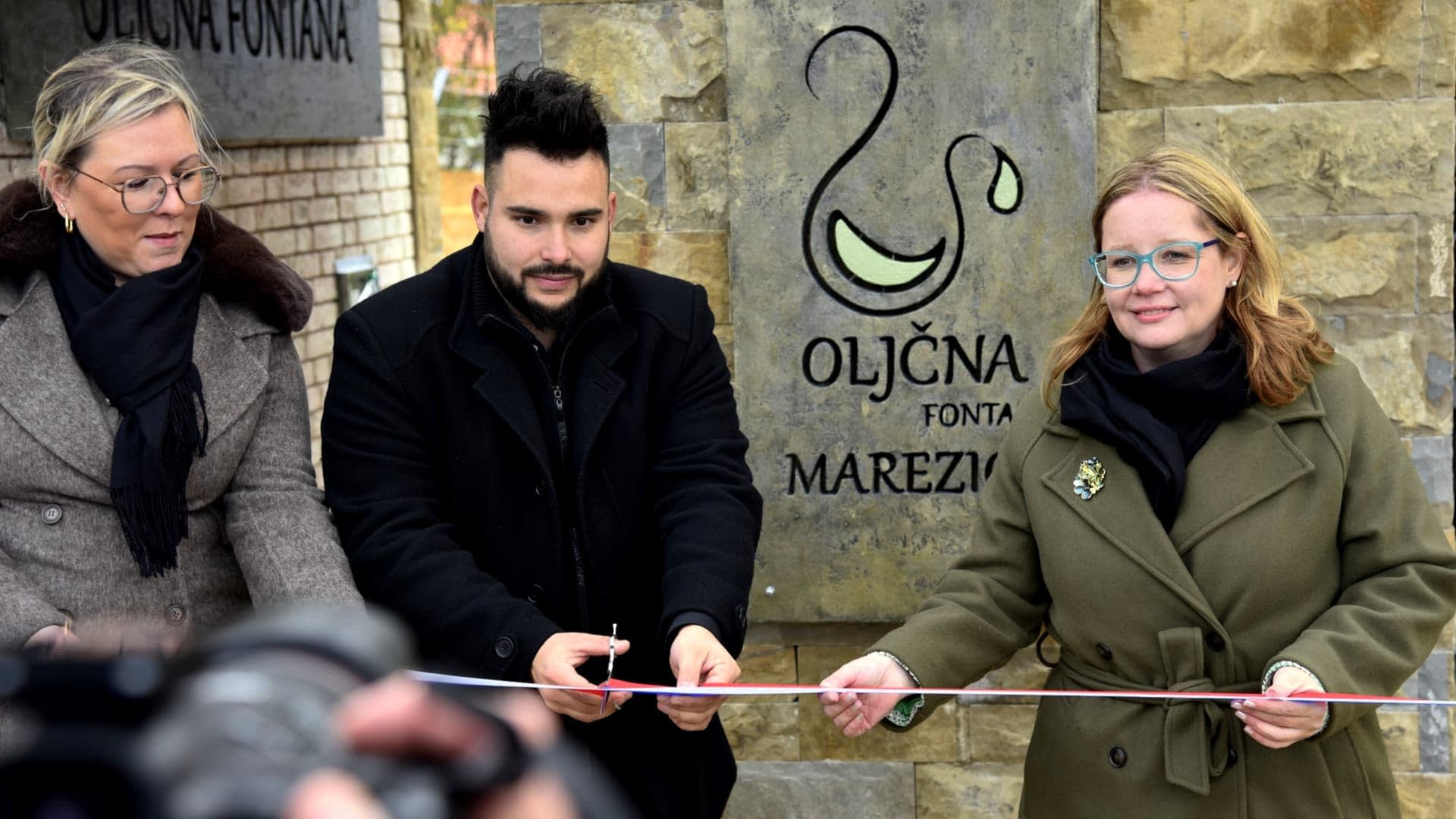 The opening of the fountain in Marezige
Visitors can taste extra virgin olive oils from local producers Pr’ Rojcu, Sveti Kancijan and Sabadin.
Patrik Babič, director of Prik — the company that operates the fountain and is already known for its wine fountain — explained how tastings work using pre-purchased tokens.
“Guests can buy a set of three tokens and receive an olive-wood tray with a space for the oil and a holder for glasses, should they decide to sample wine at the nearby wine fountain. The set also includes packaged bread, while cheese tastings are available for an additional fee. A specialty shop offers several olive-based dishes and bottled oils,” he said.
Competence Center Planned in Plavje
On World Olive Day — established by UNESCO in 2019 to promote the protection of olive trees and the values of peace and harmony — a public forum was held on the planned Competence Center for Mediterranean Cultures in Plavje, a village near the Italian border. The six-million-euro center is expected to open next year and will focus on research in olive growing, viticulture and other Mediterranean crops.
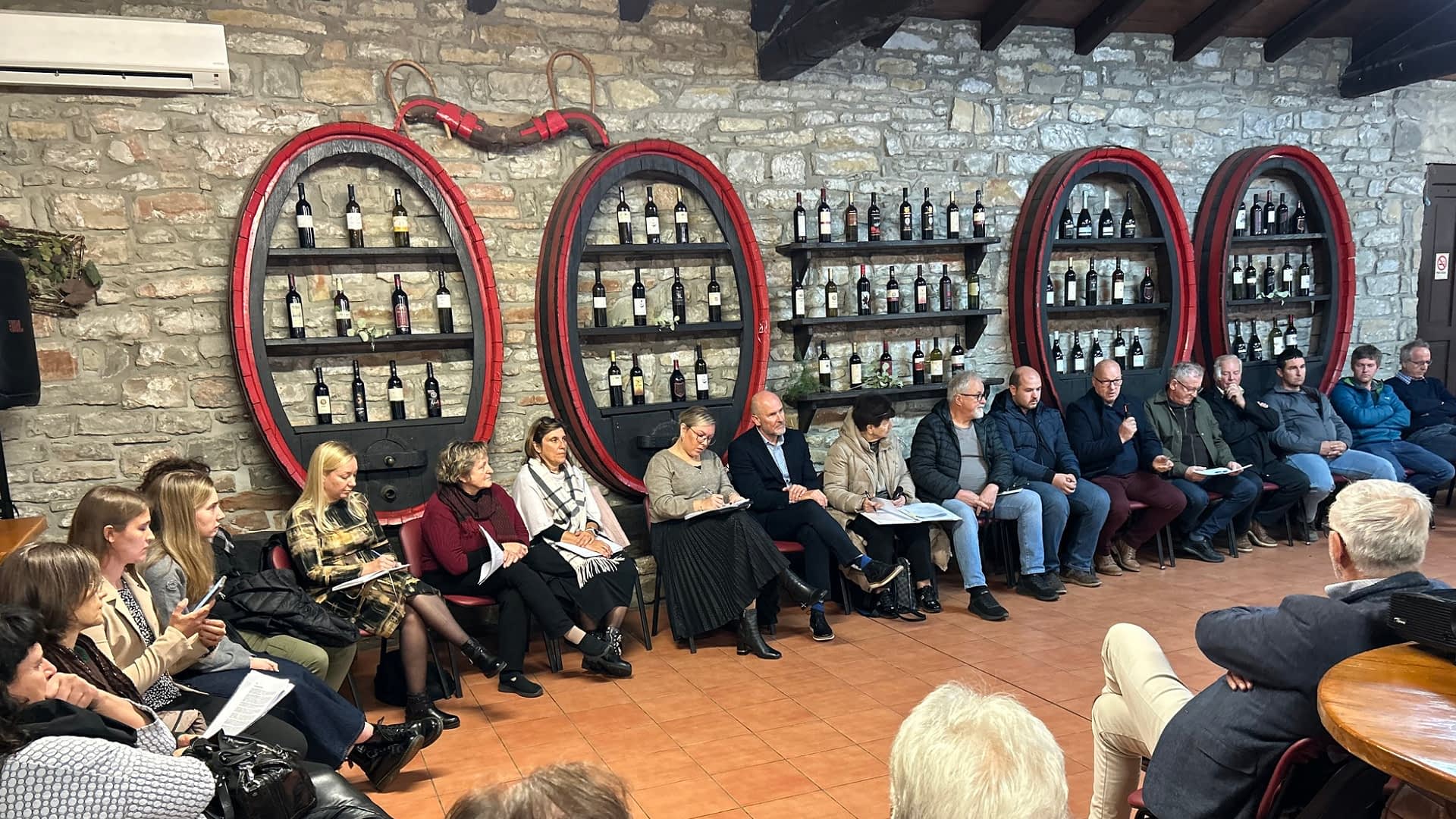 A local forum on World Olive Day
The minister also highlighted Slovenia’s new Food Law, which introduces a comprehensive system for testing the sensory properties of virgin and extra virgin olive oils. “This regulation strengthens quality control and places Slovenia alongside the most advanced olive-growing countries,” Čalušić said.
Climate Change Challenges
Experts at the forum warned of the growing impact of climate change. Higher temperatures and milder winters are expanding olive-growing areas but also increasing the presence of new pests and intensifying those already present. Extreme weather events, they noted, create abiotic stress and affect yield stability.
Changes are also being observed in oil quality, composition and flowering times, which are occurring earlier. The ripening period is shortening, influencing optimal harvest dates and processing decisions. Despite these challenges, Slovenia’s olive-growing area continues to expand — from roughly 460 hectares in 1985 to 2,600 hectares today. The sector is currently growing by about 70 hectares per year.
The Strategic Need for Irrigation
“The sector would grow even faster if we had an adequate irrigation system,” said Maja Podgornik, head of the Institute of Olive Growing at the Scientific Research Center of Koper.
Researchers emphasize that irrigation development is essential for Slovenia’s olive sector. Irrigation improves nutrient uptake, vegetative growth, yields and oil quality. However, the country still lacks a clear water-management strategy and a legal framework for using alternative water sources.
As climate impacts intensify, monitoring conditions and developing adaptive strategies will be crucial. “Water will be one of the key elements of our resilience,” experts at the research center noted.
A Better Harvest Than Last Year
Despite the challenges, this year’s olive harvest was solid in both quantity and quality. “Better than last year,” said Miran and his son Martin, who runs the family estate, Ronkaldo. At the institute’s invitation, 84 growers submitted 121 oils for analysis.
“The oils were very uniform in quality, which made classification challenging. They display fresh fruitiness with aromas reminiscent of freshly cut grass, olive leaf, green almond, herbs, tomato leaf, artichoke and chicory, along with possible notes of apple, banana and sweet herbs. You are warmly invited to taste these exceptional oils,” said Dr. Milena Bučar Miklavčič, chair of the tasting panel at the Institute’s sensory laboratory.
This year’s Young Olive Oil Days festival, organized by the Institute of Olive Growing, is taking place in participating Koper restaurants from November 22 through December 7, offering curated menus and premium oils to the benefit of growers, restaurateurs and visitors alike.
Dining and Cooking