
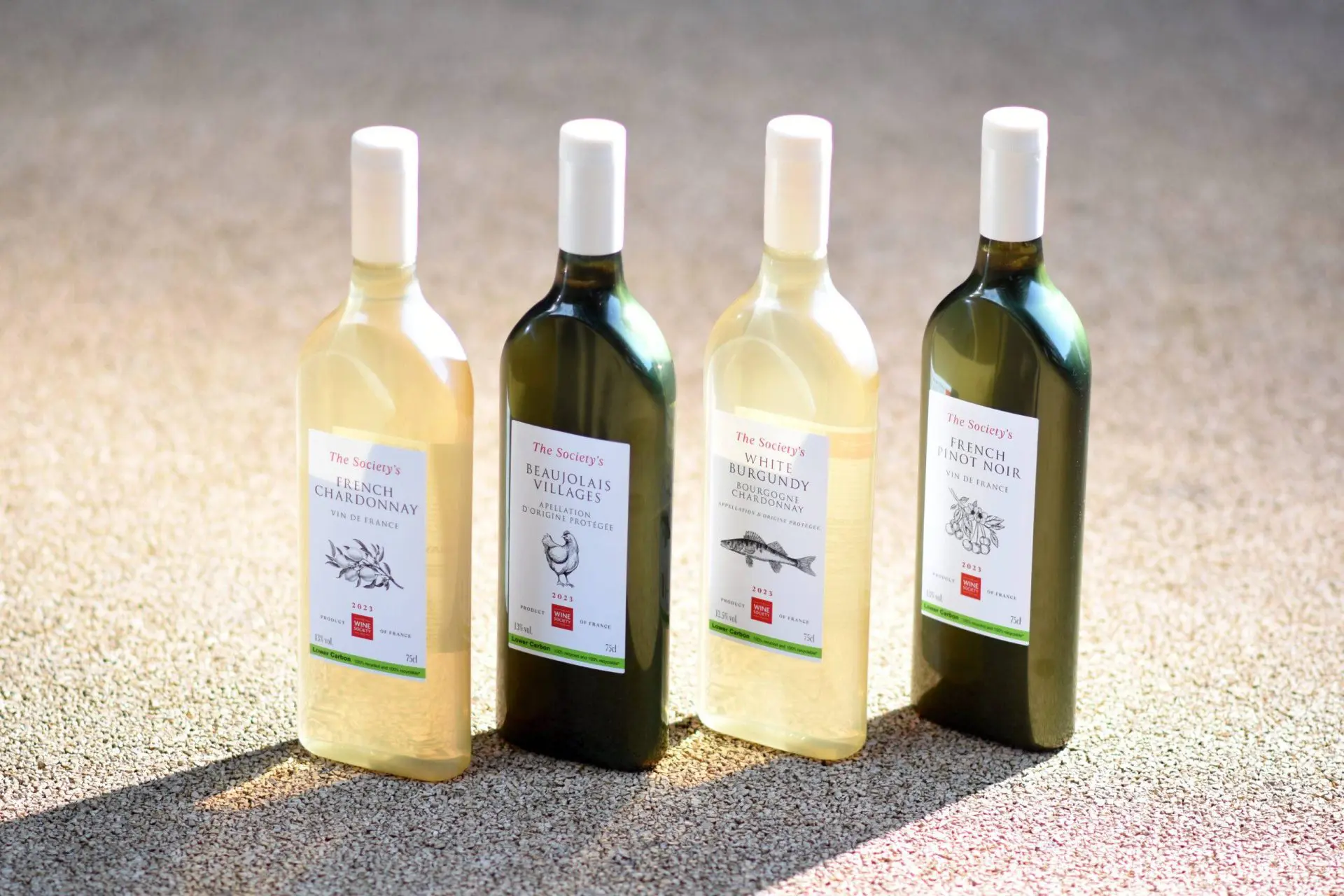
Packamama, a leading innovator in packaging, has secured a government grant totaling $1 million. The funds will bolster their efforts to develop and perfect an advanced circular polymer wine bottle. This product promises to reduce carbon emissions without negatively affecting the quality of the wine it holds.
Earlier Funding and Research
The substantial funding follows an initial $100,000 feasibility grant provided by the Business Research and Innovation Initiative (BRII). The initial grant supported Packamama’s preliminary study, which effectively demonstrated the technical viability of the project, along with impressive potential for emissions savings.
Packamama’s bottles underwent independent life cycle analyses, which confirmed the impressive reduction in carbon emissions. The findings showed that emissions were cut by over 50% when compared to conventional glass bottles. In addition to being environmentally friendly, the bottles are lighter, shatterproof, and fully recyclable using existing systems.
Recognition and Future Plans
As one of only two proof-of-concept recipients amongst a group of six participants in the Alternative Packaging for Australian Wine challenge, Packamama views the grant as a powerful affirmation of its vision. The company is driven to engage consumers and make the wine industry more sustainable through forward-thinking design and technology.
Over the forthcoming 18 months, Packamama will move forward with validating its innovative bottle design. This will involve material trials, recyclability testing, and consumer research.
The company is also investigating opportunities for retail collaborations both domestically and in the UK. These efforts will build on existing relationships with major retailers like Coles, Tesco, and Aldi.
Comments from the CEO
Packamama’s CEO and founder, Santiago Navarro, expressed his excitement and motivation at being chosen by the Australian Government and Wine Australia to spearhead the industry’s transition to more sustainable packaging.
He stated, “This shows that innovation in materials, design, and technology can preserve both wine and the environment. Together, we can transition the wine bottle from being part of the problem to being part of the climate solution.”
Questions & Answers
What is Packamama’s mission?
Packamama aims to excite consumers and decarbonize the wine industry through innovative design and technology.
What makes Packamama’s bottles environmentally friendly?
Packamama’s bottles significantly reduce carbon emissions compared to traditional glass bottles. They are also lighter, shatterproof, and fully recyclable using existing systems.
What are the company’s next steps?
Packamama plans to validate its innovative bottle design through material trials, recyclability testing, and consumer research. They are also exploring possibilities for retail collaborations locally and in the UK.
Dining and Cooking