
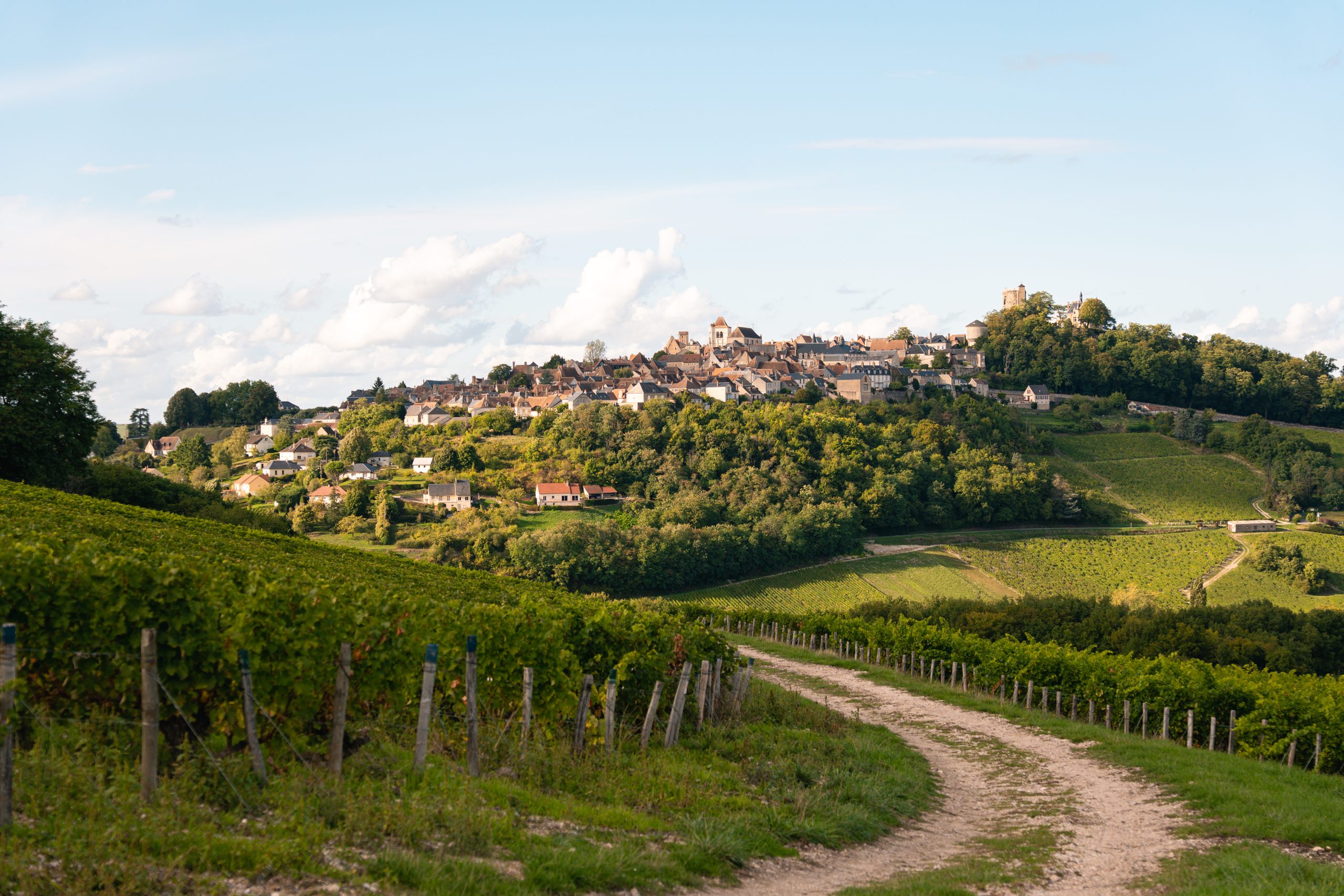
An Edinburgh masterclass dedicated to Centre-Loire proved that this region has much more to offer than just its most famous names. db discovers how excellence and sustainability are building its position in the UK market.
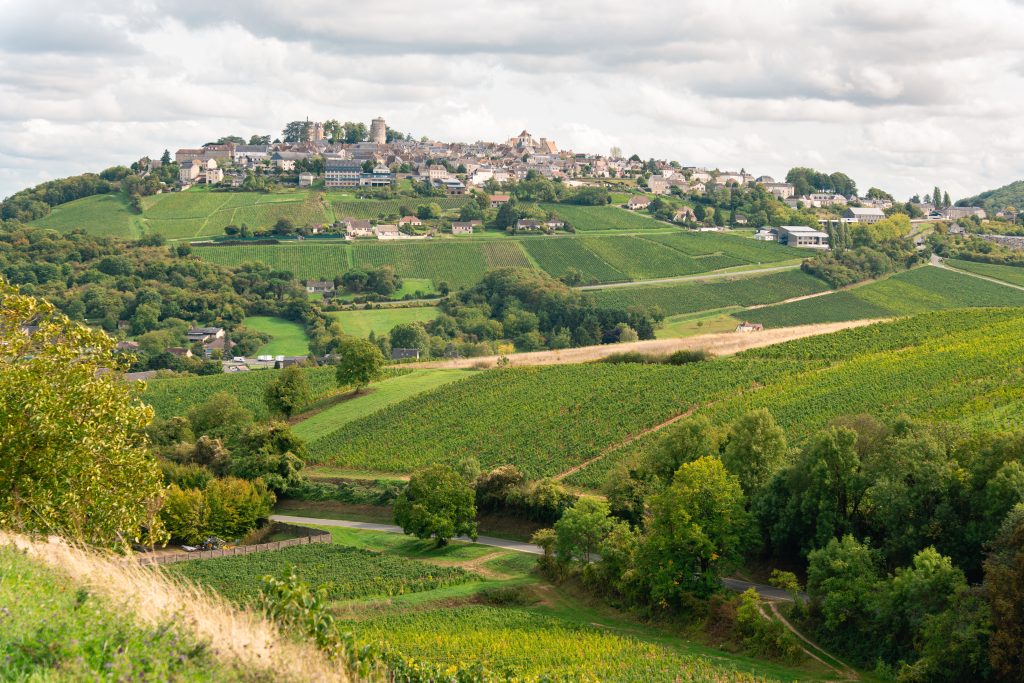 The village of Sancerre (Credit: Anatole Gonon)
Centre-Loire is home, among others, to Sancerre and Pouilly-Fumé, two of the world’s most prestigious appellations. Its grape varieties, Sauvignon Blanc and Pinot Noir, are globally recognised and loved by consumers. Yet there is still much to be discovered about this region. Beyond the headline appellations and famous growers’ names, there is a wealth of different and lesser-known styles and terroirs, and a host of producers with a sustainable approach to winemaking. A masterclass in Edinburgh, led by Rebecca Gibb MW, sought to explore what Centre-Loire has to offer the UK wine trade.
A northern region with notable vintage variation and a rich history
The river Loire gives the region its name. Centre-Loire means the middle of the Loire, and indeed, the vineyards of Centre-Loire are the river’s halfway point: a plaque on a bridge in Pouilly-Fumé pinpoints the exact spot and has become an Instagram sensation in recent years.
It is worth noting the scale of the Loire. It is France’s longest river, spanning 1,005 kilometres, about the distance from Edinburgh to Copenhagen. Meanwhile, the Centre-Loire region is around half the size of Scotland.
Like Scotland, it is a northern region, at least by French standards. A two-hour drive south of Paris, the vineyards of Centre-Loire are located on the 47th parallel north. What is not always common knowledge is that Sancerre is only 110 km from Chablis and 155 km from Beaune, whereas the vineyards of Touraine, in ‘the rest of the Loire’, are almost 200 km away.
Because of their northern location, the vineyards of Centre-Loire have a semi-continental climate with cold winters and summers that can get very hot. The grapes, however, retain the elegant acidity that is the hallmark of the region’s most famous wines. Marlborough, another celebrated region for Sauvignon Blanc, has similar growing degree days, although Centre-Loire receives one-third less sunlight.
According to Gibb, this explains the less bombastic style of the wines of Centre-Loire when compared, for instance, with those of New Zealand.
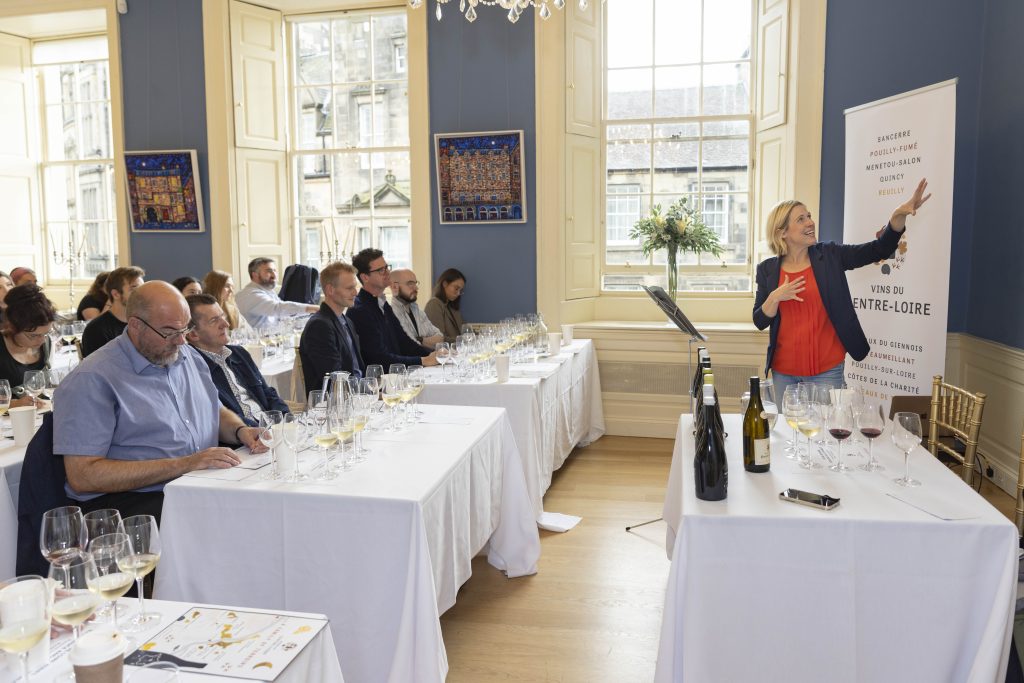 Gibb presented to the Edinburgh wine trade.
Vintage variation is another important characteristic of Centre-Loire wines. Even looking at just the last five years: 2021 was marked by frost; 2022 was hot and dry; 2023 was warm and wet; and 2024 was wet again, but notably cooler than previous years.
Wine has long been part of the rich history of Centre-Loire. Jacques Cœur, a financier to King Charles VII, acquired the seigneury of Menetou-Salon in 1450. He is known to have promoted the local wines so vigorously that they won favour with the King’s mistress, Agnès Sorel.
A century later, Sancerre, having turned to the Protestant faith, found itself besieged by the French army in 1573. The Sancerrois did win the day, albeit with heavy casualties, but when a wider peace deal ended the conflict, their wine cellars were raided as part of the reparations.
Appellations and colours
In the Centre-Loire, you find a mix of famous and under-the-radar spots for winemaking. Sancerre is probably the most iconic, with Pouilly-Fumé sitting on the other side of the Loire. Head southwest from Sancerre, away from the river, and you reach the more pastoral Menetou-Salon, while heading north from Pouilly-Fumé brings you to Coteaux du Giennois. Reuilly and Quincy, meanwhile, are clustered around tributaries of the Loire.
These are relatively small appellations: the whole of Sancerre would fit within the vineyards of Delegat, of Oyster Bay fame. Most of the estates are family-owned, and even the négociants are themselves winemakers with their own estates. The average holding is 9.5 hectares, just below the French national average.
Thanks to this unique combination of prestige and human scale, the famous appellations of the region are crowded. Sancerre is planted out, and Pouilly-Fumé has almost reached that stage. This results in significant discrepancies in land value within the region. A hectare of vines will set you back €260,000 in Sancerre but only €21,000 in Coteaux du Giennois. Thus, several Sancerre producers have branched out to make more affordable wines in some of the lesser-known neighbouring appellations.
Nowadays, Centre-Loire is primarily white wine country. Sauvignon Blanc is the leading grape variety, accounting for 80% of plantings. Pinot Noir represents around 15%, and the remaining 5% includes other varieties such as Gamay, Pinot Gris, Chasselas, Melon de Bourgogne, and Chardonnay. Pinot Noir, however, used to be the dominant grape in the region before phylloxera. Today, the elegant red wines are increasingly popular with Pinot Noir fans.
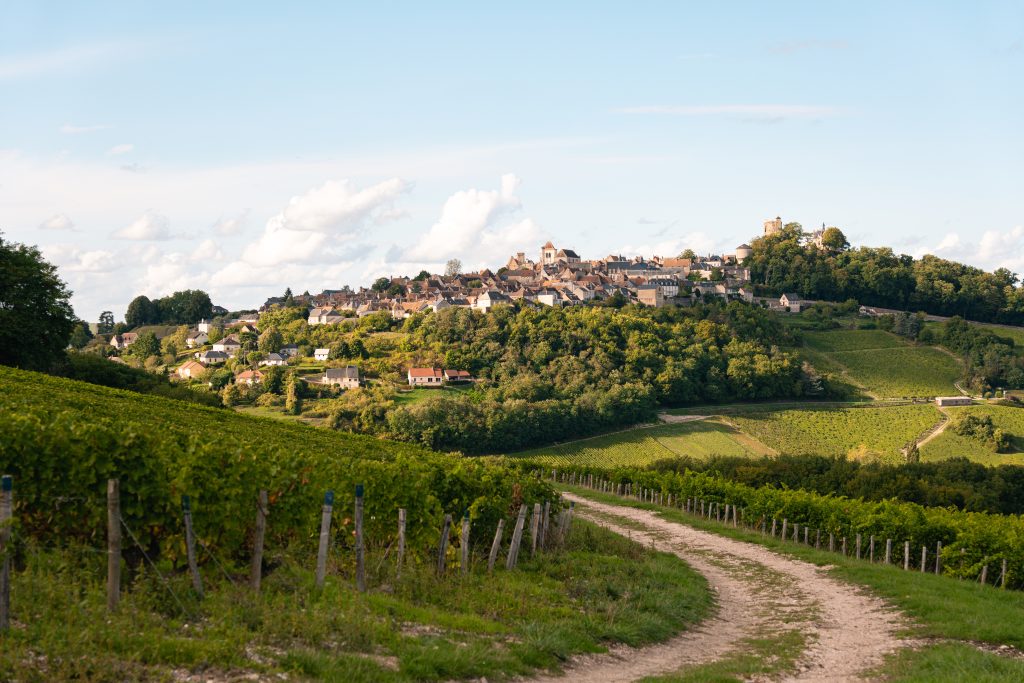 Picturesque Sancerre is a famous name, but not the only high-quality subregion. (Credit: Anatole Gonon)
Realising the potential
With any wine region respected for its fine wines, discussion of terroir is inevitable. While many Sauvignon Blanc-centred regions rely on the grape variety’s popularity, in the Centre-Loire, terroir is key. In addition to its climate, as discussed above, soil is the main component that determines the region’s distinctive terroirs.
In the Centre-Loire, there are four main soil types. Limestone, associated with many of the best vineyards all over the world, makes for stony, well-drained soils. Its sponge-like qualities enable it to store water, protecting vines against drought. Wines from limestone soils have an aromatic, fresh style. Clay-limestone soils, meanwhile, are more compact. They are found across most Centre-Loire appellations and they retain humidity. Grapes ripen later on these soils, which is a blessing or a challenge, depending on the year. On the banks of the Loire and its tributaries (in Quincy, for example), sand and gravel soils are prevalent. They warm quickly in the sun and help ripen the grapes. Last but not least, flint, known locally as silex, retains heat and helps the grapes reach perfect maturity. Wines from silex vineyards can be closed in their youth but age beautifully.
Centre-Loire’s winemakers are also keen to realise the potential of their terroir. That is achieved through a focus on sustainability – not an easy endeavour in a cool climate. In 2024, for instance, some producers had to choose between giving up on organic viticulture or losing their crop. Despite this tough reality, more than one third of producers are either organic or in conversion, well above the national French average of 22%.
In fact, 65% of Centre-Loire’s vineyards already hold some form of ecological certification, and the region is aiming for 100% by 2030. These certifications include High Environmental Value (HVE), a scheme that addresses biodiversity, flora protection, and management of water and fertilisers; and Terra Vitis, a national certificate that seeks to protect both land and people well into the future.
Exemplary wines
Having explored the region’s potential, Gibb concluded with a tasting of Centre-Loire wines to illustrate the region’s diversity. She began with two reds.
Châteaumeillant Domaine Lecomte 2023 — an unoaked blend of 60% Gamay and 40% Pinot Noir — showed how this tiny appellation, the most central in France and one where only red and rosé wines are made, can achieve fresh, supple, easy-drinking wines.
Sancerre Domaine des Terres Blanches La Louisonne 2018, made from 40-year-old Pinot Noir vines and hand-harvested at very low yields, demonstrated the age-worthiness of red Sancerre and this famous AOC’s potential for producing fine red wines.
The tasting then covered some of the under-the-radar options for Sauvignon Blanc lovers. Coteaux du Giennois Domaine de Villargeau L’Incontournable 2022 proved that flint is not exclusive to Pouilly-Fumé or Sancerre. Reuilly Domaine de Reuilly Les Chênes 2023, on the other hand, exemplified the softness and appeal of biodynamic wines from limestone soils.
Meanwhile, Menetou-Salon Domaine Pellé Les Blanchais 2023, from Burgundy-trained winemaker Paul-Henry Pellé, offered brilliant value. The ambitious Quincy Domaines Tatin Sucellus 2022 then rounded off the flight with its delicate and seductive aromas from sandy and gravelly soils.
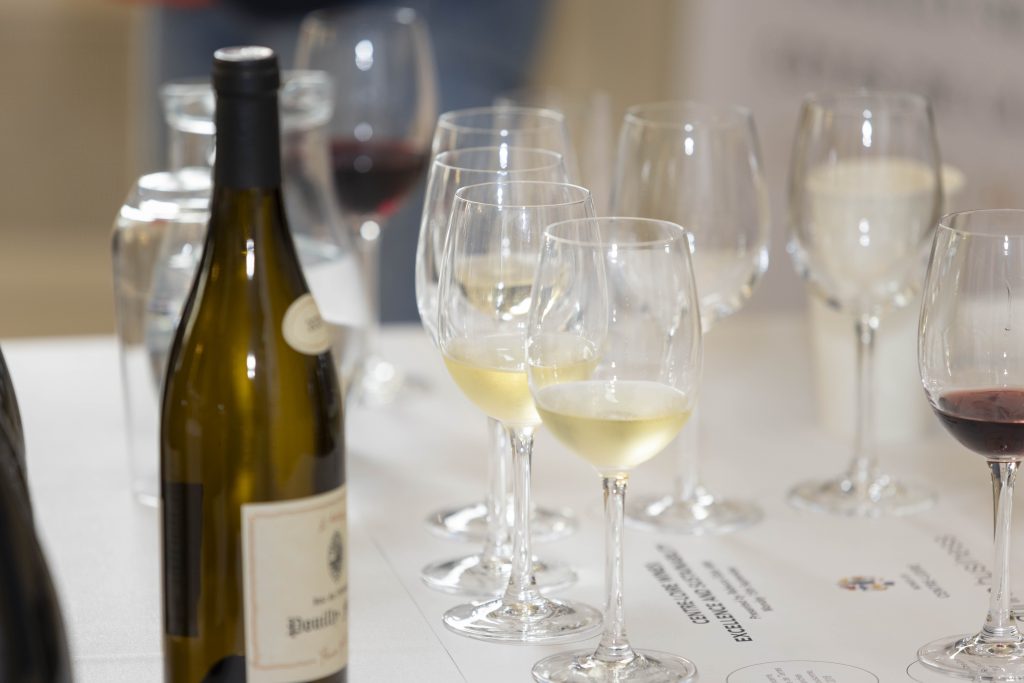 The region’s Sauvignon Blanc is characterised by elegance, but shows a rich diversity.
Lieux-dits
To conclude, Gibb presented two wines from the region’s most famous appellations. Sancerre Domaine Jean-Max Roger La Côte de Bué 2022 demonstrated the uniqueness of lieux-dits or named plots. La Côte de Bué is a steep, southeast-facing slope dominated by Kimmeridgian marl. Even from a ripe vintage, it showed the quintessential elegance of Sancerre.
Pouilly-Fumé Domaine Michel Redde et Fils Majorum 2020, from across the river and also grown on Kimmeridgian soils, demonstrated the weight and richness that can be achieved in the Centre-Loire, with subtle oak and ripe fruit playing off Sauvignon Blanc’s natural freshness.
The masterclass overall proved a more important point: the complex and diverse wines of Centre-Loire deserve much more than just a glance. Beyond the star appellations of Sancerre and Pouilly-Fumé, there is something for everyone.
Related news
Rioja’s second largest co-op to become a limited company
Château Mouton Rothschild reveals label for the 2023 vintage
‘A mountain of dirt and trees’ podcast rallies support for devastated Friuli winery
Dining and Cooking