
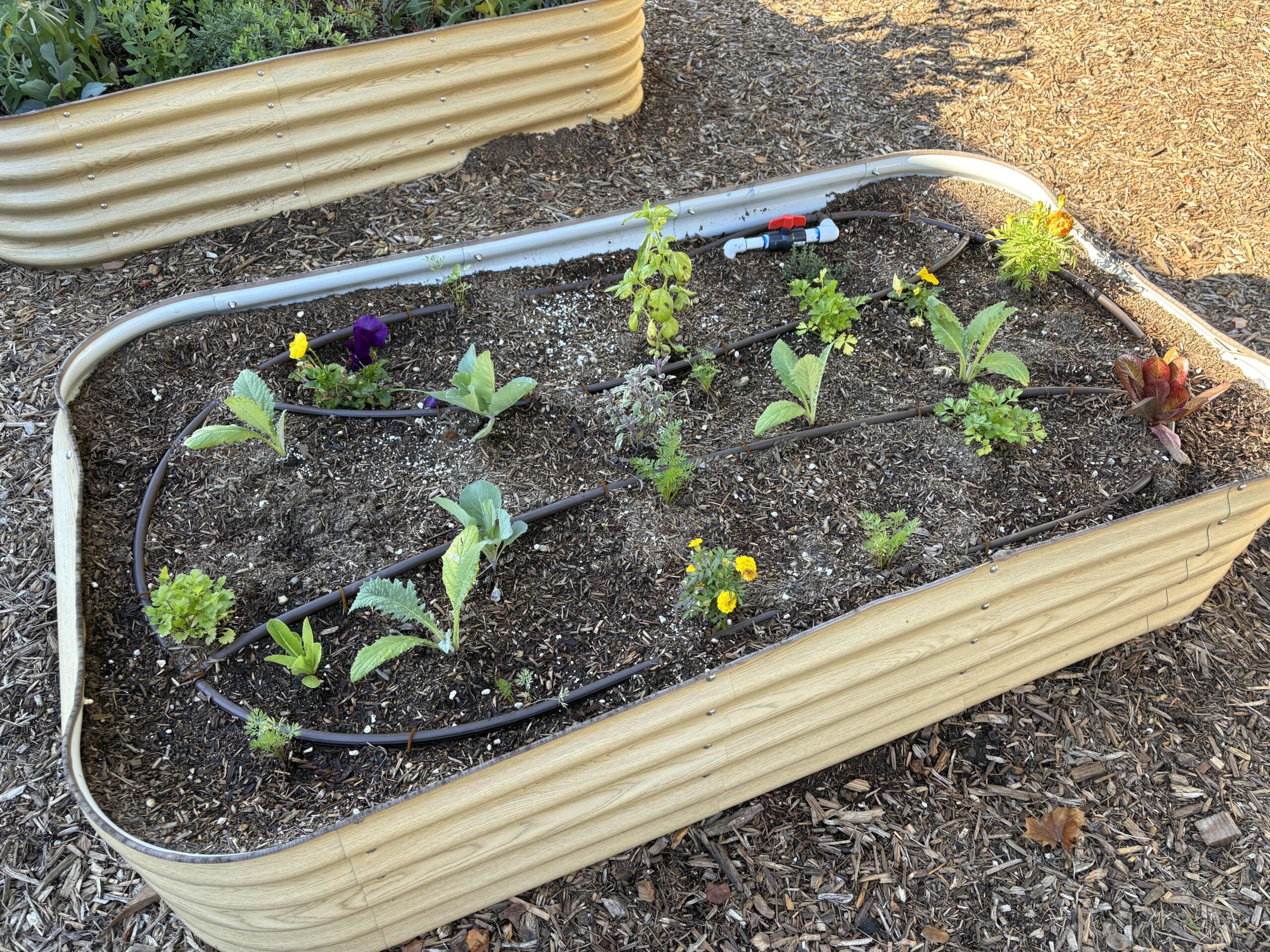

Hi there – I am a school garden teacher helping my school create their garden from scratch. We planted veggie starts around 10/28, but 5 weeks later everything is still pretty small. I’m thinking the dirt the district provided was not very good and more compost needs to be added. Any other ideas? Thank you
by Dizzy-Cantaloupe-951
15 Comments
Even though you are in California, the days are short and still getting shorter. Plus the days are generally not as warm as spring and summer even if you are in southern California. The plants all look healthy, it is just going to be very slow.
My first thoughts are, what is the climate like and how much sun are these planta getting? Most veggies thrive best in full sun and a warm climate. Water amounts and nutrients may also be an issue. However, that is not my area of expertise and so I shall kindly await the comments of more knowledgeable people for that info. 😊
Your plants know it is winter. The light is not right for growth, even though the temps are not low enough to freeze.
Compost tea never hurt.
Last year I planted some stuff in the garden same time as you, didn’t harvest until march. But it was all really nice stuff. Just took its time is all. Also in CA
What zone are you in? Do you have the option to get your soil tested?
I’m in zone 9. I planted late and cheated with gibberellic acid mixed with 10-10-10. Everything was growing great until we had a freeze and the cover blew off in the middle of the night.
YAy! I also teach kids gardening. Its an amazing line of work.
Yeah. the main growing season in the US does not align with the school season. Students beginning their year in the fall are coming in at the tail end of the gardening timeline.
The days are short and the nights are cool, so your plants will probably have to take their time. Also if you transplanted them from pots, they have to go through whats called transplant shock. This is a period where they really wont grow much at all above ground, because they are repairing and realigning their root systems below ground. This takes even longer when the days are short, so over a month of shock is not unusual in this case.
Its never a bad idea to add more compost. Especially when it gets cooler. because the black of the compost absorbs more sunlight and helps warm the soil a bit.
If you have any bed space left, might I suggest garlic? its planted this time of year, and youll see noticable growth from week to week because it doesnt mind the cold. the kids will love when the little green fingers come crawling out of the soil.
Cheers
great opportunity to teach them about the persephone period. it also looks like you have some warm season annuals in there – basil and marigold, which aren’t well suited to winter.
Maybe there’s a lesson on good soil here if not the role fertilizer plays – or even direct sunlight. Can you ask the district what the soil was? Maybe grab some soluble 10-10-10 either organic or synthetic and feed some to see how the plants react.
It’s the “Persephone Period.” Depending on your exact latitude, it runs from about November 20 to Jan 20 when the days have under 10 hours of sunlight. Everything basically stops growing, but they will pick up again in about 8 weeks.
Funnily enough, the article linked below was published exactly 365 days ago lol.
[https://ucanr.edu/blog/hort-coco-uc-master-gardener-program-contra-costa/article/period-persephone](https://ucanr.edu/blog/hort-coco-uc-master-gardener-program-contra-costa/article/period-persephone)
Well, it’s awfully hard to grow vegetables in November in the northern hemisphere.
Do you have direct sunlight for most of the day, short as it is?
What did you plant? I know in some areas fall plantings are quite successful, but that’s as long as it’s an appropriate plant for October… brassicas, herbs, a select few perennials etc. also, what time of day was that picture taken? as other posters have mentioned that’s full sun, which will definitely stunt growth and if it’s not getting any more sun than that or just afternoon sun, you could see some slowed growth from that. Plants are better able to photosynthesize the blue spectrum morning light.
That soil looks very “mulchy”. Lots of wood debris and perhaps not much in the way of nutrients the plants can absorb.
My advice is that you should add manure. If someone around you has chicken manure, that would be great.
https://preview.redd.it/wmn0gthc8u4g1.jpeg?width=4032&format=pjpg&auto=webp&s=bb7668566cbf1b00f91aca9683dc52cc401bc439
This is a coastal North County San Diego location facing West, Zone 10A/B. I have 2 raised beds on the left and containers in the center and right. where it’s more sunny Because of the big white wall on the left the fall/winter garden is in shade, but daytime temps due to heat reflectivity and heat absorption can reach 80 deg in the sunny areas, and that is on a daily high 60 to 70 deg day. I the shade the temps are in the 60’s. Even then, I had to plant pre-sprouted starts after direct sewing leafy greens and radishes from seed was very slow. In early Oct I planted store bought 6″ tall brassica’s in the raised beds. 2 months later they are growing but very slowly. As a test, I would suggest you use some very dilute fish fertilizer with a dilute kelp fertilizer which will offer “immediate” nutrition for the plants, and see how they responded a week later. Keep in mind, high nitrogen fertilizers promote green growth. Also adding a little granular organic fertilizer with a bone meal fertilizer when you first plant can give your root growth a boost. Granular fertilizers and mulch are slow release, and the soils are cooler this time of year, so they get even slower to release. Compost tea could also work as a faster acting fertilizer but again, try a weak dilution and see what happens but don’t over do it. Also your beds might just be dry on the surface, but make sure they are not drying out too much depending on your level of direct sun. My problem with containers and lack of sun is getting the soil to wick moisture so the plants don’t drown or root rot. The winter garden in this zone still going to be much slower. Shade is not a bad thing either, it just slows it all down and requires close attention to water and patience. I hope this helps and I hope someone else in this zone can confirm they too have similar results or more to add.
Also, don’t forget that a lot of the growth which is happening now is not visible. It is growth of the roots.