
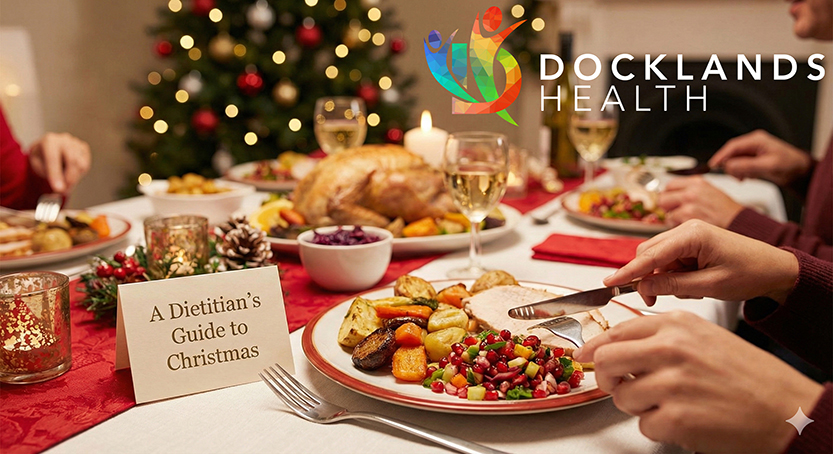
Christmas is often described as the most wonderful time of the year – a season of connection, celebration, and, undeniably, food.
From glazed ham and roast potatoes to pavlova and mince pies, the festive period is steeped in traditions that bring people together. But for many, the abundance of food and disruption to daily routines can spark stress: Will I undo my hard work? How do I say no to seconds? Why do I feel guilty just looking at dessert?
At Docklands Health, dietitians Lauren Le Fevre and Amanda Huynh want to reassure people that health and happiness can coexist at Christmas.
Eating for health and joy is achievable,” Lauren says. “Diet influences all aspects of health, both physical and mental, and the holidays are a perfect time to practise a balanced relationship with food.
Amanda agrees, emphasising that Christmas shouldn’t be about restriction. “No restrictive diets here,” she says. “Our bodies are self-healing if we allow them to guide us. Intuitive eating is key to navigating seasons of abundance.”
Drawing from their expertise in intuitive eating, metabolic health and practical nutrition, Lauren and Amanda share five strategies for enjoying the festive season without guilt or overwhelm.
Ditch the all-or-nothing mentality
Amanda encourages shifting to intuitive eating. Instead of rigid rules, listen to your body and give yourself unconditional permission to enjoy festive foods.
“Restrictive diets often lead to bingeing,” she says. “If you want the pavlova, have a slice, savour it, and move on without guilt. It prevents the ‘last supper’ mentality.”
Prioritise add-ins, not cut-outs
Traditional health advice often focuses on what to remove, but restriction can dampen the joy of Christmas. Lauren suggests flipping the script: focus on what you can add to your plate.
Fill half your plate with salads or non-starchy vegetables to boost fibre, vitamins and satisfaction. Bring a nourishing, delicious dish to share – this adds balance without taking anything away from the celebration.
Savour the flavour with mindful eating
Christmas meals often happen at speed and with plenty of distractions. When we eat quickly, our brain doesn’t register fullness until we’re uncomfortable.
Both dietitians encourage slowing down: taste the food, notice textures and aromas, put your fork down between bites, and enjoy the conversations around you.
Move for joy, not punishment
Exercise is often framed as a way to “burn off” Christmas lunch – an approach that drains pleasure from movement.
Docklands Health encourages a holistic mindset: move because it feels good. That might mean backyard cricket, a walk to see Christmas lights or a swim at the beach.
Set boundaries and manage stress
Stress affects digestion and food choices, and Christmas can be socially overwhelming. Lauren frequently helps clients manage stress-related eating and gastrointestinal discomfort.
Part of developing a healthy relationship with food is respecting your limits – with meals and with social energy. Prioritising sleep, rest and calm helps your body digest food better and supports intuitive choices.
This Christmas, let go of guilt
One day of indulgence doesn’t define your health – just as one salad doesn’t make you healthy. Health is built over time.
By eating intuitively, adding nourishment, moving for joy and being kind to yourself, you can enjoy the festive season feeling energised instead of depleted.
From the team at Docklands Health, wishing you a nutritious, delicious and joyful Christmas.
For personalised nutrition support, appointments with dietitian Amanda Huynh are available in-person or online. •
Dining and Cooking