
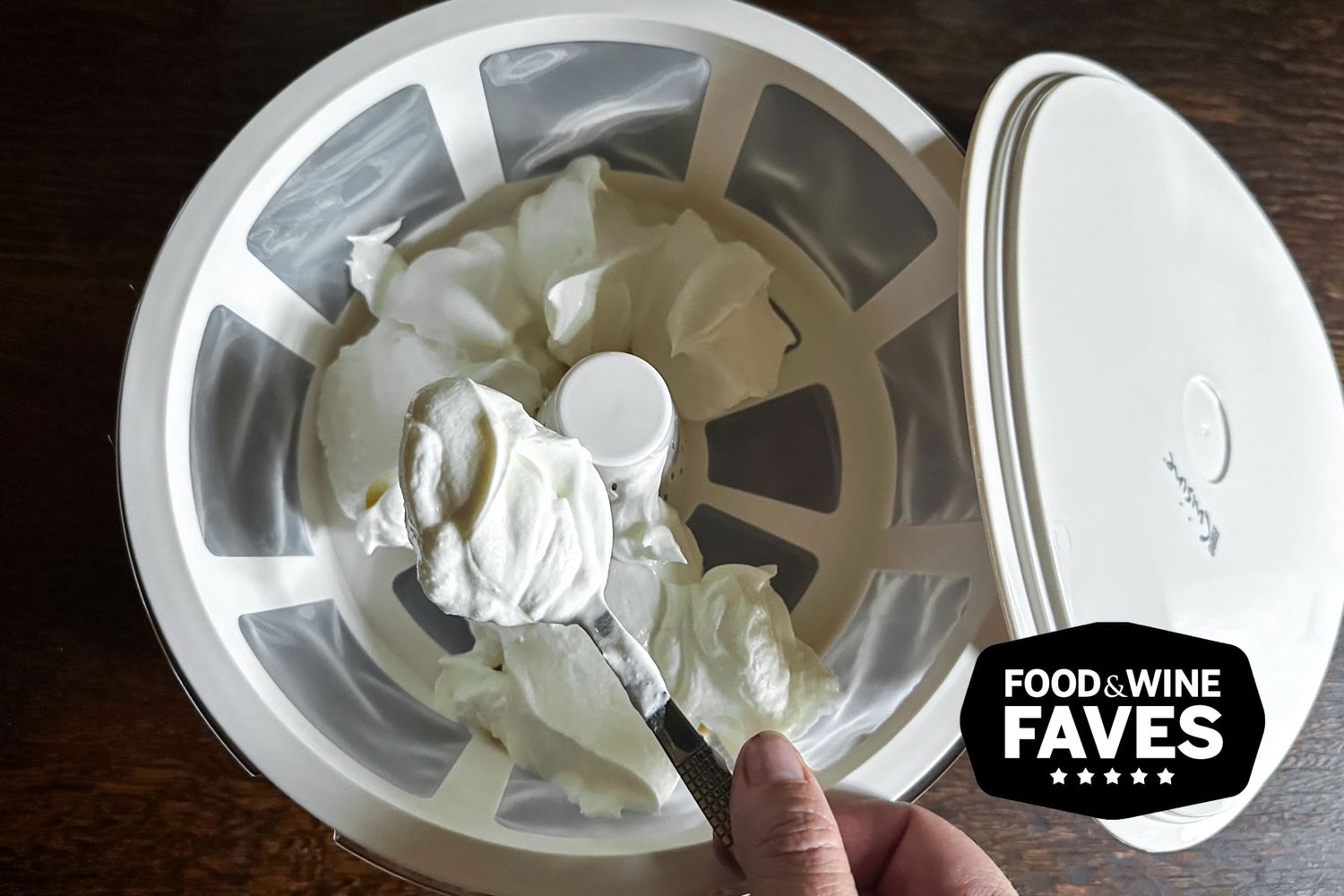
Yogurt is one of the most versatile foods, whether you’re enjoying it on its own with a bit of fruit or using it in a recipe for Caesar salad, mashed potatoes, or chicken tikka masala, to name a few. Making yogurt at home, you can create any style — like plain yogurt, strained Greek yogurt, or Vietnamese yogurt with sweetened condensed milk — and customize the ingredients and flavor. Homemade yogurt also costs less than store-bought. All you need is milk, starter, and six to 12 hours.
I’ve been fermenting yogurt at home for years, so I had a good idea of what to look for when I started testing. But I can assure you that, even for those who are new to fermentation, the best yogurt makers simplify the process. Testing five best-selling options — three electric models and two manual sets for Greek yogurt — I found these yogurt makers to be worth your time and money.
Credit: Amazon
Cons
The 42-ounce capacity may be too small for yogurt-loving households, though you can purchase an expansion rack and additional jars separately to increase the capacity.
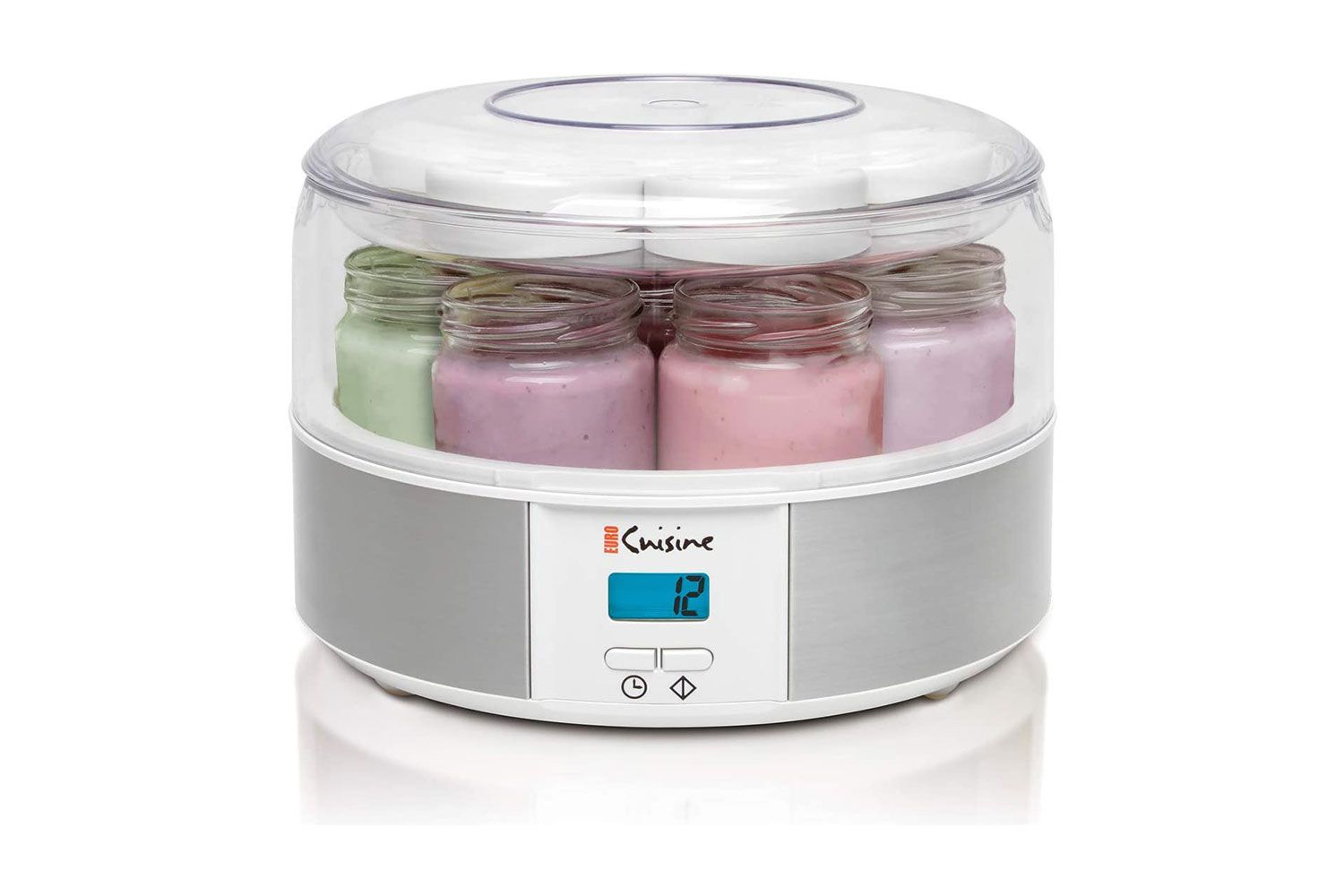
The beginner-friendly Euro Cuisine Automatic Digital Yogurt Maker made consistently high-quality yogurt during testing. Instead of fermenting yogurt in one large container, this maker uses individual 6-ounce jars, allowing you to make a few flavors at once if you’d like. I find the premeasured jars much more convenient than scooping finished yogurt into new containers, ideal for ready-to-go servings that I can grab in the morning. You can make all seven jars at once, but you can also make just a few jars at a time if you go through yogurt slowly.
To use the machine, simply whisk starter culture into heated and cooled milk following Euro Cuisine’s instructions. Pour it into the jars, then set for the desired number of hours — for this size of jars, usually six to 10 hours. An automatic shut-off feature means it will stop incubating your yogurt after 15 hours. (It will keep fermenting if you leave it, however, so stick it in the fridge as soon as it’s ready.) I also love that the jars have a rotary date-setting mechanism in each lid, taking out the guesswork of how old a batch is. It feels sturdy and made to last, which makes it a great value to me.
Dimensions: 9.5 x 9.5 x 7 inches | Capacity: 42 ounces | Container Type: seven 6-ounce jars with lids | Dishwasher-Safe: Yes
Credit: Amazon
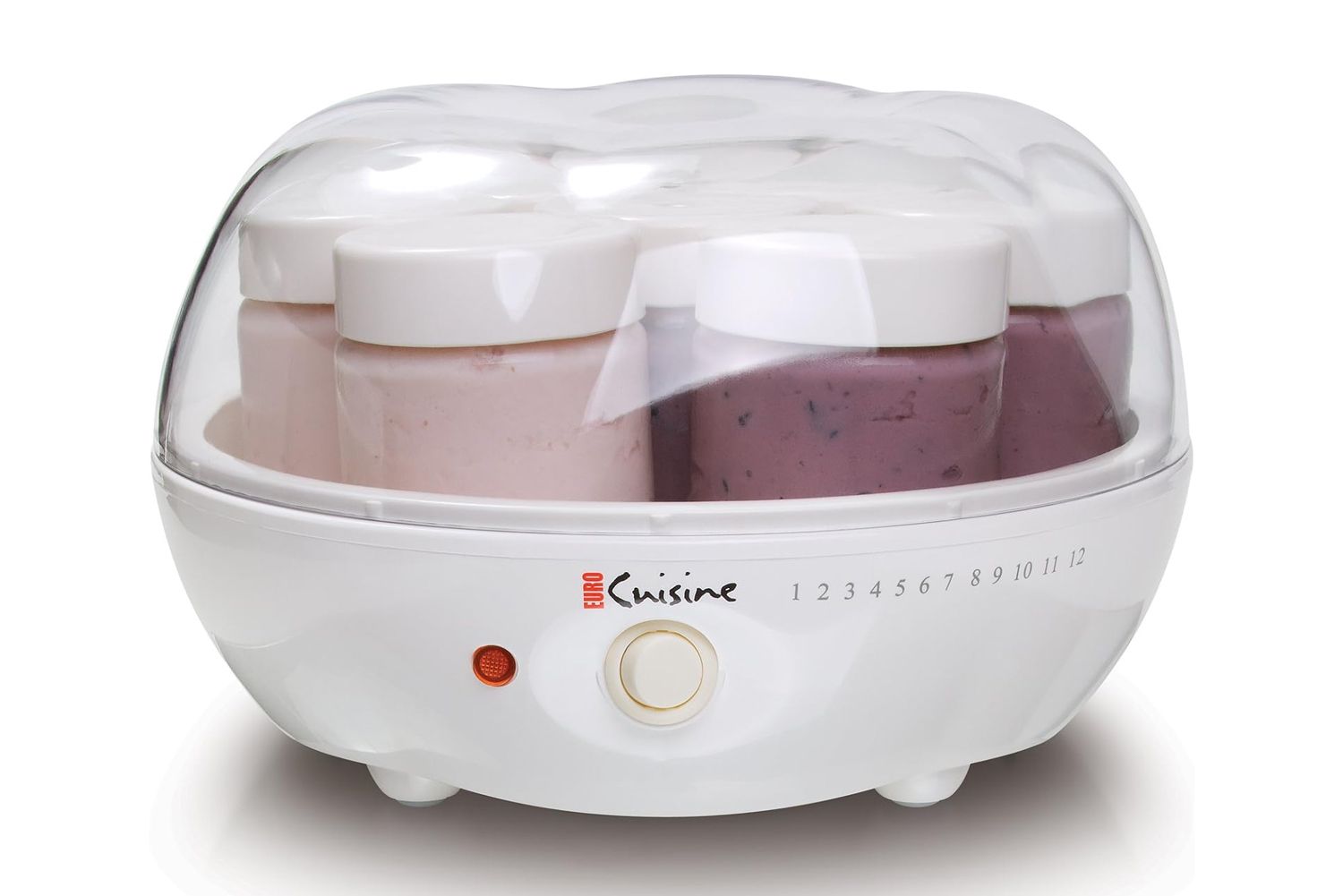
EuroCuisine makes several popular yogurt makers, and the YM80 is no exception. Like its (slightly) more expensive cousin, our Best Overall pick, the YM80 makes individual jars of yogurt for mixing and matching flavors and easy storage. Between its relatively low price and the lower cost of homemade yogurt over store-bought, this little machine will pay for itself quickly.
While it lacks the customizability of the YMX650, it’s excellent for basic yogurt with consistent results. It has a timer with markings to indicate how many hours the yogurt has been fermenting, which I had two issues with: It didn’t work consistently in my tests, and the manual timer does not include an automatic shut-off. This is fine if you’re setting it to run through the day or overnight, but if you aren’t home to turn it off, it will continue fermenting, which can result in extra tangy, sour yogurt. Both are easy to address, though, if you make the yogurt overnight then pull it the next morning, or set a separate timer if you’re worried about it going too long.
Dimensions: 9.5 x 9.5 x 6 inches | Capacity: 42 ounces | Container Type: seven 6-ounce jars with lids | Dishwasher-Safe: Yes
Credit: Amazon
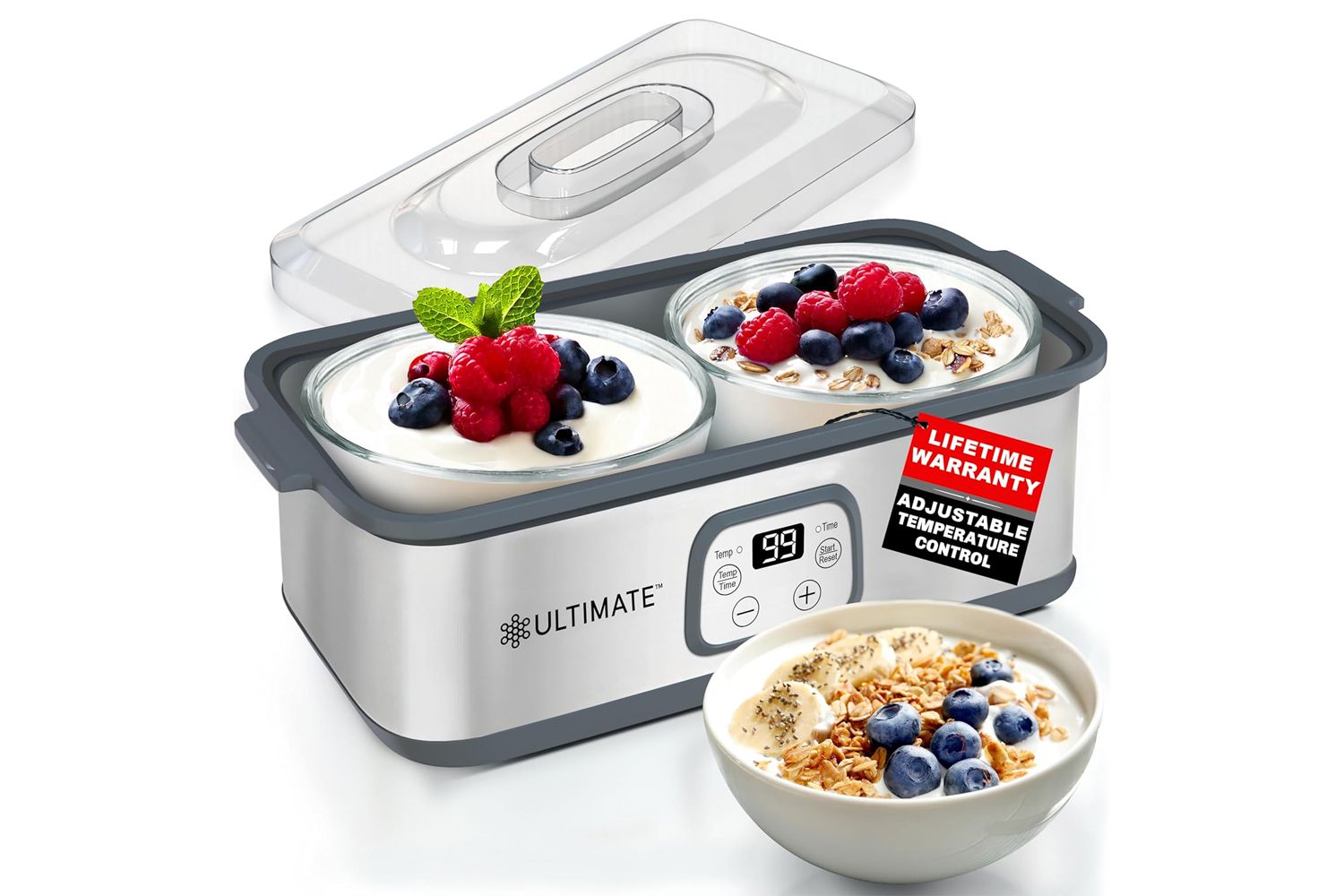
I immediately liked the Ultimate for its stainless steel design — a sleeker alternative to the white plastic options. But testing it out, I found it offered more than good looks. This yogurt maker has a slightly larger capacity than our other top picks, plus two options for containers: two 1-quart containers or eight 6-ounce jars for those who want versatility with flavors and the convenience of individual servings. Unlike the other makers, the Ultimater’s basin is filled with water, which warms and allows for even heat around the jars. As with other yogurt makers, the longer you let it ferment, the stronger the flavor. The only downside I found during testing was that the lids for the 1-quart containers can’t go in the dishwasher, so remember to set those containers and lids aside for hand-washing.
Dimensions: 14.37 x 7.6 x 5.71 inches | Capacity: 64 ounces | Container Type: Two 1-quart containers or eight 6-ounce jars | Dishwasher-Safe: Yes, except for lids
Credit: Amazon
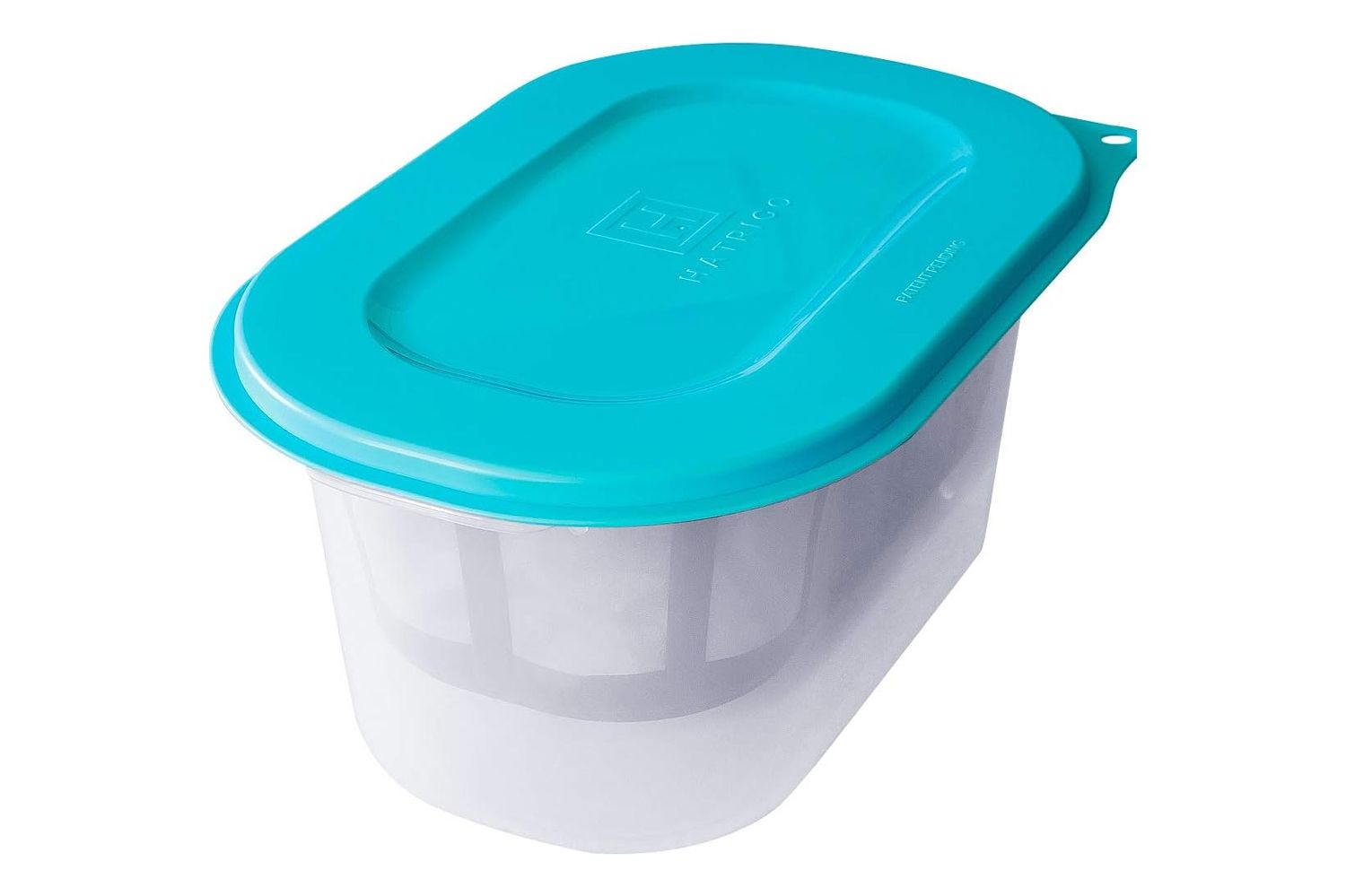
Greek yogurt makers, unlike electric yogurt makers, do not actually ferment your milk into yogurt. Instead, they take your finished yogurt and strain out some of the whey for a thicker, richer final product. (I recommend saving that liquid to use in marinades, smoothies, and other dishes!) This is by far my favorite Greek yogurt maker I’ve tested, and I use it for many fine mesh straining projects beyond yogurt making, like cheesemaking or straining fruit pulp from juice.
The fine mesh in this maker is stainless steel, meaning it should be more durable than its plastic counterparts. Plus, I’ve found its rectangular shape makes it easier to stack and store in my cabinets than round makers. As with all Greek yogurt makers, or any mesh strainer, the key to cleaning is to not let food dry on it: So be sure to spray it off at least (or, just hand wash it) right after use.
Dimensions: 12 x 6 x 8 inches | Capacity: 64 ounces | Container Type: One 2-quart container with strainer and lid | Dishwasher-Safe: No
Credit: Amazon
Cons
This maker’s mesh is plastic, not steel, so it’s more delicate than our other Greek yogurt pick.
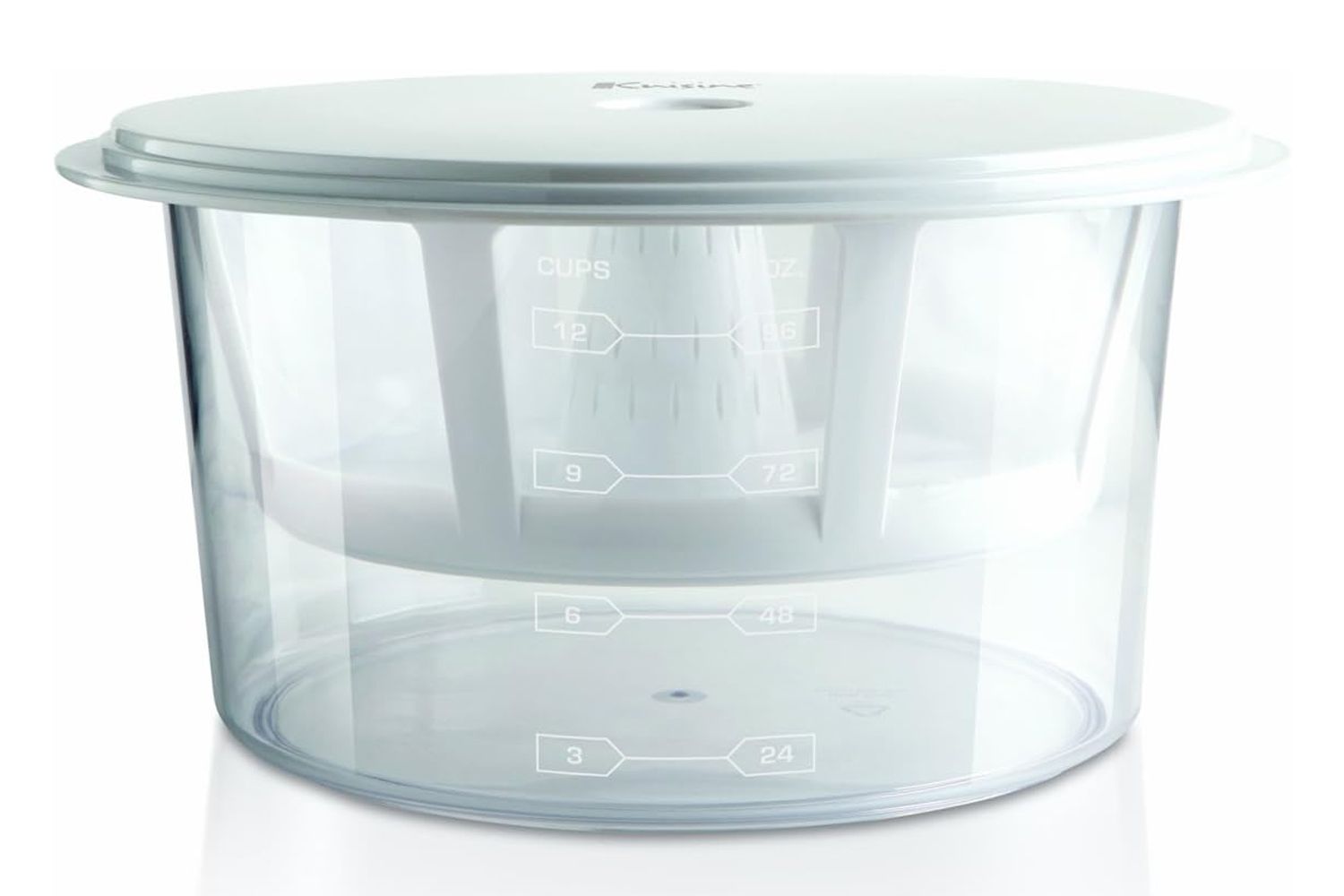
If Greek yogurt is your preferred dairy culture, then you’ll have to take things one step further after incubating your yogurt. Unlike the other yogurt makers on our list, this model is only a strainer, not an incubator, which means it can only be used on finished yogurt and not to culture the yogurt itself. You can strain store-bought or homemade yogurt in this maker, then let it work its magic in the fridge until it’s as thick as you’d like.
Like our top Greek yogurt pick, this one does a great job at straining extra liquid from yogurt (and is less wasteful than using cheesecloth and a standard colander). The only downside is that the mesh is plastic, not stainless steel, which means it’s more delicate and needs to be handled with care to last. As with any mesh strainer, be sure to clean right after using so food doesn’t dry to the mesh.
Dimensions: 10 x 10 x 5.25 inches | Capacity: 64 ounces | One 2-quart container with strainer and lid | Dishwasher-Safe: No
How I Tested Yogurt Makers
As someone who makes yogurt constantly, I was excited to give these makers a try. To test the electric yogurt makers, I ran several tests incubating milk at six, 10, and 12 hours, respectively, to see how fast each unit worked. For smaller containers, six to eight hours was enough for perfectly fermented yogurt. For larger containers (like the Ultimate’s 1-quart containers), eight to 10 hours did the trick. I also paid attention to how easy they were to clean: Seeing how the containers held up in the dishwasher, for example, and how easy it is to wipe stray splashes of milk off the makers themselves. I used whole milk in all tests because whole milk yogurt is creamier than low-fat.
For Greek yogurt makers, which are strainers rather than incubators (in other words, they only work with finished yogurt), I strained yogurt by pouring in finished yogurt, topping with the lid, and popping them in the fridge to strain. Since this is purely subjective — you just strain the yogurt until it’s as thick as you’d like it to be, then scoop it into containers to store — my focus was more on the durability of the makers and how easy they are to clean. The strainers I tested couldn’t go in the dishwasher, so I noticed how easy the mesh was to clean, and if any bits of food got stuck between the mesh and plastic body.
Food & Wine
Factors to Consider
Capacity
Consider how much yogurt you typically go through, and make sure to get a machine that’s large enough to meet your needs. The other capacity to think about is whether you want the yogurt to be made in smaller containers for individual servings or one larger container. I like models that can make multiple jars at once, but it’s personal preference.
Food & Wine
Electric vs. Non-Electric
All yogurt makers are, basically, insulated chambers that keep milk consistently warm so it can culture into yogurt. (Unless we’re talking Greek yogurt strainers, as these don’t ferment the yogurt.) Electric yogurt makers do this with a built-in heating element, while non-electric yogurt makers simply create an insulated environment, which reduces a loss of heat but does not heat the milk itself. Making yogurt without electricity uses less power, but electric models ensure a more consistent temperature throughout the culturing process.
Food & Wine
Frequently Asked Questions
Is it worth getting a yogurt maker?
You need the correct temperature for microbes to ferment and turn milk into yogurt, and yogurt makers hold the temperature of the milk warm and steady. With a precise temperature, you’re neither over- nor under-fermenting the yogurt, and this contributes to a better taste. Plus, you want to keep the glasses still during incubation, which lets the yogurt get firm. Yogurt makers make this easy and safe.
What is the yogurt making process?
The first step is heating milk to 180°F, which pasteurizes it. Second, cool milk to 110°F. Next, stir in starter yogurt. Keep the milk and starter at around 110°F for about eight to 12 hours. After, cool to room temperature for about two hours. Strain it if you like, refrigerate it, and it’s ready to eat.
To make yogurt in the Instant Pot, heat milk to 180°F using the boil setting, then allow it to cool to 110°F. Whisk in your starter, and allow it to incubate on the yogurt setting. This method will work for most starters, though mesophilic starters (used for skyr) have a different process.
What is Greek yogurt, and how is it different?
Greek yogurt has more protein and is extra thick, thanks to straining, which removes some liquid from the yogurt.
How do you make vegan yogurt?
Making non-dairy yogurt is essentially the same process as dairy yogurt in a yogurt maker, except you use a vegan yogurt starter. Some people stir in some store-bought soy capsules; others use probiotic capsules. You can also purchase a vegan yogurt starter online. You can experiment with non-dairy milks to find your favorite.
Do you need a yogurt starter to make yogurt?
Since yogurt relies on the inoculation of specific beneficial microbes, you need a starter culture to make the magic happen, and you have many options. You can add either a couple of spoons of existing yogurt or freeze-dried cultures to a new batch.
Our Expertise
Julia Skinner, PhD, is a writer, food historian, home fermenter, and avid gardener. She educates the public on food waste reduction and fermentation through her Atlanta-based business, Root, which offers online fermentation classes, a recipe newsletter, and more. She is the author of Our Fermented Lives: How Fermented Foods Have Shaped Cultures and Communities. While Julia makes yogurt at home regularly, she tested five new yogurt makers to write this piece.
Dining and Cooking