
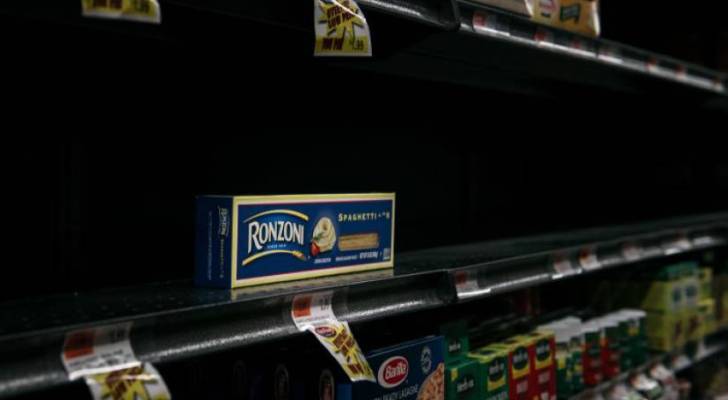
The Trump administration is considering a new 92% antidumping duty on Italian pasta makers, a move that, combined with the existing 15% European imports tariff, would raise total duties to 107% on 13 major Italian exporters, including La Molisana, Garofalo, Rummo, Pastificio Liguori and Barilla.
Industry experts warn that the tariff, if implemented, could drive up U.S. pasta prices or wipe certain brands off shelves entirely as early as January. While the White House says the move isn’t final, Italian companies are reportedly already preparing for an exit from the American market (1).
Some importers are baffled by the focus on pasta. Sal Auriemma, whose family has run Claudio Specialty Foods in Philadelphia’s Italian Market for more than 60 years, told CBS News the sector feels like an unusual target (2).
“Pasta is a pretty small sector to pick on. I mean, there’s a lot bigger things to pick on,” Auriemma said. “It’s a basic food.”
Pasta may be iconic in Italy, but it’s also big business in the U.S. The American pasta market is valued at more than $9 billion and continues to grow (3).
While U.S. companies export about $500 million worth of pasta each year, America is also one of Italy’s most important buyers — accounting for roughly 15% of Italy’s pasta exports, or about $684 million annually, according to data reported by CBS. Which means these proposed tariffs could have a massive impact on the economy and food prices.
So why is the administration targeting pasta?
The potential tariff stems from what the U.S. Department of Commerce says was a routine antidumping review (4). As CBS reports, the agency launched an investigation in 2024 after complaints from Missouri-based 8th Avenue Food & Provisions, which owns Ronzoni Pasta, and Illinois-based Winland Foods, maker of Prince and Mueller’s Pasta.
Both companies claim that Italian pasta makers were selling products in the U.S. below fair market value and undercutting domestic brands, a practice known as “dumping.” Dumping occurs when a foreign producer sells goods in the U.S. below their “normal value,” either the price charged at home or the cost of production plus a reasonable profit (5).
Story continues
Commerce officials say the two largest Italian exporters, La Molisana and Garofalo, failed to provide accurate or complete information during the review, prompting the department to apply the proposed 92% duty estimate to them and 11 other companies.
Italian officials insist the claims are unfounded. EU Trade Commissioner Maros Sefcovic called the combined 107% levy “unacceptable,” arguing there is no evidence Italy is dumping pasta in the U.S. (2). Several pasta makers also told CBS that prices for Italian brands in American stores are already higher than domestic pasta, contradicting any claim that they’re unfairly cheap.
Read More: This top market strategist reveals the market trends you can’t ignore — and how to position your portfolio to stay ahead in 2026
If the tariff moves forward, with the decision set for Jan. 2, consumers should brace for more than just pricier pasta dinners.
Italian brands that remain in the U.S. could see retail prices jump anywhere from 50% to 100%, depending on how much of the 107% duty they choose to absorb. If producers pull out entirely, shortages could push demand toward domestic brands, driving up prices across the board.
Restaurants would also feel the pressure — Italian restaurants, caterers and meal-prep services rely heavily on imported pasta for quality and consistency. Higher wholesale costs will likely cause menu price increases at a time when food inflation is already straining budgets. Grocery chains and specialty importers will likely raise prices or have to redesign supply chains to keep shelves stocked.
Some importers say they’ve built up enough inventory to maintain prices for a short time. But, as Lucio Miranda, president of ExportUSA, a consulting firm for EU exporters, told CBS, “It will definitely be a deal killer.”
“It’s not going to be something that you can just dump on the consumer and move on, life continues,” Miranda said.
And it’s not just consumers who need to be paying attention. For investors, the impact could show up in several corners of the market:
Food retailers and grocers: Higher wholesale prices and supply volatility could squeeze margins, especially for chains competing on price.
Consumer packaged goods (CPG) companies: Firms with flexible sourcing or U.S.-based pasta production may weather the disruption better than brands dependent on European imports.
Restaurant stocks: Italian restaurant chains and companies with high pasta usage could see increased cost pressures.
Inflation-sensitive sectors: Another food price shock could influence broader inflation rates, which in turn affect interest rate expectations and consumer staple equities.
The pasta tariff isn’t final, but the threat alone is already reshaping supply chains and shaking Italy’s export industry. If the U.S. moves forward with the full 107% duty, American shoppers, restaurants and even investors will feel the impact.
We rely only on vetted sources and credible third-party reporting. For details, see our editorial ethics and guidelines.
Wall Street Journal (1); CBS News (2); Statista (3); Federal Register (4); U.S. Customs and Border Protection (5)
This article provides information only and should not be construed as advice. It is provided without warranty of any kind.
Dining and Cooking