
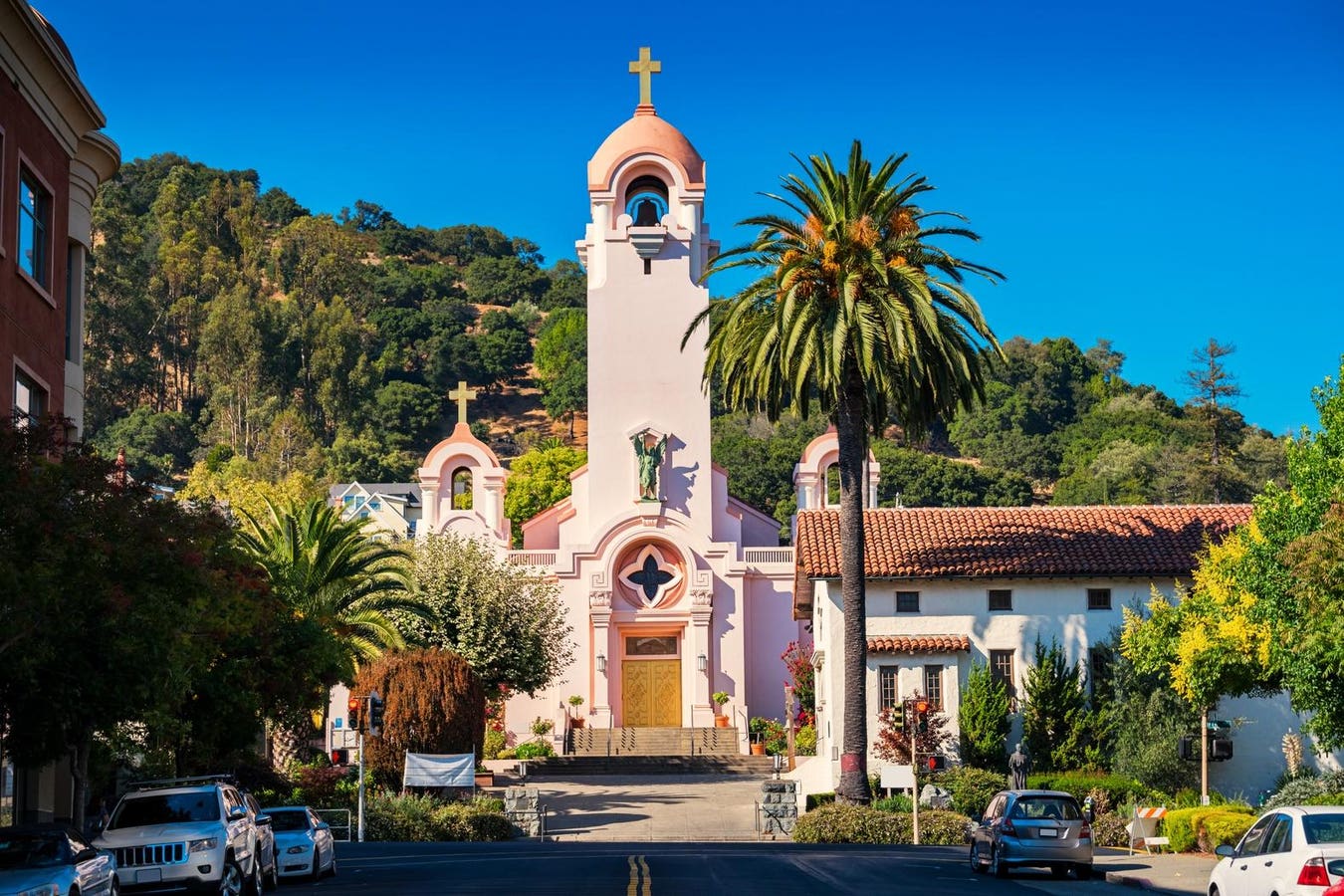
Photo of Mission San Rafael Arcangel, one of the most recognizable landmarks in San Rafael, California, USA.
getty
Before Napa made California wine famous the world over, Franciscan friars and a modest grape began a story that still shapes the state: the California missions.
If you’ve visited Napa or Sonoma, you’ve likely noticed the European influences—especially Italian—that began shaping California’s wine scene in the mid- to late 1800s. Immigrants brought seeds, vines and centuries of know-how, planting their futures in California soil. However, the real wine story began almost a century earlier, when Franciscan friars arrived with vines from Spain’s Canary Islands and established what is now known as the Mission Trail.
The Long Trail Of California Missions
It’s no coincidence that so many California towns are named for saints—San Luis Obispo, San Juan Capistrano or Santa Clara. You can thank the Mission Trail. Between 1769 and 1823, the Franciscan Order, led by Father Junípero Serra, founded 21 missions from San Diego to Sonoma—where the last California Mission still stands and where the modern $84 billion California wine industry began.
Mission San Francisco Solano was constructed in 1823 and was the last of the 21 Spanish Missions built. The mission is the most northerly of all the Californian missions.
getty
At that time known as Alta California, a far-flung province of New Spain, it was later ceded to Mexico after its independence in 1821. The name “California” itself originated from a 16th-century Spanish novel, which described a mythical island ruled by a warrior queen—a name that explorers later adopted for this stretch of coastline and beyond.
The Spanish Crown authorized and funded the mission system as a colonial and religious project to expand its territorial control, spread Christianity and integrate the Indigenous population into the Spanish Empire. The friars aimed to teach them European agricultural methods, including grape growing and winemaking. The involvement of Indigenous communities was integral to the development of California’s early wine culture—a contribution that was foundational yet long overlooked.
Several bottles of wine, including the Mission Zin, Mission Port, and Mission Wine bottled and sold at Story Winery in Plymouth, Calif., on Monday, March 6, 2017. The winery still harvests the Mission grape, which was the first type of grapevine to be planted in California. Few Mission vines remain, but Story Winery has about an acre remaining of vines planted in 1894. (Photo By Carlos Avila Gonzalez/The San Francisco Chronicle via Getty Images)
San Francisco Chronicle via Getty ImagesCalifornia Missions And The Mission Grape
San Luis Rey Mission sits behind it’s grassy plaza, in Oceanside, California, USA.
getty
The grape they brought—Mission, also known as Listán Prieto—had its own long journey. It originated in Spain, arrived in Mexico with Jesuits and conquistadors in the 1500s and gradually made its way north with the Franciscans. Although it lacked finesse—being low in acid and subtle in flavor—it was a survivor. It thrived in poor soils, ripened consistently and required little care. It was the perfect grape for the church’s practical needs, and vineyards took root at nearly every mission.
JANUARY 1 2005 – SAN GABRIEL; The historic Old Mission San Gabriel Arcangel, established in 1771, is the 4th of 21 missions established by the Franciscan order and Father Junipero Serra, stands in the city of San Gabriel north of Los Angeles. The Spanish style adobe church caught fire in July 2020 and the roof and part of the interior were destroyed in July 2020. (photo by Nik Wheeler/Getty Images via Corbis).
Corbis via Getty Images
The wines the Mission grape produced were rustic, often sweet and frequently fortified into Angelica, a style named for Mission San Gabriel Arcángel. These marked the first known instances of winemaking in California.
California Missions And The Mission Grape Live On, But Barely
Today, fewer than 400 acres of Mission grape remain in California, mainly in Southern California and the Sierra Foothills. While only a handful of wineries still work with the grape, its legacy endures in the land—and in the architecture of the missions themselves.
Old Mission Santa Barbara, California
getty
Many of the original structures still stand. Mission Santa Barbara, often referred to as the “Queen of the Missions,” remains one of the most majestic, with restored buildings, gardens and occasional vineyard plantings that honor its rich history.
The Mission grape, the Spanish Crown, the Franciscan friars and Indigenous people built California missions and laid the groundwork for California’s world-class wine industry. Today, the Trail is a reminder of how wine has long traveled in tandem with religion, migration and cultural shifts—not just in California, but around the world.
Dining and Cooking